Executive Overview
The avant-garde landscape of dark cabaret and underground music has long been haunted by the theatrical, unsettling specters of The Tiger Lillies. Fronted by the inimitable, falsetto-wielding Martyn Jacques, the trio has carved out a singular niche over three decades, fusing the decadent, politically charged grit of Weimar-era Berlin with the grotesque vaudeville of London’s Soho. Now, the band has dragged one of their most macabre compositions back into the light, releasing a chilling new official music video for "Rats"—a song deeply embedded in the cosmic horror of H.P. Lovecraft.
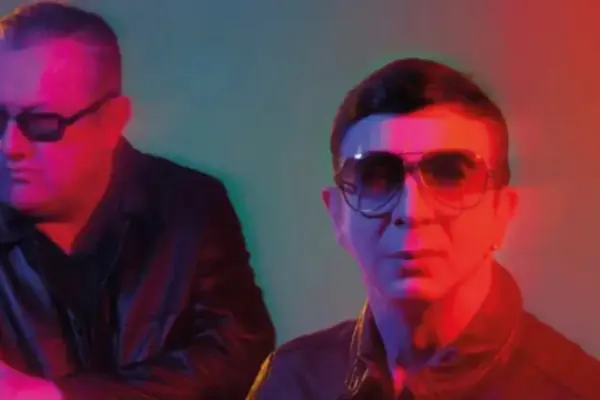
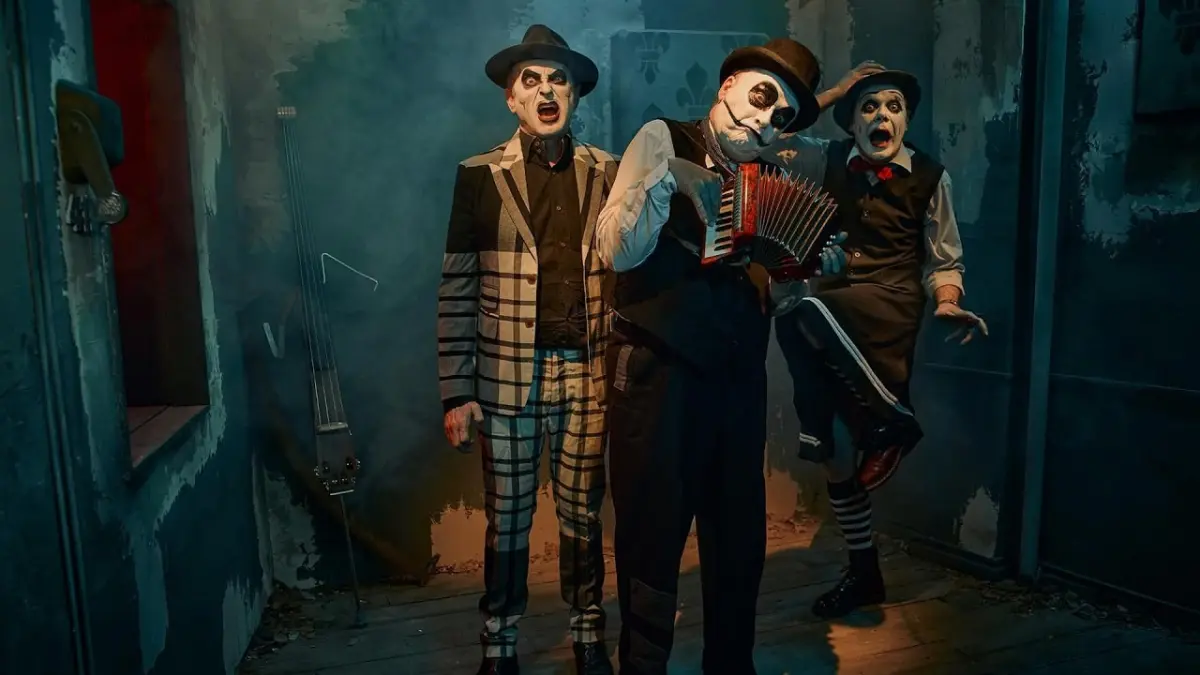
Coinciding with the Halloween season and a special "Songs for the Dead" Day of the Dead performance at the newly minted Soho Theatre Walthamstow, this latest iteration of "Rats" marks a fascinating structural evolution. Originally forged during a legendary 2005 collaboration with industrial pioneers Alexander Hacke (Einstürzende Neubauten) and visual artist Danielle de Picciotto, the track has been stripped of its historic electronic trappings. In its place stands a raw, acoustic-driven performance that relies on the core trio’s terrifyingly intimate instrumentation: accordion, double bass, and percussion, anchored by Jacques’ otherworldly falsetto and multi-instrumentalist Adrian Stout‘s atmospheric sawing.
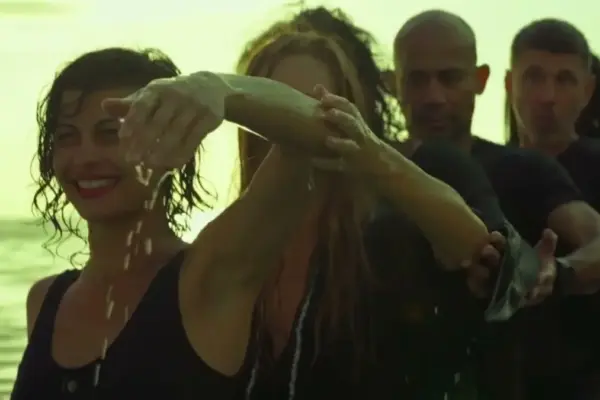
Directed by Berlin-based filmmaker and photographer Andrey Kezzyn, the accompanying music video translates Lovecraft’s claustrophobic dread into stark visual poetry. This feature explores the deep literary origins of the track, the rich history of The Tiger Lillies, their landmark collaborations, and how this newly recorded acoustic translation cements their status as modern masters of the grand guignol.
Detailed Chronology: From Lovecraft’s Page to the Cabaret Stage
The Literary Roots: 1924 and "The Rats in the Walls"
To understand the psychological labyrinth of The Tiger Lillies’ "Rats," one must first descend into the fevered imagination of H.P. Lovecraft. Written in the summer of 1923 and published in Weird Tales in 1924, "The Rats in the Walls" remains one of the Providence master’s most relentlessly visceral pieces of short fiction.
The narrative follows an American descendant of the cursed de la Poer family, who returns to his ancestral home in England—Exham Priory—to restore the dilapidated estate. Beneath the ancient stone foundations, however, lies a horrific secret. Through restless nights punctuated by the relentless, phantom scratching of rodents inside the walls, the protagonist uncovers subterranean caverns where his depraved ancestors engaged in industrial-scale human husbandry, breeding generations of men and women like cattle in subterranean pens.
The story ends in absolute madness. Confined to the Hanwell insane asylum, the narrator is consumed by primal regression, devolving into cannibalism and raving in a mixture of archaic dialects while insisting that the rats—and the unseen horrors of the earth—devoured his friend.
Martyn Jacques’ Alibi: Translating Terror into Song
Martyn Jacques captures this descent into hereditary madness with uncanny precision. Singing from the perspective of the unreliable narrator, Jacques uses his trademark soaring falsetto to offer the listener a deeply unsettling psychological alibi. Amid warnings of phantom smells, creeping shadows, and the mutilated remains concealed within the mortar of the priory’s foundations, Jacques leans into the listener’s ear with chilling reassurance: it is “all in your mind of course.”
This juxtaposition of childlike vocal delivery and blood-curdling subject matter has been a hallmark of The Tiger Lillies since their inception. Rather than relying on modern jump scares, Jacques evokes the grand tradition of English music hall, transforming cosmic horror into an intimate, unsettling cabaret act.
The 2005 Genesis: Mountains of Madness
The genesis of "Rats" as a musical composition dates back to August 2005, when The Tiger Lillies joined forces with Alexander Hacke of Berlin industrial legends Einstürzende Neubauten and artist Danielle de Picciotto. Together, they conceived Mountains of Madness, a sweeping, multimedia Lovecraftian cabaret that premiered to critical acclaim at the Arena Berlin.
For a band traditionally defined by organic, acoustic instrumentation, Mountains of Madness represented a watershed moment. It was the first time The Tiger Lillies integrated electronic soundscapes, heavy synth elements, and spoken-word interludes into their performances. Hacke’s industrial production bled into the band’s acoustic arsenal—accordion, piano, double bass, and the haunting frequencies of the musical saw.
The Modern Reimagining
Two decades later, the band has chosen to strip away the industrial scaffolding of the 2005 production. The newly recorded and performed version of "Rats" clears out Hacke’s electronics, returning the composition entirely to the core trio’s physical instruments.
Driven by the wheezing, rhythmic pulse of Jacques’ accordion, the subterranean throb of Adrian Stout’s double bass, and the crisp, martial percussion of drummer Budi Butenop, the track feels leaner, darker, and more exposed. Beneath Jacques’ soaring falsetto lie two tightly wound backing voices, creating a choral density that amplifies the claustrophobia of Lovecraft’s original text.
Supporting Context & Metrics: The Evolution of a Dark Cabaret Institution
The Architects of Misery: Band Lineup & History
The Tiger Lillies were founded in London in 1989 by Martyn Jacques. Immersed in the gritty, neon-lit underbelly of Soho street life during the late 1980s, Jacques developed a performance style that wedded the theatricality of pre-war German cabaret—specifically the biting political satire and stark compositions of Bertolt Brecht and Kurt Weill—with the confrontational, anti-establishment energy of punk rock.
- Martyn Jacques (Vocals, Accordion, Piano): The creative epicentre of the band, Jacques possesses a multi-octave vocal range spanning a piercing falsetto and a gravelly operatic baritone. His falsetto style, reminiscent of a castrati or an unhinged music hall entertainer, provides the emotional core of the band’s output.
- Adrian Stout (Double Bass, Musical Saw, Theremin, Backing Vocals): Joining the fold in 1995, Stout expanded the band’s sonic palette by introducing the eerie, weeping tones of the musical saw and the space-age wail of the theremin. His deep, resonant double bass lines provide the gravitational anchor for Jacques’ soaring melodies.
- Budi Butenop (Drums, Percussion): A seasoned veteran of the Berlin theatre scene, as well as crust-punk and Americana circuits, Butenop settled in London before officially joining the percussion stool in December 2021. His dynamic, precise drumming drives the rhythm section with both theatrical flair and punk rock urgency.
Operating independently from major labels, the trio releases the vast majority of their extensive catalogue through their own imprint, Misery Guts Music. With dozens of albums to their name—ranging from adaptations of classic fairy tales to collaborations with circus troupes and symphony orchestras—they remain one of the most prolific touring acts in alternative music.
Soho Theatre and the Cinematic Partnership with Andrey Kezzyn
The Tiger Lillies’ relationship with London’s cultural institutions runs deep, particularly with the Soho Theatre. The band has staged numerous celebrated residencies at the theatre’s Dean Street home, a history commemorated on their live album Live in Soho.
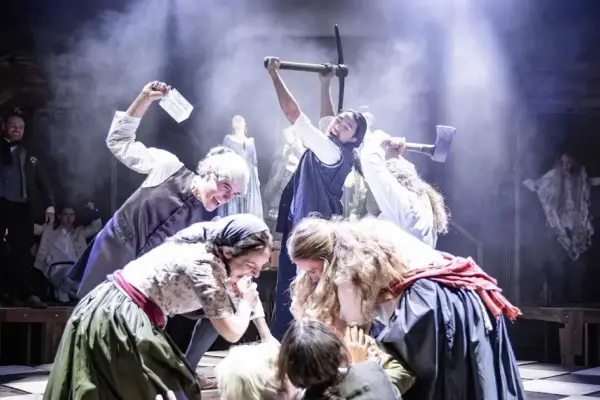
This theatrical lineage continued on November 1, when "Rats" took centre stage as part of Songs for the Dead, a special Day of the Dead concert hosted at the newly opened Soho Theatre Walthamstow.
To capture the visual essence of the song, the band tapped Berlin-based photographer and filmmaker Andrey Kezzyn. Known for his surreal, highly staged, and theatrically lit imagery, Kezzyn previously directed the music video for "Stupid Life" from the band’s 2025 release, Serenade from the Sewer. Released on Halloween, the video for "Rats" serves as a masterclass in gothic aesthetics, pairing Kezzyn’s striking cinematic eye with the band’s grotesque theatricality.
Official Statements & Artistic Vision
While The Tiger Lillies rarely bow to traditional promotional cycles, their creative trajectory speaks volumes about their ongoing artistic evolution. In past interviews discussing their literary adaptations, Martyn Jacques has emphasized that the horror in his music is not meant to alienate, but to reflect the dark complexities of the human condition.
"We don’t write songs about pop stars or cars," Jacques has noted regarding the band’s thematic choices. "We write about the gutters, the asylums, the brothels, and the ancient tombs. The human mind is a far more terrifying place than anything Lovecraft could invent, though he certainly gave us a magnificent blueprint for the descent."
By revisiting Mountains of Madness twenty years after its debut, the band demonstrates a commitment to self-archiving and sonic reinstration. Stripping the electronic embellishments away in favor of pure acoustic dread highlights a desire for direct communication with the listener—a return to the bare-bones, visceral shock value that defined their early days in Soho basements.
Director Andrey Kezzyn echoed the collaborative synergy behind the visual elements of the project, noting that working with The Tiger Lillies requires an immersion into a shared cinematic dreamscape:
"When you work with Martyn and the band, you aren’t just making a music video; you are stepping into a staged play where every shadow has a history and every character is hiding a dark secret. ‘Rats’ demanded an atmosphere of historical rot and psychological entrapment, and we built that frame brick by brick."
Future Outlook: The Endless Tour of the Damned
As The Tiger Lillies round out another relentless year of international touring and artistic production, the release of the "Rats" video and its integration into live performances like Songs for the Dead signals that the band has no intention of slowing down.
Having already established a blueprint for independent, cross-disciplinary art—spanning theatre, literature, circus, and avant-garde music—the trio continues to prove that traditional instrumentation, when placed in the hands of master provocateurs, can easily rival the noise and fury of modern industrial production.
With upcoming dates, ongoing archival releases through Misery Guts Music, and a fanbase that spans generations of goths, punks, and literary enthusiasts, The Tiger Lillies remain the undisputed lords of dark cabaret. As the final notes of "Rats" fade out—leaving listeners with the phantom scratching of unseen claws behind the wainscoting—Martyn Jacques’ falsetto lingers in the air, a chilling reminder that the monsters of the past are never truly buried; they are merely waiting beneath the floorboards.
Listen to "Rats" on YouTube and explore the 2005 original composition via Misery Guts Music and Bandcamp.