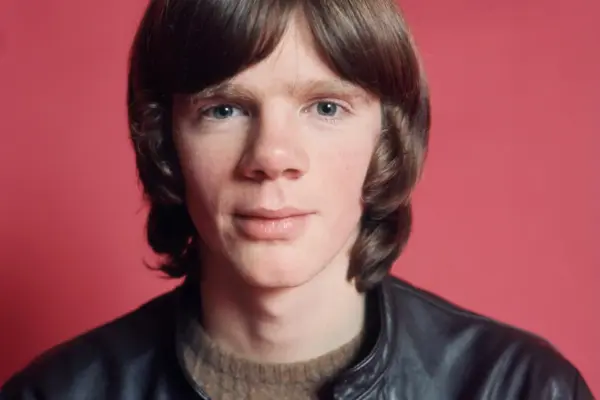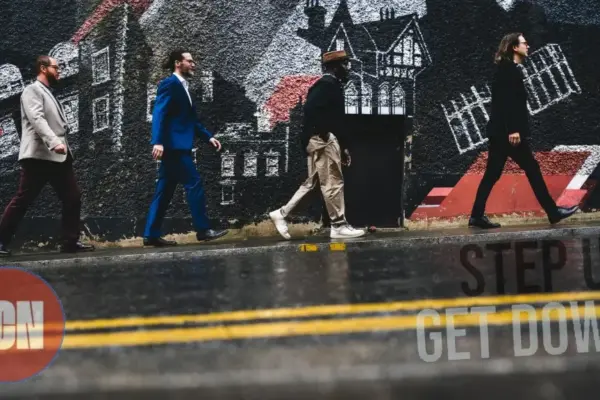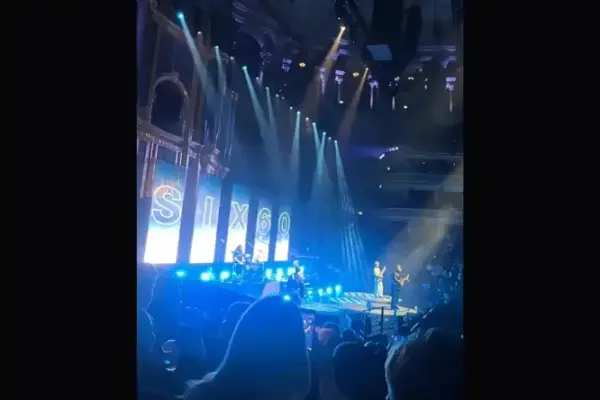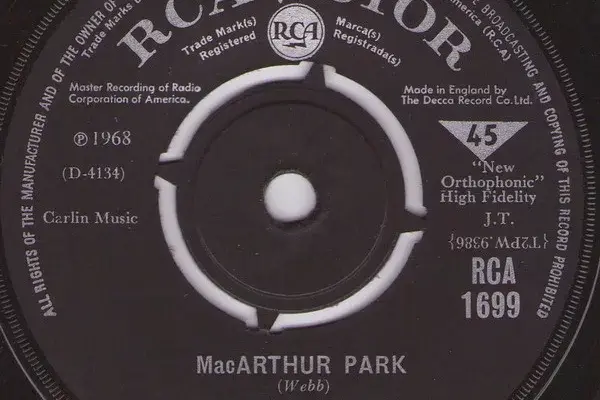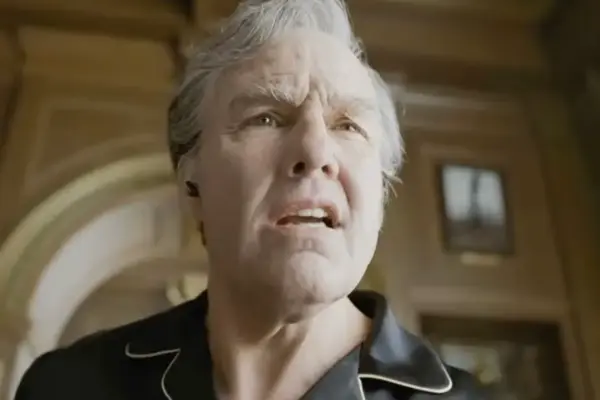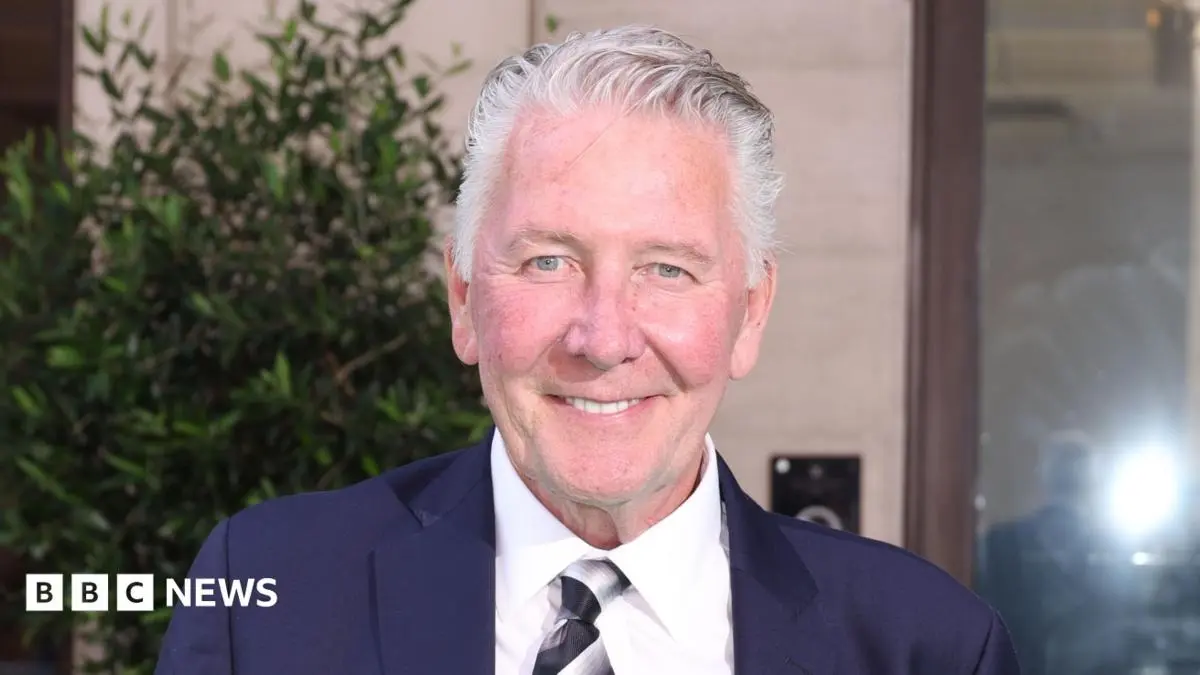
In the grand tapestry of popular music history, few figures occupy a space as versatile, quietly influential, and persistently foundational as Derek “Blue” Weaver. If Pete Frame’s iconic, hand-drawn Rock Family Trees taught us anything, it is the immense value of the musician who acts as the connective tissue between seemingly disparate musical worlds. Weaver is precisely that kind of artist. His career forms a grand nexus linking Wales’s mod-pop pioneers Amen Corner, the quintessentially English folk-rock innovators The Strawbs, glam-rock royalty Mott The Hoople, and the global, chart-topping juggernaut that was the Bee Gees.
To look at Weaver’s studio discography is to gaze across a sprawling landscape of modern rock and pop history. It is a resume that glitters with names like Alice Cooper, Lou Reed, and the Pet Shop Boys. Yet, even when chronicling these massive milestones, one has barely scratched the surface of a career spanning more than six decades.
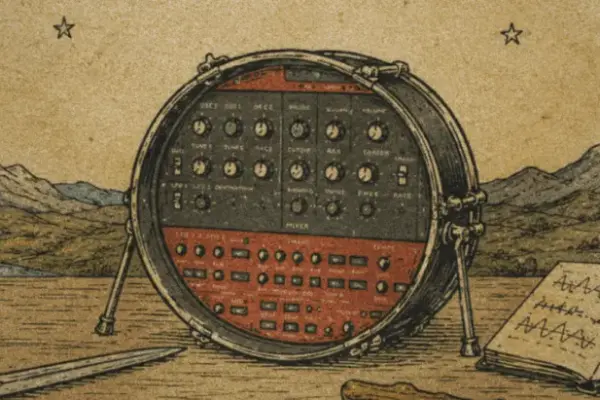
Speaking from his modern studio setup in northern Germany at the age of 79, Weaver reflects on a life lived inside the beats, chords, and mixing desks of the world’s finest recording spaces. Chief among his current reflections is his enduring relationship with The Strawbs—a band he playfully describes as “the only group I never left.” Proof of this unbreakable bond arrives with the upcoming release of Grave New World Live, a sweeping vinyl package capturing the band’s landmark 1972 transition album performed in its entirety. Recorded in front of an adoring crowd in Lakeside, New Jersey—where the local mayor happens to be a card-carrying superfan—the release brings Weaver’s storied journey full circle.
From driving a London minicab to make ends meet to holding the crown as the only keyboardist to play on six consecutive US Billboard number-one hits, Weaver’s journey is a masterclass in talent, tenacity, and being in the right place at the exact right moment.
Detailed Chronology: From Cardiff Soul to Studio Stardom
The Early Days and Amen Corner
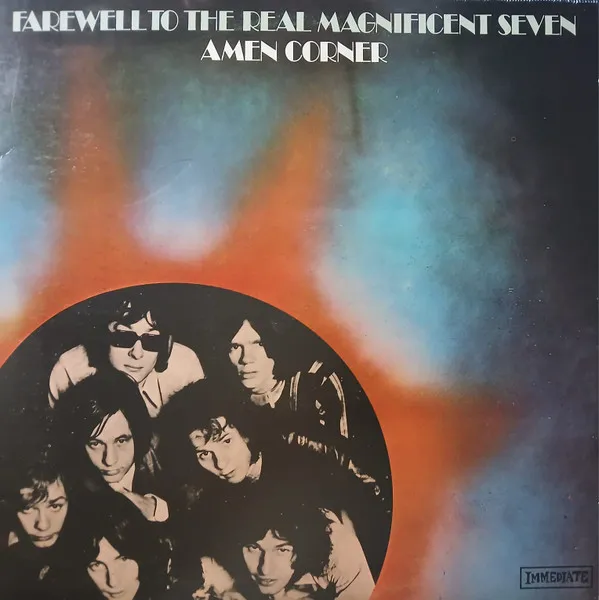
Weaver’s professional life began in the vibrant late-1960s British music scene. Hailing from Wales, he made his initial splash as the organist for Amen Corner, a soulful pop outfit that scored major UK hits like “(If Paradise Is) Half as Nice.” Alongside drummer Dennis Bryon—with whom Weaver would cross paths again years later in Miami and the Bahamas recording with the Bee Gees—Weaver helped define the brass-heavy, blue-eyed soul sound of the era. However, the restless creative spirit that would define his career soon pulled him toward more progressive pastures.
The Strawbs and the Folk-Rock Metamorphosis
In the early 1970s, Weaver joined The Strawbs, a group that was rapidly evolving from a traditional folk outfit into a major-league progressive and melodic rock force. The band’s 1972 masterwork, Grave New World, captured this metamorphosis perfectly.
Recalling the 2019 New Jersey concert that forms the basis of the new live album, Weaver paints a vivid picture of the event. "It was a fantastic week," he enthuses. "We did three or four days in the hall, and one evening was taken up with Grave New World Live, with Wesley Stace doing a commentary. It was funny. Dave [Cousins] went onstage beforehand and said, ‘Look, we’ve organised this with a linking narrative, so we would appreciate it if you saved the applause to the end and not between numbers.’ So, we went through the album tracks in order and opened up with ‘Benedictus’. We finished, and the whole audience started cheering and clapping. Then they remembered, they calmed down…"
This deep-rooted connection to The Strawbs remained a constant anchor, even as Weaver continually stepped away to explore other sonic frontiers. "I always say once a Strawb, always a Strawb," he notes. "I was always there, always doing something. When Dave asked me, I would go and tour, or I would do a concert."
The Lou Reed and Alice Cooper Interludes
By the mid-1970s, Weaver had embedded himself firmly within the cutthroat ecosystem of the London session scene. However, even the most talented session musicians face lean periods. Following an initial departure from The Strawbs, Weaver found himself down on his luck, briefly resorting to driving a minicab around London just to pay his rent.
Fate intervened at Morgan Studios, where he ran into American producer Bob Ezrin. Weaver had previously contributed a memorable Mellotron part to Alice Cooper’s 1973 landmark Billion Dollar Babies. When Ezrin and Weaver reconnected, the keyboardist was instantly thrust into an unforgettable recording session.
"We were sitting there talking," Weaver explains, "and then, suddenly, Steve Winwood walks over. He had to leave for another gig. So, Bob said, ‘Oh, shit, we haven’t got a keyboard player.’ And then he’s sort of looking at me…"
Ezrin promptly opened the studio door, guided Weaver onto a still-warm piano stool, and introduced him to a backing lineup featuring Jack Bruce, Aynsley Dunbar, and guitarist Steve Hunter. Following a quick warm-up jam, Lou Reed walked into the room. "They wrote out some chords for me, I sat down at the piano, and [Reed’s] ‘Men of Good Fortune’ was the result."
The Bee Gees and Global Domination
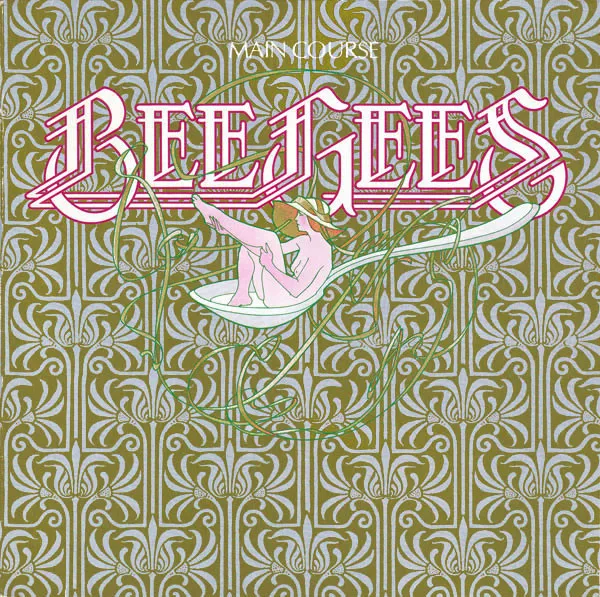
If the Lou Reed session proved Weaver’s rock credentials, his entry into the Bee Gees’ inner circle in 1975 cemented his status as pop royalty. Joining forces with Barry, Robin, and Maurice Gibb, Weaver became an integral part of the band’s touring and recording lineup during their imperial phase.
His synthesizer textures and keyboard arrangements helped shape the pristine, groove-laden sound that dominated global radio waves throughout the late 1970s. As the proud owner of a personal statistic that few musicians can claim, Weaver’s website proudly declares him "the only keyboard player to have played on six consecutive US No 1 hits"—a direct result of his contributions to the era-defining Saturday Night Fever soundtrack and its immediate follow-ups.
The Pet Shop Boys and the Fairlight Era
As musical technology shifted into the 1980s, Weaver embraced the digital revolution. Armed with the revolutionary Fairlight CMI synthesizer—the defining sound of the decade’s electronic pop landscape—Weaver found himself collaborating with the nascent synth-pop duo Pet Shop Boys.
"They just had ‘West End Girls’ out and their manager, Tom Watkins, told me I should produce some of their stuff," Weaver recalls.
Having helped Neil Tennant and Chris Lowe re-record tracks for television and radio broadcasts using the Fairlight, Weaver performed with them at their historic first live outing in August 1985 at the Institute of Contemporary Arts (ICA) in London, where they were introduced by the semi-animated television character Max Headroom.
"There was just Chris [Lowe], Neil [Tennant] and myself onstage and two Fairlights," Weaver remembers. "Chris played trombone: I’d got him to play it on the record I produced [‘I Want A Lover’] as well. It’s never happened since. I’d love to see a video."
Supporting Context & Metrics
To truly understand the scope of Derek Weaver’s career, one must look at the sheer breadth of artists who sought his musical sensitivity. Whether adding atmospheric depth to progressive arrangements or locking down a disco groove, Weaver’s technical versatility made him a secret weapon for producers and songwriters alike.
- The Billboard Record: Six consecutive US Billboard Hot 100 number-one singles with the Bee Gees during the late 1970s.
- The Strawbs Legacy: Spanning over five decades of periodic recording and touring, culminating in the 50th-anniversary release of Grave New World Live.
- Key Collaborations: Amen Corner, The Strawbs, Bee Gees, Alice Cooper, Lou Reed, Pet Shop Boys, Mott The Hoople, Andy Fairweather Low, Ian Hunter, and Graeme Edge of The Moody Blues.
- Academic Recognition: Appointed honorary Professor of Music at Bangor University—a delightful irony for a musician who freely admits he "hardly went to school."
The Road Not Taken: Almost a Moody Blue
Weaver’s near-misses are just as fascinating as his actual credits. During the mid-1970s, he worked closely with Graeme Edge of The Moody Blues on various solo projects. It was only years later, after Edge’s passing, that Weaver discovered how close he came to joining the legendary symphonic-rock outfit.
"I found out afterwards, I don’t know whether it was after Patrick [Moraz] left, that he’d said in an interview, ‘Oh, we considered getting Blue Weaver in, asking Blue to join The Moody Blues.’ And I thought, ‘Graeme, you never told me.’ I read this after he died. I remember listening to [1967’s] Days of Future Passed when we were driving in the van with Amen Corner and thinking it was incredible. Had it happened, I’d have been Moody Blue Weaver…"
Similarly, when Yes offered Weaver the unenviable task of replacing Rick Wakeman in 1974 (following Weaver’s initial departure from The Strawbs), Weaver turned it down out of mutual respect. Instead, he recommended Patrick Moraz for the gig. "Rick was always Rick and I was me," Weaver notes. "émor I couldn’t, I can’t, play like him."
Official Statements & Testimonials
Throughout his career, Weaver has remained remarkably grounded, viewing his myriad successes through a lens of profound gratitude and artistic camaraderie. However, his highest praise is reserved for his late Strawbs collaborator, Dave Cousins, who passed away in July 2023.
Reflecting on Cousins’ enduring contribution to British songwriting, Weaver speaks with unalloyed reverence:
"He was the one who had the least recognition for the quality of his musicianship and songwriting. He’s not just a songwriter, a lyricist, he’s a poet—in every one of his songs, you can take the music away and there’s a story there."
Speaking on his current musical endeavors and his avoidance of standard "tribute act" clichés, Weaver is swift to clarify the nature of his current live performances celebrating the Gibb brothers’ catalog:
"We’re the one band that doesn’t pretend to be the Bee Gees. The show is called Massachusetts, and it’s with the Egiziano brothers."
The collaboration with the three Italian siblings—whose soaring vocal harmonies first gave Weaver goosebumps upon hearing them—brings an authentic, reverent energy to the stage, occasionally featuring former Bee Gees guitarist Vince Melouney.
Future Outlook
As he approaches his ninth decade, Derek “Blue” Weaver shows no signs of slowing down. Splitting his time between his professional studio in northern Germany, academic mentorship as an honorary Professor of Music at Bangor University—where he actively utilizes Strawbs material as a pedagogical tool—and touring across Europe with the Massachusetts stage show, Weaver remains an active, vital participant in the musical landscape he helped construct.
The upcoming release of Grave New World Live on October 9, 2026, serves as both a celebration of a golden era of British folk-rock and a testament to an artist who refuses to let his history gather dust. Whether he is dissecting the poetic lyricism of Dave Cousins for university students, engineering pristine synthesizer sounds, or sharing stages with world-class vocalists, Blue Weaver remains an irreplaceable pillar of modern music history.
As Pete Frame might proudly draft upon his next great parchment scroll, the lines connecting the dots of rock history will always run straight through Blue Weaver’s studio door.