The trajectory of alternative rock music in the early 1990s is frequently remembered through the dual lenses of the explosive Britpop movement and the atmospheric haze of shoegaze. Yet, nestled precisely in the stylistic cracks between these phenomena were bands whose brilliance outpaced their commercial endurance. Among the most compelling casualties of this era was Adorable, a Coventry-formed outfit led by the sharp-witted and unapologetically ambitious frontman Pete “Fij” Fijalkowski.
Formed in 1990, Adorable initially seemed destined for the upper echelons of the British indie elite. Signed to Alan McGee’s legendary Creation Records—a stable that housed luminaries like Oasis, Primal Scream, and My Bloody Valentine—the band commanded instant attention. Their debut single for the label claimed NME’s Single of the Week accolade, rocketing straight to the top of the UK indie charts. However, this meteoric rise was immediately complicated by an industry culture prone to pigeonholing, inverse snobbery, and a volatile relationship with the music press.
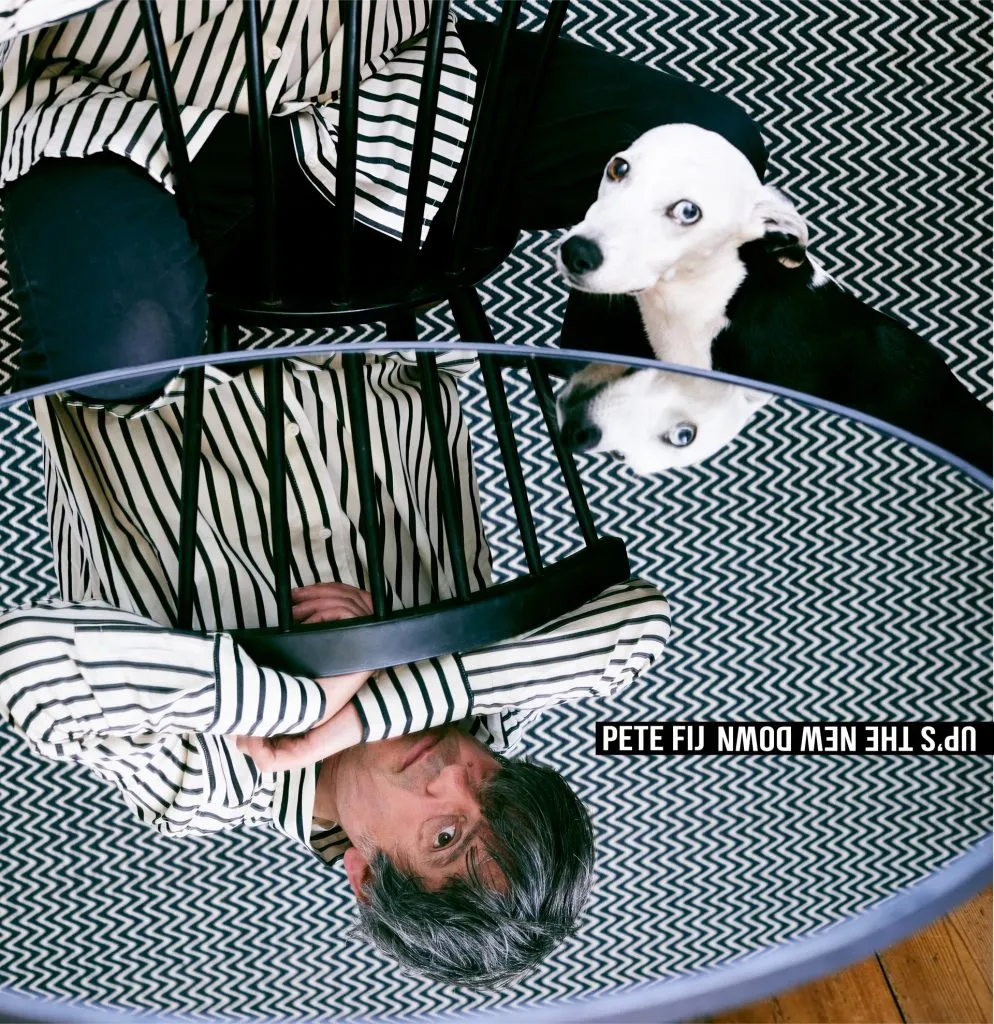
What followed was a classic tale of music industry whiplash: critical acclaim, internal label alienation, a brutal mid-tour dismissal, and a long, winding road through subsequent musical iterations, personal crises, and an unexpected career as an end-of-life celebrant. More than three decades after their inception, Pete Fij is releasing his debut solo album, Up’s The New Down, via Tip Top Recordings.
This profile examines the turbulent history of Adorable, the artistic rebirth of its frontman, and how a brush with mortality in the unlikeliest of professional environments ultimately reshaped a veteran musician’s perspective on life, legacy, and creativity.
Detailed Chronology
1990–1992: The Rise of the "Cockiest New Band in Pop"
When Adorable formed in Coventry in 1990, the British independent music scene was a fiercely competitive landscape dominated by shifting subcultures—baggy, shoegaze, and the nascent tremors of alternative rock. Driven by the songwriting partnership and distinct vision of Pete Fijalkowski, the band carved out a sonic identity that looked less to the dancefloors of Madchester and more toward the intellectual, jangling art-rock of Echo & The Bunnymen, The Psychedelic Furs, and The House of Love.
After a few early false starts, the band captured the attention of Creation Records founder Alan McGee. To McGee, Adorable represented a thrillingly arrogant proposition. But when the music press got hold of them, the narrative swiftly turned. Crowned by the NME as "the cockiest new band in pop," Fij and his bandmates embraced an abrasive, high-confidence public persona designed to mimic the swagger of working-class icons like the Manic Street Preachers.
"I was really into attitude," Fij reflects. "But there was this inverse snobbery going around. We loved how the Manic Street Preachers dealt with the press, but they were working-class, and we were clearly not."
This mismatch in cultural positioning, combined with an unwillingness to comfortably fit into existing media boxes—refusing to bow to the sonic parameters of shoegaze while arriving slightly too early for the sweeping tide of Britpop—alienated key tastemakers.
1993–1994: Against Perfection, Fake, and the Creation Collapse
Despite press friction, Adorable’s debut album, Against Perfection (1993), achieved critical recognition and topped the UK indie charts. Today, it is widely revered as a lost classic of early-90s indie guitar music.
However, behind closed doors at Creation Records, the band’s safety net was evaporating. "We were very much McGee’s signing," Fij recalls. "The rest of the label thought he was mad to sign us." Worse still, partway through recording their debut, Alan McGee retreated into a reclusive, remote management spell, leaving Adorable without their primary champion inside the corporate machinery.
The muted critical reception of their sophomore album, 1994’s Fake, proved to be the death knell. While preparing to go on stage in Colchester during the album’s promotional tour, the band received the devastating news that they had been dropped by Creation. Labelmate Noel Gallagher later expressed disbelief at the decision, telling McGee that dropping Adorable ranked among his most egregious management blunders.
Faced with vanishing audiences, an indifferent record label, and a hostile music press, Adorable dissolved. "For the longest time, my memory of Adorable was the shitty end of it," Fij admits. "It was like the last six bad months of a relationship blotting out all the good years before it."
2000–2002: The Polak Era and the Solo Breakdown
Refusing to abandon music, Fij partnered with his brother Krys to form Polak, signing with the respected independent label One Little Independent (formerly One Little Indian). Polak released two well-received albums—Swansongs in 2000 and Rubbernecking in 2002.
Yet, commercial viability remained elusive. As the band members entered their thirties and faced the fiscal realities of mortgages and young families, a proposed third-album deal coincided with internal burnout. Rather than pressing forward alone, Fij turned the deal down, triggering what he describes as a "musical breakdown." He retreated into solitude, recording a stark solo album heavily influenced by Johnny Cash’s American Recordings, only to shelve the project out of a crippling fear of rejection.
2008–2017: Artistic Partnerships and the Care Home Calling
A lifeline arrived in 2008 when Fij was offered a performance slot at the Brighton Fringe. This prompted him to reach out to Terry Bickers, guitar luminary of The House of Love and Levitation. Though an attempt to recruit Bickers for Polak had previously failed, this time the chemistry clicked. The resulting collaboration yielded two albums of rich, melodic melancholy: Broken Heart Surgery (2014) and We Are Millionaires (2017). Both earned critical acclaim, even if they remained best-kept secrets within the broader cultural landscape.
To sustain his creative life, Fij worked various jobs, eventually landing a position as a part-time activities coordinator in a care home. Immersed in the twilight years of the elderly, Fij found himself frequently attending funerals. This sobering, deeply human exposure to mortality inspired him to formally train as an end-of-life celebrant.
Supporting Context & Metrics
The transformation of Pete Fij from a defensive, sharp-tongued 90s indie rocker into a compassionate end-of-life celebrant profoundly altered his approach to art.
"Storytelling had started coming out in the music I was making with Terry, both in the songs and in between them onstage," Fij notes. "I actually started talking to audiences, which was something I’d never done in Adorable."

Conducting end-of-life services provided Fij with a unique sociological window into human psychology. He observed a sharp dichotomy in how people face their final moments: some arrived at peace with their life’s ledger, while others were consumed by the bitter weight of missed opportunities.
- Primary Life Lesson: "You’ve only got a certain amount of time on this earth," Fij reflects, summarizing the primary takeaway from his time as a celebrant. "And you need to leave with as few regrets as possible. Time is ticking."
- The 2019 Reunion Metric: Before launching his current solo career, Fij experienced a cathartic reckoning with his past. Adorable reunited in 2019 for a limited run of live dates. The shows sold out within minutes, filling venues significantly larger than they had ever commanded in the 1990s, drawing obsessive fans who flew from as far away as Australia.
- Streaming Discovery: Demonstrating the long-tail reach of digital platforms, Fij discovered that his stepson’s friend—completely unaware of Fij’s musical past—had listed Adorable tracks as his top three most-played songs on his Spotify year-end summary.
Official Statements & Industry Perspective
Reflecting on the 2019 Adorable reunion, Fij speaks candidly about how it healed old psychological wounds. "It rewrote the ending," he says. "It felt like getting the director’s cut. When I play those songs now, I own them again."
Regarding his new creative output, Fij highlights a deliberate tonal shift. Once defined by spiky, introspective melancholy, his new solo material reflects a profound personal stability.
"There’s a lot more positivity in my life now," Fij explains. "I haven’t consciously written about it; the songs just came."
Musically, Fij describes his approach on Up’s The New Down as "happily magpie-like," raiding both his personal physical record collection and absorbing the vibrant energy of contemporary guitar and electronic acts.
"I’m not saying I’ve got my finger on the pulse exactly, but I’d like to think some newer bands have influenced me—just the sheer vitality and energy of them," he says. "I’d love the album to reach a new audience—people who don’t know my old music at all. That would be the ultimate result. I know that’s a big ask for a heritage artist, but I don’t find that discouraging."
Future Outlook
As Pete Fij prepares for his autumn UK tour in support of Up’s The New Down—released via Tip Top Recordings—he stands at a fascinating intersection of heritage credibility and contemporary reinvention.
Praised historically by The Independent as "the finest lyricist since Jarvis Cocker last put pen to paper," Fij is no longer running from the ghost of Adorable or defensive about the commercial shortcomings of his past. Armed with the philosophical clarity gained from his work as an end-of-life celebrant, he views the future not through the lens of anxiety or industry validation, but through the pure, urgent joy of creation.
Up’s The New Down represents more than just another record release in a storied indie career; it is a testament to resilience. It proves that an artist can survive the collapse of major-label dreams, personal creative breakdowns, and the heavy burden of retrospective grief, emerging on the other side with a clearer voice, a brighter perspective, and a renewed commitment to leaving zero regrets in the studio or on the stage.