Executive Overview
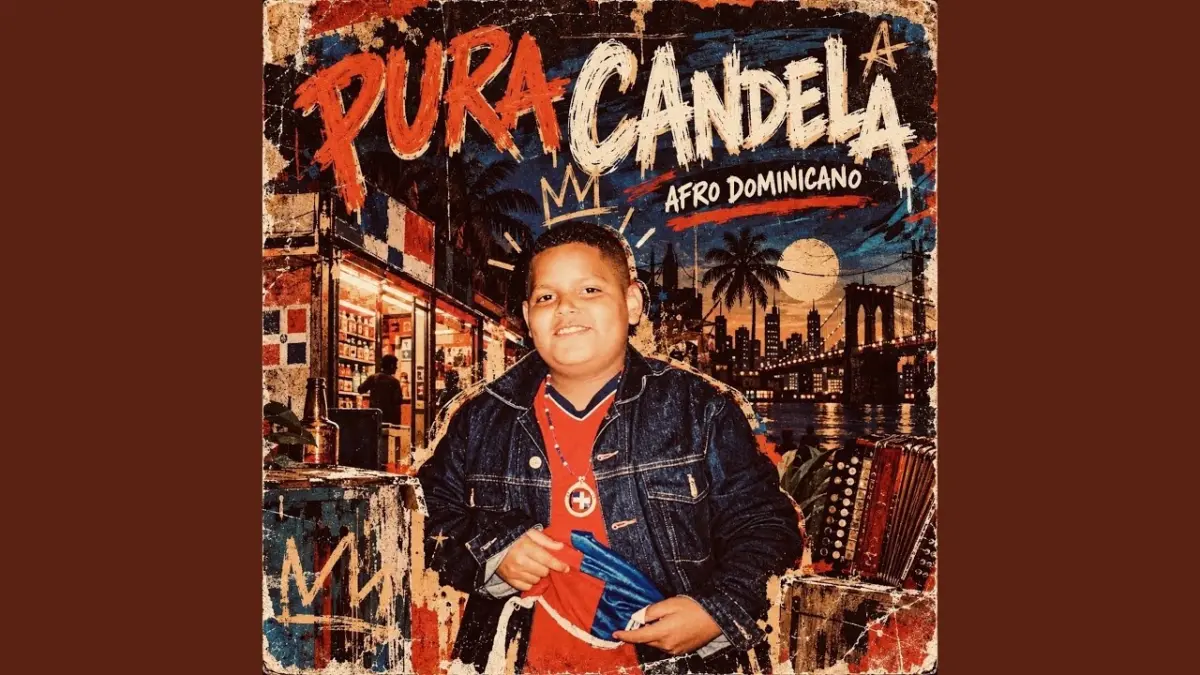
In the contemporary landscape of global tropical music, few artists manage to honor traditional folk idioms while simultaneously dismantling their borders with the fearlessness of Adriano J. Brito. As the creative force behind the genre-bending musical collective Afro Dominicano, Brito has spent years crafting a sonic universe that refuses to sit neatly within a single box. His latest release, the explosive October 29th single aptly titled "Pura Candela"—Caribbean Spanish for "pure fire"—serves as both a manifesto and a masterclass in cross-cultural synthesis.
This comprehensive journalistic feature explores the multifaceted career of Adriano J. Brito, tracing his trajectory from a mirror-singing New York City child channeling the legendary Celia Cruz to an internationally minded bandleader bridging the Cibao valley of the Dominican Republic with the bustling subway tunnels of Manhattan, the reggae soundsystems of Kingston, and the global stage. By examining his sonic architecture—which mirrors the rich, complex layers of the traditional Dominican stew sancocho—this article provides an authoritative look at migration, identity, resistance, and the relentless evolution of Caribbean roots music in the twenty-first century.
Detailed Chronology: From Mirror Anthems to Subway Stages
The New York Crucible and the Voice of Celia Cruz
Long before he was commanding festival stages and engineering high-energy fusions of merengue and afrobeat, a young Adriano J. Brito was discovering the limits of his own vocal cords in front of a bedroom mirror in New York City. Raised in the cultural melting pot of the United States’ largest metropolis, Brito found early inspiration in the titanic voice of the "Queen of Salsa," Celia Cruz. Her uncompromising vocal power and jubilant stage presence taught the young boy how to project, belt, and command a room.
According to Brito, those formative hours spent shouting lyrics into glass reflections directly explain the formidable volume and theatrical vocal delivery that still define his performances with Afro Dominicano today. New York City, with its cacophony of sirens, rumbling trains, and diverse immigrant neighborhoods, acted as an immediate incubator for his artistic sensibilities. Yet, despite being immersed in the urban sprawl of the American Northeast, his household maintained a deep, unwavering tether to Latin America.
While Cruz provided the vocal blueprint, his parents filled their home with the timeless, emotive balladeering of Mexican singer-songwriter Juan Gabriel. The profound impact of Gabriel’s music on Brito was underscored years later in 2016 when the iconic composer passed away—an event that left the musician in open tears, mourning a foundational pillar of his musical education. Furthermore, as he navigated his youth, Brito immersed himself in the romantic, melancholic laments of bachata, practicing the vocal stylings of Yoskar Sarante, whom Brito still reveres as his all-time favorite bachatero.
The Pull of the Cibao Valley and the Rhythms of Resistance
While his physical upbringing was anchored in New York, Brito’s artistic soul drew inexorably toward the heartland of the Dominican Republic. He eventually made the pivotal decision to relocate from the United States to the Caribbean nation, a migratory pivot that inverted the typical Caribbean-to-US diaspora narrative. This return to the homeland was not merely geographical; it was an archaeological dig into the foundational rhythms of Dominican folklore.
In the Cibao valley—the agricultural and cultural heartland of the Dominican Republic—Brito immersed himself in the traditions of merengue típico. This is the country merengue in its most visceral, acoustic, and unrelenting form. Here, the melodic, breathless runs of the accordion weave intricate patterns over the driving, syncopated pulse of the two-headed tambora drum and the dry, metallic rasp of the güira.
Yet, Brito’s sonic palette was too expansive to remain strictly traditional. His journey of musical discovery expanded southward when the sounds of reggae reached him via Puerto Rico. Hearing the visionary Spanish-language reggae outfit Cultura Profética for the first time opened new pathways in his mind. He realized that the rhythmic cadence of reggae and the celebratory bounce of merengue shared a communal, pulse-driven DNA. This realization culminated in conceptual breakthroughs such as "Un Merengue en Kingston", a daring composition commissioned for the Dominican Embassy in Jamaica that seamlessly laid traditional merengue típico over a deep, hypnotic reggae beat.
The Underground Academy: Music Under New York
Before capturing the attention of international world-music critics, Afro Dominicano had to conquer one of the toughest, most unfiltered audiences on earth: the commuters of the New York City subway system.
Playing on underground platforms across the transit network, Brito and his band honed their craft under the most grueling conditions imaginable—competing against the screech of train brakes, the roar of underground wind tunnels, and the indifferent strides of millions of rush-hour commuters. Rather than being swallowed by the noise, Afro Dominicano transformed subway stations into open-air concert halls.
Their dynamic performances, characterized by relentless groove and undeniable musicianship, earned them widespread acclaim from straphangers and cultural arbiters alike. This grassroots triumph led to their official induction as one of the premier acts in Music Under New York, the prestigious transit authority program that handpicks and credentials the city’s finest station performers. This subterranean residency forged an ironclad performance ethic that would eventually translate seamlessly to major international festival stages.
Supporting Context & Metrics: The Anatomy of a Musical Sancocho
To fully comprehend the music of Afro Dominicano, one must look beyond standard genre classifications and examine the cultural mechanics of the Dominican Republic’s most iconic culinary creation: the sancocho.
The Sancocho Metaphor
In Dominican culture, sancocho is a legendary, multi-meat stew loaded with root vegetables, plantains, and corn, simmered for hours until all the distinct ingredients meld into a rich, cohesive broth. Crucially, however, each component retains its unique flavor profile.
Adriano J. Brito explicitly uses the sancocho as the theoretical model for Afro Dominicano’s arrangements. When Brito takes the rapid-fire accordion patterns of merengue típico and pushes them into the domains of reggae, afrobeat, and Afro-Cuban percussion, he is not diluting the ingredients; he is cooking them together.
- The Base: The folkloric skeleton of Dominican folk music (accordion, tambora, güira).
- The Spice: The heavy, off-beat rhythmic emphasis of Jamaican reggae and the complex syncopations of Nigerian afrobeat.
- The Body: The polyrhythmic, conga-heavy foundation of Afro-Cuban son and rumba.
This methodology places Afro Dominicano at the cutting edge of contemporary tropical fusion, aligning them with global movements that view cultural heritage not as a museum artifact preserved under glass, but as a living, mutable organism capable of endless reinvention.
Release Metrics & Digital Footprint
The October 29 release of "Pura Candela" marks a strategic escalation in Afro Dominicano’s digital and physical distribution footprint. Engineered to capture the raw electricity of their live shows, the single is currently available across major streaming platforms, anchored by their curated presence on Spotify (accessible via their official artist profile).
+-----------------------------------------------------------------+
|                   AFRO DOMINICANO: KEY METRICS                  |
+---------------------------+-------------------------------------+
| Primary Creative Force    | Adriano J. Brito                    |
| Signature Release (2023)  | "Pura Candela" (Released Oct 29)    |
| Core Musical Fusion       | Merengue Típico x Reggae x Afrobeat |
| Institutional Accolade    | Music Under New York (MTA) Honoree  |
| Primary Geographic Bases  | New York City, USA & Dominican Rep. |
+---------------------------+-------------------------------------+
The band’s ability to leverage digital streaming infrastructure while maintaining deep, physical roots in community performance—ranging from the asphalt of Caribbean streets to the concrete platforms of the MTA—exemplifies the modern hybrid artist model required to survive and thrive in the current global music economy.
Official Statements & Artistic Philosophy
The philosophy driving Afro Dominicano is articulated not merely through press releases, but through the lived experiences and spoken reflections of Adriano J. Brito. In discussions surrounding the conceptualization of "Pura Candela", Brito has consistently emphasized the intentionality behind the track’s title.
"We didn’t just want to record a song; we wanted to bottle the literal heat of the Caribbean and the kinetic energy of the diaspora," Brito notes regarding the October 29 release. "‘Pura Candela’ translates to pure fire, and that is precisely what my band and I brought to the studio. Every note played on that accordion, every strike of the tambora, is designed to ignite something in the listener—whether they are standing on a dusty road in the Cibao or walking past a subway turnstile in Manhattan."
Brito’s lyrical output further cements his status as an observant chronicler of the modern Caribbean experience. Writing from both ends of his migratory arc—the bustling concrete canyons of New York City and the verdant landscapes of the Dominican Republic—his pen continuously circles themes of:
- Migration: The psychological and physical costs of crossing borders, the duality of longing for two homes simultaneously, and the resilience required to adapt.
- Identity: Navigating the complex intersections of Afro-Latino heritage, where indigenous, European, and African lineages collide and harmonize.
- Resistance: Using rhythm, dance, and song as historical tools of survival and pushback against marginalization.
Future Outlook: The Horizon for Afro Dominicano
As Afro Dominicano enters the post-release cycle for "Pura Candela", the trajectory for Adriano J. Brito points toward an increasingly borderless future. The global appetite for Afro-descendant Caribbean rhythms—supercharged by the global ascendance of reggaeton, dembow, and Latin urban fusions—has created a fertile ecosystem for bands willing to look backward into tradition while lunging forward into innovation.
Upcoming Touring and International Expansion
Industry insiders anticipate that the momentum generated by "Pura Candela" will propel Afro Dominicano onto major international world-music festival circuits across Europe, North America, and Latin America. By bridging the gap between purist folklorists and modern groove enthusiasts, the band occupies a rare demographic sweet spot. They can headline intimate, academic ethnomusicology symposiums just as easily as they can command late-night festival stages packed with ecstatic dancers.
Cultural Preservation Through Innovation
Looking ahead, Brito’s primary mission remains educational as much as it is artistic. By mentoring younger musicians in both New York and the Dominican Republic, he ensures that the foundational techniques of merengue típico, bachata, and traditional Afro-Caribbean percussion are not lost to the digital ether. Instead, he demonstrates to the next generation that tradition is most effectively honored when it is allowed to breathe, mutate, and catch fire.
In an era of hyper-commercialized, algorithmically generated pop music, Afro Dominicano stands as a testament to the enduring power of organic instrumentation, lived migration experiences, and uncompromising artistic vision. With "Pura Candela", Adriano J. Brito has not only thrown fuel onto his own already blazing career, but has illuminated a bright, fiery path forward for the future of Caribbean roots music.