LONDON — Standard music histories have long suffered from a form of historical telescoping. By leaping almost breathlessly from the architectural majesty of Henry Purcell’s tragic genius straight to the cosmopolitan triumphs of George Frideric Handel, conventional narratives inadvertently relegate decades of vital, innovative British musical expression to the footnotes.
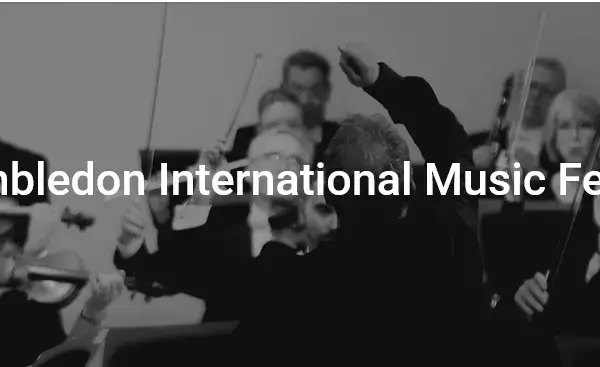
On Friday, October 30, 2026, the critically acclaimed period-instrument ensemble Arcangelo, under the visionary artistic direction of founder and conductor Jonathan Cohen, took a decisive step toward correcting this historical oversight. Performing at London’s prestigious Wigmore Hall, Arcangelo mounted The Music More Full Than It Was—a meticulously curated, vibrant exploration of sacred repertoire spanning the restoration of the monarchy through the early years of Handel’s English residency.
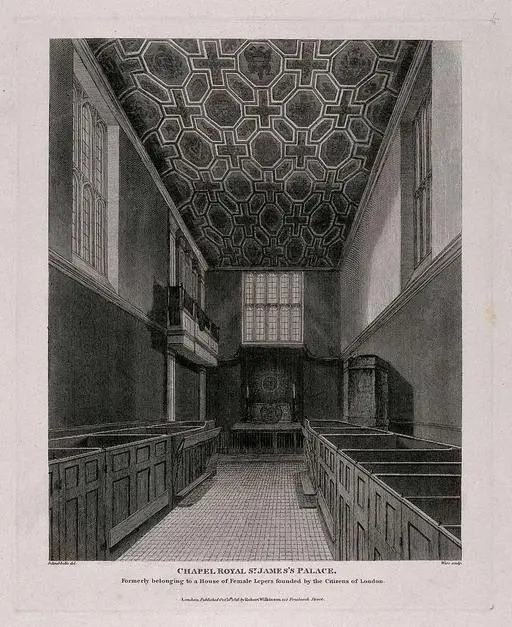
Serving as the inaugural chapter of Arcangelo’s ambitious, multi-concert English Baroque Journey, the evening cast a brilliant, long-overdue spotlight on lesser-known Chapel Royal gems. In doing so, it successfully re-anchored figures like John Blow, Matthew Locke, and Pelham Humfrey into the vibrant pantheon of British musical heritage.
Executive Overview: Restoring the Missing Links of English Music
For decades, the narrative surrounding 17th- and early 18th-century English music has been dominated by a teleological myth: that the native tradition temporarily peaked with Purcell, stagnated after his premature death in 1695, and was ultimately rescued from obscurity only by the influx of Handel’s continental brilliance. The Music More Full Than It Was shattered this reductive paradigm.
The concert’s programming was an act of both musicological reclamation and artistic rehabilitation. By tracing a continuous, evolving thread from the re-establishment of the Chapel Royal following the Stuart Restoration in 1660
up to the burgeoning Hanoverian era, Arcangelo demonstrated that English sacred music of this period was neither provincial nor derivative. Instead, it was a dynamic, highly experimental idiom characterized by rapid stylistic shifts, intense word-painting, and a unique synthesis of native polyphonic traditions with continental innovations.
Gathering an elite consort of eight vocalists alongside a flexible, period-authentic instrumental ensemble, Cohen crafted performances that moved fluidly between intimate, solo-driven devotional textures and thunderous tutti climaxes. The resulting acoustic and emotional landscape proved that this repertoire is not merely of antiquarian interest; rather, it is urgent, deeply expressive music that is quite literally crying out to be heard on the modern concert stage.

Detailed Chronology: From Restoration Revival to Hanoverian Splendor
The concert’s repertoire was thoughtfully bifurcated by the interval, with the first half exploring the immediate aftermath of the Restoration and the second charting the transition toward the high Baroque and the Hanoverian succession.
Part I: The Rebirth of the Chapel Royal (1664–1685)
The first half anchored itself in the tumultuous yet culturally vibrant decades following the return of King Charles II to the throne, focusing on four foundational masters: Christopher Gibbons, Matthew Locke, Pelham Humfrey, and John Blow.
- Christopher Gibbons (Not unto us, O Lord): As the son of the illustrious Orlando Gibbons, Christopher bore the weight of a monumental musical legacy. Written for the newly revived Chapel Royal, Not unto us, O Lord deliberately eschewed the bright, treble-heavy brilliance of later works. Beginning with a subterranean gravity—utilizing a low vocal and instrumental profile completely devoid of violins—the piece gradually unfurled into slow, solemn counterpoint. Arcangelo’s instrumentalists delivered these rich, slow-moving textures with a luminous, resonant warmth.
- Matthew Locke (How doth the city sit solitary): Locke, a figure bridging the gap between late-Renaissance consort music and early theatrical experiments, navigated a complex professional life as a Catholic writing for Queen Catherine of Braganza while maintaining his duties for the Chapel Royal. His verse anthem is a masterclass in economy and emotional directness. Accompanied solely by continuo, the performance highlighted Locke’s sensitivity to vocal constraints—specifically the post-Restoration shortage of trained boy trebles—and focused its expressive weight on intimate male vocal groupings. The attention to textual nuance anticipated the expressive heights later achieved by Purcell.
- Instrumental Interlude (Pavan and Chaconne in G minor, Z752): Henry Purcell’s haunting instrumental interlude provided a meditative bridge. Beginning with a deeply chromatic, agonized slow movement, the Pavan dissolved seamlessly into a hypnotic ground-bass Chaconne, showcasing the virtuosic yet restrained interplay of Arcangelo’s string section.
- Pelham Humfrey (O give thanks unto the Lord): Sent abroad to France by King Charles II to absorb continental idioms, Humfrey’s short life left an indelible mark on English composition. His anthem opened with a civilized string introduction that gracefully birthed a lively choral dance. Tenor Hugo Brady and baritone Malachy Frame delivered a sparkling duet, followed by a resonant bass solo from Will Gaunt. The sprawling tutti finale was executed with razor-sharp rhythmic precision.
- John Blow (God spake sometimes in visions): Despite holding immense prestige during his lifetime—including mentoring Purcell—Blow’s sacred output remains unjustly neglected today, largely because its structural fluidity resists easy integration into modern concert programming. Arcangelo proved that this neglect is entirely unwarranted. Framed by a stately string opening, the performance reveled in Blow’s mercurial shifts in metre and tempo. The acoustic intimacy of Wigmore Hall allowed the fastidious detail of Blow’s word-setting to register with stunning clarity, a feat nearly impossible in the cavernous acoustics of a traditional cathedral.
Part II: The Transition to High Baroque and Handel (c. 1690–1735)
The second half of the program advanced chronologically, exploring how native English composers reacted to the shifting musical tides dominated by the towering figure of George Frideric Handel.
- Maurice Greene (Lord, let me know mine end): Appointed Master of the King’s Musick under George I, Greene maintained an uneasy, competitive relationship with Handel. Though younger than the Saxon master, Greene’s style frequently leaned toward a conservative, backward-looking aesthetic. Set for full vocal ensemble and continuo, Lord, let me know mine end unfolded as a sober meditation over a relentless ground bass. While brilliantly crafted, it revealed itself as a stylistic cousin to the Restoration masters rather than a rival to Handel’s theatrical brilliance.
- Henry Purcell (My beloved spake): Written while Purcell was still in his late teens, this youthful masterpiece showcased a dazzling deployment of vocal resources. Utilizing short, punchy choruses punctuated by intricate verse sections sung by soloists James Hall, Matthew Long, Malachy Frame, and Will Gaunt, the performance radiated color, vitality, and an irrepressible rhythmic dance.
- George Frideric Handel (Chandos Anthem: O praise the Lord with one consent): The evening culminated in one of Handel’s magnificent Chandos Anthems, composed during his tenure at Cannons for the Duke of Chandos and originally performed in the surviving church of St Lawrence. Opening with an infectiously buoyant rhythm, the performance was a masterclass in high Baroque exuberance. Tenor Hugo Brady imbued his solo with a lyrical, affecting lilt; Matthew Long navigated treacherous passageways with athletic agility; Malachy Frame contributed robust, resonant tone; and soprano Hilary Cronin delivered a deeply intimate, soaring solo. The evening concluded with a cascading, rhythmically electric "Alleluia" chorus that brought the Wigmore Hall audience to rapturous applause.
Supporting Context & Metrics: Decoding the Performance
To fully appreciate the musicological ambition of The Music More Full Than It Was, one must examine the specific forces and performance parameters marshaled by Jonathan Cohen and Arcangelo:
- Vocal Consort: 8 singers (Hilary Cronin, Daisy Livesy, Sopranos; James Hall, Countertenor; Jeremy Budd, Hugo Brady, Matthew Long, Tenors; Malachy Frame, Will Gaunt, Basses).
- Instrumental Complement: 6 strings, 1 oboe (utilized exclusively in the Handel Chandos Anthem), organ, theorbo, and harpsichord (directed from the keyboard by Jonathan Cohen).
- Acoustic Adaptation: The deliberate choice of Wigmore Hall provided an optimal chamber acoustic, allowing polyphonic textures that would typically blur in gothic cathedrals to emerge with pristine, crystalline separation.
- Repertoire Span: Exactly 91 years of English sacred music development (from Christopher Gibbons’ 1664 composition to Maurice Greene’s mid-18th-century output).
Future Outlook: The Road Ahead for the English Baroque Journey
The resounding success of The Music More Full Than It Was signals a triumphant beginning for Arcangelo’s multi-concert English Baroque Journey. By refusing to treat early English sacred music as a mere historical antechamber to Handel, Jonathan Cohen and his collaborators have thrown down a formidable artistic gauntlet.
As the series continues, it promises to dismantle further historical clichés, proving that the lineage of British Baroque music is infinitely richer, more diverse, and more thrilling than standard concert programming has historically acknowledged. For audiences fortunate enough to witness this inaugural chapter at Wigmore Hall, the performance served as an unforgettable reminder that history is not merely a sequence of isolated masterworks, but an unbroken, vibrant conversation across the centuries—one that is finally receiving the full-throated voice it deserves.