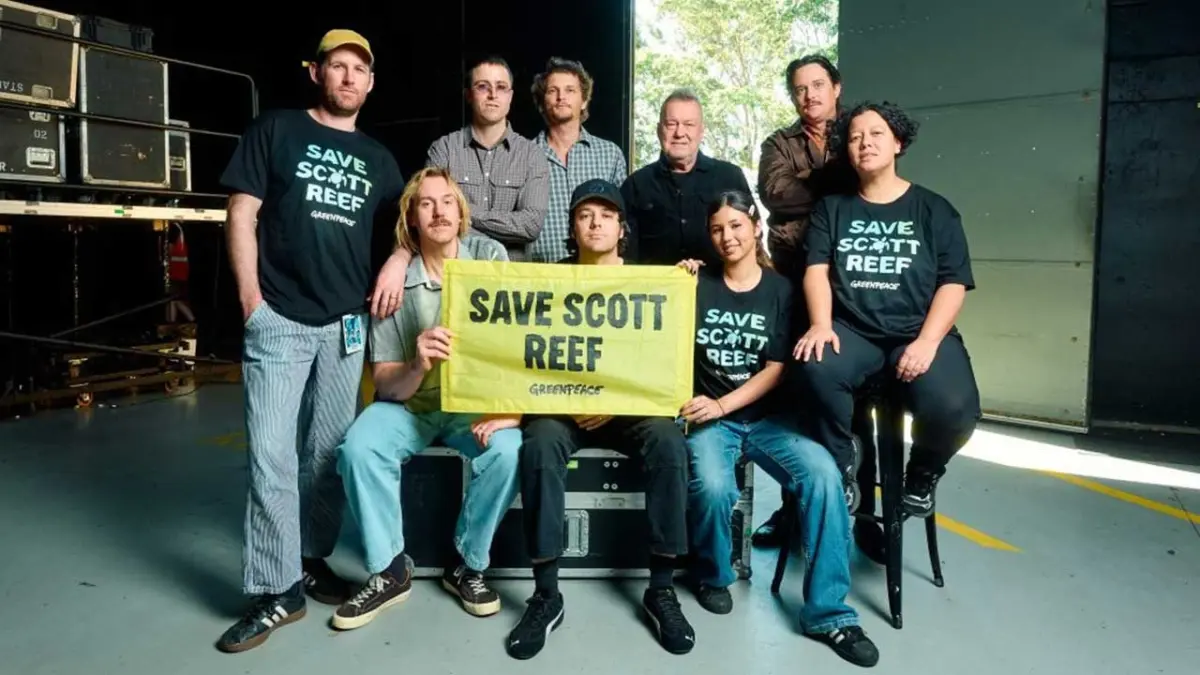
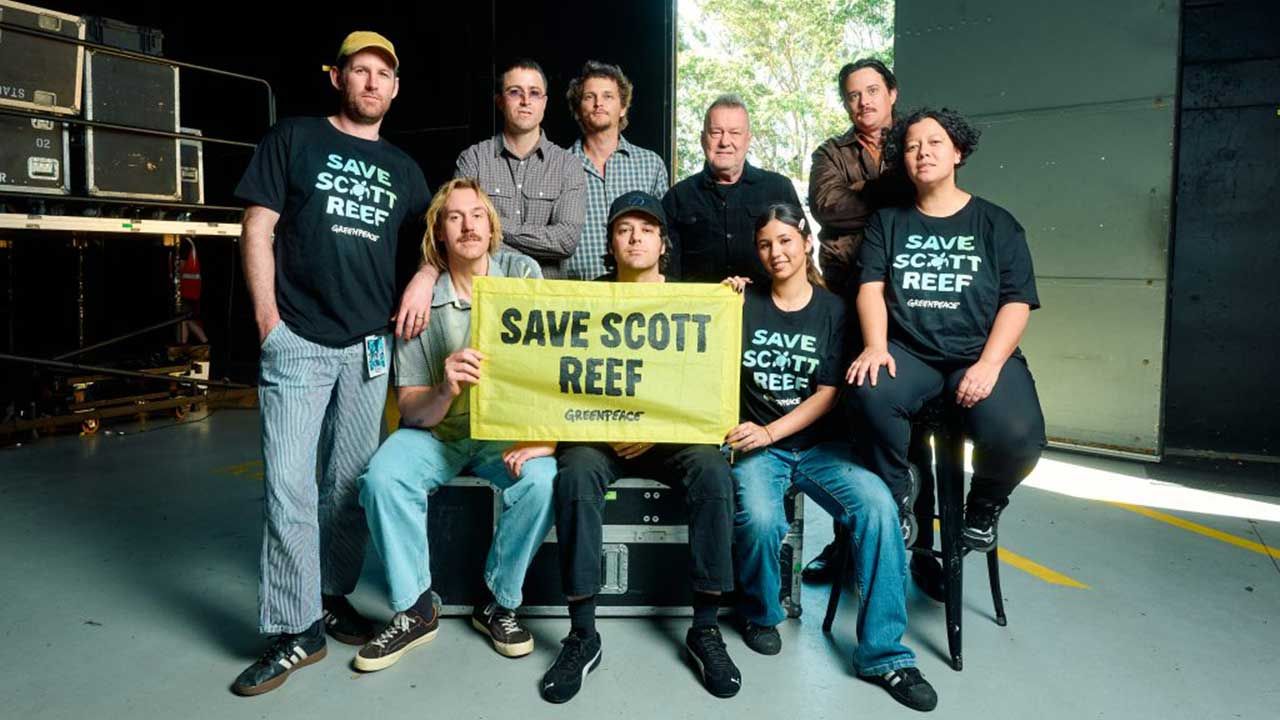
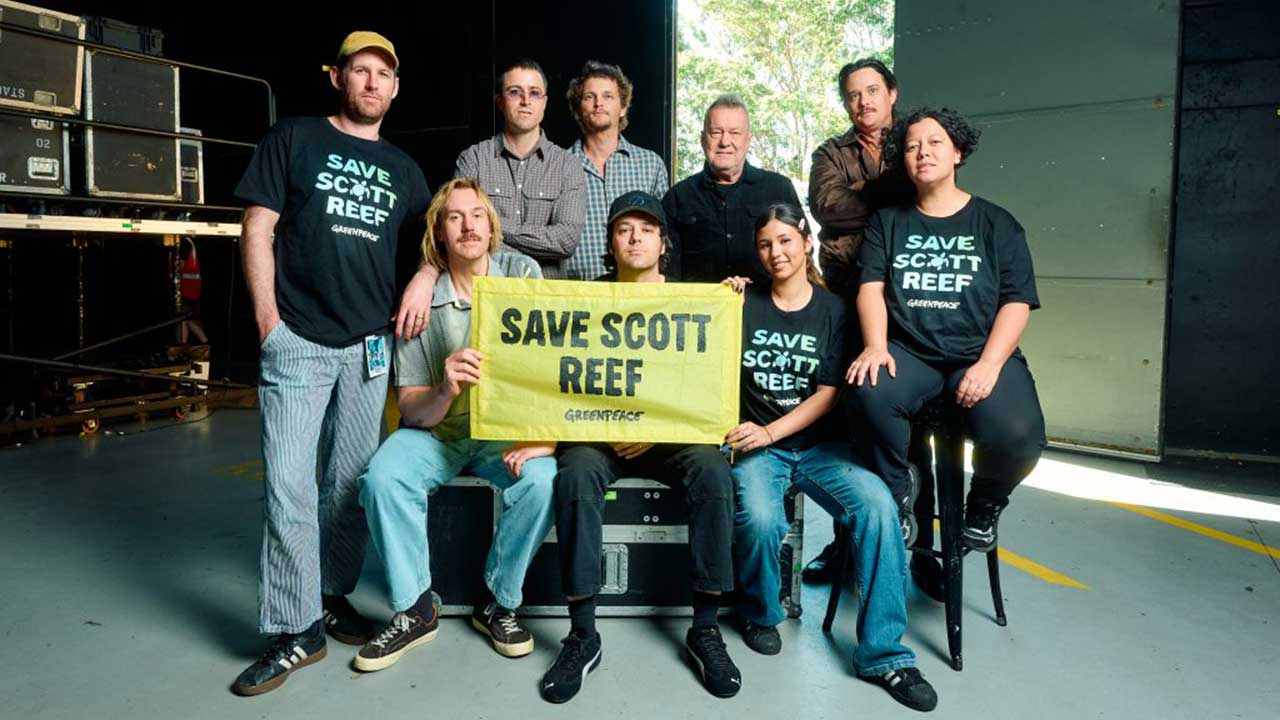
In an extraordinary cross-generational alliance that bridges Australia’s psychedelic underground with its classic rock pantheon, prolific genre-defiers King Gizzard & The Lizard Wizard have joined forces with working-class rock icon Jimmy Barnes to launch a high-profile environmental protest campaign. The collaborative coalition—which also features members of the Barnes musical dynasty and prominent First Nations vocalists—has re-recorded and released King Gizzard’s track "If Not Now" as a dedicated charity single.
The project aims to galvanize national and international opposition against fossil fuel giant Woodside Energy’s proposed Browse Gas Project. The multi-billion-dollar industrial initiative entails extensive offshore drilling beneath and surrounding Scott Reef, a remote, ecologically untouched coral system located approximately 190 miles (300 kilometers) northwest of Cape Leveque off the coast of Western Australia.
Released as a limited-edition physical seven-inch vinyl via King Gizzard’s independent label p(doom) Records, all proceeds from the track are designated for environmental advocacy organizations Greenpeace Australia Pacific and Green Music Australia. By pairing cut-through musical artistry with environmental activism, the initiative underscores growing friction between Australia’s cultural sector and the continued expansion of offshore fossil fuel extraction infrastructure.
Detailed Chronology: The Evolution of an Environmental Anthem
+-----------------------------------------------------------------------------------+
| CHRONOLOGY OF THE "IF NOT NOW" SCOTT REEF CAMPAIGN                                |
+-----------------------------------------------------------------------------------+
| 2020           | Original track "If Not Now" released on King Gizzard's 16th album|
|                | exploring microtonal structures and ecological existentialism.  |
|                |                                                                  |
| 2022           | Track wins Australia's inaugural Environmental Music Prize,      |
|                | cementing its standing as a major contemporary climate anthem.   |
|                |                                                                  |
| Early 2024     | Environmental Music Prize awarded to Ruby Rodgers for her        |
|                | song "Hits The Heart," building momentum for youth activism.      |
|                |                                                                  |
| Mid-2024       | Woodside Energy advances environmental approvals for the 57-well |
|                | Browse project surrounding Scott Reef.                           |
|                |                                                                  |
| Current Phase  | Collaborative supergroup gathers to record reimagined version of  |
|                | "If Not Now" featuring First Language vocals and multi-generational|
|                | voices; physical 7" released via p(doom) Records.                 |
+-----------------------------------------------------------------------------------+
The Origins of the Track
The song "If Not Now" originally appeared on King Gizzard & The Lizard Wizard’s 2020 studio output, blending microtonal guitar textures with lyrical themes centered on climate anxiety, societal apathy, and ecological tipping points. In 2022, the composition received widespread recognition when it was awarded the inaugural Environmental Music Prize, an Australian award established to amplify music that inspires climate action.
Assembling the Coalition
As Woodside Energy’s regulatory approvals for the Browse project entered critical phases, King Gizzard sought to convert the song’s artistic accolades into direct political impact. The band orchestrated an unprecedented studio assembly, bringing together distinct tiers of Australian musical royalty:
Jimmy Barnes: Frontman for Cold Chisel and one of the highest-selling solo artists in Australian chart history.
Mahalia Barnes: Acclaimed soul/blues vocalist and long-time campaigner.
Ruby Rodgers: Granddaughter of Jimmy Barnes and daughter of Mahalia Barnes. Rodgers notably won the Environmental Music Prize herself for her track "Hits The Heart," making the collaboration a multi-generational statement.
Fred Leone: Renowned Butchulla songman who contributed First Language vocals, asserting Indigenous sovereignty over land and sea country.
Terry Guyula: Frontman of Yolŋu rock group Drifting Clouds, who also provided First Language vocal performances to ground the track in ancestral songlines.
The resulting re-recording transforms the original psychedelic track into an expansive, choral protest anthem that unifies rock heritage, modern alternative sounds, and First Nations vocal traditions.
Supporting Context & Metrics
The Ecological Significance of Scott Reef
Scott Reef is widely regarded by marine scientists as one of the most biodiverse and pristine coral reef systems remaining on Earth. Situated in the deep waters of the Indian Ocean off the Kimberley coast, its isolated position has historically shielded it from human degradation, runoff, and industrial intrusion.
+----------------------------------------------------------------------------------+
| ECOLOGICAL IMPORTANCE vs. INDUSTRIAL IMPRINT                                     |
+----------------------------------------------------------------------------------+
| SCOTT REEF ECOLOGY                       | WOODSIDE BROWSE PROJECT SPECS         |
+------------------------------------------+---------------------------------------+
| • 190 miles NW of Cape Leveque, WA       | • Up to 57 offshore gas subsea wells  |
| • Key habitat for Pygmy Blue Whales      | • Direct drilling under/around reef   |
| • Critical nesting for Green Sea Turtles | • 900+ km pipeline to Karratha        |
| • Habitat for endangered Dusky Sea Snake | • High-CO2 reservoir gas composition  |
+----------------------------------------------------------------------------------+
Marine biology assessments highlight several key ecological features threatened by the proposed industrial development:
Migratory Cetaceans: The deep oceanic trenches around Scott Reef serve as vital nursing and foraging grounds for the pygmy blue whale (Balaenoptera musculus brevicauda), a species highly vulnerable to underwater acoustic disturbance from seismic testing and heavy vessel traffic.
Marine Reptiles: The reef complex acts as a primary nesting habitat for vulnerable green sea turtles (Chelonia mydas).
Endangered Endemics: Scott Reef supports population strongholds for rare marine reptiles, including the dusky sea snake (Aipysurus duboisii), a species currently listed as endangered and peculiarly sensitive to habitat disruptions.
Woodside Energy’s Browse project represents one of the largest unallocated conventional gas resources in Australia, holding an estimated 13.9 trillion cubic feet of dry gas and 390 million barrels of condensate. To exploit these reserves, Woodside plans to construct subsea infrastructure comprising up to 57 wells drilled directly into the ocean floor surrounding Scott Reef. The extracted hydrocarbons would then be piped over 900 kilometers southwest to the Karratha Gas Plant within the Dampier Archipelago.
Environmental groups, including Greenpeace Australia Pacific, contend that the carbon intensity of the gas field—which carries a high native carbon dioxide content—is incompatible with international net-zero emissions targets. Furthermore, the physical footprint of drilling platforms, potential toxic drilling fluids, and the risk of catastrophic hydrocarbon spills pose direct operational hazards to the surrounding coral ecosystems.
Conversely, Woodside maintains that the Browse development is integral to regional economic stability. The corporation asserts that the project will provide:
Critical "long-term energy security" for domestic Australian consumption and major Asian export partners.
Thousands of direct and indirect jobs during construction and multi-decade operations.
"Considerable tax revenue" and royalties to state and federal treasuries.
History of Musical Environmental Activism in Australia
The collaboration between King Gizzard and Jimmy Barnes builds on a long legacy of Australian musicians targeting fossil fuel expansion and land degradation:
+-----------------------------------------------------------------------------------+
| HISTORICAL PRECEDENTS IN AUSTRALIAN MUSIC ACTIVISM                                |
+-----------------------------------------------------------------------------------+
| 1980s | Midnight Oil champions anti-nuclear policy and Indigenous land rights,    |
|       | performing legendary protests against environmental destruction.         |
|       |                                                                           |
| 1990s | Yothu Yindi brings First Nations environmental and sovereign rights       |
|       | to mainstream international awareness with "Treaty".                      |
|       |                                                                           |
| 2000s | John Butler Trio forms the Amplified art movement, directly supporting     |
|       | campaigns against gas development in the Kimberley (James Price Point).   |
|       |                                                                           |
| 2020s | Green Music Australia & Environmental Music Prize mobilize modern acts    |
|       | like King Gizzard to channel royalties directly into legal action.        |
+-----------------------------------------------------------------------------------+
Official Statements & Industry Perspectives
Key figures behind the project, alongside corporate representatives, have articulated contrasting visions regarding the balance between resource extraction and environmental conservation.
Stu Mackenzie (King Gizzard & The Lizard Wizard)
Frontman Stu Mackenzie delivered a sharp rebuke of domestic environmental governance and federal energy policy:
"Why are we still digging up coal and gas? Why are we allowing this? Why is the Australian government so hell-bent on destroying our beautiful wild and untouched places?"
"I’m proud that a King Gizz song was chosen to represent a growing movement of people who are asking these questions and applying pressure. Let’s shut it down and keep it beautiful."
Jimmy Barnes
Jimmy Barnes emphasized national stewardship and cultural obligation:
"Scott Reef is one of the few pristine reefs left in the world, and it happens to be on our doorstep. We’re custodians of it — we’re supposed to be looking after it. It’s ridiculous. We must protect our country and look after what we value most, which is the nature and the beauty of this country."
Woodside Energy Position
While Woodside did not issue a direct response within the single’s promotional materials, the company’s regulatory filings defend the Browse Project’s environmental safety record. Woodside maintains that its offshore operations adhere to stringent environmental risk management frameworks, incorporating rigorous acoustic monitoring protocols for cetaceans, spill prevention contingency plans, and continuous environmental monitoring to mitigate impact on marine ecosystems.
Future Outlook: Legal Battles, Commercial Releases, and Cultural Impact
+-----------------------------------------------------------------------------------+
| CAMPAIGN IMPACT & NEXT STEPS                                                      |
+-----------------------------------------------------------------------------------+
| RELEASE FORMAT      | Limited-edition 7-inch vinyl via p(doom) Records             |
| REVENUE ALLOCATION  | 100% of proceeds split: Greenpeace Australia Pacific &       |
|                     | Green Music Australia                                       |
| REGULATORY TARGET   | Federal Environmental Protection and Biodiversity             |
|                     | Conservation (EPBC) Act decisions                           |
| PUBLIC MOBILIZATION | Digital petitions, awareness concerts, legal challenge funds |
+-----------------------------------------------------------------------------------+
Commercial and Charitable Strategy
The physical seven-inch release of "If Not Now" via p(doom) Records serves a dual purpose: as a collectible artifact for King Gizzard’s dedicated international fanbase and as a dedicated fundraising vehicle.
By directing 100% of proceeds to Greenpeace Australia Pacific and Green Music Australia, the single provides direct financial backing for:
Legal challenges challenging federal environmental approvals under Australia’s Environment Protection and Biodiversity Conservation (EPBC) Act.
On-the-ground scientific research and public awareness campaigns targeting Woodside’s corporate shareholders.
Industry-wide decarbonization initiatives championed by Green Music Australia across festival and touring sectors.
Regulatory and Political Implications
The musical campaign arrives at a critical juncture for Woodside Energy. The Browse project remains subject to key state and federal regulatory approvals. Environmental groups hope that high-profile cultural interventions will shift public opinion and compel federal decision-makers to deny final environmental clearances for drilling in the Scott Reef area.
As public scrutiny over offshore gas expansion grows, the alliance between King Gizzard & The Lizard Wizard, Jimmy Barnes, and First Nations vocalists illustrates how Australian artists are using their collective platforms to directly confront major resource projects—redefining the role of music in national political discourse.