Executive Overview
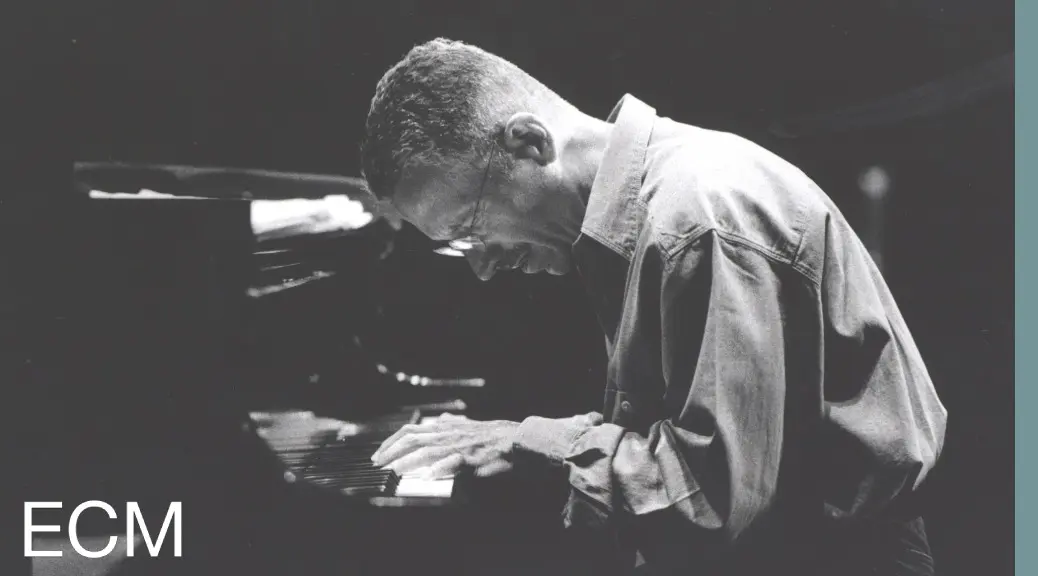
The arrival of Roma is not merely the release of another archival live recording; it represents the definitive final chapter in the recorded performance history of one of the most singular artists in modern music. Captured live at Rome’s prestigious Santa Cecilia Hall in July 2016, this album is the fifth and final installment drawn from Keith Jarrett’s historic final European solo tour. Recorded less than two years before a series of debilitating strokes permanently sidelined his public performing life, Roma serves as both a magnificent standalone artistic statement and a solemn bookend to an era-defining career.
Over the decades, Jarrett redefined the parameters of solo improvised piano. Where others relied on pre-composed structures, safety nets, or familiar setlists, Jarrett routinely stepped onto the stage of the world’s greatest concert halls with a clean slate, trusting entirely in the moment. Roma captures this breathtaking leap of faith in its purest form. It displays his inexhaustible imagination, vast harmonic vocabulary, and the uncanny ability to conjure entirely new universes of sound out of absolute silence. As the final piece of a five-album puzzle that documents the twilight of his touring years, Roma carries an immense emotional resonance, offering fans and music historians alike a chance to witness a master improviser operating at the very edge of discovery.
Detailed Chronology: Unpacking the Final European Tour and the Release Arc
To understand the magnitude of Roma, one must trace the arc of the series to which it belongs. The July 2016 European tour stands now in the rear-view mirror as a monument of perseverance, artistic hunger, and fearless execution. Though Jarrett was visibly and audibly navigating the physical challenges of aging, his creative faculties remained razor-sharp, driven by an unyielding desire to chase the muse wherever it led.
The systematic rollout of these final concert documents has unfolded over several years, slowly mapping out the geography of that historic tour:
- Munich 2016 (Released 2019): The first glimpse into the tour set a high benchmark, showcasing Jarrett’s ability to balance angular, searching modernism with moments of profound, lyrical accessibility.
- Budapest Concert (Released 2020): Recorded at the Béla Bartók National Concert Hall, this chapter highlighted a more expansive, flowing narrative structure, revealing how Jarrett could sustain a long-form improvisation across disparate emotional peaks.
- Bordeaux Concert (Released 2022): A masterclass in textural nuance, the Bordeaux performance leaned heavily into impressionistic harmonic colors and delicate rhythmic pulses, proving that Jarrett’s sonic palette was still expanding into his seventies.
- New Vienna (Released 2025): Stepping into the historic halls of the Austrian capital, this release underscored the deep reverence Jarrett held for European classical performance traditions, seamlessly blending avant-garde fearlessness with neoclassical poise.
- Roma (Released 2026): The culmination. Captured at Santa Cecilia Hall, this final chapter loops back to the raw, unadulterated urgency that initially defined the tour, bringing the monumental five-part document to a breathtaking and reflective close.
Each of these five releases shares a common DNA—the radical willingness to begin with nothing, to court dissonance and unfamiliar harmonic territory, and to slowly allow themes, melodies, and rhythms to materialize organically. Yet, remarkably, none feel repetitive or interchangeable. Each possesses its own distinct architectural design, emotional climate, and sonic fingerprint. Roma stands proudly at the terminus of this journey, summarizing a lifetime of musical exploration while remaining entirely singular in its execution.
Musical Architecture and Performance Analysis: Inside Roma
The musical journey of Roma is a masterclass in tension and release, a psychological and sonic drama played out across the keys of a grand piano.
The Opening Movements: Searching and Uncompromising
The first four sections of the concert establish a searching, uncompromising atmosphere. Jarrett resists any temptation to pander to the audience with immediate melodic comfort. Instead, he plunges straight into dense chromatic passages, jagged and angular figures, and restless, polyrhythmic exchanges between his left and right hands. There is an unmistakable sense of the pianist interrogating the instrument, testing its mechanical and expressive limits, and mapping out the acoustic space of Santa Cecilia Hall before allowing the music to reveal its true direction. It is challenging, high-stakes art where failure is always a distinct possibility—a risk that infuses every note with electrifying tension.
The Turning Point: Gospel Swing and Lyrical Expansiveness
Then, in Part V, the emotional tide turns dramatically. A wonderfully infectious, gospel-inflected swing emerges almost unexpectedly, cutting through the prior tension with an earthy, life-affirming pulse. This leads directly into the expansive, beautifully constructed harmonic architecture of Part VI, where Jarrett weaves complex chords into a sweeping, cinematic narrative.
As the performance progresses into Part VII, the music turns profoundly lyrical. This section serves as a showcase for the golden-toned melodic sensibility that has always set Jarrett apart from his contemporaries. It is followed by Part VIII—a movement so devastatingly beautiful and emotionally exposed that it defies easy critical categorization.
Resolution and the Blues
Parts IX and X bring the concert toward a profound equilibrium. Part IX satisfies the listener with an earthy, blues-drenched character that nods to Jarrett’s deep roots in American vernacular music, while Part X gradually winds down the kinetic energy, bringing the massive sonic structure to rest in a state of relative stillness and peace. Throughout all of this, the central magic of Jarrett’s solo concerts remains intact: the palpable sensation that nothing has been predetermined. Jarrett is simultaneously composer, performer, discoverer, and critic, and the listener is invited to ride shotgun on that high-wire intellectual and emotional journey.

The Encores: Familiar Melodies, Infinite Nuances
The two encores captured on Roma provide a deeply moving coda to the evening. The first is a finely judged interpretation of the Harold Arlen and E.Y. Harburg standard "Somewhere Over the Rainbow," a tune that became something of a sacred ritual in Jarrett’s late-career solo performances. The second, Charles Kisco and Harry Tobias’s "It’s a Lonesome Old Town," closes the night with a touch of profound, poignant reflection.
Interestingly, both encores appeared four days later in Munich (documented on Munich 2016), while "Somewhere Over the Rainbow" also closes New Vienna and "It’s a Lonesome Old Town" anchors Budapest Concert. Far from revealing a lack of imagination, the recurrence of these familiar melodies highlights Jarrett’s endless capacity for reinvention. Even within the rigid confines of a well-worn pop standard, he continually unearthed fresh emotional nuances, bending the time, reshaping the harmonies, and finding new dimensions of heartbreak and solace.
Supporting Context & Metrics: Assessing the Scale of Jarrett’s Legacy
To fully appreciate the cultural and historical weight of Roma, one must look at the quantitative and qualitative metrics of Keith Jarrett’s towering career.
- The Solo Piano Paradigm: Jarrett did not invent the improvised solo piano concert, but he single-handedly commercialized and elevated it to high art. His 1975 release, The Köln Concert, remains the best-selling solo piano album in jazz history, with estimated sales exceeding 3.5 million copies.
- The ECM Partnership: Nearly all of Jarrett’s seminal solo work has been championed by producer Manfred Eicher and the venerable German label ECM Records. This decades-long creative partnership stands as one of the most fruitful and uncompromising producer-artist collaborations in the history of recorded music.
- The Physical Toll: Jarrett’s career was defined by extreme physical and mental dedication. The rigorous demands of his uncompromising solo tours—coupled with chronic fatigue syndrome and, ultimately, the devastating strokes of 2018—forced an abrupt end to a touring schedule that had spanned over five decades.
- The 2016 Tour Legacy: The five albums born from the July 2016 European tour (Munich 2016, Budapest Concert, Bordeaux Concert, New Vienna, and now Roma) represent the final documented evidence of an unamplified, completely unscripted acoustic mind at work on the global stage. Together, they form a roughly six-to-eight-hour monument of spontaneous composition that will be studied by conservatories and jazz historians for generations.
Official Statements and Industry Reception
Critical reception across the global jazz and classical music communities has been universally reverent. Music critics and industry insiders have hailed the rollout of these archival releases as a vital preservation of modern musical history.
In an official statement accompanying the release cycle of these late-career live documents, representatives for ECM Records emphasized the rare nature of Jarrett’s artistry:
"Keith Jarrett’s solo performances represent a unique peak in twentieth and twenty-first-century music. They ask everything of the artist and offer everything to the listener. To revisit these final European dates is to witness an artist operating without a safety net, guided entirely by intuition, acoustic resonance, and a lifetime of profound musical wisdom."
Jazz historians and prominent pianists have likewise noted that Roma avoids the trap that ensnares many late-career retrospective projects. There is no commercial pandering, no recycling of past glories, and no reliance on nostalgia. Instead, Roma documents an artist who remained dangerous, curious, and uncompromising right up until the final time he lifted his hands from the keyboard.
Future Outlook: Preserving the Master’s Archive
As the final piece of the 2016 European tour puzzle clicks into place with Roma, questions naturally arise regarding the future of Keith Jarrett’s vast unreleased archive. While Jarrett’s public performing career is definitively over, his vaults at ECM and within his personal collections are rumored to hold a wealth of unreleased studio sessions, rare live radio broadcasts, and undocumented trio and solo performances from earlier decades.
However, industry analysts suggest that Roma and its four companion albums will likely remain the definitive final word on Jarrett as an active touring force. They capture the artist in his final grand epoch, wrestling with mortality, physical limitations, and the infinite possibilities of the 88 keys.
For the listener, Roma is more than just a new album; it is a monument to creative courage. It reminds us of what can happen when an artist abandons all fear of failure and submits completely to the present moment. As the final notes of "It’s a Lonesome Old Town" fade away into the cavernous acoustics of Santa Cecilia Hall, we are left with the echoing legacy of a titan who permanently changed the landscape of improvised music—leaving behind a body of work that will continue to challenge, comfort, and inspire as long as pianos are played.