Executive Overview
Few cultural figures of the late 20th century navigated the volatile intersections of music, fashion, theatre, and literature with the fierce autonomy of Marsha Hunt. Born in Philadelphia in 1946, Hunt’s trajectory was defined by a relentless refusal to be categorized. Whether gracing the West End stage in the countercultural milestone Hair, fronting psych-funk outfits, posing for historic magazine spreads, or penning searing autobiographies and novels, Hunt operated as a formidable intellectual and artistic force.
Her life story reads as a definitive cross-section of the 1960s and 1970s British and American countercultures. Moving fluidly between blues royalty, psychedelic trailblazers, and literary luminaries, Hunt was never merely a muse. As producer Tony Visconti astutely observed, she approached her craft with an intellectual rigor that often baffled industry executives eager to package her as a conventional pop commodity.
This retrospective examines the extraordinary life and career of Marsha Hunt—tracing her roots in the blossoming London underground scene, her encounters with rock icons like Jimi Hendrix and Mick Jagger, her genre-spanning musical output, and her triumphant transition into a celebrated author and novelist.
Detailed Chronology: The Making of an Icon
1966–1967: Arrival in London and the Blues Underground
Marsha Hunt’s journey across the Atlantic in February 1966 marked the beginning of a remarkable creative awakening. Having spent her early years in Philadelphia as an aspiring model, singer, and actress, London offered an expansive, hyper-creative playground.
Her initial steps into the British entertainment sphere included working as an extra in Michelangelo Antonioni’s quintessential swinging-sixties film Blow-Up. Soon, her distinctive presence and vocal talents caught the attention of the blues community. She transitioned into a backing singer for Alexis Korner’s Free At Last before embarking on a brief, creatively fruitful relationship with bluesman John Mayall.
Mayall immortalized this fleeting chapter on his 1967 album, The Blues Alone, penning tracks such as "Marsha’s Mood" and "Brown Sugar" in her honor. Never one to settle, Hunt quickly moved on, joining Bluesology—a powerhouse lineup featuring Long John Baldry and a young, heavily bearded Reg Dwight (soon to become Elton John). Following a brief stint with the soul ensemble Ferris Wheel, Hunt found the vehicle that would catapult her to national prominence.
1968–1970: Hair, Track Records, and Musical Breakthrough
Hunt’s big break arrived when she joined the original London cast of the landmark rock musical Hair. As a theatrical manifestation of hippie counterculture, Hair celebrated the naked body as a profound statement of liberation—an ideology that Hunt embraced fully, despite conservative backlash.
Taking center stage, Hunt delivered a blistering lead vocal on "White Boys," a biting Supremes send-up. Her arresting image on promotional posters caught the eye of Patrick Anson, the Earl of Lichfield, who invited her to pose nude for American Vogue. At a time when Black models rarely graced the pages of mainstream fashion bibles, Hunt accepted the commission as an explicit act of political and personal empowerment.
Simultaneously, Hunt signed a recording contract with Track Records, sharing a stable with titans like The Who and The Jimi Hendrix Experience. Hendrix, whom she deeply admired for his ability to articulate complex emotions through electric instrumentation and lyricism, served as a profound kindred spirit.
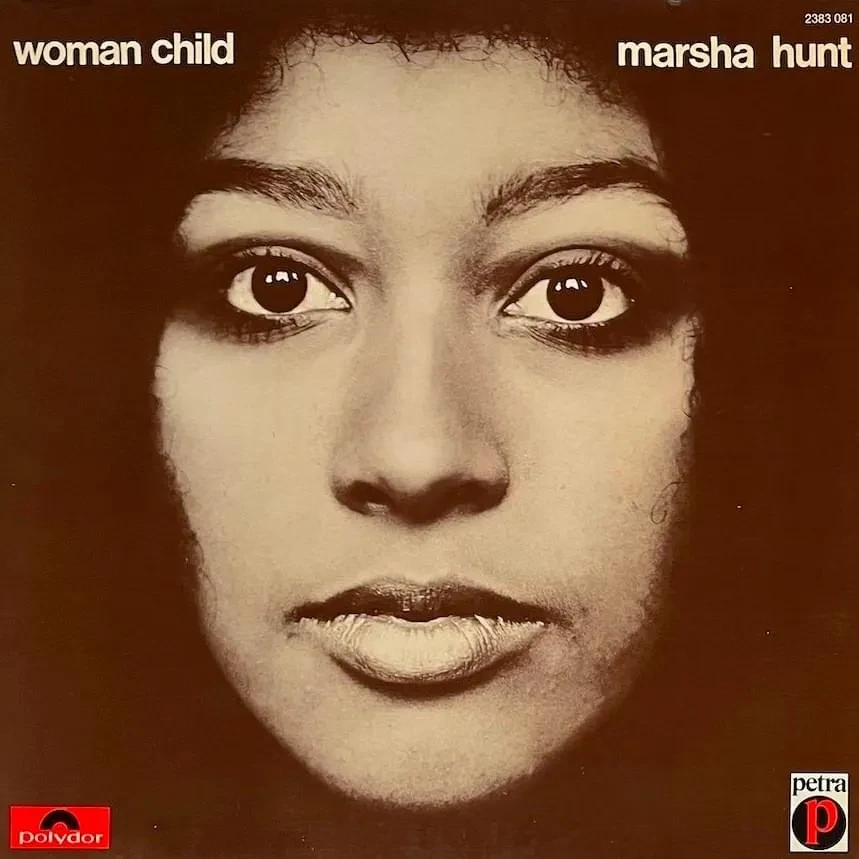
Teaming up with producer Tony Visconti, Hunt released her debut solo single in 1969: a searing, swamp-funk-inflected cover of Dr. John’s "Walk On Gilded Splinters." While the track became a minor hit, it cemented her reputation as a vocal powerhouse. Her time with Visconti also led to a passionate romance with Marc Bolan. While recording material for her debut solo album, Woman Child, Hunt recorded two Tyrannosaurus Rex songs and a striking cover of Bolan’s "Desdemona."
The Jagger Connection and Woman Child
During this high-profile era, Hunt entered into an intense relationship with Rolling Stones frontman Mick Jagger. The union resulted in a planned pregnancy and the birth of their daughter, Karis. Though Jagger initially agreed to function as an "absent father," the relationship ultimately required a hard-fought paternity suit before Jagger established a lasting association with both Hunt and Karis. Notably, Jagger’s earlier track "Brown Sugar" was written with Hunt’s defiant independence and cultural impact in mind.
Released belatedly in 1971, Woman Child showcased Hunt’s remarkable versatility as an interpreter of diverse material. Produced by Visconti, the album featured gripping renditions of Traffic’s "No Face, No Name, No Number," Bessie Smith’s "Moan You Moaners," and the contentious title track penned by Bobby Goldsboro and Kenny O’Dell.
Despite critical acclaim, commercial success eluded the record—a major industry miscalculation that foreshadowed the hurdles Hunt would face throughout her musical career.
1972–1977: Marsha Hunt’s 22, Disco, and the Stage
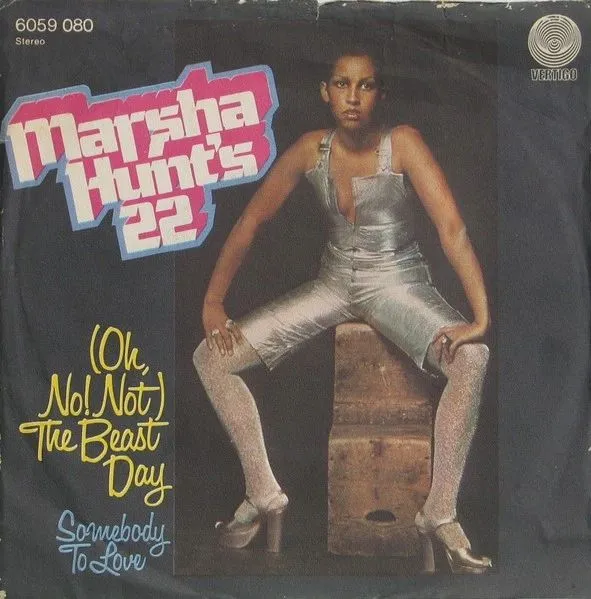
Undeterred by the commercial stagnation of her solo debut, Hunt pivoted toward a heavier, rootsier sound. Signing with Phonogram, she formed Marsha Hunt’s 22, a four-piece band that explored Louisiana swampland hoodoo and psychedelic funk. Their 1972 debut single, (Oh, No! Not) The Beast Day, produced by Steve Rowland, was paired with a fiery cover of Grace Slick’s "Somebody To Love." A follow-up single, "Medusa / Bop City," co-written by Hunt and guitarist Hugh Burns, suffered a similar fate to its predecessor due to chronic under-promotion.
A second album, Attention! Marsha Hunt! (1973), cobbled together from early demo recordings with the 22, received a limited European release—ironically remaining unknown to Hunt herself for over four decades.
As her recording career hit roadblocks, Hunt expanded her acting credentials. She starred alongside PJ Proby and Dana Gillespie in Jack Good’s rock adaptation of Othello, titled Catch My Soul, and completed a six-month West End run in Melvyn Bragg’s musical Mardi Gras. In 1976, she achieved a major theatrical milestone by portraying Sabina in Thornton Wilder’s The Skin of Our Teeth at the newly inaugurated Royal Exchange Theatre—a role originally made famous by Vivien Leigh.
By 1977, Hunt embraced the burgeoning electronic dance revolution, traveling to Munich to record the disco-orientated LP Marsha 77. The project was produced by Pete Belotte, a close associate of Giorgio Moroder, who co-wrote defining disco anthems like "I Feel Love" and "Hot Stuff" for Donna Summer.
1982 Onwards: The Literary Pioneer
In addition to her music and theatre work, Hunt maintained a steady presence on screen, appearing in cult horror films like Dracula AD 1972 (alongside Christopher Lee and Peter Cushing), Britannia Hospital (1982), James Bond entry Never Say Never Again (1983), and Beyond Soho (1989) with Ray Winstone.
In 1982, she wrote and produced the musical Man To Woman, staged at London’s Zig Zag Club. Following the financial disappointment of the production, Hunt made a deliberate and inspired pivot away from the music industry to focus on writing.
Her transition to literature proved transformative. Her candid, deeply reflective autobiography, Real Life (1986), established her voice as a gifted prose stylist. She followed this with Repossessing Ernestine (1996), a poignant investigative journey into the life of her paternal grandmother, who spent 50 years institutionalized in an asylum. In 2005, she published Undefeated, documenting her courageous and public battle with breast cancer.
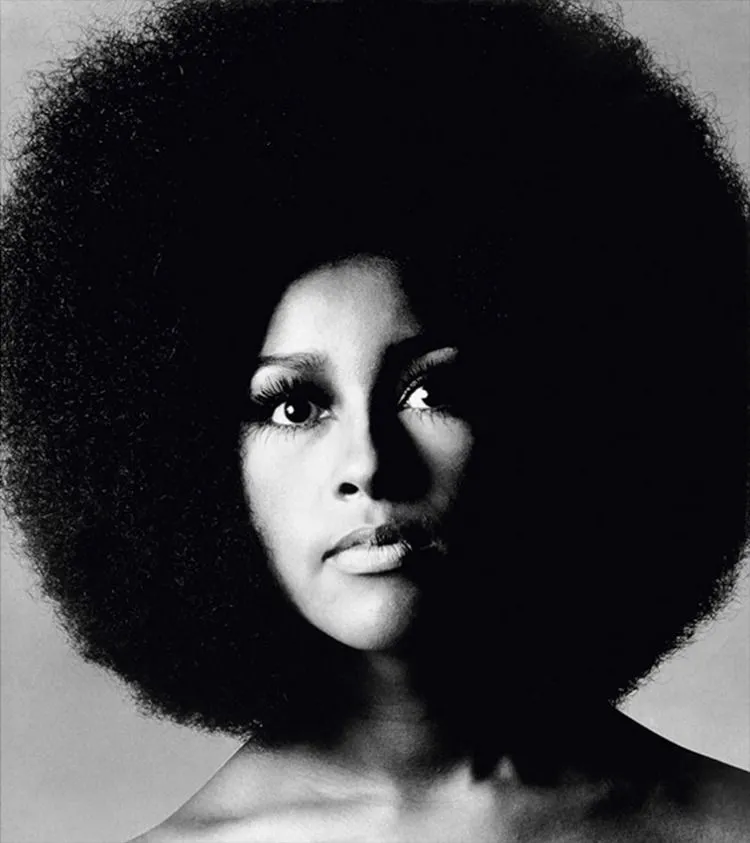
Hunt also achieved notable success as a novelist, publishing works such as Joy (1990), Free (1992), and Like Venus Fading (1998)—the latter heavily influenced by the trailblazing lives of legendary performers Adelaide Hall and Josephine Baker.
Supporting Context & Metrics: Analyzing Hunt’s Impact
| Metric / Milestone | Detail / Description |
|---|---|
| Birth & Origins | Born in Philadelphia, Pennsylvania in 1946; relocated to London in February 1966. |
| Key Theatrical Roles | Original London cast of Hair; Catch My Soul (Othello rock adaptation); The Skin of Our Teeth (Royal Exchange Theatre). |
| Major Musical Collaborations | Alexis Korner, John Mayall, Bluesology, The Who/Jimi Hendrix orbit, Marc Bolan, Tony Visconti, Pete Belotte. |
| Discography Highlights | Woman Child (1971), Marsha 77 (1977); Hit singles include "Walk On Gilded Splinters" and (Oh, No! Not) The Beast Day. |
| Literary Works | Autobiographies: Real Life (1986), Repossessing Ernestine (1996), Undefeated (2005); Novels: Joy (1990), Free (1992), Like Venus Fading (1998). |
Producer Perspectives: The Tony Visconti Session Notes
Reflecting on their time together in the studio, producer Tony Visconti captured the unique professional dynamic that defined Hunt’s artistic output:
"Marsha was very smart," Visconti noted. "She approached her music very intellectually. She was totally confident in her innate beauty, but she was also into how we could interpret the material for her album in a very hip, almost psychedelic way. She wanted to make a credible ‘guy’ record, and not come off as a Black Marilyn Monroe, which is how the record company saw her."
This constant tension between corporate expectations and artistic integrity ultimately prevented Hunt from achieving commercial ubiquity, yet it secured her legacy as an uncompromising purveyor of genuine countercultural art.
Official Statements & Archival Reflections
Throughout her extensive career, Marsha Hunt has remained remarkably candid about the challenges of operating as a Black woman in an overwhelmingly white, male-dominated entertainment industry. Rather than conforming to archetypes set down by record executives or fashion moguls, Hunt viewed her body, voice, and intellect as instruments of self-determination.
In retrospective interviews regarding her historic Vogue shoot and her role in Hair, Hunt consistently emphasized that liberation was not a passive aesthetic, but an active political stance:
- "We weren’t just playing characters; we were living out an ideology of freedom in real time," Hunt reflected on her countercultural beginnings. "When the world tells you how you should look, act, and sound, stepping outside those lines isn’t just an artistic choice—it’s survival."
Industry contemporaries have echoed these sentiments, noting that Hunt’s career defied easy categorization precisely because she refused to be packaged, diluted, or tamed.
Future Outlook: Securing a Timeless Legacy
Marsha Hunt’s multifaceted legacy continues to resonate across contemporary culture. As music historians, fashion archivists, and literary scholars re-examine the seismic shifts of the 1960s and 1970s, Hunt stands out as a bridge between multiple artistic worlds.
Her autobiographies serve as vital historical documents of the era, while her musical recordings—from her swamp-funk interpretations to her disco ventures—are increasingly recognized for their daring innovation. Far from being pigeonholed by her versatility, Hunt’s refusal to remain in a single lane has ensured that her influence extends far beyond any single hit record or acting role.
As modern audiences continue to unpack the complexities of race, gender, and autonomy in the arts, Marsha Hunt’s trailblazing path remains a masterclass in artistic freedom and uncompromising integrity.