Executive Overview
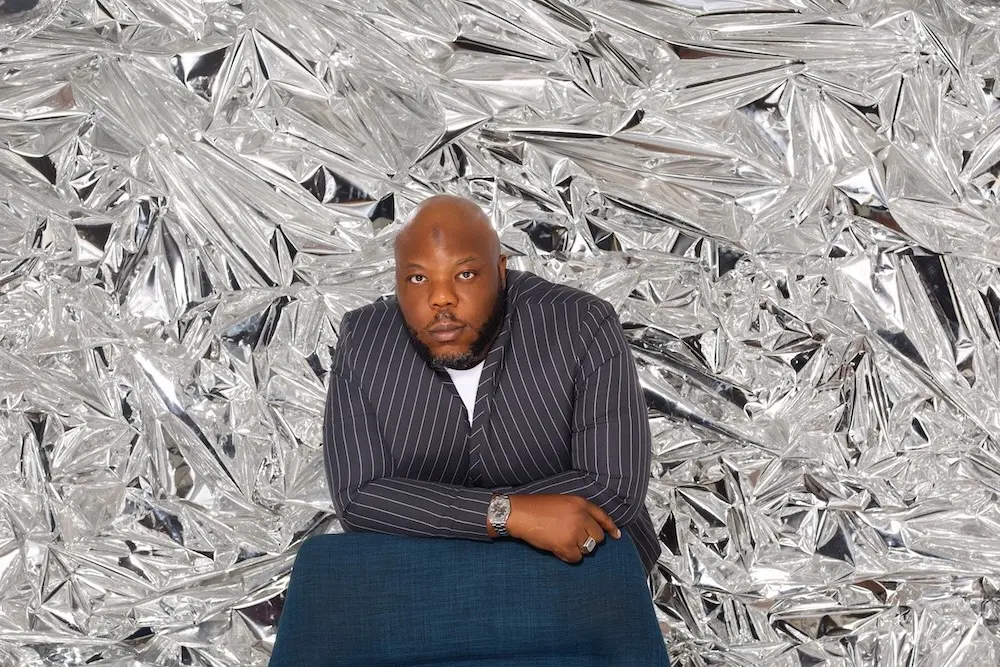
The narrative surrounding African music has long suffered from a persistent, institutionalized flaw in Western markets: the tendency to treat a continent-spanning, self-sustaining cultural movement as a sudden, accidental "discovery." For over a decade, elite music executive, talent manager, and entrepreneur Bizzle Osikoya has been systematically dismantling that perception from the inside out.
As the co-founder of The Plug—a multifaceted powerhouse spanning music management, publishing, live events, and sports—Osikoya has played an indispensable role in guiding breakout stars like Victony while helping establish the strategic frameworks that power global icons such as Davido, Tems, and Oxlade.
From scaling the Mainland BlockParty into a continent-crossing live entertainment movement to advocating for fair, transparent representation within the Recording Academy, Osikoya’s life’s work centers on a clear, uncompromising philosophy: viral moments mean nothing without the structural scaffolding to support them.
In this comprehensive exploration of his insights, we break down the fundamental misconceptions Western markets still hold about the African music industry, the absolute necessity of building self-sustaining local ecosystems, and why the next phase of the global African music movement is entirely about long-term ownership, structural integrity, and institutional power.
Detailed Chronology: Building the Machinery of Afrobeats
To understand where the African entertainment ecosystem stands today, one must examine the painstaking, deliberate chronology of its construction. The global explosion of Afrobeats—characterized by stadium tours, historic Grammy wins, and high-profile Western collaborations—was not an overnight stroke of luck. It was engineered by a generation of executives who stepped into vacuums left by traditional institutional indifference.
Phase One: The Pre-Infrastructure Era (Early to Mid-2010s)
Before the genre crossed over into mainstream Western consciousness, African artists operated within heavily localized, informal markets. Piracy ran rampant, physical distribution had collapsed, and digital streaming platforms had yet to fully map the continent. During this foundational period, pioneers like Osikoya recognized that digital platforms would eventually level the playing field. However, access to global DSPs (Digital Service Providers) meant little without the domestic administrative framework to collect royalties, clear publishing rights, and execute professional marketing campaigns.
Phase Two: Establishing The Plug and Institutional Scaffolding (2016–2019)
Realizing that fragmented talent management was holding the industry back, Osikoya and his partners launched The Plug. The vision was simple yet radical for the region: build an end-to-end entertainment company that could handle everything from day-to-day artist management and public relations to publishing and live experiences.
- Talent Management & Development: Instead of waiting for international labels to hand down deals, The Plug cultivated artists with distinct local identities, preparing them for global markets while keeping their creative roots intact.
- Live Entertainment Innovation: Through initiatives like Mainland BlockParty, the team transformed the live concert landscape in Nigeria, proving that domestic youth culture could command massive, highly organized, and monetizable festival circuits.
Phase Three: The Global Crossover and Structural Realities (2020–Present)
When the world finally woke up to the undeniable pull of African rhythms during the pandemic and post-pandemic streaming boom, the infrastructure built by Osikoya and his peers prevented the movement from collapsing under its own weight. Artists like Davido, Tems, and Oxlade stepped onto global stages not as fragile newcomers, but as seasoned professionals backed by robust local management, legal teams, and distribution networks. Today, the focus has shifted from mere participation in Western markets to demanding equity, executive representation, and long-term ownership of intellectual property.
Supporting Context & Metrics: The Economics of the African Music Boom
The global acceleration of African music is backed by staggering growth metrics, yet these numbers often obscure the nuanced realities of infrastructure development on the ground.
According to data from various industry bodies, Sub-Saharan Africa has consistently ranked as one of the fastest-growing recorded music markets globally, largely driven by mobile-first streaming adoption. Yet, as Osikoya frequently points out, revenue growth without structural protection leads to systemic vulnerability.
The Western "Discovery" Fallacy vs. Ground-Level Reality
- The Myth: A Western label discovers an African artist via a viral TikTok clip or a streaming algorithm spike, signs them to a standard licensing or recording deal, and parachutes them into London or Los Angeles to "make it."
- The Reality: The artist has typically spent years grinding through local radio circuits, independent studio sessions, Nigerian or Ghanaian social media platforms, and localized touring networks.
When Western markets approach African talent through a colonial "discovery" lens, they routinely underestimate the complexity of the domestic ecosystem. As Osikoya notes:
"The biggest misconception is that African talent just needs a moment, a viral record, a co-sign, a festival slot, and the infrastructure will follow. In reality, it works the other way around. The infrastructure has to exist before the moment, or the moment gets wasted."
Bridging the Gap: Legal, Publishing, and Distribution
The true deficit in the global music pipeline is rarely artistic talent; it is administrative scaffolding. Key areas requiring ongoing foreign and domestic investment include:
- Publishing Administration: Ensuring songwriters and producers accurately collect mechanical and performance royalties worldwide.
- Legal Frameworks: Enforcing robust contract standards that protect artists from predatory international deals signed during early-career vulnerability.
- Distribution Muscle: Empowering local distribution networks that understand the nuance of regional data aggregation rather than relying solely on blanket Western aggregators.
Official Insights: Navigating Authenticity and Global Strategy
When examining the global footprint of artists like Davido, Tems, and Oxlade, their success is striking because it feels deeply rooted in cultural integrity rather than desperate attempts to conform to Western pop radio standards.
In discussions regarding international expansion, industry leaders are often faced with a critical fork in the road: Do you dilute the sound to appeal to a broader, uninitiated audience, or do you double down on local authenticity and let the world catch up?
The Coexistence of Authenticity and Strategy
Osikoya argues forcefully that authenticity and strategic execution are not opposing forces. In fact, the most lucrative and culturally enduring outcomes happen when strategy serves authenticity, never the other way around.
"Davido, Tems, and Oxlade didn’t reach global audiences by softening what they did," Osikoya explains. "They got there because the ecosystems around them figured out how to translate their sound without diluting it, and that is the actual skill."
Consider the trajectory of Tems: her distinct vocal tone, phrasing, and spiritual cadence did not morph into standard American pop when she collaborated with Drake and Future, or when Rihanna recorded a song she penned. Instead, her international team executed a placement strategy that inserted her singular voice directly into rooms where the world was already listening, allowing her art to command attention on its own uncompromising terms.
The Death of Manufactured Crossover Attempts
Global audiences have grown increasingly sophisticated in the streaming era. Listeners can instantly sniff out manufactured crossover attempts—songs designed in Western boardrooms using formulas calculated to chase streaming trends.
- The Organic Advantage: Authentic records consistently outperform manufactured crossover attempts on streaming platforms because cultural resonance creates passionate, long-term fanbases.
- The Rhythm Section is Untouchable: The vocal pockets, language mixes, bilingual pidgin-English phrasing, and intricate percussion patterns native to Afrobeats are foundational DNA. According to Osikoya, the job of an elite international team is to find where that authentic sound fits naturally into global playlists, rather than reshaping the audio format to fit antiquated radio programming boxes.
Future Outlook: The Next Phase of African Entertainment
As we look toward the horizon of the 2020s and beyond, the trajectory of African entertainment is shifting from mere exportation to complete sovereignty.
1. Shift from Licensing to Ownership
For decades, African creators signed away master rights and publishing shares to foreign entities in exchange for international exposure. The next generation of executives, led by figures like Osikoya, is fiercely protecting intellectual property. The future belongs to localized joint ventures, independent distribution networks, and equity-sharing models that ensure the wealth generated by African culture remains rooted within the continent’s economies.
2. Institutional Representation and Global Standardisation
The inclusion of African music categories in major international award bodies—such as the Grammy Awards—is a step forward, but institutional reform must go deeper. True progress requires African executives, lawyers, voting members, and tech innovators holding seats at decision-making tables across major global conglomerates.
3. Scaling the Live Infrastructure
While streaming has broken down geographic barriers, the live entertainment sector is the final frontier for sustainable economic growth. Scaling initiatives like Mainland BlockParty across multiple continents proves that the African diaspora and global youth are hungry for immersive, authentic live cultural experiences. Expect to see massive investments in venue infrastructure, ticketing technology, and festival production talent directly within key African hubs like Lagos, Nairobi, Accra, and Johannesburg.
Conclusion
Bizzle Osikoya’s journey as a co-founder of The Plug and an architect of modern Afrobeats serves as a masterclass in industry building. By refusing to compromise cultural authenticity for quick international validation, and by aggressively constructing the legal, operational, and live infrastructure required to sustain multi-decade careers, he and his peers have permanently altered the global music landscape.
The era of treating African music as a fleeting trend is officially over. As the infrastructure continues to strengthen and artists claim true ownership of their output, the architects of the culture are ensuring that the African century in entertainment is only just beginning.
This report is part of an ongoing long-form investigative series examining the visionaries and powerhouses shaping global music and culture. To explore more in-depth analyses, industry interviews, and deep-dives into the architects of modern music, stay tuned to our ongoing features.