Executive Overview
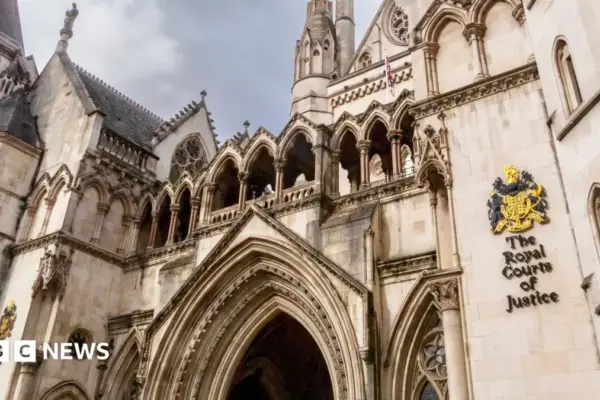
The gladiator arena has long been synonymous with high-stakes peril, dramatic tension, and monumental spectacles of survival. However, the true cost of cinematic pageantry rarely breaches the public consciousness until legal disputes pierce the polished veneer of Hollywood blockbusters. In a high-profile legal filing at London’s High Court, British stuntman and actor Edward Sarsfield has initiated formal legal proceedings against August Street Films, a subsidiary of major Hollywood studio Paramount Pictures, following a catastrophic on-set accident during the production of the 2024 epic Gladiator II.
Sarsfield, a 47-year-old native of Liverpool, is seeking approximately £200,000 in damages after suffering what court documents describe as "excruciating" flash burns and permanent, hypersensitive scarring. The incident occurred in 2023 during the international location shoot in Morocco, where Sarsfield was working as a background artist portraying a fallen soldier on a burning vessel. A sudden, unannounced explosion of a specialized gas line engulfed the deck in 20-foot flames, rapidly igniting his costume and throwing him forward.
While August Street Films has formally admitted liability for the accident itself, the legal battle remains contentious. The production company has contested the specific nature and severity of the alleged injuries, declining to accept the baseline financial damages requested by the claimant. The case has cast a harsh, unforgiving spotlight on the systemic occupational hazards faced by stunt professionals and background artists—the unsung backbone of major motion pictures—whose physical labor often occurs at the absolute margins of on-set health and safety protocols.
This comprehensive investigative report examines the chronology of the harrowing accident, the immediate and long-term medical fallout experienced by Sarsfield, the broader context of stunt safety standards within mega-budget Hollywood productions, official corporate responses, and the potential ramifications this landmark lawsuit may carry for the future of film production safety regulations.
Detailed Chronology: The Anatomy of a Production Disaster
To fully understand the severity of Edward Sarsfield’s claims, one must reconstruct the timeline of events that unfolded on the Moroccan set in 2023. Gladiator II, directed by veteran filmmaker Sir Ridley Scott, served as the long-awaited sequel to the universally acclaimed 2000 historical drama starring Russell Crowe. Boasting a massive budget and sprawling battle sequences, the production required intricate logistical coordination, extensive special effects, and hazardous practical stunts involving pyrotechnics.
The Scene: Siege at Sea
Sarsfield was cast as an extra playing a dead soldier, a role requiring stillness, physical endurance, and absolute trust in the production’s safety apparatus. According to detailed particulars of the claim filed at the High Court in London, the scene being filmed involved a coastal castle under siege by an approaching warship.
To visually simulate the chaos of naval warfare and the devastation of a ship on fire, the production crew utilized gas-powered flame bars strategically positioned across the vessel. Sarsfield was directed to lie on the port side of the ship, directly adjacent to these special effects installations. Crucially, court documents emphasize that the actor was positioned merely a few feet away from the active gas line, a proximity that significantly heightened his vulnerability to any localized mechanical or operational failure.
The Explosion
Without warning or pre-determined cue, the operational equilibrium of the set collapsed. A violent, unexpected gas explosion ripped through the installation, catching Sarsfield directly in the blast radius and forcefully propelling him forward across the deck.
The physical reality of the moment was immediate and terrifying. Sarsfield was confronted by walls of fire soaring 20 feet into the air, accompanied by overwhelming ambient heat. The flames instantly caught his costume, turning his wardrobe into a conduit for thermal destruction. In his initial statements, Sarsfield recalled the horrifying sensory experience of watching and feeling strips of skin peel away from his arms amidst the chaos.
The Chaotic Escape and Immediate Aftermath
Overcome by primal terror, Sarsfield "panicked and ran," tripping multiple times across the cluttered, burning deck before finally breaking free of the immediate hazard zone. Because the production’s safety infrastructure failed to prevent the ignition of his person, intervention fell immediately to his colleagues.
In scenes more reminiscent of an active war zone than a professional film set, fellow crew members rushed to his aid, desperately hurling bottles of drinking water over his burning body to extinguish the flames. Sarsfield was hurriedly undressed, and makeshift first-aid was applied, with emergency personnel wrapping his severe burns in clingfilm to protect the exposed tissue from airborne contaminants.
Evacuation and Medical Repatriation
Medical assessment revealed that Sarsfield had sustained severe "flash burns" covering approximately 15% of his total body surface area, alongside blunt-force injuries to both knees and his right wrist. The localized medical infrastructure was immediately overwhelmed, necessitating his emergency evacuation by helicopter to a specialized hospital in Marrakesh.
However, the initial medical intervention in Morocco proved deeply inadequate for the scale of his trauma. According to his legal filings, Sarsfield remained in excruciating pain while receiving treatment that was critically limited in scope and capability. Recognizing the inadequacy of local care for severe thermal injuries, arrangements were made to repatriate him to the United Kingdom four days after the accident. Upon his return to British soil, Sarsfield was admitted to a specialized hospital where his wounds finally received comprehensive, appropriate clinical management.
Supporting Context & Metrics: The Human and Financial Toll
While corporate legal teams often reduce personal injury lawsuits to cold figures and liability percentages, the human toll of the Gladiator II incident reflects a profound disruption to a professional’s life and livelihood.
Physical De-Conditioning and Permanent Sequelae
Prior to the accident, Edward Sarsfield maintained a reputation as a physically robust professional capable of enduring the rigorous demands of stunt and extra work in action cinema. The legal documentation outlines a stark post-accident reality:
- Physical Decline: Sarsfield suffered significant physical de-conditioning, marked by prolonged limitations to his basic mobility and muscular strength.
- Permanent Scarring: The flash burns resulted in extensive, permanent scarring across high-visibility and functional areas, including his face, arms, and hands.
- Hypersensitivity and Environmental Restrictions: The newly formed scar tissue is pathologically hypersensitive, requiring Sarsfield to exercise extreme vigilance and strictly avoid direct sunlight to prevent chronic pain and further tissue degradation.
Psychological Fallout
Beyond the visible physiological destruction, the trauma of being engulfed in flames and experiencing near-death terror has manifested in substantial psychological injuries. Post-traumatic stress symptoms, anxiety related to professional environments, and the mental burden of managing chronic, disfiguring injuries have compounded the plaintiff’s suffering.
The Legal Standpoint and Financial Demands
At the core of the High Court litigation is a financial and legal disconnect between the plaintiff and the defense:
- The Claim: Sarsfield’s legal team has calculated damages at approximately £200,000, factoring in medical expenses, loss of future earnings, specialized ongoing care, and compensation for pain, suffering, and loss of amenity.
- The Defense: August Street Films has adopted a dual-pronged legal strategy. While explicitly admitting liability for the occurrence of the accident—a crucial concession that removes the burden of proving negligence—the company’s legal representatives have formally stated that "no admissions are made as to the alleged injuries sustained by the Claimant."
- The Impasse: By refusing to admit to the specific severity, permanence, or financial valuation of the injuries outlined in the claim, August Street Films has effectively forced the litigation into a protracted phase of medical expert testimony and evidentiary verification before any settlement can be reached.
Official Statements and Industry Context
The incident on the set of Gladiator II is not an isolated event within the high-risk ecosystem of modern Hollywood filmmaking, but it stands out due to the severity of the injuries sustained by background and stunt personnel.
Paramount Pictures’ Initial Response
In the immediate wake of the 2023 accident, parent studio Paramount Pictures issued a carefully worded public statement acknowledging the mishap while emphasizing the promptness of their on-site safety and medical teams:
"While filming a planned stunt sequence on the set of the Gladiator sequel, an accident occurred during which several crew members experienced non-life-threatening injuries.
The safety and full medical services teams on-site were able to act quickly so that those who were impacted immediately received necessary care. They are all in stable condition and continue to receive treatment.
The well-being of the cast and crew is of the utmost importance to us, and we have strict health and safety procedures in place on all our productions. We will continue monitoring the situation and taking all necessary precautions as we resume production."
Despite these assurances regarding strict health and safety protocols, the sudden, uncontrolled explosion of a gas line mere feet away from an immobile actor directly challenges the efficacy of those protocols on the Moroccan set. Since the initial statements were released, Sarsfield, August Street Films, and Paramount Pictures have maintained a strict silence, declining to provide further comment as the matter proceeds through the British judicial system.
The Broader Safety Crisis in Action Cinema
The lawsuit arrives at a time of heightened scrutiny regarding stunt safety, working hours, and the treatment of below-the-line workers in the global film industry. In recent years, high-profile accidents—such as the tragic fatal shooting on the set of Rust and numerous lesser-reported stunt malfunctions—have galvanized industry unions, labor advocates, and insurance providers to demand radical reforms.
Stunt performers and background artists operate in a uniquely vulnerable legal and occupational space. Unlike principal actors protected by powerful talent agencies and bespoke, heavily negotiated contracts, extras and stunt doubles frequently face systemic pressure to accept hazardous conditions without adequate briefing, rehearsal time, or safety margins. The fact that Sarsfield was positioned directly adjacent to high-output gas flame bars while playing a stationary corpse highlights an ongoing industry tension: the prioritization of visual spectacle over absolute human safety margins.
Future Outlook: Legal Precedent and Industry Reform
As Edward Sarsfield’s lawsuit against August Street Films winds its way through London’s High Court, the implications extend far beyond a single £200,000 settlement.
Potential Legal Outcomes
- Settlement Negotiations: Given that August Street Films has already admitted liability, legal analysts suggest that the primary battleground will be fought over medical evidence. If independent medical experts corroborate the extent of Sarsfield’s physical de-conditioning, permanent scarring, and psychological trauma, the defense may ultimately settle out of court to avoid a public trial that could damage the studio’s reputation for on-set safety.
- Trial and Judgment: Should the case proceed to a full trial, the presiding judge will be tasked with setting a definitive financial valuation for the lifelong impact of severe flash burns on a physical performer, potentially establishing a notable legal precedent for future UK-based litigation involving international film productions.
Industry-Wide Implications
The case serves as an urgent wake-up call for major Hollywood studios utilizing international production hubs. As studios increasingly migrate to overseas locations—such as Morocco, Malta, and Eastern Europe—to capitalize on tax incentives and lower operational costs, questions frequently arise regarding the uniformity and enforcement of health and safety standards.
If production companies can be held comprehensively accountable in Western courts for accidents occurring on international shoots, studio risk-management departments will be forced to overhaul their pyrotechnic and stunt protocols. Key reforms likely to gain traction include:
- Mandatory Minimum Safety Buffers: Enforcing strict spatial separation between practical pyrotechnic effects and unarmored personnel.
- Real-Time Safety Audits: Empowering independent safety supervisors to halt productions immediately upon detecting hazardous deviations from approved stunt storyboards.
- Enhanced Insurance and Medical Infrastructure: Ensuring that international shoots maintain immediate access to tier-one trauma care, thereby mitigating the catastrophic delays in specialized treatment experienced by Sarsfield in Morocco.
Ultimately, Gladiator II will be remembered by audiences worldwide as a cinematic triumph of scale and historical reconstruction. However, for Edward Sarsfield and the broader community of film workers, the production will forever be linked to the blinding flash of a gas line explosion—a stark reminder that behind the breathtaking illusions of the silver screen lie real human bodies vulnerable to the devastating consequences of negligence.