Executive Overview
The landscape of modern music production and post-production has crossed a significant threshold. With the official release of Pro Tools 2026.11, industry pioneer Avid has introduced one of the most requested and transformative workflows in digital audio workstation (DAW) history: native AI-powered stem separation.
Long viewed as the holy grail for remixers, producers working with archival audio, and sound designers seeking to salvage imperfect recordings, source separation technology has largely lived in the realm of third-party standalone desktop applications, web services, or specialized plugins. By baking this capability directly into the core ecosystem of Pro Tools via an innovative new paradigm called Pro Tools Extensions, Avid is effectively bridging the gap between external utility tools and native timeline editing.
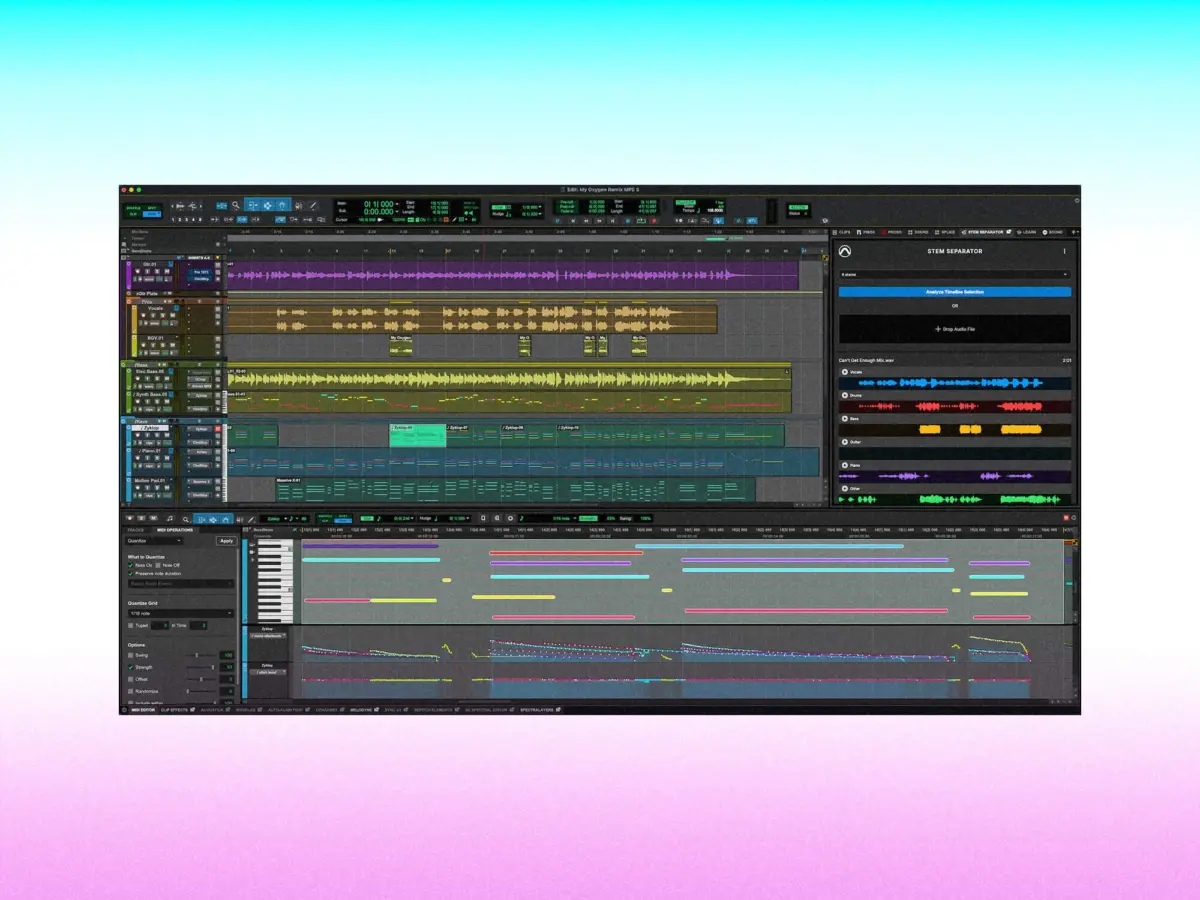
The newly minted AI Stem Separator is not merely an isolated utility; it serves as the vanguard for a broader architectural shift within Pro Tools. Designed to process a complete audio file or stereo mix down into up to six distinct structural components—vocals, drums, bass, guitar, keys, and other instruments—the tool operates with a streamlined drag-and-drop workflow that promises to keep creators in the creative "flow state."
Simultaneously, the debut of Pro Tools Extensions opens the DAW up to an unprecedented ecosystem of third-party developer integrations. Brands such as Splice, SoundFlow, Pro Sound Effects, Soundly, Forte, and Pibox are already leveraging this new framework to bring library management, cloud collaboration, and workflow automation directly into the Edit window.
Available immediately across the entire Pro Tools tier—including Artist, Studio, Ultimate, and even the free Pro Tools Intro (alongside perpetual license holders with active update plans and 30-day trial users)—Pro Tools 2026.11 signals a profound evolution in how audio professionals interact with their sessions, signaling Avid’s intent to maintain its dominance in an increasingly agile and software-diverse marketplace.
Detailed Chronology: The Evolution to Pro Tools 2026.11
To understand the magnitude of the Pro Tools 2026.11 release, one must look at the trajectory of digital audio technology over the past half-decade. Source separation has evolved from an academic exercise in machine learning into a commercially viable, near-instantaneous production technique.
The Rise of Source Separation (2018–2024)
In the late 2010s, early AI algorithms trained on isolated multitrack stems began filtering into the consumer and semi-professional markets. Tools like LALAL.AI, Spleeter (developed by Deezer), and various offline processing software demonstrated that neural networks could parse complex, mixed stereo master files and intelligently extrapolate individual instrument groups with startling clarity.
However, for professional mixing and mastering engineers operating inside heavy-duty DAWs like Avid Pro Tools, Apple Logic Pro, or Steinberg Cubase, using these tools meant breaking workflow continuity. Engineers had to export a mix, open a separate application or browser window, wait for cloud or local processing, export the resulting stems, and manually re-import them back into the DAW session, realigning bars, beats, and sample rates.
As demand for stem-based mixing (Dolby Atmos and spatial audio production) skyrocketed, the industry grew increasingly vocal about wanting native, non-destructive source separation built directly into the timeline. While some competitors introduced rudimentary clip-based separation features over the intervening years, Avid’s approach required a complete structural re-thinking of how non-linear editing software handles large-scale data processing across multiple tracks.

The Development of the Extensions Framework
Rather than rushing out a monolithic plugin that would only process a single track or insert slot at a time, Avid’s product and engineering teams took a broader view. They recognized that modern audio workflows rely heavily on external utilities—sample managers, sound library indexing tools, remote collaboration platforms, and macro-automation systems.
This realization birthed the Extensions architecture. Unlike traditional plugins (which traditionally sit on an individual track’s insert chain and process audio sequentially), Extensions are designed to operate globally or across arbitrary groupings of tracks within a session. They can interface directly with the Pro Tools Edit window, opening up dedicated, deep-integration panels that interact with session data, file systems, and external cloud services simultaneously.
The Launch of Pro Tools 2026.11
Released in November 2026, the 2026.11 update represents the culmination of these architectural developments. Centered around the debut of the AI Stem Separator Extension, the release positions Pro Tools not just as a recording and mixing console emulation, but as an intelligent, AI-augmented production environment capable of adapting to both legacy archival restoration and bleeding-edge spatial mixing workflows.
Supporting Context & Technical Mechanics: How the AI Stem Separator Works
The technical brilliance of the Pro Tools AI Stem Separator lies not just in the fidelity of its separation algorithms, but in its absolute frictionlessness.
The Six-Stem Breakdown
When a producer or editor drops an audio file into the Stem Separator window, the underlying neural network analyzes the harmonic, transient, and spectral characteristics of the recording to parse it into six distinct stems:
- Vocals: Intended to cleanly isolate lead and backing vocal performances from underlying instrumental bleed.
- Drums: Separates transient-heavy percussion elements (kicks, snares, hi-hats, cymbals) from the rest of the mix.
- Bass: Isolates low-frequency melodic and rhythmic foundations, ensuring sub-bass and bass guitar lines are captured accurately.
- Guitar: Extracts both acoustic and electric guitar elements, untangling them from keyboard pads and synth lines.
- Keys: Targets pianos, organs, synthesizers, and other harmonic keyboard instruments.
- Other Instruments: Captures orchestral elements, sound effects, brass, woodwinds, and miscellaneous textures that do not neatly fit into the primary categories.
Step-by-Step Workflow Integration
The operational workflow is designed to minimize mouse clicks and cognitive load:
- Drag-and-Drop Ingestion: Users drag any audio file—be it a full stereo mix, a bounced master, or an old archival recording—directly into the dedicated Extension interface within the Edit window.
- Non-Destructive Previewing: Before committing audio to the session, the engine allows engineers to preview individual stems in isolation. This allows producers to check for phase artifacts, spectral bleeding, or unwanted distortion before committing resources.
- Direct Timeline Rendering: Once satisfied, the user commands the system to route the separated stems back into the main DAW. Pro Tools automatically generates discrete, named tracks for each stem, aligning them perfectly to the timeline grid, ready for remixing, manipulation, or spatial panning.
The Broader Ecosystem: Third-Party Extensions
Beyond Avid’s own AI Stem Separator, the true power of the 2026.11 update is its openness. By providing an SDK for third-party developers, Avid has transformed Pro Tools into an extensible hub. Key launch partners include:
- Splice: Bringing seamless loop and sample browsing directly into the session window.
- SoundFlow: Enabling hyper-advanced workflow automation and macro control.
- Pro Sound Effects & Soundly: Offering instant access to massive, cloud-connected sound effect libraries without leaving the Edit window.
- Forte & Pibox: Streamlining remote collaboration, client review, and feedback collection processes directly inside the professional audio workflow.
Official Statements and Industry Perspective
The strategic shift behind Pro Tools 2026.11 reflects a broader industry consensus: DAWs must become more open, intelligent, and flexible to meet the demands of a diverse user base ranging from bedroom bedroom-producers to elite post-production facilities.
Sam Butler, Vice President of Product Management at Avid, articulated the philosophy driving the new release during the rollout:

"The way music and audio professionals work is constantly evolving, and we want Pro Tools to evolve with them. Extensions represent an important step forward, bringing new technologies and innovative capabilities directly into Pro Tools to support a wider range of creative experiences.
It’s about giving creators greater choice and flexibility while allowing them to stay focused on their work — reflecting our commitment to making Pro Tools more powerful, open, and accessible for users at every level."
Industry analysts have noted that Avid’s move to include these high-end features across all tiers—from high-end Pro Tools Ultimate systems down to the entry-level Pro Tools Artist, Studio, and even the free Pro Tools Intro (plus 30-day trial users)—marks a significant democratization of workflow technology. Historically, advanced audio separation and processing tools were locked behind expensive third-party paywalls or restricted exclusively to flagship enterprise tiers. By making AI stem separation universally accessible, Avid is leveling the playing field for independent remixers, podcasters, and film students alike.
Future Outlook: What Pro Tools 2026.11 Means for the Industry
The release of Pro Tools 2026.11 is more than a standard dot-release; it is a clear indicator of where professional audio software is heading over the remainder of the decade.
1. The Normalization of AI in Core Audio Workflows
Artificial intelligence is no longer viewed as a novelty or a disruptive threat by professional mixing engineers; it is increasingly understood as a powerful utility tool. As neural network models become lighter, faster, and more artifact-free, expect features like stem separation, automated dialogue cleanup, intelligent spectral repair, and real-time mixing assistants to transition from standalone plugins to deeply integrated native timeline operations. Avid’s Extensions architecture provides the ideal sandbox for these technologies to mature.
2. The Shift Toward Ecosystem-Centric DAWs
For decades, DAWs functioned as closed silos. Engineers worked inside the box, exporting files to communicate with external services. The integration of platforms like Splice, SoundFlow, and Pibox via Pro Tools Extensions points toward a fully connected, cloud-native future. In coming updates, we are likely to see real-time co-authoring, automated library licensing, and integrated client revision tracking become standard operational expectations rather than specialized add-ons.
3. Broadened Accessibility and User Retention
By ensuring that innovations like the AI Stem Separator and Extensions framework are available across the entire licensing spectrum—including perpetual plans with active updates and the free Intro tier—Avid is strategically countering the aggressive growth of cross-platform DAW competitors (such as Ableton Live, Logic Pro, and Reaper). Lowering the barrier to entry while retaining the high-end stability required for Hollywood film stages ensures that Pro Tools remains the undisputed industry standard.
Conclusion
Pro Tools 2026.11 successfully bridges the gap between historical industry pedigree and modern creative agility. By introducing native AI stem separation alongside an open, developer-friendly Extensions framework, Avid has delivered an update that honors the complex demands of professional mix engineers while opening new doors for remixers, sound designers, and independent creators worldwide. As the audio industry continues to accelerate into an era defined by spatial audio, AI assistance, and cloud collaboration, Pro Tools has firmly anchored itself at the vanguard of innovation.