Executive Overview
In what has quickly become one of the most talked-about television events of the television season, Saturday Night Live (SNL) returned with a triumphant, politically charged episode celebrating the Democratic Party’s sweeping victories in the recent midterm elections. Dubbed a "blue tsunami" by political analysts, the midterms fundamentally altered the balance of power in Washington, DC, and sent shockwaves across the American political landscape.
The cold open of Saturday’s landmark broadcast featured a surprise appearance by Texas Senator-elect James Talarico, whose stunning victory in the deeply red Lone Star State stunned pollsters and flipped a Senate seat previously held by Republicans for nearly four decades. Talarico’s unannounced arrival on the iconic Studio 8H stage electrified the live studio audience, yielding a rapturous 20-second ovation that temporarily derailed the sketch.
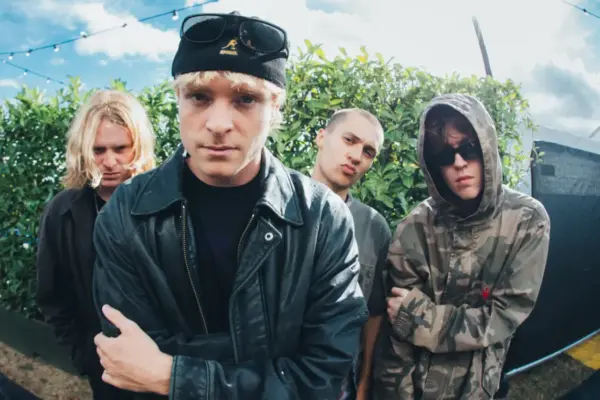
Adding to the evening’s historic proportions, comedian and viral internet personality Druski made his Saturday Night Live hosting debut, marking the first time a digital content creator has ever helmed the iconic sketch comedy institution. Supported by musical guest The Strokes—who were unexpectedly joined on stage by actor Walton Goggins—and featuring a cascade of high-profile cameo appearances including Emma Stone, Dave Chappelle, Chris Rock, and Michael B. Jordan, the episode functioned simultaneously as a victory lap for progressive politics and a masterclass in modern satirical television.
This comprehensive report breaks down the anatomy of the episode, examining the political ramifications of Talarico’s cameo, the historic nature of Druski’s hosting gig, the sharp post-election satire directed at Donald Trump and his administration, and the broader cultural context surrounding one of the most memorable nights in SNL history.
Detailed Chronology: Inside the Studio 8H Broadcast
The Cold Open: Trump’s Post-Election Reality Check
The evening commenced with a signature Saturday Night Live cold open that immediately leaned into the stark reality facing the Republican party following the midterm shellacking. James Austin Johnson returned to his now-iconic portrayal of Donald Trump, conducting a melancholic and meandering postmortem of the election results alongside various surrogates and allies.
Johnson’s Trump delivered a mixture of disbelief and resignation, famously quipping to the studio audience: "I didn’t even say it was rigged. I accepted the results, which is even scarier in a way. It’s like, ‘What the hell is he planning?’" Rather than focusing on legislative strategy or political recovery, the satirical Trump lamented the logistical headaches of his ongoing White House ballroom renovations, groaning, "Oh my God, I hate my life."
The sketch intensified as Colin Jost stepped into the frame to portray Pete Hegseth. Jost’s Hegseth leaned aggressively into his erratic persona, confronting Trump with characteristic chaos: "You think some election is going to stop me? Do I look like a person who gets less crazy when backed into a corner? I live a YOLO lifestyle. You only lose often, so I’m gonna keep losing for you, sir, unless Congress impeaches me. But you won’t let that happen, right?" Hegseth concluded his appearance with a bizarre flourish, declaring, "Now, if you’ll excuse me, I have to go weigh the female soldiers. Peace out, war in."
The Talarico Interruption
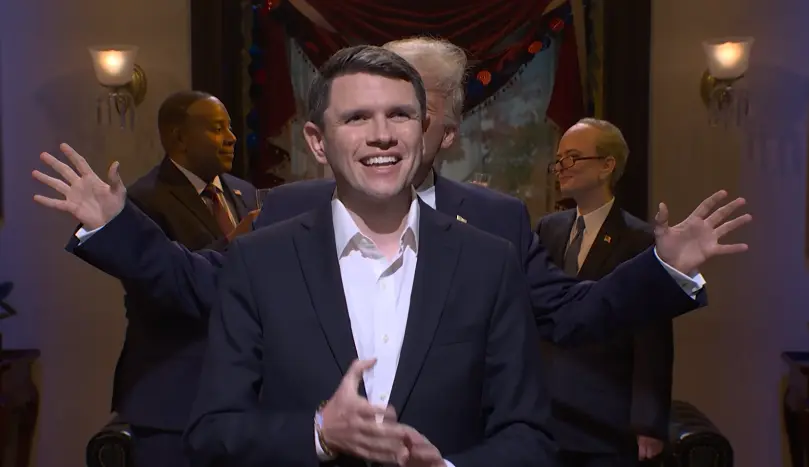
Just as Johnson’s Trump was nearing the end of his monologue, the sketch was brought to a dramatic halt. Texas Senator-elect James Talarico emerged from backstage, casually crashing the cold open to an eruption of cheers and applause that lasted a full twenty seconds.
Stepping into the comedic fray, Talarico leaned into his real-life reputation as a prolific digital fundraiser, deadpanning: "I’m James Talarico, the guy who’s been texting you every day asking for five dollars."
In true character, Johnson’s Trump fired back with a wry endorsement: "In this economy, who can blame you?"
Talarico then pivoted to a meta-commentary on both bipartisan cooperation and the longevity of SNL’s political satire: "But I think, Mr. President, if we can work together, we can make life better for everyday Americans. It’s clear people want something new. They want something different. I’m talking, of course, about SNL’s cold opens. How many of these Trump freezers are they going to do?"
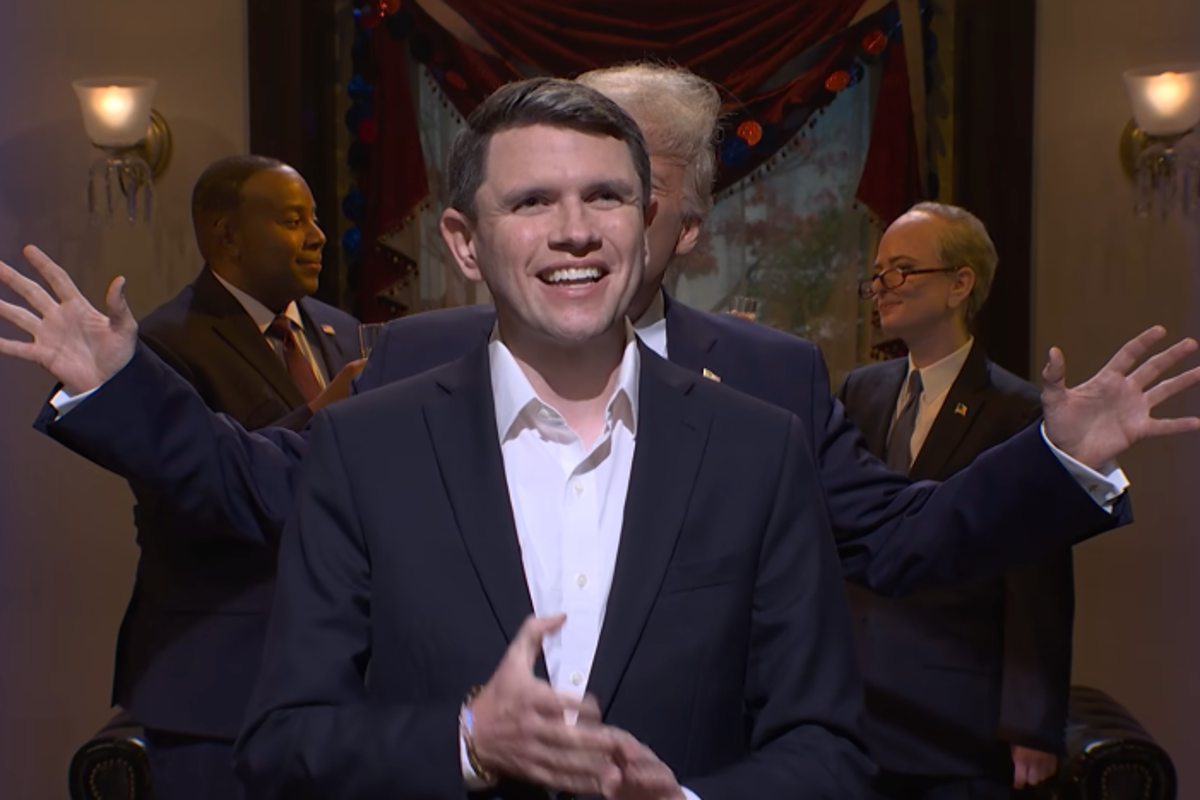
The seamless integration of a sitting US Senator-elect into a late-night comedy sketch underscored the unique cultural gravity of the moment, symbolizing the seismic shift in political momentum that had just swept the nation.
Druski’s Monologue and Historic Hosting Debut
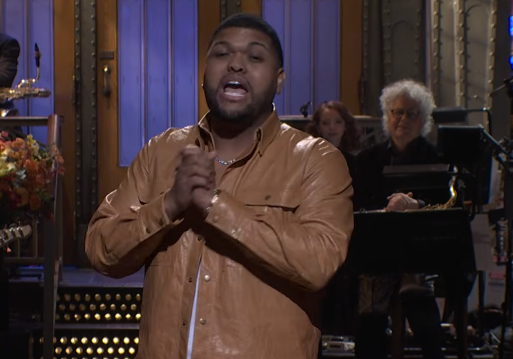
Following the cold open, Druski stepped onto the Studio 8H stage to deliver his opening monologue, making history as the first-ever internet content creator to host Saturday Night Live. Known for his viral sketch comedy, vox pop interviews, and internet culture commentary, Druski wasted no time addressing the unique constraints—and perceived limitations—of network television.
During his monologue, Druski playfully addressed the network’s compliance and standards department, warning the audience that he intended to push boundaries. "Listen, I know y’all think SNL gonna water me down tonight, but no, they are not holding me back from saying anything," he told the cheering crowd. "They said, No. 1, no cussing. I cannot promise that. No. 2, no whiteface. I also can’t promise that. That’s about half the show right there."
True to his word, Druski later showcased his comedic versatility in a daring sketch parodying the Nathan Fielder and Elizabeth Holmes documentary You Can See Everything. Adorning himself in whiteface and piercing blue contacts, Druski delivered a chillingly funny and surreal portrayal of Holmes, cementing his ability to transition from digital platforms to traditional sketch comedy formats.
The monologue also featured a surprise appearance by Oscar-winning actress Emma Stone, who joined Druski on stage to tease their upcoming cinematic collaboration, The Catch.
Musical Performances and Star-Studded Goodnights
Rock icons The Strokes delivered a high-energy musical performance, anchored by their signature gritty guitar tones and charismatic delivery. In a surreal twist that delighted music and television fans alike, actor Walton Goggins made an unannounced guest appearance on stage alongside the band, adding to the evening’s unpredictable atmosphere.
As the episode drew to a close, the traditional "goodnights" segment resembled an A-list Hollywood gala. Alongside host Druski and musical guest The Strokes, comedy legends Dave Chappelle and Chris Rock appeared on stage, flanked by Hollywood heavyweight Michael B. Jordan, creating a star-studded visual testament to the cultural magnitude of the broadcast.
Supporting Context & Metrics: The Triumphant Texas Flip
To understand why James Talarico’s appearance on Saturday Night Live generated such a thunderous response, one must examine the historic electoral earthquake that preceded it.
Just days prior to his SNL cameo, Talarico secured a decisive victory in the Texas Senate race, capturing more than 50% of the vote against Republican opponent Ken Paxton. The victory marks a monumental turning point in American politics: it is the first time a Democrat has flipped the Texas Senate seat since 1988.
| Electoral Metric | Historical Context | 2026 Midterm Outcome |
|---|---|---|
| Texas Senate Seat Control | Held by Republicans since 1988 | Flipped to Democrats (James Talarico) |
| National Legislative Power | Split or Republican-leaning majorities | Democratic Sweep of House and Senate |
| Voter Turnout Dynamics | Historically suppressed or moderate suburban engagement | Massive surge in suburban and youth turnout |
Talarico’s campaign relied heavily on populist economic messaging, energetic grassroots digital organizing (hence his self-deprecating joke about text-message fundraising), and direct critiques of entrenched political corruption. His victory was not an isolated incident; it served as the crown jewel in a broader national "blue tsunami" that saw the Democratic Party wrest control of both chambers of Congress.
Official Statements and Industry Reactions
The collision of high-stakes American politics and prime-time satire generated immediate reactions from political operatives, media critics, and entertainment executives alike.
In a statement released by his campaign headquarters in Austin, Texas, Senator-elect Talarico addressed his television debut with characteristic humor:
"While Washington is preparing for a new era of governance, it’s important to remember that politics shouldn’t take itself too seriously. I went to New York to remind everyday Americans that we are listening—even if we have to break into a Studio 8H cold open to do it. The real work begins now, but tonight, we share a laugh at the absurdity of it all."
Media analysts have pointed to Druski’s historic hosting gig as a watershed moment for the entertainment industry. For decades, Saturday Night Live relied exclusively on traditional television stars, film actors, and musicians to host the show. By inviting an internet-native content creator to anchor the broadcast, NBC and executive producer Lorne Michaels signaled a permanent evolution in how mainstream media validates digital talent.
Television critics praised Druski’s fearlessness. Writing for entertainment syndicates, reviewers noted that his willingness to push network boundaries—exemplified by his Elizabeth Holmes parody and candid monologue—injected a much-needed jolt of anarchic energy into the long-running series.
Future Outlook: Navigating the New Political and Cultural Landscape
As the dust settles on both the midterm elections and one of the most culturally significant episodes of Saturday Night Live in recent memory, the implications for both politics and entertainment are profound.
Political Ramifications
For the incoming Democratic majorities in Congress, the pressure to deliver on populist promises has never been higher. Figures like James Talarico, who successfully bridged progressive policy goals with red-state electoral realities, are positioned to become influential voices in the national legislative agenda. Their challenge will be translating viral campaign momentum—and late-night television charm—into tangible legislative achievements in a deeply polarized Washington.
Meanwhile, the Republican party faces a rigorous and painful post-mortem. As satirized mercilessly by James Austin Johnson’s Trump and Colin Jost’s Hegseth, the party must reconcile infighting, unexpected electoral defeats, and a shifting demographic landscape if they hope to regain momentum ahead of future election cycles.
The Evolution of Late-Night Television
For Saturday Night Live, the episode proved that the show remains the definitive cultural mirror for the American zeitgeist. By leaning into real-time political triumphs and breaking industry traditions by casting digital creators like Druski, the show has secured its relevance for a new generation of viewers who consume media across multiple screens.
As the political drama of the post-midterm era unfolds, audiences can rest assured that Studio 8H will remain on the front lines, translating the triumphs, tragedies, and sheer absurdities of American public life into Sunday-morning headlines.