Executive Overview
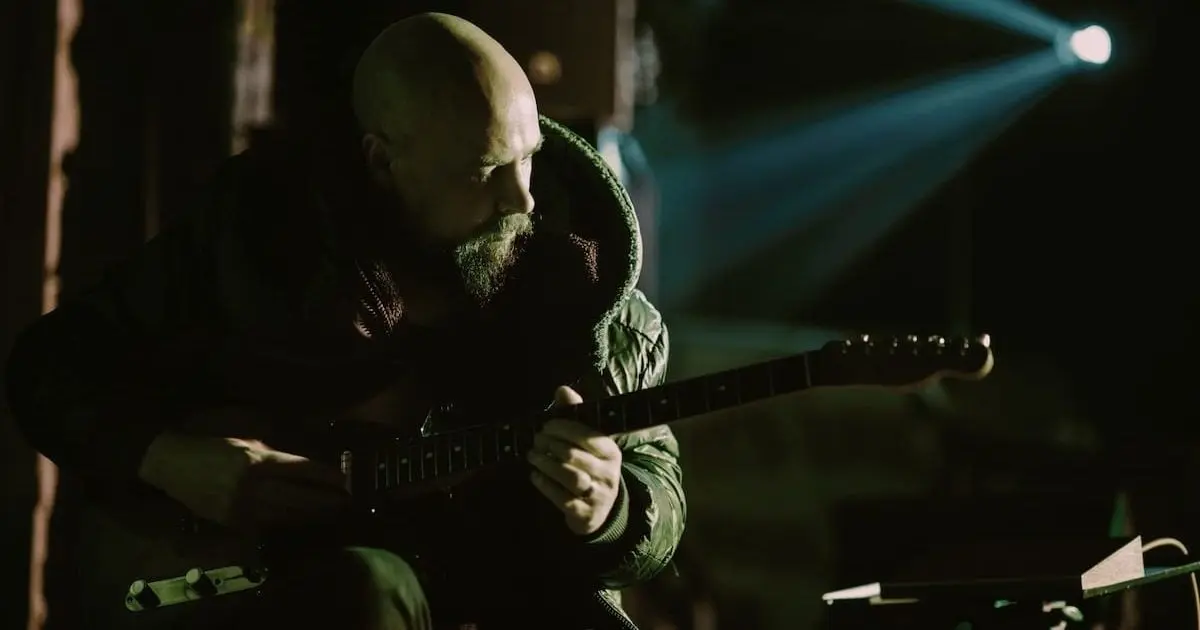
The contemporary landscape of British instrumental guitar music is vast, varied, and frequently dominated by sterile technical wizardry or quiet, unassuming folk tropes. Yet, very few practitioners manage to carve out a sonic identity as distinct, hypnotic, and atmospherically rich as Bradford-based guitarist and composer Dean McPhee. Operating at the intersections of ambient minimalism, traditional British folk, spiritual jazz, and drone, McPhee has steadily built a reputation as a master of the Electric Telecaster, relying primarily on clean tones, tube amplification, and a subtle deployment of live looping to construct sweeping, cathedral-sized compositions entirely unassisted by overdubs or computer manipulation.
Following his critically acclaimed previous releases, McPhee returned last month with his latest full-length opus, Northern Earth, released via the independent imprint Bass Ritual and distributed globally through Cargo Records. While the entire record serves as a masterclass in patient, evocative musicianship, one piece has quickly emerged as the beating heart of the album: “Appleby Fair.”
Recently, critical praise for the track has been amplified by insightful reviews—notably from Glenn Kimpton, who highlighted how McPhee’s overlaid guitars mimic traditional instrumentation, invoking distant echoes of Balkan and Far Eastern melodic phrasing alongside drone-heavy textures evocative of bagpipes, all underpinned by a resonant, bodhrán-esque kick-drum pulse.
Capitalizing on this momentum, McPhee has released a self-produced, intimate live performance video filmed at his home in Bradford. This visual offering provides fans and musicologists alike with a rare, transparent look into his creative process, demonstrating the intricate looping architecture and analog gear configuration that brought Northern Earth to life. Beyond the technical mechanics, the video’s release offers a deeper window into the cultural and geographic inspirations underpinning the track.
Drawing from his personal experiences visiting the historic Appleby Horse Fair—Europe’s largest annual gathering of Gypsies, Roma, and Travellers—McPhee channels the visceral energy, ancient traditions, and sensory overload of the Cumbrian event into a modern electric guitar tour de force. This article explores the anatomy of Northern Earth, the cultural significance of “Appleby Fair,” the technical wizardry behind McPhee’s performance style, and the broader implications of his work within the contemporary underground music scene.
Detailed Chronology & Background: The Genesis of Northern Earth
To understand the weight and resonance of Northern Earth, one must first examine the trajectory of Dean McPhee’s musical evolution. Emerging from the vibrant, often overlooked creative underground of Bradford, West Yorkshire, McPhee has long operated outside the traditional machinery of the mainstream music industry. Eschewing the conventional verse-chorus-verse structures of rock or the rapid-fire fretboard gymnastics of modern shredders, McPhee approaches the electric guitar with the reverence of a medieval modalist and the spatial awareness of a drone composer.
The Evolution of a Stylistic Vision
Over the course of several acclaimed albums released across various underground labels, McPhee’s signature sound has crystalized. Utilizing a Fender Telecaster—an instrument traditionally prized for its biting twang in country and rockabilly contexts—he subverts expectations. Through careful manipulation of tube amp settings, natural sustain, reverb, and delay pedals, he transforms the solid-body electric guitar into an instrument capable of rich, organ-like sustain, shimmering harmonic overlays, and earthy, rustic warmth.
The genesis of Northern Earth began months prior to its official release last month. Conceived during a period of intense personal reflection and geographic grounding in the North of England, the album’s title itself serves as a programmatic statement. It speaks directly to the topography, folklore, industrial heritage, and ancient histories of Northern Britain. Yet, as tracks like “Appleby Fair” prove, McPhee’s gaze is not purely insular; he looks outward, drawing sonic and cultural parallels between the localized traditions of the British Isles and broader, trans-continental nomadic histories.
The Unveiling of “Appleby Fair”
Upon the release of Northern Earth, music critics immediately gravitated toward its narrative peaks. “Appleby Fair,” positioned crucially within the album’s tracklist, quickly established itself as a focal point. Reviewers noted its distinct departure from standard modal folk workouts, pointing toward a borderless aesthetic where instruments simulate entirely different cultural tools.
Glenn Kimpton’s astute analysis captured the essence of the track, noting how McPhee’s layered guitar lines transcend the boundaries of standard fretted instruments. By deploying specific modal scales and precise pick-attack techniques, McPhee conjures the reedy, drone-backed wail of the bagpipes, alongside the cascading, microtonal ornamentations associated with Balkan and Far Eastern folk traditions. All of this is anchored by a persistent, earthy low-end thump reminiscent of the Irish bodhrán, creating a rhythmic heartbeat that drives the composition forward without ever disrupting its meditative flow.
The Live Performance Video Release
To further illuminate the creation of this centerpiece track, McPhee returned to the medium of self-documentation. Rather than hiring an external production crew or conceptualizing an abstract cinematic video, McPhee chose to film and edit a live performance video entirely at his home in Bradford.
Released to coincide with the album’s sustained critical run, the video serves a dual purpose: it acts as a striking visual performance piece and functions as an educational masterclass for aspiring musicians and fans fascinated by ambient composition. By stripping away the mystery of how such dense, multi-textured music can be generated by a single human being in a domestic setting, McPhee bridges the gap between creator and audience, offering a transparent glimpse into the physical labor and technological alchemy required to manifest Northern Earth.
Supporting Context & Cultural Metrics: The World of Appleby Fair
To fully appreciate the depth of McPhee’s composition, one must examine the socio-cultural phenomenon that inspired it: the Appleby Horse Fair. Held annually in the picturesque town of Appleby-in-Westmorland in Cumbria, England, the fair is a living, breathing historical institution that defies easy categorization.
History and Scale of the Gathering
Dating back to a charter granted by King James II in 1685—though with unwritten roots stretching back centuries earlier—the Appleby Horse Fair is officially recognized as Europe’s largest gathering of Gypsies, Travellers, and Roma. Each June, tens of thousands of Travellers and Gypsies converge upon the Eden Valley, accompanied by thousands of horses, traditional vardos (bow-top wagons), and modern vehicles.
For the settled community, the fair is often viewed through the narrow lens of media sensationalism. However, for those who immerse themselves in its culture—such as McPhee, who has visited the fair twice—it reveals itself as a vibrant nexus of commerce, community, horsemanship, and deep-seated oral and visual traditions.
The Sights, Sounds, and Sensory Landscape
McPhee’s personal reflections on the fair offer a vivid blueprint for the musical choices made on “Appleby Fair”:
"The track is inspired by the annual Appleby Horse Fair, one of Europe’s largest gatherings of Travellers, Gypsies and Roma. There’s a real horse culture in Bradford, and I’ve been to Appleby twice. Both visits were really inspiring – I got to see the horse trading markets, the famous ‘Flashing Lane’, where horses are trotted at speed, and the River Eden, where my wife took her horse for a swim. It was great to have a beer, explore the massive car boot sale and wander around, soaking up the sights and sounds…"
This sensory immersion directly translates into the structural dynamics of the track:
- The Flashing Lane: The kinetic energy, dust, thundering hooves, and adrenaline of the famous Flashing Lane find their sonic equivalent in the driving, repetitive rhythmic pulses and cascading guitar runs that build tension throughout the piece.
- The River Eden: The fluid, tranquil, and restorative qualities of the landscape—exemplified by horses swimming in the river—are mirrored in the sustained, ambient wash of the background drone layers, providing a cooling counterweight to the rhythmic intensity.
- The Communal Tapestry: The bustling markets, trading haggles, and diverse cultural intersections of the fair inform the global modal palette of the composition, blending British folk structures with Eastern European and Balkan flavors.
Bradford’s Equine Culture and Local Roots
It is also worth noting McPhee’s reference to Bradford’s own distinct "horse culture." Far from being an isolated rural curiosity, the intersection of urban life and equine tradition has deep working-class roots in parts of West Yorkshire. This intersection of the urban industrial North and the agrarian, nomadic traditions of the countryside forms the ideological bedrock of Northern Earth. McPhee’s music does not emerge from an ivory tower; it is firmly rooted in the physical realities of northern landscapes, working-class communities, and shared cultural experiences.
Technical Breakdown: The Architecture of McPhee’s Sound
One of the most remarkable aspects of Dean McPhee’s artistic output—and one that is laid bare in his new live performance video—is his commitment to absolute authenticity in execution. In an era where electronic music and modern rock are frequently subjected to digital quantization, multitrack layering, and heavy post-production correction, McPhee relies on real-time execution.
The Looping Process
At the core of McPhee’s live methodology is the judicious use of live looping pedals. Rather than building a wall of sound through countless studio overdubs that cannot be replicated on stage, McPhee constructs his complex arrangements layer by foundational layer in real-time.
- The Foundation Drone: The process typically begins with the establishment of a low-end, sustaining modal drone. Using specific EQ settings on his Telecaster and amp, McPhee creates a warm, atmospheric bed of sound that mimics a harmonium, bagpipe drone, or bowed cello.
- The Rhythmic Pulse: Next, using specialized picking techniques, palm-muting, and percussive tapping against the guitar body and pickups, he generates the bodhrán-like kick drum effect noted by critics. This rhythmic anchor is looped to maintain temporal sync without the use of robotic click tracks or programmed drum machines.
- The Melodic Interplay: Once the foundational architecture is secured, McPhee layers intricate, serpentine lead lines over the top. Because these layers are captured live, any microscopic human variations, micro-timing shifts, and natural acoustic interactions remain intact, giving the music an organic, breathing quality that computer-generated loops invariably lack.
Gear and Configuration
While McPhee’s tone sounds effortless and organic, it is the result of years of careful gear curation. As demonstrated in his home studio video, his setup avoids massive pedalboard configurations laden with digital multi-effects processors. Instead, he favors a transparent signal path:
- Fender Telecaster: The choice of guitar provides the requisite clarity, snap, and sustain. By manipulating the tone knobs and pickup selections (frequently favoring the neck pickup for warm, jazz-infused tones or the bridge for cutting folk articulation), he achieves a vast array of timbral colors.
- All-Tube Amplification: Clean, high-headroom tube amplifiers provide the vital warmth, dynamic response, and natural compression necessary to make sustaining single notes sound vocal and expressive.
- Analog and Tape-Style Delays/Reverbs: Rather than sterile digital room simulations, McPhee utilizes delay and reverb units that impart a sense of vast, cavernous space, evoking ancient chapels, misty moors, and open valleys.
Official Statements & Critical Reception
The critical response to Northern Earth and “Appleby Fair” has been overwhelmingly positive, solidifying McPhee’s status as a vital voice in contemporary British underground music.
Critical Accolades
In his review for KLOF Mag, critic Glenn Kimpton encapsulated the transcendent nature of the release:
“…inspired by Europe’s largest gathering of gypsies and travellers, the overlaid guitars here are almost playing the parts of traditional instruments, with echoes of Balkan and far eastern stylings in places and hints of bagpipes in others, all supported by the bodhran-like kick drum.”
This sentiment has been echoed across various music blogs, ambient forums, and folk publications. Reviewers have praised McPhee’s ability to evoke profound emotional responses without uttering a single word. In instrumental music, narrative is often difficult to convey without heavy-handed conceptual scaffolding; however, through evocative song titles and deeply felt stylistic choices, McPhee manages to tell vivid stories about place, history, and community.
Statement from the Artist
Reflecting on the creation of the video and the deep inspirations behind the track, Dean McPhee shared the following via his official channels:
"I filmed and edited the video myself at home in Bradford. It gives an insight into the track and how it’s performed, with a look at the looping process and some of the gear I used to record the album. The track is inspired by the annual Appleby Horse Fair, one of Europe’s largest gatherings of Travellers, Gypsies and Roma. There’s a real horse culture in Bradford, and I’ve been to Appleby twice. Both visits were really inspiring – I got to see the horse trading markets, the famous ‘Flashing Lane’, where horses are trotted at speed, and the River Eden, where my wife took her horse for a swim. It was great to have a beer, explore the massive car boot sale and wander around, soaking up the sights and sounds…"
This statement highlights the grounded, down-to-earth perspective of the artist. Despite the high-art complexity of his compositions and their frequent comparison to avant-garde minimalism or sacred music, McPhee remains connected to the simple, human pleasures of wandering a market, enjoying a beer, and observing the dynamic life of the British countryside.
Future Outlook: The Ongoing Legacy of Northern Earth
As Northern Earth continues to find its audience across the globe, the release of the “Appleby Fair” live performance video marks a strategic and artistic high point in the album’s campaign.
The Independent Model and Distribution
Released on the independent underground label Bass Ritual and distributed internationally through Cargo Records, the album stands as a testament to the viability of uncompromising, niche instrumental music in the modern era. In a music industry increasingly dominated by algorithmic streaming optimization and viral short-form content, artists like Dean McPhee prove that there remains a hungry, dedicated audience for physical media (vinyl and CD), deep listening experiences, and slow-burn artistic integrity.
Through platforms like Bandcamp—where Northern Earth is currently available for digital purchase and physical ordering—independent artists maintain a direct, unmediated relationship with their fanbase. The transparency shown in McPhee’s home-studio video further strengthens this bond, transforming consumer relationships into communities of shared aesthetic appreciation.
Live Performance Horizons
With the intricate mechanics of tracks like “Appleby Fair” now publicly demystified, anticipation is naturally building for McPhee’s upcoming live dates. Translating the sweeping majesty of Northern Earth to the live stage is no small feat, but as his home performance video proves, McPhee’s mastery of real-time looping allows him to recreate his studio environments with striking fidelity. Audiences attending his upcoming performances can expect not merely a recital of recorded material, but a mesmerizing, ritualistic demonstration of sonic architecture being built out of thin air, loop by loop, note by note.
Conclusion
Dean McPhee’s Northern Earth is more than just another collection of instrumental guitar tracks; it is a cultural artifact, a sonic map of northern topography, and a heartfelt tribute to nomadic traditions that stretch back centuries. In “Appleby Fair,” McPhee achieves a rare synthesis: he takes the dust, thunder, water, and community of Europe’s largest Traveller gathering and distills them into the pure, vibrating copper and steel of an electric guitar.
Through his uncompromising commitment to live execution, his deep engagement with local and national folklore, and his unwavering artistic vision, McPhee has delivered a career-defining work. As listeners watch him construct these towering sonic cathedrals in his Bradford home via his new performance video, they are reminded of the profound power of music to bridge geographic divides, honor living traditions, and evoke the eternal spirit of the northern earth.
Album & Purchasing Information
- Album: Northern Earth by Dean McPhee
- Label: Bass Ritual
- Distribution: Cargo Records
- Availability: Available now on Vinyl, CD, and Digital Download via Bandcamp and select independent record stores worldwide.