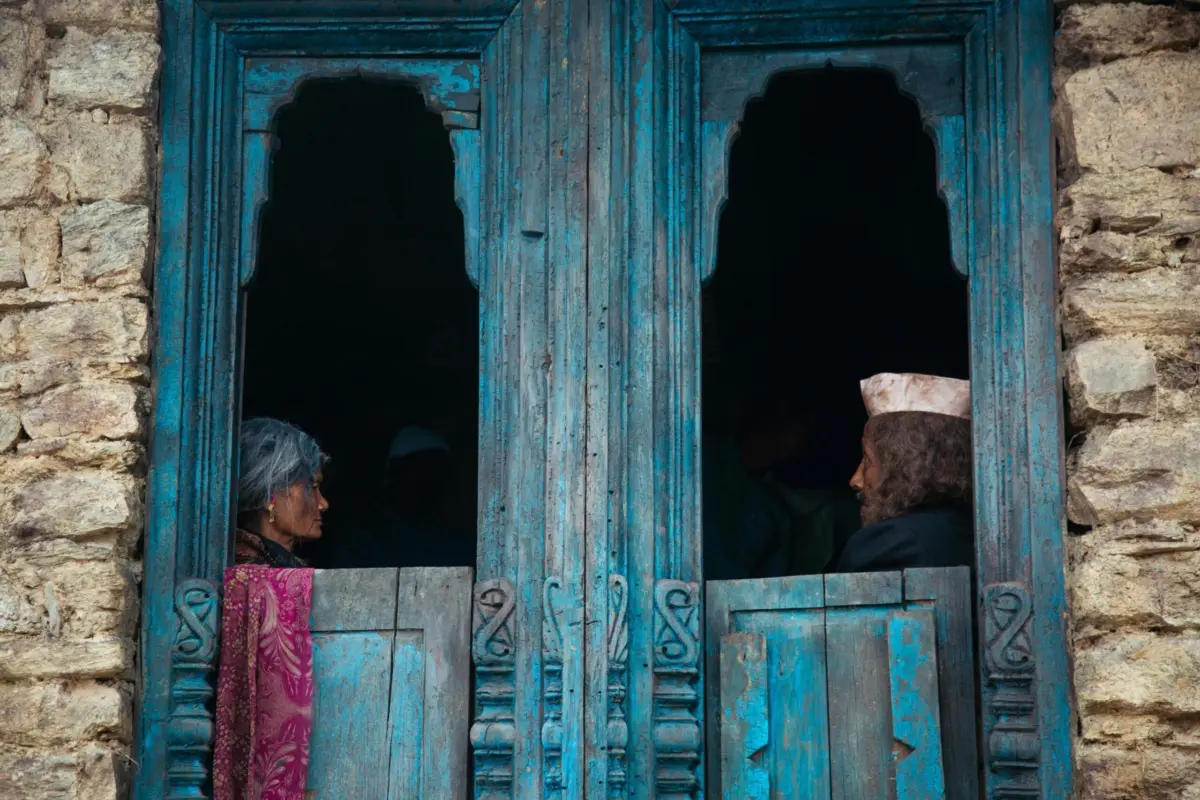
In an era dominated by high-octane blockbusters, franchise universes, and algorithmically optimized streaming content, a quiet, 111-minute independent film has emerged to capture the collective conscience of India. Titled Pyre and directed by veteran television journalist-turned-filmmaker Vinod Kapri, the movie examines the tender love, profound isolation, and ultimate vulnerability of an elderly couple navigating the twilight of their lives in the remote heights of the Himalayas.
Despite accumulating 18 major awards across international and domestic film circuits—including three Best Feature accolades and a staggering 12 Audience-Choice Best Film prizes—Pyre was initially deemed commercially unviable. For two long years, the film sat on a digital shelf, rejected by major domestic distributors and completely passed over by dominant Over-The-Top (OTT) streaming platforms. Industry gatekeepers argued that a slow-paced, regional language narrative anchored by non-professional actors lacked the commercial muscle required for theatrical distribution.
However, the film’s modest 70-screen theatrical release on October 30 fundamentally upended those industry assumptions. Propelled by raw, tearful word-of-mouth recommendations, packed screenings, and widespread social media discourse, Pyre transformed from an orphan project into a runaway box-office triumph. More importantly, it has sparked a national conversation surrounding the socioeconomic crises plaguing rural India: the rapid outmigration of youth, the creation of depopulated "ghost villages" in the mountains, and the devastating toll of climate volatility on fragile Himalayan ecosystems.
Detailed Chronology: The Making and Miracle of Pyre
The Spark in Munsiyari (2018)
The genesis of Pyre dates back to 2018, when director Vinod Kapri encountered a striking photograph of an 84-year-old resident of Munsiyari, a picturesque yet geographically isolated hill station in the northern Indian state of Uttarakhand. Captivated by the deep topography of the man’s weathered face, Kapri traveled to the mountains to meet him and his wife.
During their conversation, Kapri asked the elderly couple what kept them awake at night—what their ultimate fears were. The response was disarmingly intimate. The husband confessed that his greatest terror was dying first, leaving his wife entirely unequipped to manage alone. The wife mirrored his anxiety, noting that her husband did not know how to cook, leaving his survival in question should she pass away first. This profound interdependence planted the narrative seeds for what would eventually become Pyre.
Casting and Production Challenges
Initially, Kapri attempted to cast the real-life couple who inspired the project. However, after a grueling week of shooting, it became evident that translating raw reality directly into a feature-length dramatic structure was untenable.
Seeking seasoned talent, Kapri approached legendary Bollywood actor Naseeruddin Shah and his wife, acclaimed actress Ratna Pathak Shah. While Shah was deeply moved by the script, he ultimately turned down the role, reasoning that their urban backgrounds and lack of familiarity with the specific regional cadence of the Garhwal Himalayas would prevent them from rendering an authentic performance.
Kapri then turned inward, casting within his own extended family and local communities. He secured his lead male protagonist—Padam Singh—through his father’s younger brother, a retired Indian Army soldier eager to explore the craft of acting. For the female lead, Tulsi, Kapri scoured neighboring mountain communities until he discovered Heera Devi, an elderly widow who had spent her entire life farming, cutting fodder, and tending livestock. Neither had ever faced a motion picture camera before.
The Wilderness of Rejection (2022–2024)
Principal photography concluded, and by 2022, Pyre was a finished cinematic work. What followed, however, was a prolonged period of industry indifference. Major studios, independent distributors, and subscription video-on-demand (SVOD) platforms universally declined to acquire the film, citing its lack of commercial viability, absence of star power, and niche regional focus.
Refusing to let the project languish in obscurity, Kapri submitted the film to the international festival circuit. Throughout 2024, Pyre screened at high-profile international and domestic festivals, steadily accumulating critical validation and sweeping audience choice awards. Yet, theatrical doors remained firmly bolted until a producer friend of Kapri stepped forward to personally underwrite a limited theatrical rollout.
The Theatrical Breakthrough (October 2024)
On October 30, Pyre debuted in Indian cinemas on a meager 70 screens. What transpired next caught industry analysts entirely off guard. Audiences exiting screenings flooded social media platforms with video testimonials, capturing viewers weeping openly in cinema foyers and confessing that no modern film had elicited such visceral emotional responses. Faced with surging demand and sold-out auditoriums, theater owners rapidly increased daily screenings, turning a micro-budget regional film into an undeniable cultural event.
Supporting Context & Metrics
The Socio-Economic Realities of Uttarakhand’s "Ghost Villages"
While Pyre functions primarily as an intimate character study of a couple married for 65 years who have spent 28 of those years waiting for their son, Hariya, to return from Mumbai, it doubles as an unflinching social critique. The film documents the harrowing phenomenon of "ghost villages"—hundreds of historical Himalayan settlements abandoned as younger generations migrate en masse to metropolitan centers in search of economic survival.
Key contextual factors driving this migration include:
Economic Stagnation: A lack of localized industrial, educational, and white-collar employment opportunities forces youth to leave behind agrarian lives.
Climatic Pressures: Escalating climate change impacts have made Himalayan weather patterns increasingly volatile, disrupting traditional farming and pastoral livelihoods.
Infrastructure Deficits: Many remote hamlets remain disconnected from primary road networks and electrical grids, rendering basic healthcare access—such as carrying the sick down treacherous mountain paths—a logistical nightmare.
Critical Acclaim and Award Metrics
Total Awards Won: 18 international and domestic accolades.
Festival Breakdowns: 3 Best Feature Film awards and 12 Audience-Choice Best Film prizes.
Theatrical Footprint: Began as a localized 70-screen release before expanding due to organic word-of-mouth demand.
Industry Endorsements: Received effusive praise from heavyweights of Indian cinema, including veteran actors Naseeruddin Shah and Anupam Kher.
Official Statements and Perspectives
The cultural resonance of Pyre is amplified by the authentic voices of its creators, its amateur stars, and the towering figures of Indian cinema who have championed its release.
Director Vinod Kapri on the Core Narrative:
"They have shared a life together for 65 years and, for the last 28 years, they’ve been waiting for their son, Hariya, who’s gone to Mumbai in search of work, to come back. It’s a story of companionship, of loneliness and of waiting."
Heera Devi (Lead Actress ‘Tulsi’) on the Universal Nature of the Film:
"Across villages in India, the elderly are left alone. No one’s children stay at home anymore and it’s the same situation for all parents. They keep waiting for their son and daughter-in-law, hoping that their grandchildren would visit and spend a few days with them. The loneliness is simply unbearable… In reality, our village is just like this."
Padam Singh (Lead Actor ‘Padam Singh’) on the Emotional Validation:
"We felt immense joy and happiness. We’ve received so much love and inspiration—something we had never imagined."
Recalling his encounter with legendary actor Naseeruddin Shah, Singh shared a humbling moment:
"He watched the entire movie and had tears in his eyes. He hugged me. He said, ‘Bubu, the role you have performed, I wouldn’t be able to pull off even in seven lifetimes.’"
Future Outlook: Legacy and Lessons for the Indian Film Industry
The unexpected triumph of Pyre signals a potential watershed moment for independent Indian cinema. For years, regional narratives rooted in rural realities have struggled against the gravitational pull of high-budget Bollywood spectacles and pan-Indian commercial action franchises. Pyre demonstrates conclusively that a substantial, hungry demographic of Indian cinema-goers yearns for grounded, emotionally resonant storytelling that reflects the changing sociological fabric of the nation.
Policy and Societal Implications
Beyond its artistic achievements, the film has breathed new life into policy debates surrounding rural development in Himalayan states like Uttarakhand. Padam Singh’s closing appeal to the younger generation and the state apparatus carries broader economic urgency:
Decentralization of Opportunity: Demands for government interventions to establish localized educational institutions and sustainable green-collar employment hubs.
Reversing Outmigration: Incentivizing youth to remain connected to their ancestral homelands through modern agricultural technology and eco-tourism initiatives.
Elderly Care Infrastructure: Highlighting the urgent need for institutional support systems to care for aging populations left behind in remote hamlets as working-age populations concentrate in tier-one cities.
Ultimately, Pyre proves that stories born from the margins of society, told with uncompromising honesty and stripped of commercial artifice, possess the enduring power to pierce the noise of modern media and strike at the universal heart of the human condition.