Executive Overview
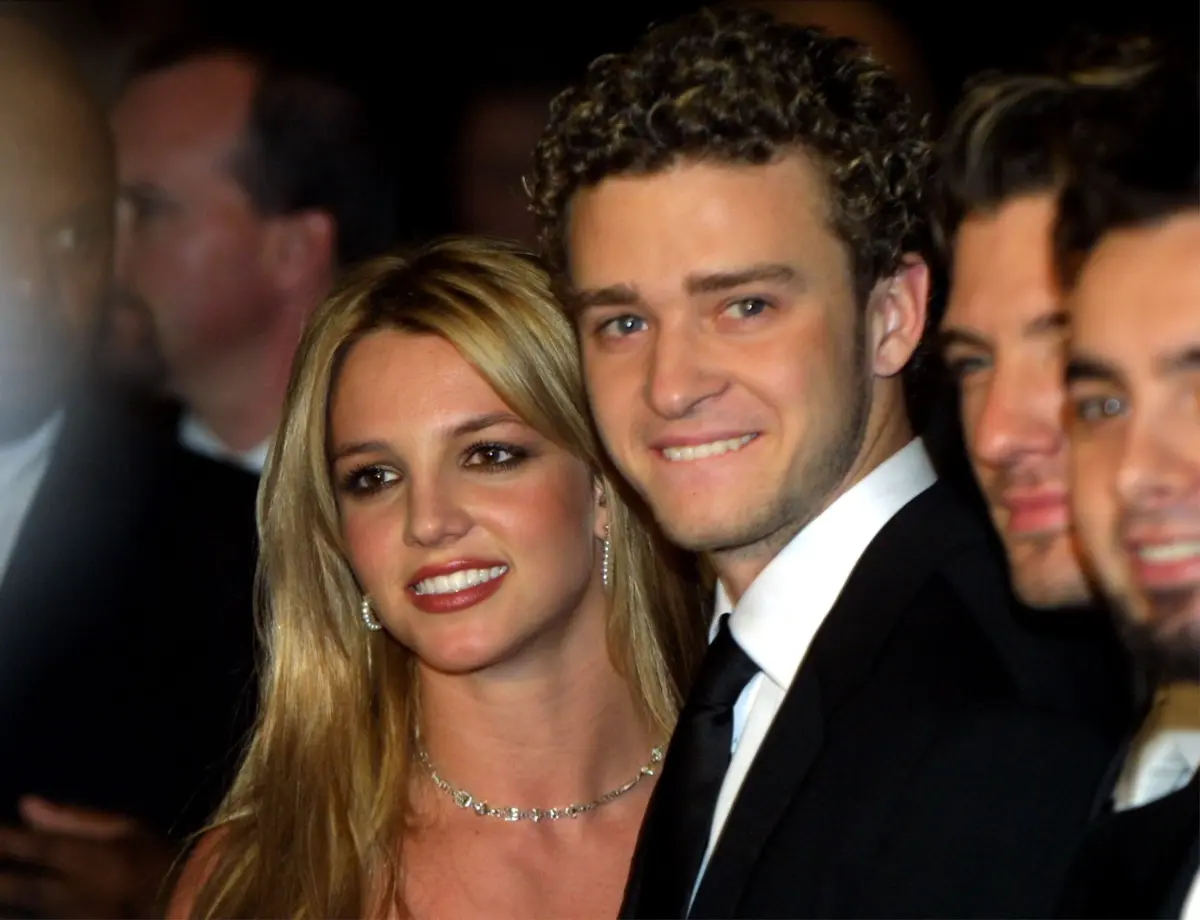
For nearly two decades, pop culture historians, music critics, and die-hard fans alike have operated under a singular, unchallenged assumption: that Justin Timberlake’s 2006 chart-topping megahit, “What Goes Around…Comes Around,” was a direct musical autopsy of his high-profile, devastating breakup with fellow pop icon Britney Spears. The narrative seemed watertight. Arriving four years after their bitter 2002 split—and following on the heels of “Cry Me a River,” an undisputed public indictment of Spears—the track was universally interpreted as another venomous chapter in one of the music industry’s most scrutinized romances.
However, in a revealing new interview with Complex magazine published on Thursday, the 45-year-old Grammy Award-winning artist shattered decades of speculation. Stepping forward to rank and reflect upon the definitive tracks of his expansive solo catalog, Timberlake took direct aim at the persistent folklore, explicitly stating that the track had nothing to do with Spears whatsoever. Instead, the multi-platinum single—which went on to capture a Grammy Award and cement its status as a defining cultural artifact of the mid-2000s—was born from an entirely different source: a heartbroken friend’s raw, unfiltered phone call.
This revelation arrives at a fascinating cultural juncture. In recent years, public scrutiny regarding the dynamics of early-2000s celebrity relationships has intensified, fueled in part by bombshell revelations in Spears’s 2023 memoir, The Woman in Me. By finally pulling back the curtain on the creative genesis of “What Goes Around…Comes Around,” Timberlake not only rewrites the mythology of one of his most celebrated anthems but also forces a re-examination of how pop music audiences consume, project, and ultimately mythologize the personal lives of global superstars.
Detailed Chronology: From 1999 to the Present
To fully understand the weight of Timberlake’s recent clarification, one must chart the complex timeline of his relationship with Spears, the subsequent solo trajectories of both artists, and the enduring shadow cast by their collective past.
The Golden Era (1999–2002)
Long before streaming services and social media gossip loops dictated the news cycle, Justin Timberlake and Britney Spears were the undisputed royalty of the turn-of-the-millennium pop landscape. Having first crossed paths as fresh-faced cast members on Disney’s The All-New Mickey Mouse Club, the duo transitioned into international superstardom—Spears with "…Baby One More Time" and Timberlake as the frontman of boy band phenomenon NSYNC.
When they officially began dating in 1999, they became the ultimate tabloid fixation. For roughly three years, their romance was the archetype of adolescent pop perfection. Yet, behind the matching denim outfits and red-carpet appearances, pressures mounted. In late 2002, the fairy tale abruptly ended, sending shockwaves through the entertainment industry and leaving a legion of devoted fans searching for answers in the wreckage.
The Aftermath and “Cry Me a River” (2002–2006)
While the precise mechanics of their breakup were kept largely under wraps at the time, the musical fallout was immediate and public. Timberlake launched his solo career with the 2002 blockbuster album Justified. Its second single, “Cry Me a River,” became an instant cultural milestone.
Featuring a music video starring a Spears lookalike, the track left little to the imagination regarding themes of betrayal and heartbreak. For years, the public connected the dots. While Timberlake largely maintained a calculated ambiguity early on, he explicitly acknowledged in a 2011 interview that the song had indeed been penned in the direct aftermath of his split from Spears.
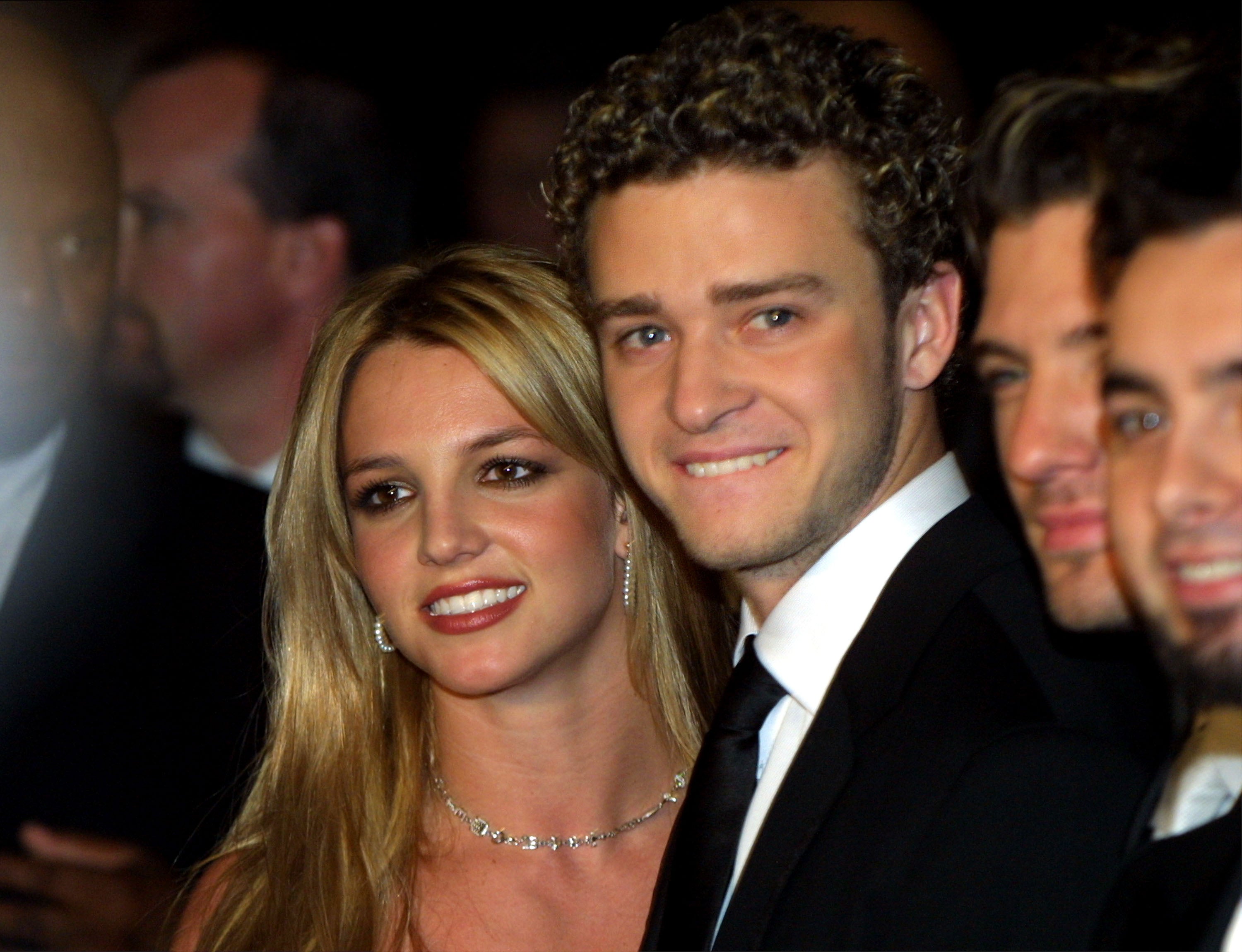
When Timberlake returned to the studio for his sophomore solo effort, 2006’s FutureSex/LoveSounds, the appetite for more autobiographical heartbreak anthems was insatiable. Enter “What Goes Around…Comes Around.” Released as the album’s third single, its cinematic, dramatic narrative—bolstered by a 10-minute mini-movie music video—led fans and media outlets to seamlessly classify it as "Cry Me a River, Part 2."
The Memoir Reckoning (2023)
The narrative surrounding the former couple experienced a seismic jolt in late 2023 with the release of Spears’s memoir, The Woman in Me. In the book, Spears offered her perspective on their years together and the subsequent breakup. Notably, she admitted to infidelity, disclosing that she had cheated on Timberlake with choreographer Wade Robson, while also bringing to light her side of the tumultuous media storm that followed their split, including personal struggles during an era of relentless tabloid intrusion.
The Complex Clarification (2026)
Now, nearly twenty-four years after their breakup, Timberlake has utilized his retrospective feature with Complex to untangle the web of assumptions. By explaining that “What Goes Around…Comes Around” was pulled from a third-party narrative rather than his own journal entries, the pop star has effectively severed the umbilical cord connecting the 2006 track to the ghost of his relationship with Spears.
Supporting Context & Metrics: The Anatomy of a Mega-Hit
To view “What Goes Around…Comes Around” merely through the lens of celebrity gossip is to overlook its staggering artistic and commercial achievements. Timberlake himself regards the song as residing comfortably within the top two of his entire illustrious career—a bold claim for an artist who has dominated modern pop and R&B radio for over two decades.
A Rapid-Fire Genesis
According to Timberlake, the track’s creation was almost supernatural in its efficiency. In his interview with Complex, he recalled that the song was written in "damn near 20 minutes."
The catalyst was a late-night phone call from an anonymous friend who was navigating a devastating breakup driven by infidelity. When Timberlake asked for permission to translate the raw experience into a song, his friend reportedly responded with a definitive blessing: *"Yeah, torch that b***, what goes around comes around."
Recognizing lightning in a bottle, Timberlake recalled cutting the conversation short: "And I was like, ‘I have to go, thank you.’ He was like, ‘What?’ I was like, ‘I got it.’ And I hung up the phone, and so I had the idea." Working alongside longtime collaborator Timbaland, the musical architecture of the track fell into place with frictionless synergy.
Commercial Domination and Critical Acclaim
The track’s effortless inception translated into a powerhouse commercial juggernaut:

- Billboard Hot 100: Upon its release from the FutureSex/LoveSounds album, the single soared to the summit, making it Timberlake’s third consecutive number-one hit on the prestigious chart.
- Global Reach: The song achieved massive international crossover success, dominating radio formats from North America to Europe and Australia.
- Grammy Recognition: The Recording Academy validated the track’s artistic merit, awarding Timberlake the Grammy Award for Best Male Pop Vocal Performance.
- Visual Artistry: Directed by Samuel Bayer, the accompanying 10-minute cinematic music video—co-starring actress Scarlett Johansson—broke conventional video formats of the era, functioning more like a short noir film than a standard promotional clip.
Official Statements and Industry Impact
Timberlake’s candid breakdown of the song’s origins highlights a broader conversation within the music industry regarding the intersection of personal life and public art. For years, singer-songwriters have wrestled with the phenomenon of "lore"—the tendency of audiences to treat every lyric as a diary entry, regardless of the creative license employed by the writer.
By openly debunking the Spears connection, Timberlake is participating in a modern recalibration of his public narrative. Over the past few years, the artist has faced waves of intense public re-evaluation, ranging from criticisms surrounding past media handling of the early-2000s breakup to unrelated legal hurdles, including a 2024 DWI arrest.
By setting the record straight on one of his most culturally significant songs, Timberlake reclaims the authorial intent behind his art. He clarifies that while "Cry Me a River" was indeed a direct byproduct of his personal heartbreak, “What Goes Around…Comes Around” was an exercise in empathy and storytelling—an artistic channeling of a friend’s pain rather than an ongoing vendetta against an ex-partner.
Future Outlook: Legacy, Lore, and the Modern Pop Landscape
As Justin Timberlake continues to evaluate his storied catalog and legacy within the pantheon of pop music, this latest revelation serves as a reminder of how deeply intertwined perception and reality can become in the digital age.
Looking forward, the debunking of the “What Goes Around…Comes Around” myth is unlikely to completely erase the song’s place in pop culture folklore; listeners have spent nearly twenty years weaving the track into the narrative tapestry of the Timberlake-Spears saga. However, it provides a vital educational pivot for music historians and fans alike.
In an era where fan communities dissect lyrics on social media platforms like TikTok and X (formerly Twitter) with forensic intensity, Timberlake’s commentary stands as a timely cautionary tale. It demonstrates the danger of reducing complex musical compositions to simple tabloid gossip. As pop music evolves, the lines between an artist’s lived experience and cinematic fiction will continue to blur, but thanks to Timberlake’s recent clarifications, one of the 2000s’ most iconic tracks can finally be appreciated for what it truly was: a brilliantly captured story of universal heartbreak, written in twenty minutes, driven by a friend’s raw command to "torch that b****" and let karma take the wheel.