Executive Overview
While British culture revels in the seasonally bounded pageantry of Halloween—a month-long festival of ghouls, cinematic horror, and creeping dread—academics and cultural theorists are tracking a deeper, more pervasive phenomenon. Beyond the synthetic cobwebs and costume parties lies a quiet, enduring reality: society is continuously shaped by the ghosts of yesterday.
At York St John University, the Hauntology and Spectrality Research Group sits at the vanguard of this intellectual movement. Drawing from philosophy, sociology, media studies, literature, health care, and cultural theory, the group investigates how the past refuses to stay neatly filed away. Their work shifts the definition of "ghosts" away from the supernatural tropes of Victorian parlor tricks and horror fiction. Instead, they examine how absence itself can exert a powerful presence, shaping contemporary literature, political landscapes, architecture, and everyday life.
At the heart of this interdisciplinary inquiry are two closely intertwined concepts: hauntology—a term coined by French philosopher Jacques Derrida in his 1993 landmark work Specters of Marx—and spectrality, the study of how absent people, places, and cultures continue to make their presence felt. As popular culture witnesses a massive resurgence of interest in folk horror, retro media, and cultural heritage, this academic framework offers a vital lens for understanding why modern Britain feels so profoundly haunted.
Detailed Chronology: The Evolution of Hauntology and Spectrality
To understand how contemporary culture became so deeply entwined with its own history, it is necessary to trace the conceptual lineage of hauntology, spectrality, and the shifting relationship between time, memory, and media.
1993: The Birth of Hauntology
French philosopher Jacques Derrida introduced the term hauntologie (hauntology) in Specters of Marx. Derrida used the concept to challenge linear timelines and historical determinism, arguing that the past is never fully over, nor is it merely dead. Instead, it lingers in the present as a specter, dictating terms to living generations. Originally deployed as a critique of political economy following the apparent "end of history" and the fall of the Soviet bloc, the term quickly transcended its political origins to become a foundational theory for cultural studies.
1997: The Sociology of Ghostly Matters
American sociologist Avery Gordon published Ghostly Matters: Haunting and the Sociological Imagination. Gordon expanded the vocabulary of haunting beyond high philosophy, anchoring it in the lived social realities of trauma, power, and memory. She argued that being haunted is a cumulative state in which repressed or unresolved social violence makes itself known through everyday disturbances, structural inequalities, and collective anxieties.
2000s–2010s: The Digital Turn and "Lost Futures"
As the 21st century progressed, cultural critic Mark Fisher (known widely by his moniker K-Punk) applied hauntological frameworks to popular music, digital culture, and late-capitalist malaise. In his influential 2016 work The Weird and the Eerie, Fisher crystallized the hauntological sentiment as "a failure of absence or a failure of presence." Fisher popularized the notion of "lost futures"—the haunting realization that the 21st century has largely failed to imagine a genuinely new cultural or aesthetic future, choosing instead to endlessly recycle the retro aesthetics of the 20th century.
2010s–Present: The Rise of the "Haunted Generation" and Public Media
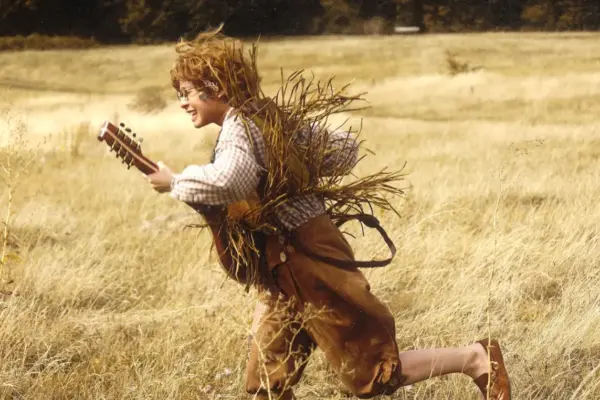
In the UK, public fascination with the uncanny surged through podcasts such as Danny Robins’s BBC series Uncanny, which investigates unexplained phenomena drawn directly from listeners’ personal accounts. Simultaneously, cultural commentators like Bob Fischer identified a distinct demographic shift among adults who grew up during the 1970s and 1980s. Dubbed "the haunted generation," this demographic began viewing the distinct, often eerie aesthetic of 20th-century British children’s television—typified by terrifying East German imports like The Singing Ringing Tree—not merely through rose-tinted nostalgia, but as a site of profound psychological resonance.
Supporting Context & Metrics: Britain as a Nation of Layers
Britain provides an exceptionally fertile landscape for hauntological inquiry. Few nations feature such dense, visible stratifications of history where ancient infrastructure and modern commerce collide daily. Roman roads, medieval parish churches, crumbling 19th-century industrial ruins, and sleek 21st-century architectural developments frequently occupy the same physical footprints.
This spatial and temporal compression means that the past in Britain is rarely experienced as a distant, abstract epoch. Rather, it is embedded directly into the fabric of everyday life.
Key Cultural Metrics and Manifestations:
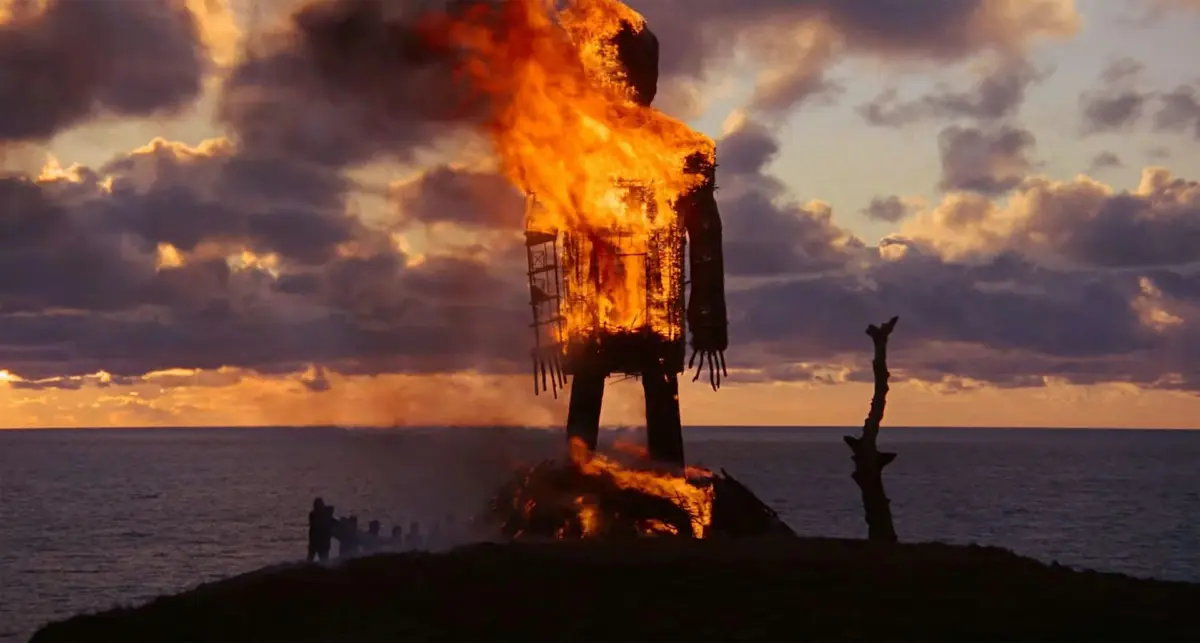
- The Folk Horror Resurgence: Public interest in British folk horror—characterized by isolated rural communities, pagan survivals, and ancient landscapes—has transitioned from a niche cinematic sub-genre into a dominant cultural touchstone. Sell-out public lectures, specialized festivals, and reading groups, such as the York Society of Hauntologists, demonstrate a booming appetite for historical unease.
- The Seance of Retro-Media: Rather than simple escapism, academic analysis reveals that adults returning to the television shows, books, and aesthetic artifacts of their youth are engaging in a form of cultural seance. Revisiting these texts allows individuals to commune with past versions of themselves, bridging the gap between personal memory and collective history.
- Academic Diversification: Over the past twenty years, the application of hauntological frameworks has spread from literary theory into unexpected domains. Scholars now apply spectral analysis to criminology, architecture, landscape photography, digital heritage, and technology.
Official Statements & Research Perspectives
The York St John University Hauntology and Spectrality Research Group approaches these phenomena through an aggressively interdisciplinary lens. Members argue that understanding the persistence of the past is vital for diagnosing contemporary cultural anxieties.
"Our work is concerned with ghosts, not in the conventional supernatural sense, but rather with the broader question of how absence can nevertheless exert a powerful presence,"
— Spokesperson, York St John University Hauntology and Spectrality Research Group
Reflecting on the psychological weight carried by those who grew up during the waning decades of the 20th century, academics note that engaging with historical media functions as an active psychological pursuit:
"Revisiting these texts then becomes a seance of sorts, where adults seek to commune with past selves and past experiences."
— Dr. John Marland, co-editor and author of Horrifying Children: Hauntology and the Legacy of Children’s Television
Furthermore, the theoretical boundaries of the field continue to expand outward, demonstrating its utility far beyond the humanities.
Future Outlook: Medical Hauntology and Global Horizons
As the field looks toward the future, its scope is widening in two critical directions: institutional application and international collaboration.
1. Medical Hauntology
One of the most innovative sub-divisions of the York St John research ecosystem is the Medical Hauntology sub-group. This initiative explores how hauntological and spectral frameworks can be applied within healthcare settings. By examining how trauma, chronic illness, institutional memory, and patient histories linger in clinical environments, researchers are uncovering new tools to help both practitioners and patients navigate the psychological weights of medical care. The framework provides a language for the invisible burdens carried within hospitals and care facilities—where past diagnoses, bodily changes, and systemic failures continuously shape the present treatment experience.
2. Globalized Spectrality
While Britain’s layered history has provided a natural laboratory for this research, the appeal of hauntology is rapidly globalizing. Scholars from around the world are adapting these theories to address regional histories of displacement, colonialism, and technological disruption. This international dialogue is captured in ongoing academic outputs, including the Spectres, Hauntings and Horrors book series, which examines storytelling along the blurred borders of fiction, non-fiction, and cultural trauma.
Conclusion
Ultimately, the work being championed at York St John University and across the broader academic landscape serves as a reminder of a fundamental truth: memories endure, histories resurface, physical spaces retain the invisible footprints of former lives, and forgotten possibilities continue to exert gravity on the modern world.
As the cultural calendar shifts past October and the seasonal fixation on ghosts recedes, the core lesson of hauntology remains. Enjoy the spooky season while it lasts, but remember—society is haunted all year round.