Executive Overview
Long before the modern conventions of horror fiction and secular ghost stories took root in the cultural imagination, the medieval period possessed a remarkably vibrant, deeply theological, and frequently terrifying tradition of the paranormal. Far from being mere entertainments designed to while away the long winter nights, medieval ghost stories functioned as a potent nexus of folklore, socio-economic anxiety, and orthodox religious doctrine.
At the center of this historical fascination lies a remarkable collection of 12 ghost stories, painstakingly recorded during the early years of the 15th century by monks at Byland Abbey, a Cistercian monastery nestled in the windswept landscape of North Yorkshire. These Latin accounts present an eclectic and bizarre array of the paranormal: shape-shifting entities, miracle narratives, malevolent revenants, and the physical, walking dead who crept up on unsuspecting villagers under the cover of the "terrors of the night."
This investigation explores the historical architecture of these medieval accounts, examining how the theological doctrine of Purgatory shaped popular perceptions of the afterlife, how social hierarchies were reinforced through spectral intervention, and how the physical boundary between the living and the dead was maintained through both spiritual authority and gruesome post-mortem rituals.
Detailed Chronology & Historical Context
To understand the Byland Abbey collection and its contemporaries, one must trace the evolution of medieval attitudes toward the afterlife. For centuries, early medieval Christianity wrestled with the immediate destiny of the soul. However, the formal crystallization of the doctrine of Purgatory—accelerated during the 12th and 13th centuries—fundamentally transformed how Europeans viewed death and the deceased.
- The Early Medieval Period (Pre-12th Century): Spectral encounters were largely recorded as isolated events in hagiographies and chronicles. The dead were seen as distant, residing either in heavenly bliss or eternal damnation, with limited scope for earthly interaction outside of divine miracles.
- The 12th to 13th Century (The Rise of Purgatory): The institutional Church solidified the theology of Purgatory: a transitional realm where souls laden with minor or unabsolved sins underwent purification before gaining entry to heaven. This theological shift created an immediate psychological imperative for the living. Souls in Purgatory were active agents who could theoretically petition the living for prayers, restitution, and Masses to shorten their suffering.
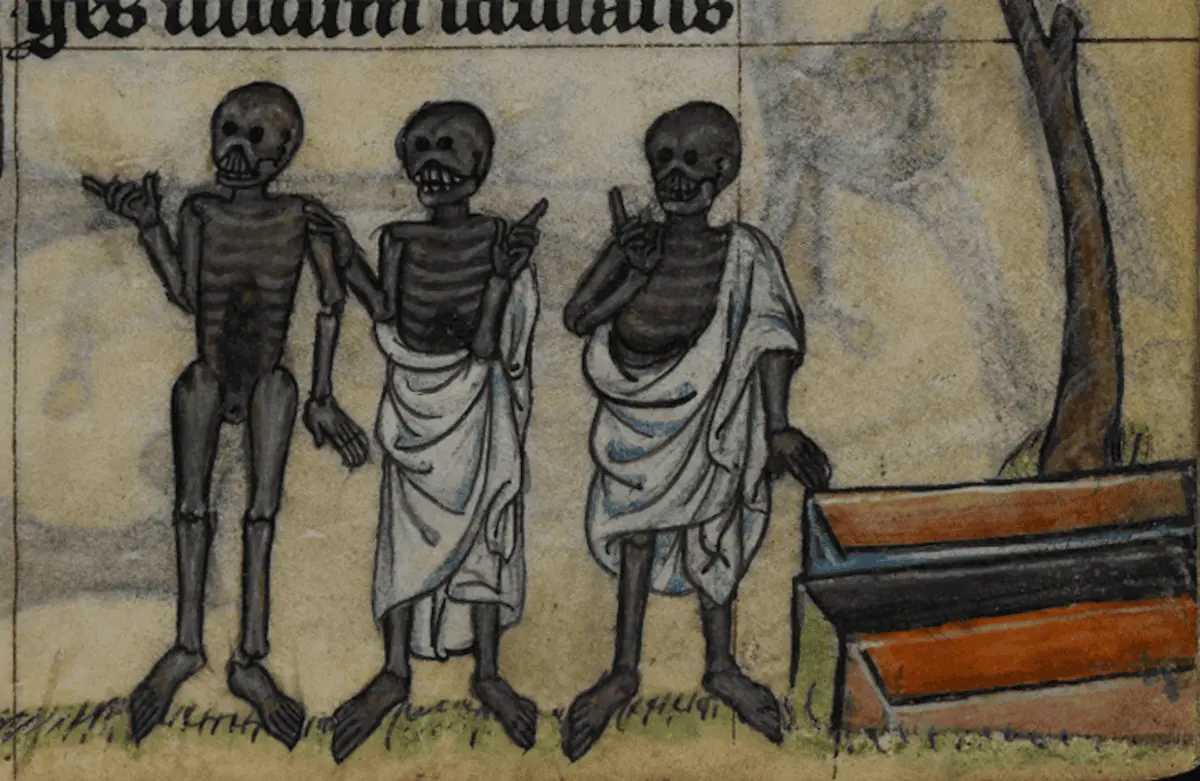
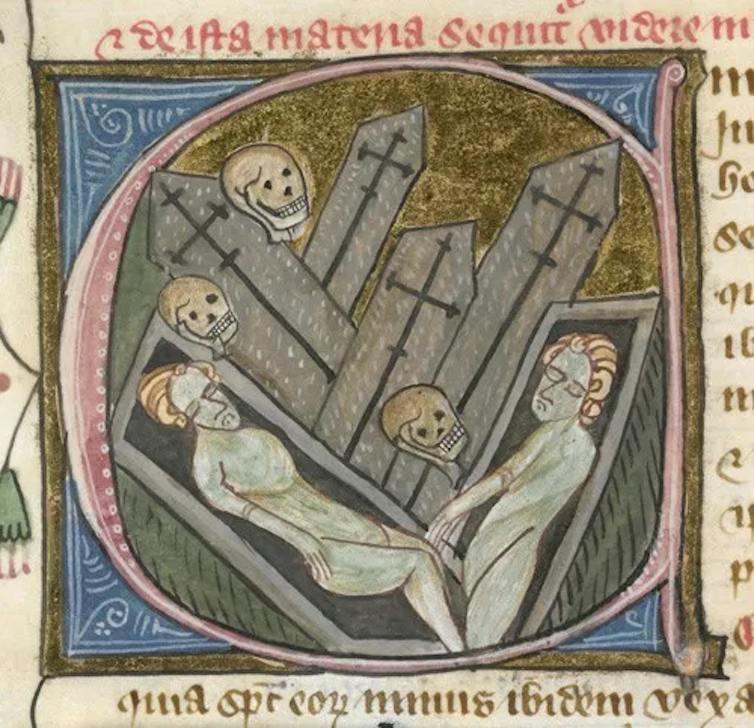
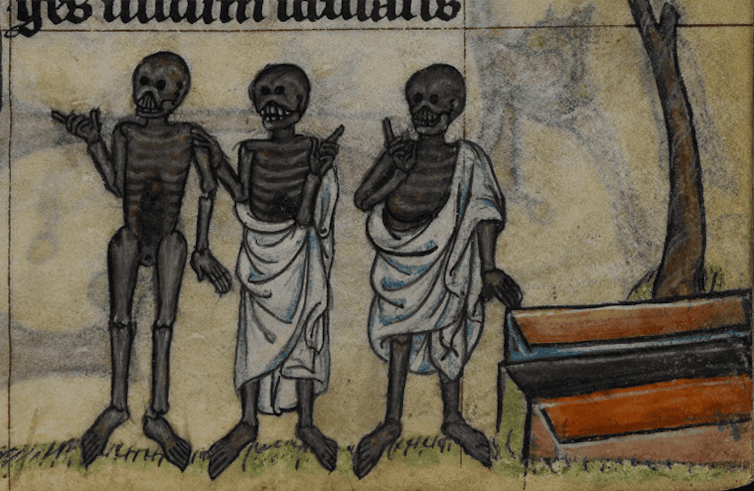
- Circa 1300 (The Artistic and Literary Wave): Manuscripts such as the Maastricht Hours and theological encyclopedias like the Omne Bonum began to visually and textually depict "revenants"—corpses that refused to remain inert in their graves. Concurrently, archaeological evidence from sites like Wharram Percy in North Yorkshire demonstrates that communities were actively practicing post-mortem mutilation to prevent the dead from rising.
- Early 15th Century (The Byland Abbey Compilation): Sometime in the opening decades of the 1400s, an anonymous Cistercian scribe at Byland Abbey gathered local oral traditions, compiling a dossier of 12 distinct ghost narratives. This document serves as one of the most comprehensive windows into late-medieval English supernatural belief.
The Nature of the Byland Specters: Theology Meets Folklore
The Byland Abbey accounts shatter the modern misconception that medieval ghosts were silent, translucent spectres drifting through castle corridors. Instead, these entities possessed physical mass, emotional volatility, and specific agendas.
Physicality and Confrontation
In the Byland narratives, physical interaction with the dead was commonplace and often brutal. One account graphically details a woman plunging her hand into a spirit’s flesh, describing it as "rotten and insubstantial." Witnesses to these apparitions frequently suffered physical trauma, falling ill and languishing for days after an encounter.
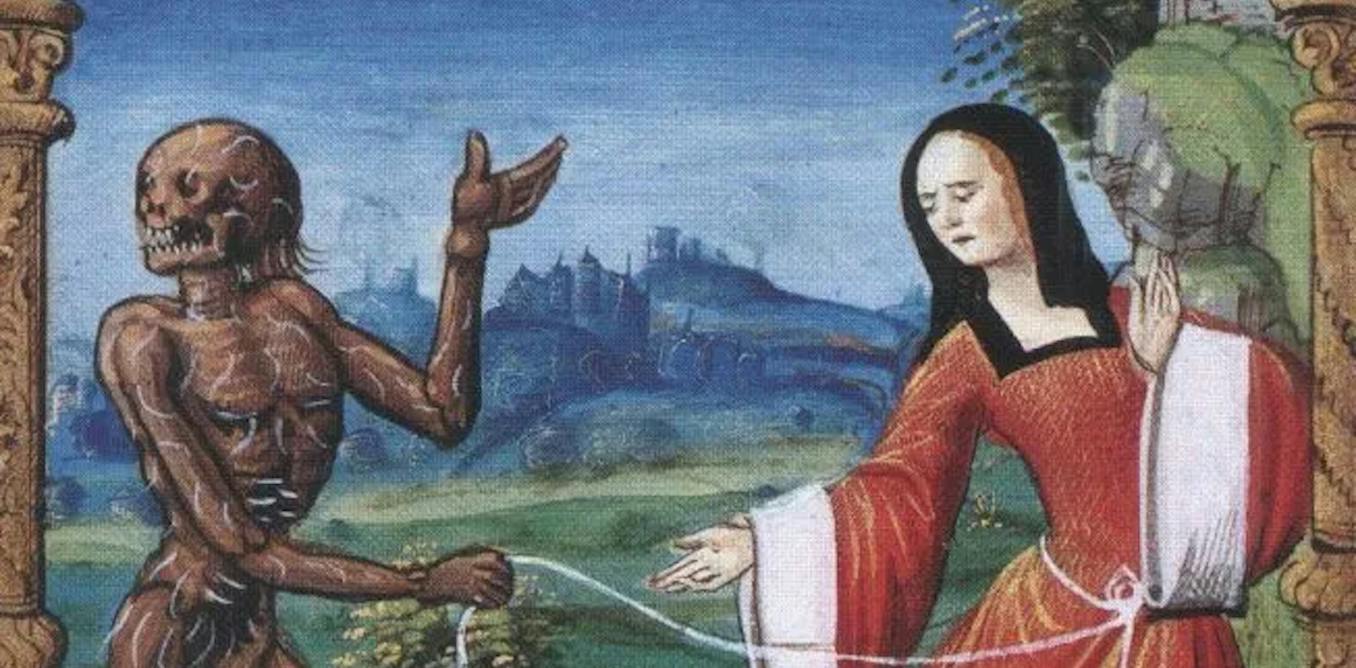
Yet, the physical danger was rarely fatal or malicious for its own sake. In a characteristic incident, a spirit violently tossed a man over a hedge, only to catch him deftly on the other side to prevent injury. The violence was instrumental—a means to compel attention, secure a parley, and force the living into dialogue.
The Art of Conjuration and Confession
Communication with the dead required protocol. A living person had to "conjure" the spirit—often invoking divine authority—to establish a dialogue.
In one prominent Byland tale, two men walked through a field when a spirit suddenly attacked, tearing one man’s clothes to shreds while his companion fled in blind terror. The trapped man successfully conjured the ghost, who confessed that he had been excommunicated for stealing silver spoons. The spirit begged the living man to restore the stolen items and petition for his absolution. Once the man fulfilled these duties, the restless soul found release.
Supporting Context & Metrics: Socio-Economic Realities and the Dead
While the theological framework of Purgatory dominated these accounts, the content of the Byland stories reveals acute earthly anxieties, particularly concerning property, labor, and social compliance.
Land Disputes and Inheritance
Ghosts frequently acted as legal arbiters from beyond the grave, intervening in matters that earthly courts might bungle or ignore. In a narrative rooted in a verifiable 15th-century inheritance dispute, the sister of Adam de London—a minor landowner in Ampleforth—wandered her village as a restless spirit. She directly threatened her brother, warning that if he failed to return disputed property to her husband and sons, he would share her grim fate after death.
Labor Relations
The socioeconomic hierarchy of the feudal manor also extended into the spirit world. One haunting narrative describes a deceased peasant being "grievously punished" in the afterlife specifically because he had failed to plough his master’s land with sufficient care during his earthly tenure. These stories effectively weaponized the supernatural to enforce labor discipline and property rights, reminding the peasantry that earthly obligations did not terminate at the graveside.
Spiritual Defenses
Confronting these entities required absolute adherence to religious ritual. When a man named William de Bradeforth was pursued by a wailing spirit crying "how, how, how," he commanded it to depart "in the name of the Lord and by the power of the blood of Jesus Christ." The spirit reportedly vanished, dissolving into a shape "like a piece of canvas unfurling its four corners and billowing away."
Conversely, laxity in religious observance invited vulnerability. A tailor nicknamed "Snowball" was tormented by a spirit taking the shape of ravens and dogs. The entity freely admitted that it only possessed the metaphysical leverage to harass the tailor because Snowball had neglected to attend Mass that day.
Official Statements & Scholarly Perspectives
Historians, folklorists, and medievalists have long scrutinized the Byland Abbey corpus for what it reveals about the medieval mindset.
Dr. Jacqueline Simpson, a leading scholar of folklore and legend, notes that medieval ghost stories operate on a transactional plane entirely distinct from modern horror. "The dead do not return merely to frighten; they return because they have unfinished business—legal, financial, or spiritual—that only the living have the institutional power to resolve," Simpson observes.
In recent analyses published in historical journals, researchers have emphasized the porous boundary between the living community and the dead community in medieval England. Unlike modern society, which sanitizes death and segregates cemeteries far from daily life, medieval villages lived alongside their dead. Churchyards were centers of village life, serving as spaces for markets, dancing, and communal gatherings.
Furthermore, osteological studies of medieval burial sites provide empirical weight to the textual records. Professor Simon Mays and colleagues, examining human remains from deserted medieval settlements like Wharram Percy, have documented clear patterns of post-mortem interventions. Skulls and long bones from the 11th through 13th centuries exhibit deliberate cutting, burning, and smashing—injuries inflicted after death. These findings corroborate the literary trope of the revenant, proving that medieval communities sometimes took physical measures to ensure the restless dead could not crawl out of their graves.
Future Outlook: The Enduring Legacy of Medieval Spectral Lore
The transition from medieval ghost lore to modern paranormal investigation marks a profound shift in Western culture. The Reformation largely dismantled the doctrine of Purgatory in Protestant England, radically altering the theological rationale for ghosts. Without Purgatory, Protestant theology reinterpreted ghosts either as deceptive demonic illusions or outright superstitions, severing the reciprocal relationship where the living prayed for the dead.
Yet, the DNA of Byland Abbey’s 15th-century accounts survives in contemporary horror media. The archetype of the restless spirit bound to the earth by an unconfessed crime, an unpaid debt, or a stolen object remains a staple of modern storytelling.
As archaeological excavations continue to unearth medieval burial sites bearing evidence of anti-vampiric and anti-revenant rituals, and as historians digitize and re-examine monastic manuscripts like the Byland collection, our understanding of the medieval dead continues to evolve. They were not merely passive symbols of piety; they were active, disruptive participants in village life—reminding the living that while life was fleeting, the consequences of earthly misdeeds could echo far beyond the grave.