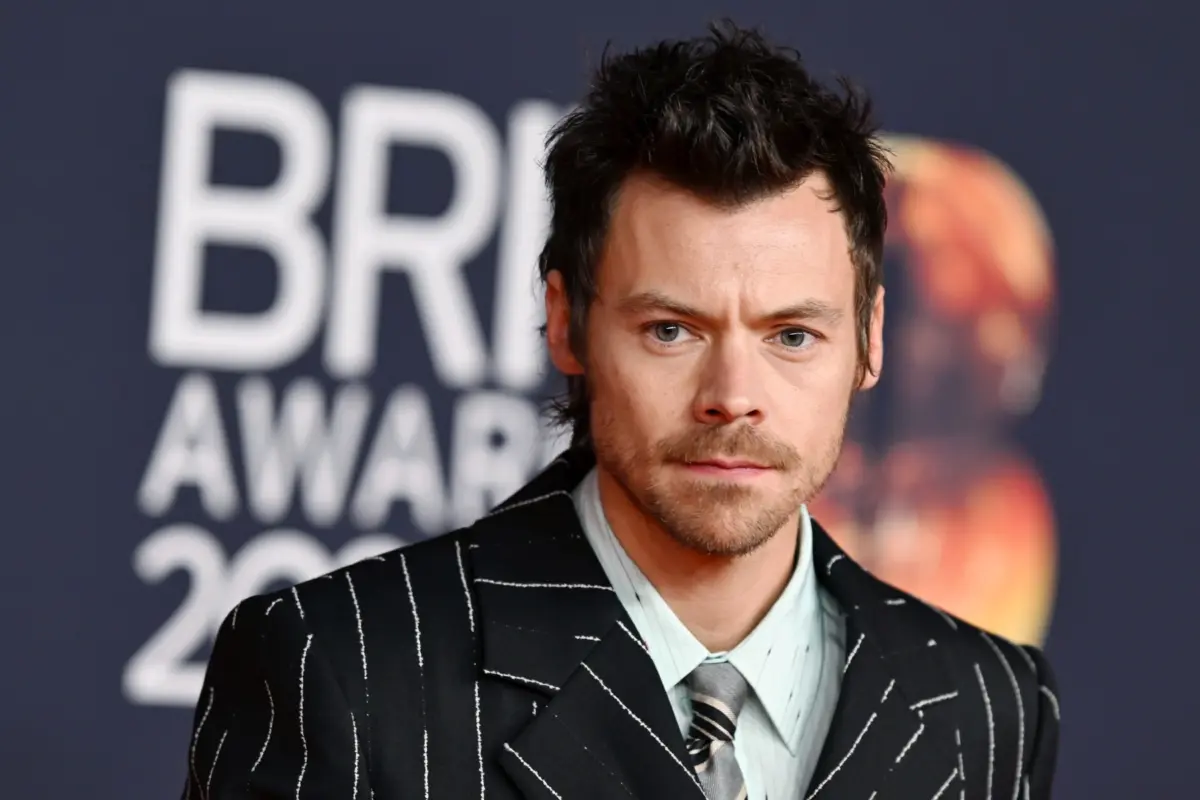
NEW YORK — Pop superstardom and intense socio-political realities converged dramatically on Saturday night inside a sold-out Madison Square Garden. During the 21st night of his heavily publicized, month-long New York City residency, pop icon Harry Styles paused his performance not to entertain, but to command his audience’s undivided attention. Shifting the evening’s emotional gravity from theatrical pop spectacle to civic urgency, Styles used his massive platform to spotlight Oscar Belgal, a 28-year-old father who was shot by federal immigration enforcement agents in the Bronx just days prior—an incident that has ignited fierce political firestorms across the five boroughs.
The unexpected address highlights a growing intersection where mainstream entertainment, contemporary pop culture, and high-stakes federal policy collide. As artists increasingly leverage multi-night arena residencies to comment on systemic issues, Styles’ Madison Square Garden platform became a megaphone for a tragedy that has deeply polarized local leadership and federal law enforcement agencies.
Executive Overview
On Saturday, October 10, Harry Styles addressed a capacity crowd at Madison Square Garden during the final stretches of his "Together, Together" setlist, explicitly naming Oscar Belgal. Belgal, a 28-year-old immigrant from the Dominican Republic, was critically wounded in a daytime shooting involving plainclothes Immigration and Customs Enforcement (ICE) officers in the Marble Hill neighborhood of the Bronx. Most alarming to civil rights advocates and local officials was the presence of Belgal’s 5-year-old son, who was seated directly in the vehicle’s backseat when federal agents opened fire.
Styles’ remarks, captured on concertgoer videos that quickly went viral across TikTok and other social media platforms, deliberately avoided directly uttering the acronym "ICE." Instead, the singer chose a broader, more resonant message concerning civic responsibility, cross-cultural empathy, and the fundamental protection of children and marginalized communities.
The incident has since exposed deep rifts between local New York City governance—championed by Mayor Zohran Mamdani—and federal immigration enforcement protocols. With federal officials categorizing Belgal as a gang-affiliated individual with an active criminal record, and city leaders condemning the operation’s aggressive tactics in a densely populated civilian area, the case has escalated into a national debate on the boundaries of federal authority within sanctuary municipalities. Styles’ public intervention guarantees that the narrative remains fixed not just in policy circles, but within the mainstream cultural consciousness.
Detailed Chronology: The Bronx Incident and Its Aftermath
The sequence of events leading to the high-profile police-and-federal confrontation unfolded on the afternoon of Thursday, October 8, in the Marble Hill neighborhood of the Bronx.
According to official police reports and statements released by New York City Police Department (NYPD) Commissioner Jessica S. Tisch, Belgal was attempting to parallel park his vehicle. Accompanying him in the backseat was his 5-year-old son. As Belgal maneuvered his car, a team of plainclothes Immigration and Customs Enforcement officers—reportedly wearing civilian clothing, construction vests, and face coverings—suddenly converged on the vehicle.
Eyewitness accounts and municipal statements emphasize that the raid occurred precisely as local schools were dismissing for the day, leaving the surrounding streets heavily populated by children, parents, and pedestrians. Federal officials claim that Belgal refused to comply with verbal orders to exit his vehicle and aggressively rammed two unmarked government vehicles. Conversely, municipal authorities and witnesses suggest the plainclothes officers failed to clearly identify themselves, causing panic.
As Belgal’s vehicle began to move forward, at least one ICE officer discharged their weapon multiple times. Commissioner Tisch confirmed that a total of seven rounds were fired into the vehicle. Miraculously, the 5-year-old child in the backseat escaped physical injury, though he was left deeply traumatized.
Because the NYPD is legally barred from participating in federal immigration enforcement operations under New York City’s sanctuary laws, local police officers responded solely to 911 calls reporting shots fired. Upon arrival, NYPD personnel secured the scene and transported the wounded Belgal—who had sustained a gunshot wound to the neck—to a local hospital for emergency medical treatment.
Following his stabilization, Belgal was transferred into federal custody and is currently being held at the Metropolitan Detention Center (MDC) in Brooklyn. His young son was safely recovered at the scene and placed into the immediate care of extended family members.
The Madison Square Garden Appeal: Styles’ Stagecraft and Social Commentary
Harry Styles’ decision to address the shooting during Night 21 of his historic 30-night Madison Square Garden residency marks a profound moment in his career-long pivot toward socially conscious performance. Known for fostering an environment of radical inclusivity and acceptance throughout his tours, Styles utilized the solemn, atmospheric break before performing his hit song "Sign of the Times" to pivot the arena’s collective energy toward systemic empathy.
"I just want us to take a moment to think about Oscar Belgal tonight," Styles told the rapt audience, his acoustic guitar in hand. "I want us to just think, [to] remember, to just look after each other."
While Styles deliberately refrained from naming the federal agency directly, his messaging clearly targeted the atmosphere of fear generated by current federal deportation agendas. Speaking directly to the arena’s tens of thousands of attendees, the British pop star framed urban safety and community wellbeing as a collective responsibility shared by everyday citizens rather than imposed by state-sanctioned violence.
"It is up to us to make the cities that we live in places we want to see," Styles continued. "It’s up to us to make the world a place that we want to see, that we want to give to our children. So please continue looking after each other, and remember, your friends, the people you love, the people who don’t look like you and aren’t born where you are from: they deserve respect, love, dignity."
The speech struck a chord with an audience already attuned to Styles’ progressive politics. Throughout his Madison Square Garden residency, the artist has frequently used pauses between songs to read fan signs, champion local charities, and advocate for LGBTQ+ rights. However, interpolating a breaking federal immigration controversy into a pop concert underscores the inescapable pressure artists feel to address geopolitical and civil rights crises happening in real-time outside the arena walls.
Official Statements and Institutional Clash
The fallout from the Marble Hill shooting has triggered a bitter jurisdictional war of words between the federal Department of Homeland Security (DHS) and New York City’s municipal leadership.
Federal Claims and Criminal History
In the immediate wake of the shooting, federal immigration authorities defended the actions of their agents by releasing detailed dossiers regarding Belgal’s background. DHS officials categorized Belgal as an "illegal alien gang member" originating from the Dominican Republic.
Furthermore, NYPD Commissioner Jessica S. Tisch outlined Belgal’s prior interactions with the local criminal justice system during a joint municipal press briefing. According to Tisch’s records, Belgal had two notable arrests in New York City:
2023 Arrest: Charged with robbery, which was subsequently pleaded down to fourth-degree grand larceny, resulting in a sentence of five years’ probation.
2025 Arrest: Charged with the criminal sale of a controlled substance, a legal matter that remains pending in the New York court system.
Federal representatives argue that these prior offenses validate the high-priority nature of the enforcement action, asserting that the use of force was necessitated by the suspect’s dangerous evasion tactics.
Municipal Condemnation
In stark contrast, New York City Mayor Zohran Mamdani mounted a fierce defense of civilian safety and immigrant rights during an emergency press conference held hours after the incident. Mamdani did not mince words, labeling the federal operation an "outrage" and questioning the tactical logic of deploying masked, plainclothes operatives into residential neighborhoods during school dismissal hours.
"There is no explanation for these tactics. There is no explanation for federal officers firing this many rounds into a car that has a 5-year-old in the car. There is no explanation," Mamdani declared.
The mayor emphasized the terror inflicted upon immigrant communities across the city’s five boroughs, noting that the deployment style fundamentally undermines public trust in law and order.
"Tonight, a 5-year-old child sits traumatized and terrified," Mamdani stated. "Tonight, millions of our neighbors are wondering whether they will be safe on our streets, in our schools, at their work sites. Tonight, New Yorkers across the five boroughs are asking whether their civil liberties will be respected, whether law and order is supposed to look like a man carrying a long gun, wearing a mask."
Drawing from his own identity, Mamdani added a personal dimension to the municipal critique, reinforcing that New York City remains a sanctuary built by immigrants who now question their fundamental sense of belonging under aggressive federal policies. "We will not normalize ICE’s viciousness. We will not accept its cruelty," he concluded.
Context & Metrics: Residency Success and Commercial Standing
While the humanitarian and political dimensions of the Madison Square Garden incident have dominated news cycles, Harry Styles’ commercial juggernaut continues to break industry metrics unimpeded.
The Madison Square Garden Residency
Styles’ current New York City run represents a masterclass in modern live-music business strategy. Comprising 30 consecutive weekend and mid-week dates running through October 31, the "Together, Together" residency has transformed MSG into a cultural epicenter. Following the conclusion of Night 21, the residency resumes with Night 22 on Tuesday, October 14. Industry analysts note that extended residencies in premier venues not only maximize ticket revenue by eliminating costly logistical transport between global cities, but also anchor the artist firmly within a single cultural conversation for weeks at a time—making real-time socio-political commentary far more impactful.
Global Touring Expansion
The cultural relevance of Styles’ platform is further amplified by his massive commercial footprint. Earlier this year, the artist announced a massive extension of his touring itinerary, pushing his live schedule well into 2027. The upcoming routing includes major stadium runs across key North American metropolitan markets—including Phoenix, Dallas, Los Angeles, Toronto, Atlanta, and Chicago—before transitioning into an extensive summer stadium leg across Europe.
Chart Dominance
On the recorded music front, Styles remains a dominant commercial force. His fourth studio album, Kiss All the Time. Disco, Occasionally, debuted at No. 1 on the Billboard 200 chart upon its release in March. The album’s primary commercial engine, the infectious pop-funk lead single "Aperture," spent multiple consecutive weeks atop the Billboard Hot 100, solidifying his status as one of the definitive pop auteurs of the decade.
Future Outlook
As Oscar Belgal remains detained at the Metropolitan Detention Center recovering from his injuries, and federal investigators coordinate with internal oversight boards regarding the legitimacy of the seven-shot volley in the Bronx, the cultural reverberations of Harry Styles’ stage speech will likely echo far beyond the confines of Madison Square Garden.
The incident serves as a stark reminder of the permeability between contemporary pop culture and geopolitical friction. For an artist capable of filling arenas for thirty consecutive nights, the microphone is no longer merely an instrument for melodic escapism; it has evolved into an unpredictable, high-frequency transmitter of civic protest.
With Styles’ residency continuing through the end of October and his massive 2027 global stadium tour on the horizon, observers will be watching closely to see whether the British superstar continues to leverage his unprecedented cultural reach to champion marginalized populations—and how federal immigration authorities will respond to the mounting public scrutiny surrounding urban enforcement tactics.