Executive Overview
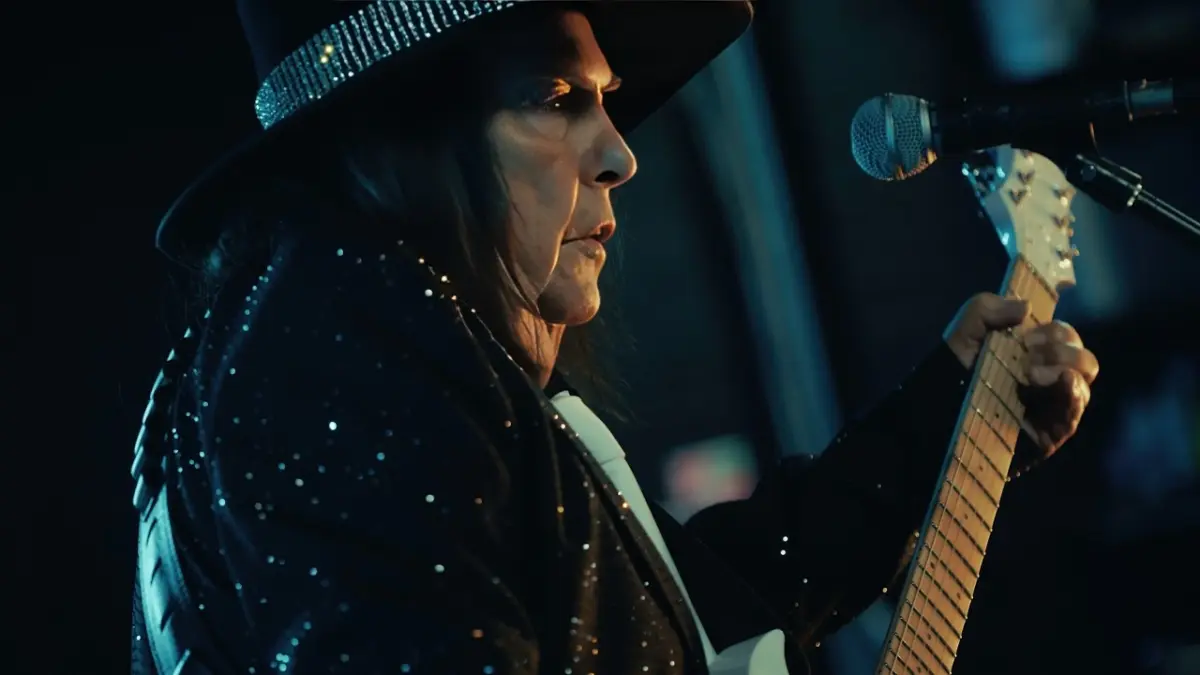
For over five decades, Dave Hill has been etched into the pantheon of British rock history as the exuberant, platform-booted guitar icon of Slade. Known to millions by his wild stage outfits, mirrored jumpsuits, and his legendary "Superyob" persona, Hill served as the primary visual catalyst for one of the most commercially successful glam rock outfits of the 1970s. However, behind the glitter and noisy anthems that dominated charts worldwide lay a music career largely defined by performing tracks crafted by the primary songwriting tandem of frontman Noddy Holder and bassist Jim Lea.
Now, arriving six months after his 80th birthday, Hill has shattered expectations with the release of his long-awaited debut solo album, Dirty Foot Lane. Comprising 10 deeply personal, reflective, and sentimental compositions, the record represents a profound departure from the stomping, high-energy hard rock that made him a household name. Rather than leaning on nostalgic glam tropes or loud guitar bravado, Dirty Foot Lane pivots toward mellow folk, acoustic textures, and introspective blues, offering listeners a rare and intimate glimpse into the inner world of an elder statesman of British rock.
Detailed Chronology: The Road to ‘Dirty Foot Lane’
Dave Hill’s transition from a flamboyant rhythm-and-lead guitarist to a solo singer-songwriter is a journey six decades in the making. Understanding the significance of Dirty Foot Lane requires examining the deliberate, prolonged timeline of Hill’s writing contributions across his storied career.
+-----------------------------------------------------------------------------------+
|                            DAVE HILL: WRITING TIMELINE                            |
+-----------------------------------------------------------------------------------+
| 1960s: The Early Phase                                                            |
|  - Co-writes rare early tracks with pre-Slade bands The Vendors & The 'N Betweens |
+-----------------------------------------------------------------------------------+
| 1970: Initial Slade Contribution                                                   |
|  - Shares credit on "Know Who You Are" (album: Play It Loud / Slade Alive!)       |
+-----------------------------------------------------------------------------------+
| 1981: Instrumental Divergence                                                     |
|  - Authors instrumental track "M'Hat M'Coat" for Till Deaf Do Us Part             |
+-----------------------------------------------------------------------------------+
| 1994: Post-Holder/Lea Era                                                         |
|  - Contributes to Keep On Rockin! under the Slade II moniker                      |
+-----------------------------------------------------------------------------------+
| 2003–Present: The Modern Touring Era & Solo Genesis                               |
|  - Collaborates closely with bassist/vocalist John Berry                          |
|  - Releases debut solo album 'Dirty Foot Lane' following his 80th birthday        |
+-----------------------------------------------------------------------------------+
The Early Formative Years (1960s)
Before the formation of Slade, Hill’s earliest creative outputs were forged in the West Midlands music scene. As a member of The Vendors and subsequently The ‘N Betweens, Hill made sparse contributions to original band compositions. However, as the group morphed into Ambrose Slade and eventually Slade under the management of former Animals bassist Chas Chandler, the internal dynamics shifted dramatically.
The Glam Rock Era & The Holder/Lea Writing Axis (1970–1991)
Throughout Slade’s peak—marked by six UK Number One singles including Cum On Feel the Noize and Merry Xmas Everybody—the songwriting responsibilities were almost exclusively held by Noddy Holder and Jim Lea. Hill’s original songwriting credits during this period were exceedingly rare:
- 1970: Hill earned a quarter share of royalties for co-writing "Know Who You Are", a standout track on Slade’s second studio album, Play It Loud, which later opened Side One of their seminal 1972 live record, Slade Alive!
- 1981: Hill composed the instrumental "M’Hat M’Coat", featured on the album Till Deaf Do Us Part, showcasing his ability to craft melodic guitar-driven hooks outside the standard pop-rock formula.
The Post-Classic Era and Slade II (1992–2000s)
Following Noddy Holder and Jim Lea’s departure from the group in 1992, Hill, alongside original drummer Don Powell, kept the live tradition alive under the banner of Slade II. In 1994, they released Keep On Rockin!, which represented Hill’s primary songwriting output during the post-glam decade. Though the release was a modest attempt to sustain the band’s recording legacy, it remained firmly within the traditional hard rock parameters expected of the Slade brand.
The Genesis of a Solo Career (2020s)
Surrounding his 80th birthday, Hill retreated to the studio to assemble a body of work entirely under his own name. Supported by long-time musical collaborator John Berry—who joined Hill’s touring band in 2003—the musician set out to craft an album unburdened by commercial expectations or stadium-rock constraints.
Supporting Context & Musical Architecture
Dirty Foot Lane strips away the sonic wall of sound that characterized Slade’s output, opting instead for organic instrumentation including acoustic guitars, pianos, and cellos. The 10-track collection balances delicate folk ballads with modest, mid-tempo rock numbers, utilizing a dual-vocal approach between Hill and Berry.
+-------------------------------------------------------------------------------------+
|                      'DIRTY FOOT LANE' - ALBUM STRUCTURE & STYLES                    |
+-------------------------------------------------------------------------------------+
| Track / Composition      | Primary Vocalist | Key Musical Elements                  |
+--------------------------+------------------+---------------------------------------+
| Thanks For The Good Times| Dave Hill        | Acoustic guitar, reflective lyrics    |
| Dirty Foot Lane          | Dave Hill        | Spoken-word narrative, acoustic folk  |
| Sweet And Tender         | Dave Hill        | Delicate acoustic, homage to mother   |
| She Had A Troubled Heart | Dave Hill        | Piano, cello arrangements             |
| Only Fools And Horses    | Dave Hill        | Mid-tempo folk-rock, retrospective    |
| Dust My Axe              | Dave Hill        | Electric blues guitar, raw vocals     |
| Taking The Fast Train    | Dave Hill        | Driving rhythm, blues-rock tone       |
| Play It To The Crowd     | John Berry       | Rolling Stones-style rock, riff-heavy |
| Back In The Air Again    | John Berry       | Upbeat rock arrangement, solid bass   |
| Reasons To Succeed       | John Berry       | Melodic rock, vocal harmonization     |
+-------------------------------------------------------------------------------------+
Vocal Dynamics and Collaborative Synergy
Recognizing the limitations of his own singing voice, Hill strategically shares lead vocal duties with John Berry. Berry, who handles bass throughout the record, provides lead vocals on three of the album’s most energetic tracks:
- "Play It To The Crowd": The record’s most outward nod to classic British rock, drawing clear stylistic parallels to Slade and The Rolling Stones.
- "Back In The Air Again" & "Reasons To Succeed": Upbeat, melodic tracks where Berry’s vocal polish offers a solid anchor for Hill’s soaring, melodic guitar solos.
When Hill himself steps up to the vocal microphone—most notably on electric blues tracks like "Dust My Axe" and "Taking The Fast Train"—his delivery is undeniably raw and weather-worn. Yet what his voice lacks in classical technical power, it compensates for with unvarnished emotional sincerity.
Analysis of Key Tracks & Lyric Themes
The emotional core of Dirty Foot Lane resides in its softer, acoustic-driven tracks. These compositions trade the bluster of rock ‘n’ roll starship for poignant reflections on family, memory, and aging.
1. "Thanks For The Good Times"
Serving as the album’s opening track, this acoustic-led tribute serves as an affectionate love letter to Hill’s glory days in Slade. Rather than harboring bitterness over past creative rivalries or the eventual dissolution of the original lineup, Hill delivers a heartfelt nod to his former bandmates—Noddy Holder, Jim Lea, and Don Powell—setting a remarkably warm tone for the remainder of the album.
2. "Dirty Foot Lane" (Title Track)
Arguably the artistic centerpiece of the album, the title track relies heavily on spoken-word narration set against a delicate folk backcloth. In it, Hill paints a vivid portrait of his working-class upbringing on the rural and industrial fringes of Wolverhampton. Stylistically reminiscent of Rod Stewart’s early folk-rock masterpiece Gasoline Alley, the track captures a poignant sense of time, place, and nostalgia.
3. "Sweet And Tender"
A tender, stripped-back ballad written as a direct homage to Hill’s late mother. The arrangement focuses heavily on minimalist acoustic guitar picking, allowing the personal nature of the lyrics to take center stage.
4. "She Had A Troubled Heart"
Pushing Hill’s musical boundaries further than ever before, this track incorporates sophisticated chamber-folk instrumentation. Built around classical piano motifs and weeping cello arrangements, the song provides a sympathetic look at a one-sided romance, highlighting Hill’s willingness to embrace understated melodrama over heavy guitar riffs.
5. "Only Fools And Horses"
A mid-tempo reflective piece that looks back on Hill’s earliest days trying to make it in the cutthroat UK music industry during the mid-1960s, offering a candid narrative on the perseverance required to achieve success.
Critical Assessment & Industry Impact
The arrival of Dirty Foot Lane presents an intriguing late-career entry within the broader context of 1970s British rock veterans. While many of Hill’s peers continue to rely on legacy touring circuits or re-recorded compilations of classic hits, Hill’s debut solo project represents a genuine artistic rebirth.
+-------------------------------------------------------------------------------------+
|                          CRITICAL PERSPECTIVES & METRICS                            |
+-------------------------------------------------------------------------------------+
| Perspective           | Key Takeaway                                                |
+-----------------------+-------------------------------------------------------------+
| Vocal Performance     | Unpolished and thin, but elevated by emotional sincerity.   |
| Songwriting & Lyrics  | Deeply personal narrative style focusing on legacy & age.   |
| Musical Shift         | Transition from arena-glam to intimate folk/blues/rock.     |
| Production Values     | Warm, organic sound prioritizing live instrumentation.      |
+-------------------------------------------------------------------------------------+
Industry analysts and rock journalists have noted that while the record may not redefine the genre, its value lies in its absolute authenticity. The album does not attempt to modernize Hill’s sound for contemporary radio, nor does it attempt to artificially recreate the raucous teenage energy of 1973’s Slayed?. Instead, it accepts the physical and emotional reality of an artist in his ninth decade, yielding a work that feels honest, dignified, and surprisingly vulnerable.
Future Outlook & Legacy
The release of Dirty Foot Lane adds a significant final chapter to Dave Hill’s enduring musical legacy. While Hill continues to perform live with the current iteration of Slade, this solo endeavor provides historical balance to a career that was previously framed almost entirely through his contributions as a showman and sideman.
Key Takeaways for Legacy Preservation:
- Redefining the ‘Superyob’ Persona: The album successfully decouples Dave Hill from the cartoonish visual image of his youth, establishing him as a thoughtful songwriter capable of emotional depth.
- Documenting Mid-Century British History: Songs like Dirty Foot Lane serve as valuable oral histories of post-war West Midlands life, preserving working-class cultural memories through song.
- Completing the Slade Narrative: By publicly celebrating his former bandmates on Thanks For The Good Times, Hill fosters a sense of closure and goodwill surrounding the complex history of one of Britain’s most beloved rock bands.
Ultimately, Dirty Foot Lane stands as a quiet triumph. It proves that even after six decades in the spotlight, an old rock warrior can still find new ways to shock, surprise, and touch the hearts of his audience.