Executive Overview
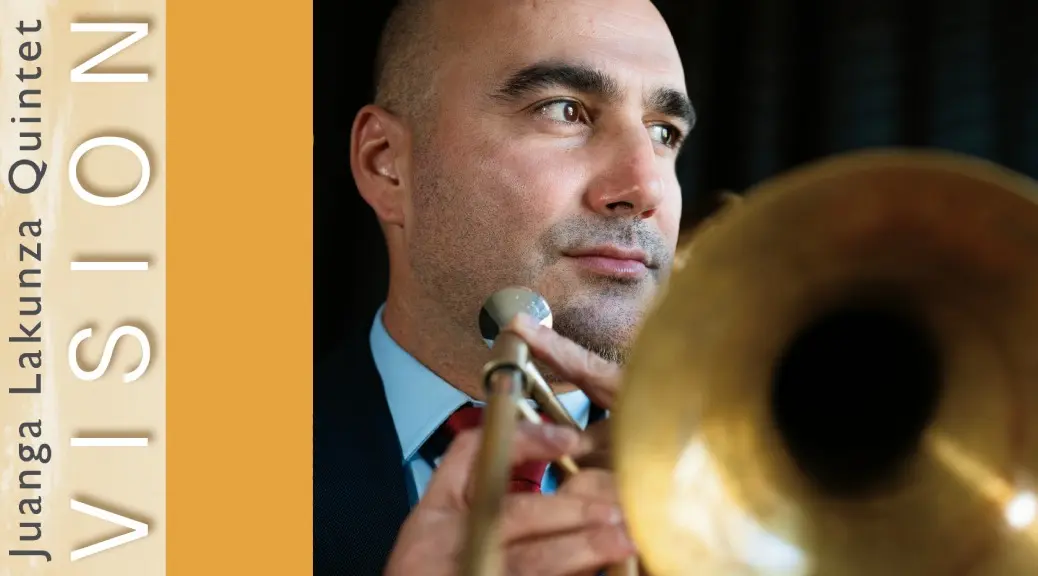
In the contemporary landscape of improvised music, few releases manage to seamlessly bridge the gap between deeply personal historical narratives and expansive geographical horizons quite like Vision, the latest full-length album from Spanish-born, New York-based trombonist, composer, and arranger Juanga Lakunza. Released to critical acclaim, the album stands as the cumulative statement of a two-decade artistic pilgrimage. It traces an arc from the rolling landscapes of Pamplona, Navarra, through the rigorous academic halls of the Basque Country and Rotterdam, and ultimately into the unrelenting crucible of the New York City jazz scene.
Vision is not merely a collection of compositions; it is a meticulously constructed sonic tapestry. It honors the foundational traditions of post-bop and American jazz while fearlessly incorporating European melodic sensibilities and the high-octane rhythmic architecture of Afro-Cuban music. To bring this ambitious project to life, Lakunza convened an elite quintet featuring tenor saxophonist Coleman Rose, pianist David Kikoski, bassist John Benitez, and legendary drummer Jeff “Tain” Watts.
This article explores the trajectory of Lakunza’s career, the complex socio-musical dynamics of Vision, the analytical breakdown of its core tracks, the pedigree of its stellar ensemble, and the broader implications of this release for the future of globalized modern jazz.
Detailed Chronology: From Pamplona to the Global Stage
Roots and Early Awakening in Navarra
Juanga Lakunza’s musical odyssey began far from the neon-lit jazz clubs of Manhattan, rooted instead in the cultural richness of Pamplona, the capital of Spain’s Navarra region. Growing up in a household steeped in artistic appreciation, Lakunza was exposed to a vast sonic ecosystem through his father’s diverse record collection. Ranging from European classical masterworks and popular song structures to early encounters with jazz recordings, this domestic environment planted the seeds for an omnivorous musical palate.
However, the path to becoming a recognized international jazz artist was neither linear nor immediate. Demonstrating a pragmatic approach common to many artists navigating the realities of professional life, Lakunza initially pursued a conventional working career. Yet, the gravitational pull of music proved impossible to resist. Recognizing that his true calling lay in composition and performance, he made the pivotal decision to abandon conventional career tracks and dedicate himself entirely to the study of his craft.
Academic Rigor in Europe
Lakunza’s formal training began at Musikene (the Centro Superior de Música del País Vasco) in the Basque Country, an institution renowned for cultivating rigorous technical foundations and contemporary compositional techniques. Seeking to expand his horizons further, he relocated to the Netherlands to study at Codarts in Rotterdam, a school celebrated for its openness to world music traditions, cross-cultural collaboration, and cutting-edge jazz pedagogy.
These European years were vital. They allowed Lakunza to refine his technical command of the trombone—an instrument historically underrepresented in the front line of modern jazz quintets compared to the saxophone or trumpet—while cementing his understanding of European harmonic and melodic sensibilities.
The New York Crucible and Latin Jazz Immersion
The year 2016 marked a major turning point: Lakunza relocated to New York City, the global epicenter of jazz. Immersing himself in the city’s hyper-competitive club circuit, jam sessions, and professional networks, he sought out the living traditions of the music.
Crucially, Lakunza’s time in New York was not limited to straight-ahead jazz. He embedded himself deeply within the Latin jazz community, securing prestigious chairs and collaborative opportunities with heavyweight ensembles such as the Spanish Harlem Orchestra and the Afro Latin Jazz Orchestra. Furthermore, working alongside legendary conga master Giovanni Hidalgo provided Lakunza with an authentic, visceral education in the complex rhythmic language of Afro-Cuban music. This foundational experience transformed his rhythmic conception, allowing him to weave polyrhythms and clave-based grooves seamlessly into his modern jazz writing.

Supporting Context & Metrics: The Anatomy of a Masterpiece
The Quintet: A Masterclass in Collective Synergy
Great compositions require interpreters who possess both technical virtuosity and deep emotional intelligence. For Vision, Lakunza assembled a working ensemble of first-call New York jazz luminaries whose individual credits read like a history of modern improvised music:
- Coleman Rose (Tenor Saxophone): Bringing a muscular tone and harmonic sophistication, Rose acts as the ideal harmonic and melodic foil to Lakunza’s warm trombone lines.
- David Kikoski (Piano): A veteran of groups led by Roy Haynes, Randy Brecker, and Bob Mintzer, Kikoski infuses the session with fearless harmonic exploration, post-bop urgency, and lyrical grace.
- John Benitez (Bass): A virtuoso bassist equally comfortable holding down a devastating tumbao or walking a swinging post-bop line, Benitez anchors the rhythm section with authority and melodic inventiveness.
- Jeff “Tain” Watts (Drums): A legendary rhythmic force known for his iconic work with Wynton Marsalis and Branford Marsalis, Watts brings unparalleled rhythmic elasticity, dynamic sensitivity, and explosive power to the session.
Compositional Breakdown & Track-by-Track Analysis
Vision is structured to take the listener on a narrative journey, balancing high-energy intensity with deeply reflective, culturally resonant spaces.
- "Fairview Street"
The album opens with a burst of exhilarating post-bop energy. The track establishes Lakunza’s mastery of complex harmony, driving tempos, and intricate horn arrangements. It serves as a statement of intent, proving that the leader is completely at home within the rigorous traditions of modern American jazz. - "Urraul Alto"
Shifting gears dramatically, this composition draws direct inspiration from the natural topography and serene landscapes of Lakunza’s native Navarra. Built around a meditative, hypnotic ostinato, the piece creates a spacious canvas that eventually blooms into an expressive, soaring bass solo by John Benitez before reaching a powerful emotional climax. - "Asymmetric Symmetry"
A masterclass in rhythmic displacement and shifting meters, this track showcases the ensemble’s telepathic interplay. The angular rhythms and relentless momentum pay clear homage to the fierce, modal intensity of McCoy Tyner, challenging both the performers and the listener with its sophisticated architectural design. - "En Algún Lugar"
Here, Lakunza steps forward to display his warmth, lyricism, and expressive depth as a trombonist. Steeped in the emotional traditions of the blues and gospel music, this moving ballad highlights the human quality of the trombone, utilizing its vocal-like slide capabilities to convey deep introspection. - "No Plastic!"
Designed as a rhythmic playground, this track provides Jeff “Tain” Watts with an expansive platform to showcase his extraordinary rhythmic imagination. The interplay between the drums, bass, and horns crackles with spontaneous invention. - "Lur Berria"
One of the album’s most culturally significant pieces, "Lur Berria" explores an organic, compelling intersection between Basque melodic folklore and contemporary jazz harmony, proving that regional folk traditions can dialogue seamlessly with modern improvisation. - "Now & Now"
This track bridges the gap between sophisticated modern jazz harmony and driving Afro-Cuban rhythmic structures, reflecting Lakunza’s extensive tenure with top-tier Latin jazz big bands. - "Equinox" (John Coltrane Cover)
The album closes with a daring reinterpretation of John Coltrane’s classic minor blues. Lakunza transforms the iconic piece by setting it over a hypnotic 6/8 Afro-Cuban groove, breathing new life into a jazz standard while honoring its timeless essence.
Official Statements and Critical Reception
In promotional materials and interviews surrounding the release of Vision, industry analysts and jazz critics have been quick to praise the album’s rare combination of intellectual rigor and emotional accessibility.
Jazz critic Mike Gates, writing for UK Vibe, encapsulated the sentiment of the critical community:
"Sometimes when I listen to an album, the music I’m hearing really does feel like the sum of a long journey, bringing together years of experience, influences and personal discovery into a statement of artistic intent. Vision, the new album from Spanish-born, New York-based trombonist, composer and arranger Juanga Lakunza, is very much one of those recordings. Beautifully written and superbly performed, it embraces the traditions of jazz while confidently exploring the influences that have shaped his own development."
Furthermore, peers within the New York jazz community have highlighted Lakunza’s unique ability to elevate the trombone—an instrument often relegated to supporting roles or classical idioms—into a vibrant, leading voice capable of driving complex, multi-cultural modern jazz ensembles.
Future Outlook: The Expanding Horizon of Global Jazz
As Vision continues to garner international radio airplay, critical acclaim, and streaming momentum, Juanga Lakunza stands at a defining juncture in his career. The album successfully answers a central question facing modern jazz musicians in the 21st century: How does one honor the historical canon of American jazz while speaking authentically from one’s own cultural and geographic origins?
Looking ahead, Lakunza’s blueprint—grounded in rigorous European academic training, validated by the competitive fires of New York City clubs, and enriched by deep immersion in Afro-Cuban rhythmic traditions—serves as a model for a new generation of globalized jazz artists.
Plans are currently underway for live touring cycles featuring the Vision quintet at major international jazz festivals across Europe and North America. As Lakunza continues to perform and compose, his work signals a thrilling future for the trombone in modern jazz, proving that with vision, technique, and cultural honesty, the boundaries of the genre remain wonderfully limitless.