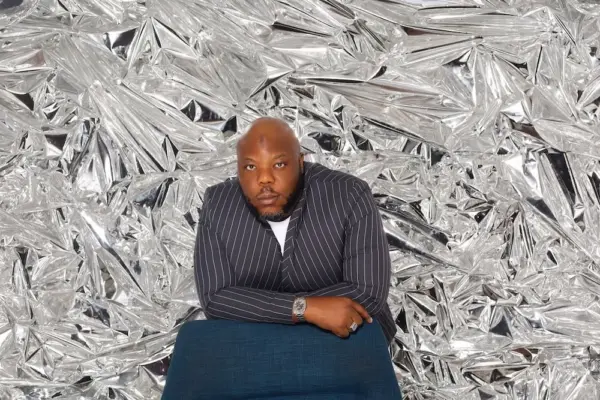
In the ever-shifting landscape of contemporary hip-hop and genre-bending audio artistry, few rising figures command attention quite like Henny Hermes. Released today, October 23, 2026, his latest single, “Old Life,” serves as an uncompromising statement of intent. It is a masterclass in raw, introspective storytelling that deftly balances the glittering allure of modern success with the heavy, often isolating psychological toll that accompanies rapid upward mobility.
Anchored by a steadfast, hypnotic groove that immediately pulls the listener into its atmospheric orbit, “Old Life” finds the New Hampshire-raised artist operating at the absolute peak of his creative powers. Hermes has never shied away from vulnerability, but his newest offering cuts deeper than much of his previous catalog. Through razor-sharp delivery and disarmingly honest songwriting, the track explores the triadic pillars that currently define his unstoppable momentum: the stark realities of navigating fame, the harrowing temptation of emotional numbness, and the unwavering spiritual anchor of his faith.
For an artist who began his journey purchasing studio equipment with hard-earned savings from teenage summer jobs, “Old Life” is more than just another milestone; it is a profound demarcation line separating who he once was from the cultural force he is rapidly becoming. Backed by critical darlings from top-tier tastemaker outlets like Lyrical Lemonade, AllHipHop, and The Source, Hermes is steadily proving that his meteoric rise is far from a fluke. As “Old Life” makes its official debut across all major streaming platforms, the music industry is once again forced to reckon with an artist who refuses to be boxed into a single genre, sound, or expectation.
Detailed Chronology: From New Hampshire Summer Jobs to Million-Stream Anthems
To fully grasp the gravity of “Old Life,” one must trace the winding, highly organic trajectory of Henny Hermes’ career. Growing up in a vibrant musical household, Hermes was immersed in sound from an early age. This domestic environment laid a rich foundational appreciation for rhythm, melody, and lyricism long before he ever stepped foot inside a professional recording booth.
However, his entry into the craft was defined by a classic, blue-collar hustle. As a teenager in New Hampshire—a region not historically recognized as a global epicentre for commercial hip-hop—Hermes recognized that if he wanted his voice to be heard, he would have to build the infrastructure himself. Countless hours spent laboring through summer jobs provided the financial capital needed to purchase his very first piece of recording equipment. This DIY ethos instilled a rigorous work ethic that continues to govern his creative output today.
As his production skills and vocal delivery sharpened, Hermes began uploading his early material to the internet, gradually cultivating a dedicated localized following. Unlike many of his peers who rigidly adhered to the strict sonic boundaries of traditional boom-bap or modern trap, Hermes fluidly crossed genres, seamlessly weaving elements of melodic rap, alternative pop, and atmospheric R&B into his music.
This fearless experimentation eventually led to a string of breakout releases that expanded his footprint far beyond New Hampshire. Tracks like “Lost Me” and “SENSES” demonstrated his uncanny ability to craft infectious hooks wrapped in melancholic instrumentation. Yet, it was the explosive success of his monster hit, “ANOTHER DRUG,” that truly catapulted him into the national conversation. Accumulating an astonishing 11 million streams on Spotify alone, “ANOTHER DRUG” proved that Hermes possessed rare commercial viability paired with genuine artistic depth.
Now, with the release of “Old Life,” the chronology of Henny Hermes enters its most pivotal chapter yet. The single bridges the gap between his grassroots beginnings and his current status as an ascending national talent, capturing an artist fully realized and fiercely protective of his hard-won evolution.
Supporting Context & Metrics: The Anatomy of an Unstoppable Rise
The commercial and critical infrastructure surrounding Henny Hermes has evolved at a breathtaking pace, turning him from a regional bedroom producer into a streaming powerhouse monitored closely by industry insiders.
The Streaming Phenomenon
Numbers rarely lie in the modern music ecosystem, and Hermes’ metrics tell a story of explosive, compounding interest. While his early catalog established a loyal cult following, the release of “ANOTHER DRUG” served as a watershed moment. Crossing the 11 million-stream threshold on Spotify placed Hermes in an elite tier of independent artists who can convert casual listeners into dedicated superfans. This sustained engagement is largely driven by his acute understanding of replay value—pairing addictive, hypnotic basslines with emotionally resonant lyricism that rewards deep, repeated listening.
Critical Validation
Long before mainstream algorithms fully caught up, elite tastemaker outlets recognized the raw potency of the Hermes sound. Esteemed hip-hop publications such as AllHipHop and The Source have consistently spotlighted his trajectory, praising his refusal to conform to transient internet trends. Meanwhile, tastemaker authority Lyrical Lemonade has championed his distinct ability to merge cinematic production values with unvarnished emotional candor. This trifecta of critical backing has insulated Hermes from the fleeting nature of viral fame, establishing him as a credible, enduring voice in contemporary music.
Thematic Resonance of "Old Life"
Musically and lyrically, “Old Life” synthesizes the core elements that have fueled his momentum. The track’s production relies on a steady, hypnotic groove that acts as a sonic anchor, allowing Hermes to dive headfirst into complex psychological terrain. The song addresses the unsettling paradox of achieving one’s dreams only to realize that success brings its own unique brand of isolation. By translating these universal anxieties into universally relatable art, Hermes cements his position as an artist who speaks not just to the culture, but for it.
Official Statements & Lyrical Deconstruction: Looking Inward
At the core of “Old Life” lies an unflinching examination of coping mechanisms, spiritual surrender, and the high cost of personal transformation. Hermes uses his lyricism not as a tool for boasting, but as a confession booth where he reconciles his past self with his present reality.
The emotional climax of the track is captured in its most striking couplet:
“Take a pill and there’s no feeling in sight / Oh, this might be okay, but it’s not alright / I can’t ever go back to my old life / Not a choice, I gave it to God to decide.”
These bars offer a masterclass in modern transparency. In the first lines, Hermes addresses the dangerous allure of emotional numbing agents—a prevalent theme in contemporary youth culture and the modern music industry alike. Rather than glorifying the numbness or masking his vulnerabilities behind a facade of toxic invincibility, he immediately deconstructs the illusion: “This might be okay, but it’s not alright.” It is a moment of stark, self-aware clarity that separates profound art from superficial bravado.
Furthermore, the transition from chemically induced escapism to spiritual surrender defines the overarching narrative of the single. By stating, "I can’t ever go back to my old life / Not a choice, I gave it to God to decide," Hermes anchors his survival and ongoing success in a higher power. This sense of divine fatalism removes the burden of perfection from his shoulders, reframing his journey not as a grueling climb he must manage alone, but as a predestined path guided by faith.
Industry insiders close to the artist note that these lyrics reflect Hermes’ actual lived experience over the past few years—navigating the dizzying highs of industry attention while battling the internal disorientation that comes with outgrowing your environment. Through “Old Life,” he doesn’t just invite listeners into his mind; he offers them a blueprint for resilience.
Future Outlook: What’s Next for Henny Hermes?
As “Old Life” officially makes its way into the headphones and playlists of music enthusiasts globally, the immediate future for Henny Hermes looks blindingly bright. Having successfully bridged the gap between underground credibility and mainstream streaming viability, the New Hampshire-born trailblazer stands at a fascinating crossroads in his career.
Industry projections suggest that “Old Life” is poised to surpass the streaming milestones of his previous releases, supported by an aggressive digital rollout and widespread critical acclaim. More importantly, the track hints at a broader, highly anticipated body of work currently taking shape behind the scenes. If singles like “LOST ME,” “SENSES,” “ANOTHER DRUG,” and now “Old Life” are any indication, Hermes’ upcoming projects promise to be his most cohesive and ambitious statements to date.
Beyond recorded music, Hermes’ trajectory points toward an inevitable expansion into major live touring circuits. His ability to translate complex, atmospheric studio tracks into captivating live experiences will undoubtedly be the next frontier he conquers. As he continues to defy genre conventions, reject superficial industry tropes, and lean into his unshakeable faith and relentless work ethic, Henny Hermes is proving that he is not merely a momentary flash in the pan.
He is an unstoppable force built for the long haul—and the culture is watching closely as he writes the next chapter of his remarkable story.
Stay tuned to Viper Magazine for continuous coverage of the latest music releases, deep-dive cultural analyses, and exclusive artist insights. Keep the culture moving by joining us in the Viper+ Vault for uncut interviews and behind-the-scenes access to the future of the scene.