Executive Overview
The cinematic landscape of the 21st century is defined by persistent reboots, sprawling shared universes, and intellectual property management. Yet, few franchises carry the cultural weight, geopolitical resonance, and historical legacy of James Bond. Following the dramatic and definitive conclusion of Daniel Craig’s tenure in 2021’s No Time To Die, Eon Productions and the broader apparatus overseeing Ian Fleming’s immortal creation have stood at a critical historical crossroads.
Now, the mystery of the franchise’s immediate future has been radically clarified. In a development that has sent shockwaves through the global film industry, critically acclaimed auteur Denis Villeneuve has officially been tapped to direct the upcoming Bond 26. He will be joined by acclaimed screenwriter Steven Knight, the visionary mind behind Peaky Blinders, who is tasked with penning the screenplay.
This pairing represents a seismic shift for the world’s longest-running film franchise. By wedding Villeneuve—a master of grand-scale sci-fi and taut psychological thrillers—with Knight, a writer renowned for his gritty, character-driven period dramas and propulsive pacing, the studio is signaling a bold, prestigious creative direction. Following recent changes in ownership and structural shifts within the franchise’s management, Bond 26 is positioned not merely as a continuation, but as a watershed moment.
As casting rumors reach a fever pitch and audiences speculate on whether the series will adopt a period setting, undergo a timeline reset, or reinvent the quintessential British spy for a modern era, the stage is set for a historic new chapter in espionage cinema.
Detailed Chronology: From Craig’s Farewell to a New Dawn
To understand the magnitude of the Villeneuve-Knight appointment, one must examine the arduous and emotionally charged timeline that brought the franchise to this juncture.
The End of an Era: No Time To Die (2021)
When Daniel Craig stepped into the tuxedo for the fifth and final time in Cary Joji Fukunaga’s No Time To Die, the stakes could not have been higher. Delayed multiple times by the global COVID-19 pandemic, the film finally premiered in the autumn of 2021 to widespread commercial and critical acclaim. Crucially, the film took a path no previous official Bond movie had ever dared to tread: it killed off James Bond.
The sacrifice of 007 to save the woman he loved and his infant daughter provided a definitive, operatic bookend to the serialized arc that began with Casino Royale in 2006. While Craig’s tenure was lauded for humanizing the cold-blooded assassin of Ian Fleming’s novels—exploring his vulnerabilities, traumas, and eventual capacity for deep love—it left producers Barbara Broccoli and Michael G. Wilson with an unprecedented narrative corner. Chronologically, the current timeline is exhausted. A clean break was not just a creative option; it was an absolute necessity.
The Interregnum and Corporate Shifts
In the years following No Time To Die, the cinematic landscape shifted dramatically. Amazon’s multi-billion-dollar acquisition of MGM in 2022 brought new corporate stakeholders into the conversation surrounding franchise management. While Eon Productions—run by Broccoli and Wilson—has historically retained strict creative control over the property, the pressure to monetize and expand the universe has intensified.
Rumors, fan theories, and speculative casting lists dominated entertainment news cycles for over three years. Names ranging from Aaron Taylor-Johnson to Henry Cavill, Regé-Jean Page, and Paul Mescal were endlessly debated by the public. Yet, behind closed doors, the more foundational work was underway: securing the creative architects who would define the tone, visual grammar, and thematic DNA of the post-Craig era.
The Securing of Villeneuve and Knight
Discussions with Denis Villeneuve had reportedly been on the studio’s wish list for years, particularly following his triumphs with Blade Runner 2049, Arrival, and his monumental adaptation of Frank Herbert’s Dune. Villeneuve’s known reverence for the cinematic medium and his capacity for world-building made him the ultimate candidate for prestige blockbuster filmmaking.
Meanwhile, Steven Knight’s recruitment brought a literary and historical gravitas to the screenwriting chair. Known for his ability to craft morally ambiguous protagonists within complex socioeconomic frameworks, Knight’s involvement ensures that the dialogue and character psychology will match the visual scale expected of a Villeneuve-directed picture.
Supporting Context & Metrics: The Box Office and Cultural Footprint of 007
To measure the gravity of Bond 26, one must examine the economic and cultural metrics that underpin the franchise. Across 25 official films spanning over six decades, the James Bond series has grossed more than $7.8 billion globally unadjusted for inflation, placing it among the most lucrative cinematic properties in human history.
Daniel Craig’s Box Office Legacy
The Craig era, in particular, redefined the financial ceiling of the franchise:
- Casino Royale (2006): $616.5 million worldwide
- Quantum of Solace (2008): $589.2 million worldwide
- Skyfall (2012): $1.108 billion worldwide (the first and only Bond film to cross the billion-dollar threshold)
- Spectre (2015): $880.7 million worldwide
- No Time To Die (2021): $774.2 million worldwide (achieved during a recovering global theatrical market)
These figures demonstrate that while individual directors and actors come and go, the global appetite for espionage remains remarkably resilient. However, expectations for Bond 26 are uniquely high. With Villeneuve commanding an immense following in the wake of Dune: Part Two, the new film is expected to attract not just traditional Bond loyalists, but a younger, prestige-film-literate demographic.
The Evolution of the Fleming Adaptation
From Sean Connery’s effortless swagger in the 1960s to Roger Moore’s campy charm, Timothy Dalton’s gritty realism, Pierce Brosnan’s suave modernization, and Craig’s brooding psychological depth, the character has constantly morphed to reflect the geopolitical anxieties of his era. Villeneuve and Knight inherit a legacy that has survived the Cold War, the collapse of the Soviet Union, the rise of cyber-warfare, and the complexities of modern surveillance states.
Official Statements: Inside the Minds of the New Creative Team
The announcement of the new creative team was accompanied by rare and revealing commentary from both Denis Villeneuve and Steven Knight, shedding light on their artistic philosophies and emotional connection to the material.
Denis Villeneuve: Honoring the Sacred Territory
For Villeneuve, taking on Bond 26 is the fulfillment of a lifelong passion rooted in childhood memory.
"Some of my earliest movie-going memories are connected to 007," the French-Canadian director noted in a previous interview. "I grew up watching James Bond films with my father, ever since Dr. No with Sean Connery. I’m a die-hard Bond fan. To me, he’s sacred territory."
Villeneuve’s awareness of the franchise’s historical weight tempers his excitement with a profound sense of duty. Rather than seeking to completely dismantle the foundation laid by previous filmmakers, he views his role as a bridge between the past and the future:
"I intend to honour the tradition and open the path for many new missions to come. This is a massive responsibility, but also, incredibly exciting for me and a huge honour."
Steven Knight: Writing the Character, Not the Actor
Steven Knight approaches the script with the pragmatism of a seasoned showrunner and the reverence of a British citizen. He has openly admitted that drafting a Bond film was permanently etched on his career "bucket list," describing the gig as "doing my duty for King and country."
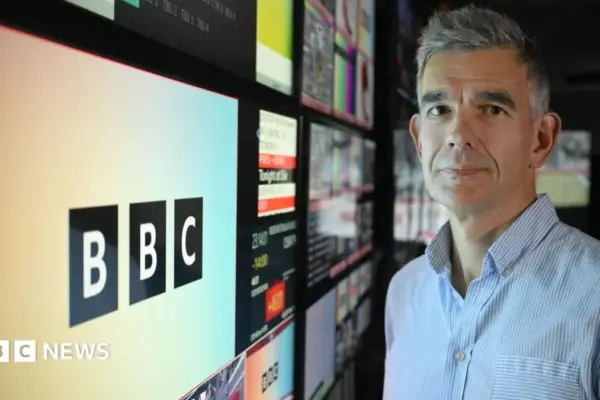
In an illuminating interview with the BBC, Knight outlined his fundamental screenwriting philosophy for the project:
"The thing with Bond is it’s its own universe and franchise. So there are certain rules. Obviously you have to move it along, but I love where it sits. I love that it’s British. I love that it’s not DC or Marvel… So I feel a responsibility to the text."
Crucially, Knight revealed that he is structuring his narrative independently of who will ultimately wear the tuxedo:
"I plan to write the character, not the actor."
This methodology ensures that the script will focus on the intrinsic nature of James Bond—his flaws, his lethal efficiency, his dry wit, and his isolated existence—providing a robust dramatic blueprint that can accommodate whoever is cast in the iconic role.
Future Outlook: Where Can Bond 26 Go?
With a visionary director and a master screenwriter secured, the central question remaining for cinephiles and industry analysts is narrative direction. Given the artistic inclinations of Villeneuve and Knight, several compelling paths lie open for the franchise.
1. The Clean Slate and Universe Reset
Given the definitive end of No Time To Die, a chronological continuation is virtually impossible unless the series pivots to focus on a different agent entirely—an approach most fans and executives would likely reject for the mainline series. Instead, an era-defining reboot is all but guaranteed. In an era where audiences are thoroughly accustomed to multi-verse narratives, alternate timelines, and cyclical reboots (pioneered by comic book adaptations), establishing a fresh version of James Bond who exists in an independent narrative universe is easier than ever.
2. The Period Piece Revolution: A Return to the 1950s or 1960s?
One of the most tantalizing discussions circulating within fandom involves setting Bond 26 in the past. This idea gained substantial traction recently when acclaimed filmmaker Tony Gilroy revealed that he and Steven Soderbergh once pitched a gritty, 1960s-set version of Bond. Around the same time, actor Ralph Fiennes recounted discussions in which he suggested a black-and-white, film-noir-inspired adaptation set in the 1950s.
While neither of those past pitches materialized, they have deeply resonated with purists. Setting a Bond film in its original literary era—the post-WWII, early Cold War decades of Ian Fleming’s novels—would offer a fresh aesthetic distinct from any 007 film made in the last half-century. It would allow the franchise to lean heavily into practical espionage, analogue technology, tailoring, and classic geopolitical intrigue without the narrative complications of modern cell phones, drone warfare, and global digital surveillance. Given Villeneuve’s penchant for meticulous period-and-world design (evident in Blade Runner 2049 and his historical sensibilities), a period-piece Bond is a mouth-watering prospect.
3. The Imminent Casting Announcement
While the script is being forged by Knight and the visual world is being conceptualized by Villeneuve, the global public remains transfixed on the ultimate reveal: Who will be the next James Bond?
Industry insiders suggest that an official announcement regarding the lead actor may be imminent. Fans across the globe are holding their breath, hoping that the holiday season or the early months of the upcoming year will deliver the news they have awaited since Daniel Craig laid down his Walther PPK.
Conclusion
The appointment of Denis Villeneuve and Steven Knight marks the beginning of a golden era for James Bond. By entrusting the future of 007 to two of the most disciplined and imaginative artists working in contemporary cinema, Eon Productions has demonstrated that the franchise refuses to rest on its laurels.
Whether Bond 26 opts for a modern geopolitical thriller or embraces a stylish, period-authentic espionage drama, one thing is certain: James Bond will return, and under the stewardship of Villeneuve and Knight, his next mission promises to be nothing short of legendary.