The trajectory of alternative rock music in the early 1990s is frequently remembered through the dual lenses of the explosive Britpop movement and the atmospheric haze of shoegaze. Yet, nestled precisely in the liminal spaces between these cultural epochs were bands whose artistic ambitions defied neat categorization, leaving them vulnerable to the fickle tides of the British music press. Among the most compelling casualties—and ultimate survivors—of this era is Pete “Fij” Fijalkowski, frontman of the Coventry-formed art-rock outfit Adorable.
Formed in 1990, Adorable initially seemed poised for stratospheric success. Championed by Creation Records visionary Alan McGee and hailed by the NME as "the cockiest new band in pop," they combined soaring, guitar-driven melodies with an intellectual, haughty detachment. However, a toxic mix of shifting press narratives, label neglect, and cultural class friction led to an abrupt and bitter dissolution by 1994, punctuated by the ignominy of being dropped just hours before a provincial gig. For decades, the legacy of Adorable was overshadowed by the sour final months of its existence.
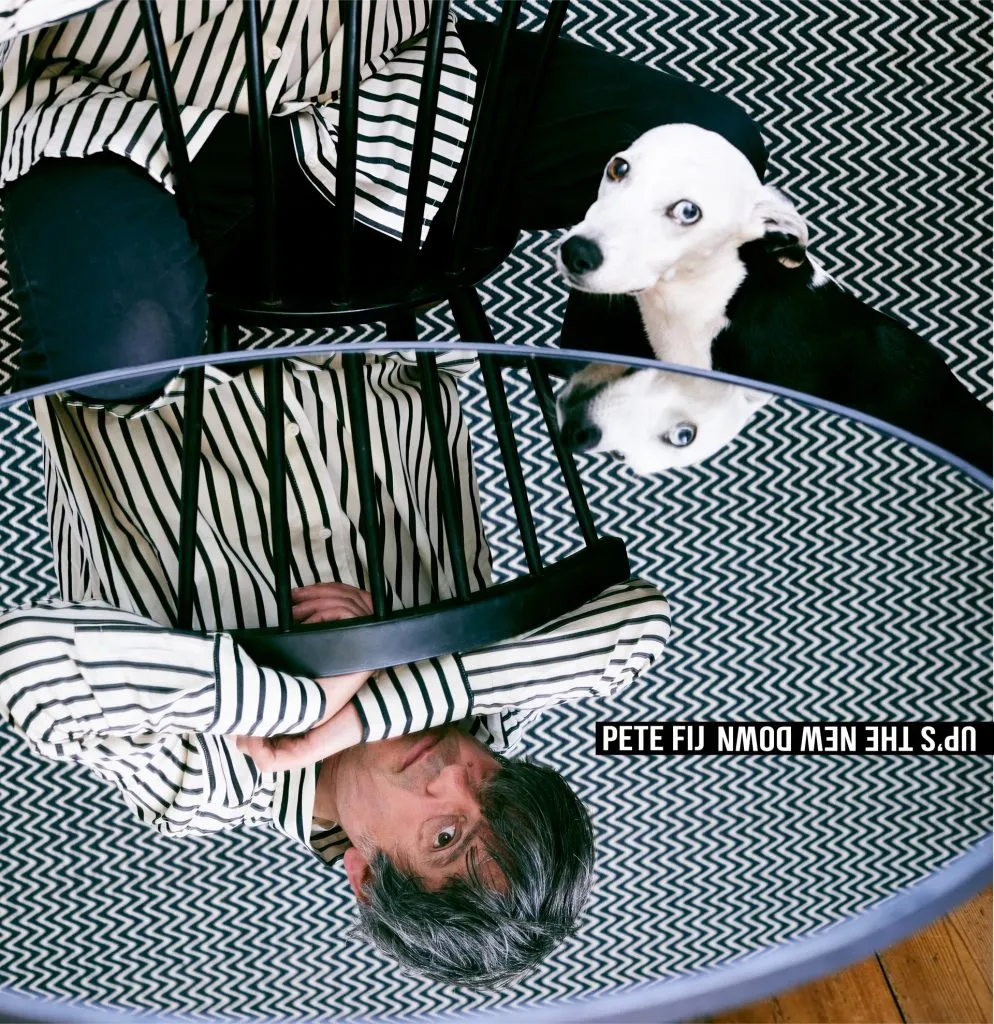
Yet, Fijalkowski’s narrative is far from a standard cautionary tale of 1990s rock-and-roll attrition. Over the subsequent three decades, his journey has traversed independent label revivals, unexpected artistic collaborations—most notably with Terry Bickers of The House of Love and Levitation—and a deeply philosophical detour into the world of end-of-life care and celebrancy. This rich tapestry of lived experience has culminated in an unexpected creative renaissance. Following a triumphant, sold-out Adorable reunion in 2019 that fundamentally rewritten the band’s historical narrative, Fijalkowski returns with his latest solo endeavor, Up’s The New Down, released via Tip Top Recordings.
This piece explores the exhaustive chronology of Pete Fijalkowski’s career, examining the mechanics of 1990s indie-music politics, the profound psychological impact of life’s final chapters on songwriting, and the triumphant, life-affirming shift that defines his latest musical chapter.
Detailed Chronology
1990–1992: The Rise of the "Cockiest New Band in Pop"
The seeds of Adorable were planted in Coventry in 1990, coalescing around the sharp intellect and distinctive vocal delivery of frontman Pete Fijalkowski. Following a series of false starts and formative struggles common to regional outfits attempting to break into the national consciousness, the band caught the attention of Creation Records founder Alan McGee. At the time, Creation was the epicenter of British independent cool, housing boundary-pushing acts that would soon define the decade.
Adorable’s debut single for the label was immediately crowned Single of the Week by the NME, propelling the track to the summit of the UK indie charts. But this early triumph carried the seeds of the band’s future tribulations. Eager to project an uncompromising artistic vision, the band leaned heavily into an unapologetic, confident posture during press interviews. The music press, perpetually hungry for archetypes, promptly labeled them "the cockiest new band in pop."
Looking back, Fijalkowski acknowledges that their presentation was calculated, though misaligned with the prevailing cultural currents of the early ’90s. "I was really into attitude," Fijalkowski reflects. "But there was this inverse snobbery going around. We loved how Manic Street Preachers dealt with the press, but they were working-class, and we were clearly not." This class distinction created an invisible friction with journalists who preferred their indie icons to project a proletarian humility.
1993–1994: Against Perfection, Fake, and the Creation Collapse
As the British music scene fragmented into competing press-invented micro-genres—baggy, shoegaze, and early manifestations of Britpop—Adorable struggled to find a secure rhetorical home. Fijalkowski firmly viewed the band through an art-rock lens, drawing direct inspiration from the melancholic grandeur of Echo & The Bunnymen, The Psychedelic Furs, The Sound, and The House of Love.
While structurally too song-driven to be genuine shoegaze and chronologically ahead of the Britpop gold rush, Adorable initially enjoyed the unwavering patronage of Alan McGee. "We were very much McGee’s signing," Fijalkowski recalls. "The rest of the label thought he was mad to sign us." This internal skepticism became a critical vulnerability when, partway through recording their debut album, McGee retreated into a reclusive spell, managing his empire remotely. Adorable suddenly found themselves isolated within their own label, devoid of institutional advocates.
Released in 1993, their debut album, Against Perfection, topped the UK indie charts and has since been reappraised as a lost classic of the era. However, the contemporary critical response was lukewarm. The follow-up, 1994’s Fake, failed to reverse their commercial stagnation.
The end arrived with characteristic music-industry brutality. While promoting the album just hours before a scheduled performance in Colchester, the band members were informed that they had been dropped by Creation. Noel Gallagher, then a rising star on the Creation roster, later expressed his dismay to McGee, noting that dropping Adorable ranked among the label boss’s worst blunders. Faced with empty venues, an indifferent record label, and a press corps that had grown entirely cold, the band fractured. "For the longest time my memory of Adorable was the shitty end of it," Fijalkowski admits. "It was like the last six bad months of a relationship blotting out all the good years before it."
2000–2002: The Polak Era
Undeterred by the collapse of Adorable, Fijalkowski quickly regrouped with his brother Kryzs to form Polak. Securing a deal with another highly respected independent imprint, One Little Independent (formerly One Little Indian), the duo released two albums: Swansongs in 2000 and Rubbernecking in 2002.
Despite critical acclaim, Polak faced similar commercial headwinds, struggling to amass an audience large of scale to ensure long-term viability. When a potential third-album deal materialized precisely as the band members were entering the life stage defined by mortgages and young families, the project folded. Rather than soldiering on alone, Fijalkowski turned the contract down.
What followed was, in his own frank estimation, "a musical breakdown." He retreated into solitude to record a stark, unsparing solo album heavily indebted to the stripped-down aesthetic of Johnny Cash’s American Recordings. Paralyzed by a deep-seated fear of rejection, Fijalkowski shelved the recordings, locking them away for half a decade.
2008–2017: Collaboration and Melancholy
The impasse broke in 2008 when Fijalkowski was offered a performance slot at the Brighton Fringe festival. The booking served as the catalyst for him to reach out to legendary guitarist Terry Bickers, formerly of The House of Love and Levitation. Though Fijalkowski had previously attempted to recruit Bickers during the Polak years, the timing was finally right.
This partnership birthed two critically lauded albums of lush, melodic melancholy: Broken Heart Surgery in 2014 and We Are Millionaires in 2017. Despite receiving rapturous reviews across the music press, these releases remained well-kept secrets within the wider musical landscape, prompting Fijalkowski to seek alternative avenues for financial and creative sustenance.
The Turning Point: End-of-Life Celebrancy
To maintain a sustainable creative life, artists frequently balance alternative vocations. For Fijalkowski, a part-time role as an activities coordinator in a care home unexpectedly bridged his lifelong literary gifts with stagecraft in an entirely unprecedented setting. Surrounded by individuals navigating the twilight of their lives, he frequently attended funerals, an experience that profoundly shifted his worldview.
This immersion inspired him to officially train as an end-of-life celebrant. "Storytelling had started coming out in the music I was making with Terry, both in the songs and in between them onstage—I actually started talking to audiences, which was something I’d never done in Adorable," he explains. Conducting these deeply personal services offered him a privileged, poignant insight into human mortality: witnessing those who arrived at their final days entirely at peace, contrasted with those burdened by the heavy weight of unfulfilled ambitions.
"You’ve only got a certain amount of time on this earth," Fijalkowski observes, distilling the core lesson of his celebrancy work. "And you need to leave with as few regrets as possible. Time is ticking."
2019: The Adorable Reunion
Armed with a renewed philosophy on time and closure, Fijalkowski prepared to return to original music. Before he could do so, however, a profound piece of historical revisionism arrived. In 2019, Adorable agreed to reform for a strictly limited run of reunion dates.
The response surpassed all expectations. Tickets sold out within minutes, the venues were substantially larger than those they had headlined during their original 1990s peak, and die-hard fans flew in from across the globe, including Australia. "It rewrote the ending," Fijalkowski reflects. "It felt like getting the director’s cut. When I play those songs now, I own them again."
Supporting Context & Metrics
The narrative of Pete Fijalkowski and Adorable encapsulates several recurring themes in the political economy of the British independent music industry:

- The Indie Chart Phenomenon: In the pre-streaming era of the early 1990s, the UK official indie charts served as a vital incubator and barometer for alternative acts, where securing the "Single of the Week" accolade in publications like the NME could instantaneously drive thousands of physical units through independent record shops.
- The Cost of Aesthetic Misalignment: Bands operating outside easily digestible press narratives frequently suffered from "genre homelessness," making it difficult for marketing departments at major-indie hybrid labels like Creation to sustain long-term promotional campaigns.
- Legacy Streaming Metrics: The enduring cultural footprint of the era is frequently quantified through modern consumption habits; Fijalkowski notes the startling moment a stepson’s friend discovered Adorable organically via Spotify algorithms, populating his year-end top tracks entirely with 1990s cuts—illustrating how archival streaming platforms continue to resurrect "lost classics" for generations born long after the band’s demise.
Official Statements
Reflecting on the psychological arc of his career, Fijalkowski has been remarkably candid about the friction between perception and reality:
“I was really into attitude. But there was this inverse snobbery going around. We loved how Manic Street Preachers dealt with the press, but they were working-class, and we were clearly not.”
“For the longest time my memory of Adorable was the shitty end of it. It was like the last six bad months of a relationship blotting out all the good years before it.”
“You’ve only got a certain amount of time on this earth. And you need to leave with as few regrets as possible. Time is ticking.”
“It rewrote the ending. It felt like getting the director’s cut. When I play those songs now, I own them again.”
Future Outlook
Today, Fijalkowski stands as an artist liberated from the ghosts of his past. Hailed by The Independent as "the finest lyricist since Jarvis Cocker last put pen to paper," he enters his latest creative phase with the release of his solo album, Up’s The New Down, via Tip Top Recordings.
Observers familiar with his historically spiky, inward-looking introspection may find the new material unexpectedly buoyant. "There’s a lot more positivity in my life now," he explains. "I haven’t consciously written about it; the songs just came." Sonically, the album is a jubilant celebration of life, love, electric guitars, and an evolving enthusiasm for programmed synthesizers. Describing his approach as "happily magpie-like," Fijalkowski draws inspiration equally from his storied record collection and the raw, unbridled vitality of contemporary alternative bands.
While acknowledging the inherent challenges faced by heritage artists seeking contemporary cultural cut-through, Fijalkowski remains resolutely optimistic about connecting with a completely fresh demographic: "I’d love the album to reach a new audience—people who don’t know my old music at all. That would be the ultimate result. I know that’s a big ask for a heritage artist, but I don’t find that discouraging."
With a UK tour slated for the autumn, Pete Fijalkowski is proving that artistic vitality is not bound by generational epochs. By confronting mortality head-on through his work as a celebrant and successfully reconciling with the triumphs and traumas of his past, he has ensured that his musical narrative concludes not with lingering bitterness, but with enduring, defiant creation.