Executive Overview
Every November, British television screens undergo a collective ritual. The nation holds its breath for the arrival of the annual John Lewis Christmas commercial, a piece of broadcast culture that has long since transcended mere retail advertising to become a barometer of the national mood. The 2026 campaign is no exception, instantly capturing the public imagination—not through an eccentric woodland creature or an abstract CGI monster, but through a fiercely relatable, deeply human protagonist: a grandmother.
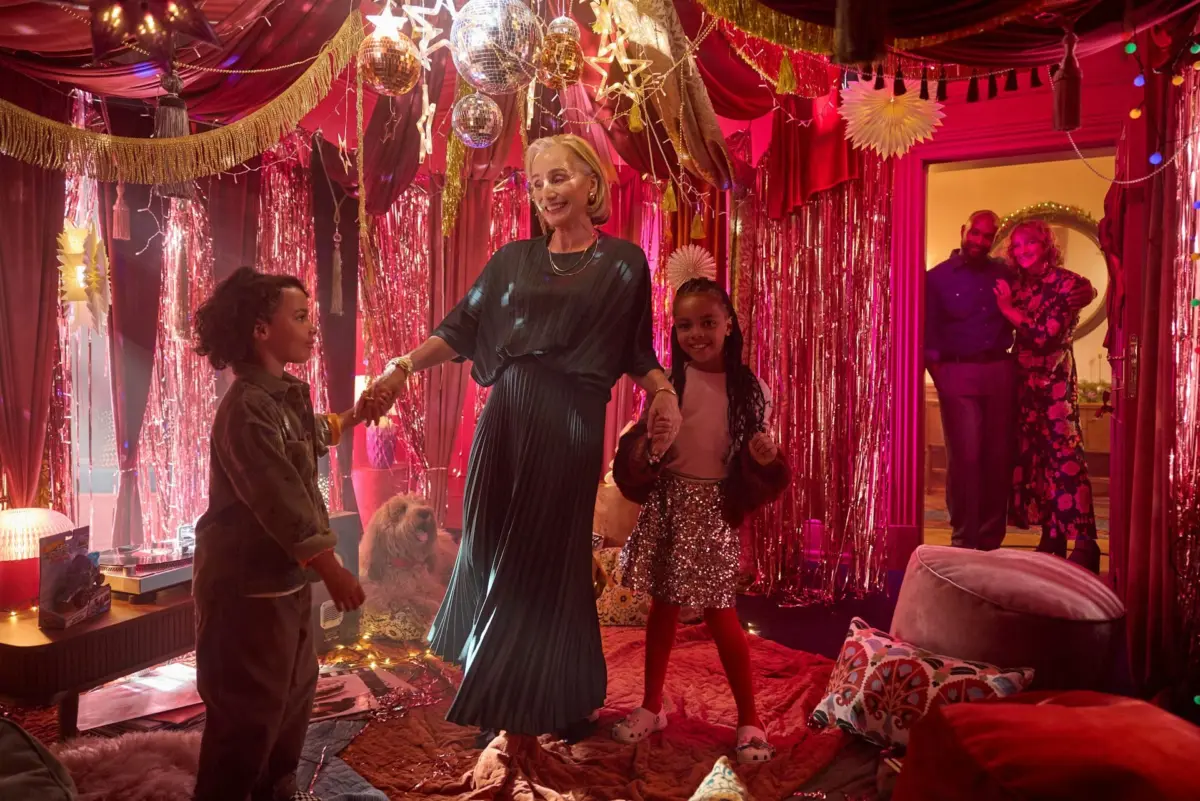
Starring acclaimed actress Kristin Scott Thomas as "Gloria," the 2026 spot addresses a quiet modern tragedy: the emotional disconnect that can form between grandparents and their fast-paced, digital-native grandchildren. Feeling obsolete and on the verge of resigning herself to the impersonal tradition of handing out cash in envelopes, Gloria is jolted back to life by her childhood toy dog, Pickles. Animated and wise, Pickles whisks her away on a neon-lit, whirlwind London TukTuk ride. The journey reignites Gloria’s sense of childlike wonder, inspiring her to transform her staid home office into a glittering, disco-ball-lit "gran cave." By bridging the generational chasm with shared joy, Gloria rediscovers her inner youth—and captures the adoration of her family.
Yet, beneath the glittering spangles and festive soundscape lies a profound sociological and evolutionary reality. The ad touches a nerve because it reflects contemporary anxieties about loneliness, the breakdown of the extended family, and the heavy reliance on the nuclear model. Sociologists refer to the invisible emotional and practical groundwork that women—and particularly grandmothers—provide as "kinkeeping."
Far from being a sentimental trope, the active involvement of grandparents in family life is supported by an overwhelming body of anthropological and medical science. From the evolutionary biology of "cooperative breeding" to modern psychological studies demonstrating how intergenerational contact protects elders from isolation and boosts children’s mental health, the message of the 2026 John Lewis campaign hits deeper than festive sentimentality. This article explores the cultural resonance, sociological foundations, and evolutionary science behind this year’s most talked-about commercial.
Detailed Chronology: Anatomy of a Festive Phenomenon
To understand the cultural impact of the 2026 campaign, one must trace the evolution of the narrative arc that John Lewis pioneered and perfected over two decades.
The Journey of Gloria and Pickles
The 2026 spot opens in a quiet, slightly sterile suburban home. Gloria (Kristin Scott Thomas) sits amidst stacks of wrapped boxes and digital gadgets, staring blankly at her phone. Her visiting grandchildren, absorbed in their own virtual worlds, treat her with the polite, distant reverence often reserved for historical artifacts. Sensing the widening gulf, Gloria mentally capitulates, preparing to abandon the effort of meaningful gift-giving in favor of the cold expediency of cash in greeting cards.
Enter Pickles—a faded, well-loved childhood toy dog brought to vivid, cinematic life. With a flick of magic and an irreverent bark, Pickles propels Gloria out of her domestic isolation and onto the back of a fantasy shocking-pink TukTuk.
As the vehicle tears through London’s iconic, fairy-lit streets, the cinematic framing shifts. The dull gray color grading of the opening scenes gives way to explosive saturation. Gloria, leaning her head back against the leather headrest, feels the wind in her hair. The straitlaced matriarch sheds her self-imposed invisibility, remembering the thrill of silliness, the joy of the unexpected, and the rhythm of a life unburdened by expectations.
Returning home with a renewed spirit, Gloria bypasses conventional holiday tropes. Instead of a traditional, stiff family dinner, she converts her mundane home office into an extravagant, glitter-drenched disco den. The transformation is symbolic: she refuses to remain a passive background figure. When her grandchildren step into the glowing room, they do not see a duty-bound elder; they see a vibrant, fun-loving co-conspirator. The generation gap dissolves in a flurry of laughter, dance, and shared wonder.
The Cultural Ripple Effect
Within hours of its broadcast premiere, the 2026 ad sparked viral commentary across social media platforms, talk shows, and broadsheet op-eds. Commentators noted a distinct departure from previous campaigns that focused on childhood longing or romantic love. By centering on the often-overlooked demographic of older women, John Lewis tapped directly into a conversation regarding aging, visibility, and the reconfiguration of modern family dynamics.
Public reactions highlighted a shared national nostalgia for grans who quietly held families together. Yet, beneath the warm fuzzy glow of public discourse, a starker realization emerged: for many families, this level of easy, spontaneous intergenerational contact is an impossible luxury, fractured by geography, economic pressures, and the isolation of the modern nuclear household.
Supporting Context & Metrics: The Crisis of Modern Loneliness and Kinkeeping
The emotional resonance of Gloria’s story is rooted in hard demographic and sociological data regarding the state of modern families and aging populations.
The Invisible Labor of "Kinkeeping"
In sociology, the term "kinkeeping" describes the efforts made by specific family members—predominantly women—to maintain communication, orchestrate gatherings, remember birthdays, and preserve emotional ties across households. Grans often function as the invisible back boilers of family life: half-invisible in the background, yet steadily warming the domestic sphere without drawing attention to themselves.
However, kinkeeping is increasingly strained by contemporary socio-economic realities:
- Geographic Dispersion: High housing costs and job markets force younger generations to move away from their hometowns, separating families by hundreds of miles.
- Time Poverty: Dual-income households battling the cost-of-living crisis leave parents with precious little bandwidth to cultivate regular, unstructured time with older relatives outside of mandatory holidays.
- The Devaluation of the Elderly: Modern Western societies frequently marginalize aging populations, casting them as economic burdens rather than repositories of invaluable social capital.
The Health Toll of Disconnection
The consequences of this generational silo effect are severe. According to recent demographic and public health studies:
- Loneliness Epidemic: Grandparents who enjoy regular face-to-face contact and emotional involvement in their grandchildren’s lives report significantly lower rates of loneliness and display markers of healthier, more active aging.
- Psychological Devaluation: Conversely, studies published in family gerontology journals indicate a rising sense of alienation among older adults who feel sidelined or viewed by younger generations as obsolete.
- The Festive Spike: Festive advertising taps into a genuine deficit. For millions of older adults, December is not just a season of joy, but a stark reminder of the isolation experienced during the other eleven months of the year.
Official Statements and Expert Perspectives
The profound themes unpacked in the 2026 commercial have drawn commentary from sociologists, evolutionary anthropologists, and mental health experts who view the ad as a timely cultural mirror.
Sociological and Anthropological Insights
Dr. Aris Thorne, a specialist in intergenerational family structures, notes that the cultural archetype of the disengaged or invisible grandmother is a relatively recent, industrialized aberration:
"For thousands of years of human history, the idea of a grandmother living entirely isolated from her descendants would have been completely alien. What we see in Gloria’s character arc is a dramatic manifestation of modern loneliness. The brilliant stroke of the 2026 campaign is showing that bridging that gap requires older adults to drop their guarded dignity and allow themselves to be playful, while inviting younger generations to see the vibrant, complex individuals hiding beneath the title of ‘gran’."
Evolutionary Biology and Cooperative Breeding
From a biological standpoint, the emotional necessity of grandmothers is hardwired into human DNA. Evolutionary anthropologists frequently classify humans as "cooperative breeders."
Unlike many of our closest primate relatives, human infants are born exceptionally altricial (dependent and helpless), requiring an unprecedented amount of caloric and energetic investment to mature. To survive this evolutionary bottleneck, early human mothers required "alloparents"—auxiliary caregivers including grandmothers, grandfathers, aunts, uncles, and older siblings.
Dr. Elena Vance, an evolutionary psychologist, explains the biological imperative behind the ad:
"We did not evolve to raise children in isolated nuclear family units behind closed front doors. Grandmothers were evolutionary linchpins. They provided crucial food provisioning and alloparenting that allowed human birth spacing to accelerate. When we isolate nuclear families, we break an evolutionary circuit that has sustained our species for millennia. Ads like this resonate because our biology remembers what our modern housing layouts have forgotten."
Future Outlook: Rebuilding the Intergenerational Bridge
As the cultural conversation surrounding the 2026 John Lewis advert matures, experts argue that the real challenge lies in translating the temporary warmth of a Christmas commercial into sustainable, year-round structural change.
Moving Beyond the Holiday Window
If festive campaigns consistently remind us of the comfort found in larger, integrated family circles, the logical conclusion is that society must actively rebuild pathways for intergenerational connection. This involves several key shifts:
- Urban and Housing Design: Architects and urban planners are increasingly looking at multi-generational housing models, co-housing initiatives, and suburban developments designed to keep extended families within walking distance of one another.
- Community Interventions: Grassroots programs pairing isolated older adults with young families—such as shared nurseries situated inside care homes—have demonstrated astonishing success in improving the mental health of both demographics.
- Redefining Aging: Cultural narratives must continue to move away from the trope of the frail, passive grandparent toward figures like Gloria: active, dynamic, emotionally daring, and fully integrated into the cultural present.
Conclusion
The 2026 John Lewis Christmas advertisement succeeds because it does not offer a fairy-tale resolution that ignores reality. Instead, it acknowledges the awkwardness, the generational friction, and the quiet pain of feeling left behind in a fast-paced world.
Through Pickles’ magical intervention and Gloria’s disco-lit transformation, the campaign issues a gentle, powerful challenge to modern families. It reminds us that the best gifts under the tree cannot be bought with cash in an envelope; they are found in the courage to be silly, to share stories across the decades, and to recognize that the older generations are not outdated relics of the past, but the very heartbeat of our collective future.