Executive Overview
The landscape of virtual instrument sampling has long chased an elusive ghost: absolute acoustic authenticity. For decades, software developers have meticulously captured the nuances of Steinway, Bösendorfer, and Yamaha grand pianos, squeezing thousands of velocity layers and multiple microphone positions into gigabytes of digital storage. Yet, despite these monumental technological strides, a distinct limitation remained tethered to the laws of physics. Traditional grand pianos are bound by horizontal cabinetry and string lengths constrained by standard concert hall footprints.
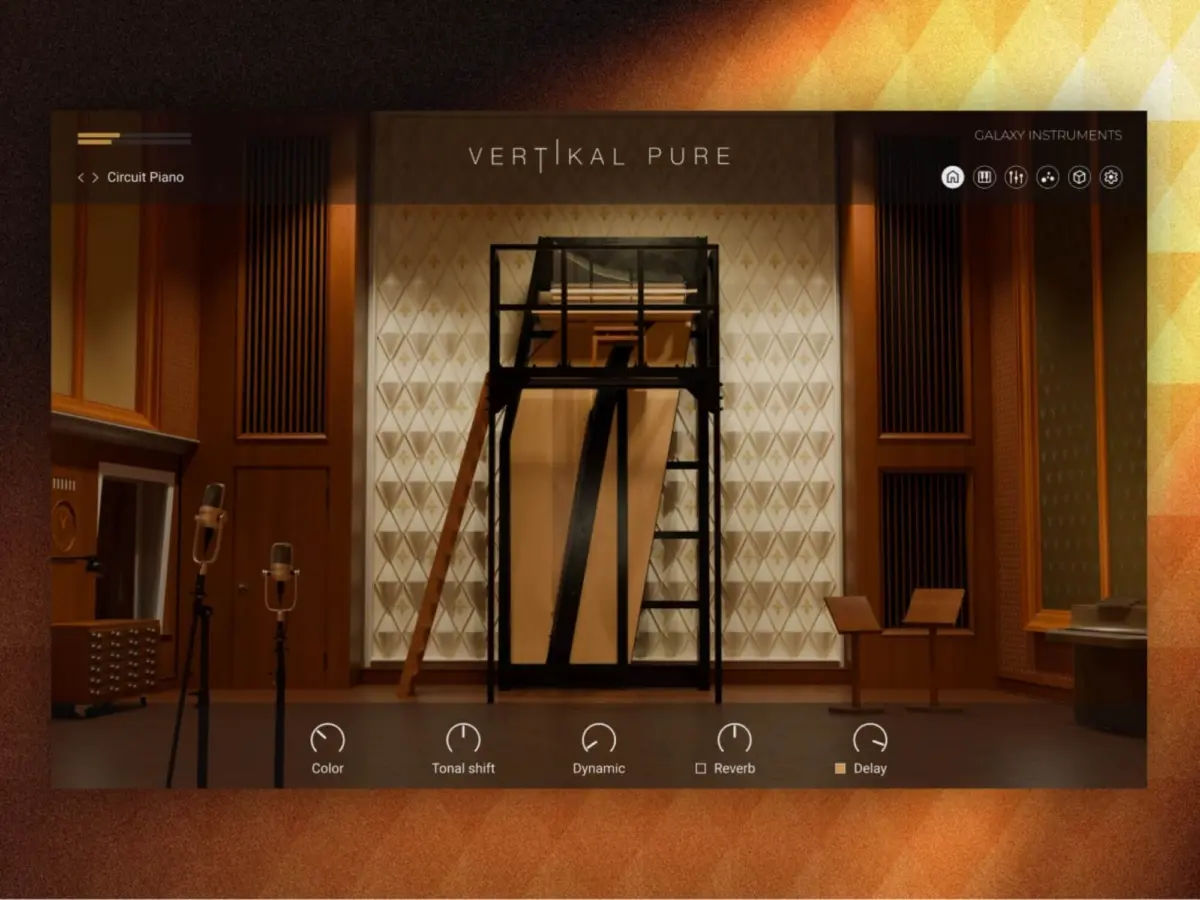
Enter Vertikal—a groundbreaking software instrument born from a collaboration between Native Instruments, renowned developer Galaxy Instruments, and visionary avant-garde composer Nils Frahm. Designed exclusively for Native Instruments’ Kontakt 8 platform, Vertikal does not attempt to emulate a conventional grand piano. Instead, it bottles the sonic lightning of one of the most eccentric, awe-inspiring acoustic instruments ever conceived: a colossal, 4.5-meter-tall vertical concert grand housed in Saal 3 of Berlin’s legendary Funkhaus production complex.
Featuring string lengths stretching up to 3.9 meters—surpassing even the largest concert grands in the world—this architectural behemoth boasts a massively oversized soundboard and a breathtaking dynamic range. Through Vertikal, this once-in-a-lifetime acoustic artifact has been transformed from an exclusive physical curiosity into a democratized, highly versatile digital workstation. Powered by a reimagined Particles 2.0 engine, the instrument bridges the gap between neoclassical acoustic purity and modern electronic sound design, offering producers and composers an unprecedented palette of pristine tones, tactile felt textures, and generative modulation capabilities.
Detailed Chronology: From Berlin Funkhaus Blueprint to Digital Reality
The story of Vertikal is deeply intertwined with the history of Berlin’s iconic Funkhaus complex and the restless creativity of Nils Frahm. To understand the software, one must first understand the physical monolith that inspired it.
The Birth of Saal 3’s Monolith
Constructed as part of the sprawling East Berlin broadcasting hub, Saal 3 is celebrated globally for its architectural acoustics, serving as a sanctuary for adventurous musicians, film composers, and sound designers. Within this hallowed space, Nils Frahm envisioned an instrument that defied standard piano-building conventions. Traditional grand pianos must lay their strings horizontally to allow gravity to assist the escapement action of the hammers. However, this layout restricts string length and soundboard size due to floor space limitations.
Frahm’s vision discarded these limitations by going vertical. Standing at a staggering 4.5 meters tall, the custom-built vertical concert grand utilizes strings that stretch an astonishing 3.9 meters. Because of this monumental vertical tension and expansive soundboard surface area, the instrument projects a thunderous, cavernous bass response and a sustain that seemingly defies decay. Every note resonates with a complex harmonic richness that traditional grand pianos simply cannot replicate in standard rooms.
The Sampling Process
Capturing such an untamed acoustic beast presented a monumental technical hurdle. Standard sampling techniques would fail to translate the sheer physical displacement and air-moving capacity of the 4.5-meter instrument. Under the direct supervision of Nils Frahm, the sampling sessions were executed with surgical precision inside Saal 3.
Every single note was recorded meticulously, capturing not just the pitch, but the holistic interaction between the immense strings, the massive wooden chassis, and the acoustic reflections of the room itself. Galaxy Instruments, known for their deep expertise in crafting sophisticated sample libraries for Native Instruments (such as The Giant and Noire), engineered the software framework to preserve the raw, unadulterated DNA of Frahm’s prized piano.
Rather than editing out the mechanical idiosyncrasies and incidental resonances that occur when playing such a massive physical object, the team embraced them. The result is a virtual instrument that breathes, reacts, and interacts with the user just like its physical counterpart.
Supporting Context & Metrics: Architecture and Engine Mechanics
Vertikal is much more than a static multi-sampled piano; it is an integrated ecosystem of acoustic capture and advanced sound-shaping technology. To appreciate its capabilities, one must examine its core performance layers and the upgraded Particles 2.0 engine.

Three Distinct Performance Modes
Understanding that modern producers require immense sonic flexibility, Vertikal offers three unique operational states, each altering the physical interaction between the hammer and the string:
- Pure: This mode delivers the unadulterated, crystalline clarity of the 3.9-meter strings striking naked felt against high-tension steel. It offers maximum dynamic range, bright transients, and a biting upper register ideal for neoclassical arrangements and cinematic punch.
- Felt: By dropping a strip of dense wool felt between the hammers and the strings, this mode creates a muffled, intimate, and warm aesthetic. Popularized globally by Nils Frahm himself, the felt setting strips away harsh high-end transients, leaving a soft, whispered hammer attack that evokes vintage cinematic moods and meditative ambient soundscapes.
- Felt-Plus-Cotton: Taking acoustic preparation a step further, this mode introduces a secondary layer of fabric texture. The combination of felt and cotton dampens the strings even further, introducing subtle mechanical noises, muted plucks, and a pillowy, organic warmth that sits effortlessly in the background of modern electronic and lo-fi productions.
The Power of Particles 2.0
At the heart of Vertikal’s electronic capabilities lies the newly redesigned Particles 2.0 engine. This engine transforms the instrument from a traditional piano library into a generative sound-design powerhouse.
- Refined Rhythm Mode: Users can sequence intricate rhythmic patterns directly within the interface, turning sustained chords and arpeggios into pulsing, living polyrhythms.
- Expanded Tonal Sources: Beyond the primary piano samples, the engine integrates percussive hits, ambient textures, and noise layers that can be blended seamlessly with the acoustic signal.
- Advanced Modulation & Control: Particles 2.0 introduces a sophisticated motion system powered by assignable LFOs and performance modulation. Producers can manipulate parameters dynamically using a hardware mod wheel or polyphonic aftertouch, making the software extraordinarily expressive during live performances.
- Independent Pan and Timbre Control: Sound designers are given surgical control over the spatial placement and tonal frequency distribution of individual layers, allowing for wide, immersive stereo fields that rival multi-mic studio setups.
Official Statements: Democratizing a Masterpiece
The release of Vertikal represents a philosophical shift for Nils Frahm, moving away from exclusive physical ownership toward global artistic collaboration.
Reflecting on the journey of turning his custom studio centerpiece into a widely accessible digital tool, Frahm shared deep enthusiasm:
"The piano is not just something singular… it is turning into a shared experience with the making of this virtual instrument. It will be democratized in a way, and I really like that. There was a community behind this and my goal was to give back. I know we’ve done the best we can to give this piano a proper chance to be useful and needful. For me it’s the best possible outcome to just release this into the world, I’m honestly very proud of it."
This sentiment echoes Native Instruments’ ongoing mission to capture rare, character-driven acoustic spaces and place them into the hands of bedroom producers and film score heavyweights alike. By partnering with Galaxy Instruments, Native Instruments has ensured that the idiosyncratic magic of Saal 3 is no longer locked behind the closed doors of a Berlin production studio.
Future Outlook: The Evolution of Virtual Acoustics
The launch of Vertikal for Kontakt 8 signals a broader trend within music technology: the blurring lines between physical acoustic preservation and electronic sound design. As processing power increases and sampling methodologies grow more sophisticated, musicians are no longer satisfied with sterile, mathematically perfect emulations of standard instruments. Instead, the modern market hungers for character, imperfection, physical scale, and deep emotional resonance.
By capturing an instrument as physically anomalous as a 4.5-meter vertical grand, Native Instruments and Nils Frahm have set a new benchmark for what is possible in virtual instrumentation. The ability to seamlessly morph from a pristine, concert-ready classical piano tone into heavily modulated, textural ambient pads using the Particles 2.0 engine highlights the direction in which modern composition is heading.
For film composers, ambient artists, and contemporary songwriters, Vertikal offers an immediate injection of cinematic scale. Available now for £129 and fully compatible with Kontakt 8, this release ensures that the thunderous resonance of Saal 3 will echo across thousands of future records, film scores, and electronic masterpieces around the globe.