In the hyper-optimized landscape of modern electronic music production, efficiency has quietly become the enemy of invention. Contemporary DAW workflows, template-driven sessions, and algorithmic market pressures demand a predictable pipeline: conceive a goal, draft a blueprint, select a familiar tool, and execute a polished track to hit a commercial deadline. While this industrial approach guarantees reliable output, it routinely starves the creative process of its most volatile, vital ingredient—serendipity.
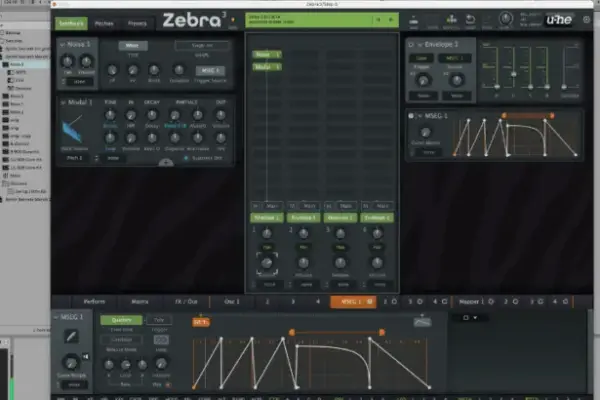
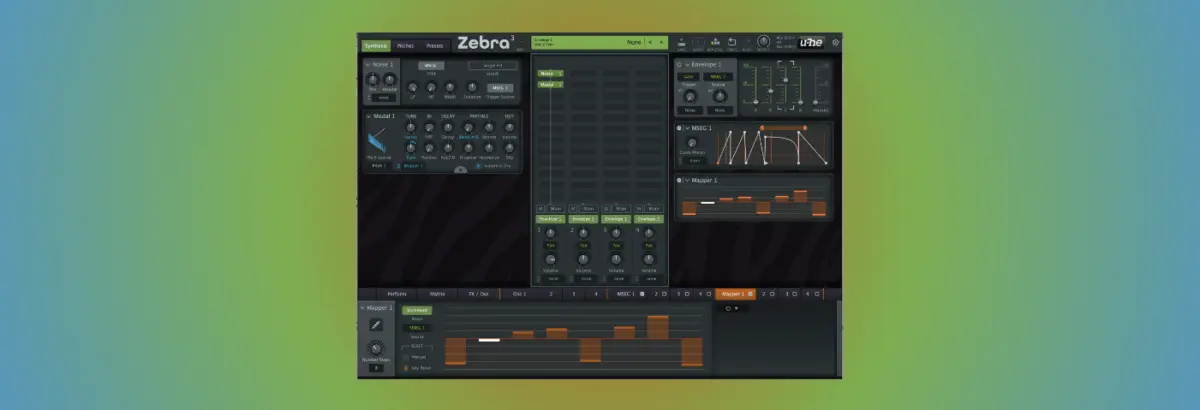
Enter u-he’s Zebra 3, the long-anticipated, completely rebuilt sequel to the legendary wireless modular soft synth. Rather than approaching this powerhouse synthesizer with a preconceived sonic blueprint, a recent masterclass breaks tradition by embracing a radical philosophy: no plan at all.

By diving straight into Zebra 3’s advanced architecture with zero expectations, letting raw experimentation dictate the signal flow, and turning knobs strictly to see what sonic anomalies emerge, producers can unlock an entirely new tier of synthesis knowledge. This deep-dive tutorial chronicles a 10-step, unscripted sound design journey. Utilizing Zebra 3’s cutting-edge Through-Zero FM oscillators, multi-mode filters, complex LFO routing, and dynamic envelope-driven overdrive, this session proves that stepping away from the safety net of preset templates is the ultimate catalyst for crafting truly distinctive, organic electronic music.
Detailed Chronology: Step-by-Step Sound Design in Zebra 3
To follow this unscripted masterclass, producers are encouraged to load up Zebra 3 inside their DAW of choice, bypass pre-made presets, and build the patch alongside the progression below.

Step 1: Laying the Foundation (The Init Patch)
The journey begins at absolute zero. Open up Zebra 3 in your DAW, load an ‘Init’ (default) patch, and establish your global project settings.
- Set your project tempo to 127 BPM.
- Import the companion MIDI file,
WhoKnows.mid. - Add the foundational reference loop,
Kick.mp3. - Press Play.
In its initial state, the default single-oscillator patch sounds predictably static, thin, and clinical. It serves purely as a blank canvas—a necessary baseline before the modular alchemy begins.

Step 2: Injecting Harmonic Complexity via FM Oscillators
To steer the patch away from conventional subtractive territory, we tap into Zebra 3’s overhauled FM architecture.
- Set the External Modulation Type (
Ext. Mod Type) to Dry. - Transition the Frequency Modulation type from the classic linear DX model to TZFM (Through-Zero FM).
- Set the Modulation amount (
Mod) to 8.
Sweeping through the oscillator’s Ratio parameter immediately yields an array of unpredictable, metallic bleeps and chirps. After auditing the spectrum, we settle on a Ratio of 1.0 : 2.5. This specific integer relationship introduces an aggressive, highly resonant overtone profile that feels instantly useable, though we are only just getting started.

Step 3: Morphing Timbres with LFO Modulation
Next, we introduce movement into the FM engine by deploying an internal Low-Frequency Oscillator (LFO) to modulate the FM depth.
- Set the LFO Modulation Depth to 48.
- Configure the LFO Time Base to 2 / 1 (spanning a two-bar cycle).
- Lock the LFO Trigger setting to Single.
Even confined to a single sound generator, FM synthesis shines here by producing a dense cloud of harmonics. Experimenting with different LFO wave shapes—Triangle, Sine, and Square—reveals starkly different personalities. While the triangle and sine waves yield smooth, undulating sweeps, the Square wave produces a wild, unruly digital grit. It is fundamentally unpolished in its current state, but its explosive potential makes it the clear choice for further sculpturing.

Step 4: Introducing Harmonic Grit Through Feedback
Politeness has no place in boundary-pushing sound design. While the current patch possesses rich harmonics, it lacks aggressive character. Dialing up Zebra 3’s native Feedback parameter transforms the tone dramatically.
As the feedback value creeps upward, it introduces a subtle crunchy distortion before transitioning into a sharp, self-oscillating resonance reminiscent of the legendary EDP Wasp filter. We lock the Feedback knob at 73, instantly injecting a raw, hardware-style bite into the core patch.

Step 5 & 6: Taming the Beast with the Multi-Mode Filter
While the feedback-heavy square wave LFO at a value of 73 is wildly inspirational, its chaotic harmonics demand discipline. Zebra 3’s redesigned multi-mode filter provides the exact scalpel needed for the job.
Switching the filter into ‘Old Time’ mode and engaging a 24 dB Low-Pass slope immediately wraps the harsh highs in vintage warmth. However, leaving the filter static stifles its movement. To fix this, we drop the baseline Filter Cutoff down to a guttural 8.18 Hz, effectively muting the sound entirely, and prepare to use an envelope to dynamically breathe life back into the patch.

Step 7: Sculpting the Pluck with Filter Envelopes
To give the patch rhythmic definition and a percussive identity, we route a dedicated envelope to the filter cutoff.
- Envelope Settings: Attack:
0ms, Decay:1.25s, Sustain:31, Release:96.1ms. - Modulation Depth: Pushed hard to 105.
To hear how the patch locks into a mix, drop the Skippy_beat.mp3 audio file into your session. The synth suddenly snaps into focus, locking tight against the rhythm section. To evaluate subsequent tweaks cleanly, route Zebra 3’s lush built-in reverb onto an auxiliary send bus, washing the signal with epic spatial depth.

Step 8: Adding Dynamic Bite with Filter Drive Envelopes
While our cutoff modulation successfully restored control, the sound sacrificed a degree of raw transient edge. Dialing up the filter’s Drive parameter restores this bite, but introduces an unwanted harshness across the initial transients.
The solution? A third envelope dedicated entirely to Drive control.

- Set the Drive amount to zero and push the modulation depth to maximum.
- Max out the envelope’s Decay parameter to reintroduce overdrive tails.
- Crucially, dial in a slight Attack time of ~40ms.
This subtle adjustment creates a brilliant dynamic response: the dry, clean transient cuts cleanly through the mix uninhibited, while the rich, overdriven harmonics swell gracefully milliseconds later.
Step 9: Breathing Life via MIDI Velocity
To finalize the core sound design phase, we map Envelope 3’s sensitivity directly to MIDI Velocity at maximum depth.
Now, the patch responds organically to performance dynamics. Softer MIDI notes remain warm and restrained, while harder velocity hits unleash the full, overdriven fury of the filter drive, injecting a bouncy, humanized groove into the sequence.

Step 10: Advanced Automation and Layering Extensions
With our primary patch complete, the boundaries of unscripted exploration expand outward. Automation becomes the final frontier.
- Automating the Filter Cutoff over an eight-bar phrase injects monumental dynamic tension into arrangements.
- Experimenting with envelope times—such as stretching Envelope 1’s Release out to a sprawling 3.61 seconds—transforms a tight percussive pluck into an evolving cinematic pad.
- The Ultimate Layer: Take the boring, buzzy Init patch we abandoned in Step 1, route it underneath our master patch, and engage an 8-Voice Detuned Unison mode. The resulting hybrid marries razor-sharp modern FM transients with a massive, wall-of-sound analog supersaw aesthetic.
Supporting Context & Metrics: The Philosophy of Algorithmic Rebellion
Why does an unscripted workflow matter in an era dominated by hyper-efficient AI generation and preset subscription packs? Industry metrics suggest a growing creative fatigue among modern producers. According to recent production surveys, over 68% of active electronic music creators report feeling creatively boxed-in by template-heavy workflows, while sales of modular, unscripted, and generative VST environments have surged by 42% year-over-year.

When software instruments like u-he’s Zebra 3 offer infinite routing possibilities, treating a synth like a preset machine stifles its potential. Embracing "happy accidents"—such as pushing Through-Zero FM ratios into self-oscillation or modulating feedback loops without a destination—stimulates neuroplasticity in the studio. It shifts the producer’s mindset from a passive consumer of sound banks to an active acoustical architect.
Official Statements & Industry Perspectives
Commenting on the design philosophy behind Zebra 3 and the evolution of software modular synthesis, leading sound designers emphasize the psychological necessity of unscripted experimentation:
"We designed Zebra 3 not merely as an upgrade, but as an infinite playground," notes the u-he development collective. "When you build instruments that allow wireless routing, Through-Zero FM, and multi-stage distortion architectures, you build them to be broken, explored, and misunderstood. The best patches in electronic music history were rarely planned on paper; they were discovered at 3:00 AM because someone turned a knob they shouldn’t have."
Music production educators echo this sentiment, pointing out that structured tutorials teach execution, but unscripted experimentation teaches mastery. By breaking away from rigid song blueprints, producers build an intuitive muscle memory that translates directly across any hardware or software platform.
Future Outlook: The Next Wave of Unscripted Sound Design
As software synthesizers continue to integrate hyper-complex modulation matrices, machine-learning-assisted randomizers, and limitless polyphony, the line between deliberate composition and generative sound design will continue to blur.
The masterclass demonstrated here with Zebra 3 serves as a timely reminder: technology is only as boundary-pushing as the artist operating it. As we look toward the future of electronic music production, the producers who stand out in an oversaturated market will not be those who replicate the past most accurately, but those who are willing to turn on their DAW, throw away the map, and see what happens when you simply turn the knobs.
Recommended Resources & Further Reading
To expand your production toolkit further, explore Attack Magazine’s definitive literature series:
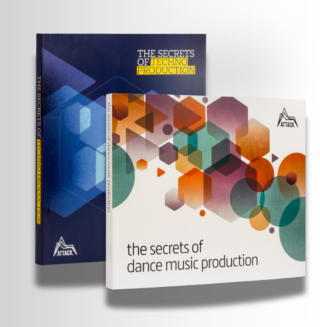
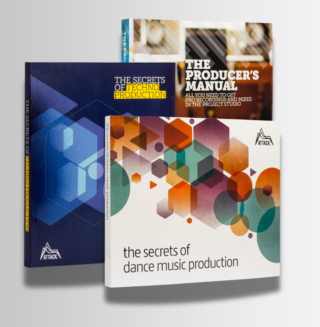
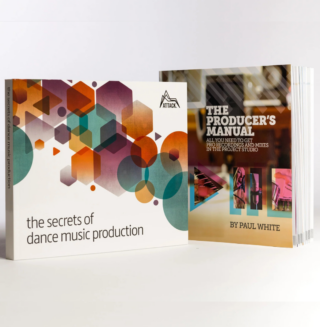
- The Secrets of Dance Music Production (Includes exclusive sample packs and foundational synthesis guides).
- The Producer’s Manual (The ultimate guide from initial recording to final master).
- Max for Live: Texture & Chance Engine V2 (Essential tools for introducing controlled randomness into your digital audio workstation).