Executive Overview
In the fast-evolving landscape of modern electronic music production, the quest for a distinct sonic fingerprint often drives artists down rabbit holes of complex plugin chains, analog hardware acquisitions, and endless routing experiments. For the acclaimed Welsh electronic music duo Overmono—consisting of brothers Tom and Ed Russell—the signature warmth, crunch, and undeniable weight of their tracks have long been the product of a deeply specialized mixing workflow. Now, rather than keeping those studio trade secrets locked away in their DAW session templates, the duo has pulled back the curtain.
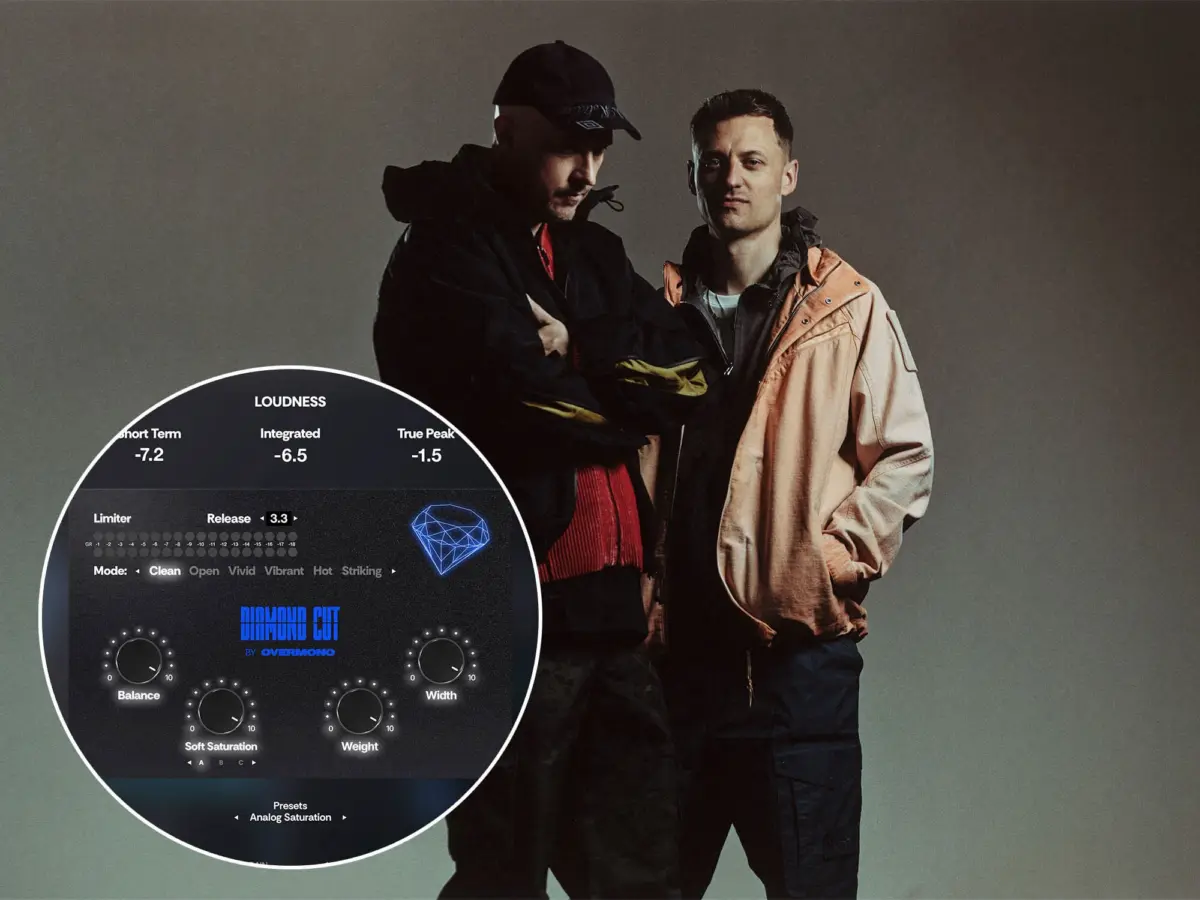
In collaboration with newly minted Finnish software developer Project Miracle, Overmono has launched Diamond Cut, an all-in-one bus processor that codifies their hard-earned mixing philosophy into a single, highly streamlined plugin. Named after their classic, floor-filling track of the same name, Diamond Cut is designed to keep producers in a creative "flow state" by eliminating the friction of managing multiple individual processors.
By combining a six-mode limiter, an intelligent tonal balance EQ, soft harmonic saturation, a psychoacoustic low-end enhancer, and a stereo width tool into a cohesive interface, Diamond Cut bridges the gap between raw, analog-style destruction and surgical digital precision. Developed over a grueling three-year design process beginning in 2023, the plugin serves as the inaugural release for Project Miracle—a collaborative venture uniting music producers, software engineers, and UI designers.
Priced at £89 / $109 / €99, with flexible rent-to-own options and a 14-day free trial available, Diamond Cut arrives not merely as another generic limiter, but as an insider’s pass to Overmono’s unmistakable sonic architecture. This in-depth report explores the anatomy of the plugin, the collaborative genesis behind its creation, the technology driving its modules, and what this release means for the broader landscape of electronic music production gear.
Detailed Chronology: From Underground Club Anthems to Software Development
To understand why Diamond Cut represents such a significant milestone in modern audio gear, one must retrace the trajectory of Overmono and the technical challenges they faced in the studio.
2021–2022: The Breakthrough and the Workflow Bottleneck
The genesis of Overmono’s hardware-software hybrid workflow can be traced back to the explosion of their breakthrough single So U Kno in 2021. The track resonated deeply with clubbers globally, introducing a sound that seamlessly blended the rhythmic syncopation of UK garage, the emotional depth of ambient electronica, and the chest-rattling weight of modern techno and bass music.
As Tom and Ed Russell scaled up from underground producers to headlining major festival stages—culminating in a massive, sold-out performance at London’s iconic Alexandra Palace—their touring schedule intensified. This transition forced them to scrutinize their studio workflows. They needed a way to translate the massive, punchy, and transient-preserving dynamics of their studio mixes onto massive festival sound systems without spending hours wrangling multi-plugin chains on their master and group buses.
2023: The Birth of Project Miracle
The turning point arrived in 2023 when the foundational ideas for Diamond Cut began to take shape. Recognizing that the specific combination of saturation, limiting, and low-end reinforcement they relied on didn’t exist in a single, cohesive hardware unit or software package, the duo sought out software engineers who shared their vision for intuitive, unpretentious studio tools.
This led to a partnership with Project Miracle Ltd., a newly formed boutique software company composed of veteran music producers, DSP (Digital Signal Processing) engineers, and UI/UX designers. Unlike massive legacy audio corporations that often prioritize historical hardware emulations, Project Miracle was founded with a singular mandate: to build forward-thinking, creative-first tools designed to solve modern workflow bottlenecks.
Over nearly three years of iterative development, the team worked closely with Overmono to distill the duo’s chaotic, highly idiosyncratic bus processing chains into a streamlined digital instrument. They tested countless prototypes, tweaking the transient response of the limiter, refining the psychoacoustic math of the bass enhancer, and obsessing over an interface that would keep artists focused on music-making rather than menu-diving.
Late 2026: The Commercial Rollout
Culminating three years of secretive beta testing and studio deployment on their own recent releases, Overmono and Project Miracle officially pulled the wrapper off Diamond Cut. Released globally in late 2026, the plugin immediately captured the attention of electronic music producers, mixing engineers, and gear enthusiasts alike, marking Project Miracle’s explosive debut on the international audio software market.
Anatomy of the Plugin: The Five Processing Modules
At the core of Diamond Cut’s appeal is its consolidation of five distinct audio processing stages into a single, unified signal path. Rather than forcing producers to stack disparate plugins—which often introduces phase issues, latency, and CPU bloat—Diamond Cut handles these interdependent tasks under one roof.
[ Incoming Audio Signal ]
         │
         ▼
 ┌───────────────┐
 │   Balance     │ ──> Subtle Tonal Correction & Tilt EQ
 └───────────────┘
         │
         ▼
 ┌───────────────┐
 │ Soft Saturation│ ──> Harmonic Excitement & Analog Warmth
 └───────────────┘
         │
         ▼
 ┌───────────────┐
 │    Weight     │ ──> Psychoacoustic Low-End Enhancement
 └───────────────┘
         │
         ▼
 ┌───────────────┐
 │     Width     │ ──> Mid/Side Expansion & Spatial Imaging
 └───────────────┘
         │
         ▼
 ┌───────────────┐
 │   Limiter     │ ──> Six-Mode Dynamic Control & Transient Shaping
 └───────────────┘
         │
         ▼
 [ Final Output & Loudness Metering ]
1. The Six-Mode Limiter
The centerpiece of Diamond Cut is its sophisticated limiting architecture. Overmono has long emphasized the importance of how a track behaves at the absolute end of the chain.
- Transient Preservation: Traditional limiters often squash transient attacks, leaving drums sounding flat and lifeless when pushed to modern commercial loudness levels. The Diamond Cut limiter is engineered to preserve the initial punch of kicks and snares while aggressively clipping or smoothing out tail ends.
- Six Distinct Modes: Ranging from pristine, transparent digital limiting to raw, aggressive, circuit-bent crunch, the six modes allow producers to drastically alter the character of their mixes. As the duo describes it, the limiter delivers "raw loudness in the mix" with a gluing and crushing capability that they couldn’t replicate anywhere else.
2. Balance (Tonal Tilt EQ)
Rather than a complex, multi-band parametric equalizer that invites over-processing, Balance is an intuitive EQ system inspired by classic mastering tilt-filters. It subtly nudges a signal toward a chosen tonal character, allowing producers to sweep a mix warmer or brighter with a single, highly musical gesture. It serves as a rapid corrective and shaping tool designed to sit perfectly ahead of the saturation and limiting stages.

3. Soft Saturation
To infuse digital tracks with the warmth and harmonic density typically associated with high-end analog gear, Diamond Cut includes a dedicated Soft Saturation module. This stage introduces carefully calculated harmonic excitement, adding rich overtones to mid-range elements and vocals without introducing harsh digital clipping or muddying the mix.
4. Weight (Psychoacoustic Bass Enhancer)
Low-end management is one of the most notoriously difficult aspects of modern electronic music production. Pushing sub-bass levels too high can eat up vital headroom and cause multi-band compressors to pump uncontrollably.
- The Weight module approaches low-end enhancement from a psychoacoustic perspective.
- Instead of blindly piling on raw low-frequency energy that overwhelms club sound systems, it generates higher-order harmonics that trick the human ear into perceiving a fighter, deeper, and heavier low end while keeping actual speaker excursion and headroom under tight control.
5. Width (Spatial Imaging)
Rounding out the processing chain is the Width module. Utilizing sophisticated mid/side processing algorithms, this tool selectively enhances the side signal of a stereo bus. It allows producers to widen synths, pads, and percussion loops, creating an expansive, three-dimensional spatial image that envelops the listener without destabilizing the mono compatibility of the core kick and bass elements.
Supporting Context & Metrics
To fully appreciate the impact of Diamond Cut, it is helpful to look at the broader software ecosystem and the economic realities facing modern electronic music producers.
The Rise of Purpose-Built Workflow Plugins
For over two decades, the audio plugin market was dominated by digital emulations of vintage hardware—SSL mixing consoles, Pultec equalizers, and 1176 compressors. While these tools remain staples of traditional recording studios, electronic music producers working entirely "in-the-box" or within hybrid setups often face a workflow mismatch.
Artists like Overmono pioneered a sound born out of DAW automation, modern digital processing, and selective hardware integration. Consequently, tools like Diamond Cut—designed from the ground up to address contemporary electronic production workflows—represent a paradigm shift. Instead of asking producers to emulate 1970s rock mixing techniques, these modern plugins provide purpose-built architecture for 2020s club music aesthetics.
Accessibility and Pricing Metrics
Project Miracle has positioned Diamond Cut competitively within the saturated DAW plugin market:
- Standard Purchase Price: £89 / $109 / €99, placing it squarely in the mid-tier software bracket—accessible to bedroom producers while maintaining professional credibility.
- Trial & Ownership Models: Recognizing that modern producers often juggle subscriptions and perpetual licenses, Project Miracle offers both a comprehensive 14-day free trial (fully functional with no restrictions) and a flexible rent-to-own plan, lowering the barrier to entry for emerging artists.
Official Statements and Industry Insights
The philosophy behind Project Miracle and Overmono’s collaborative venture centers heavily on preserving artistic momentum. In the modern studio environment, decision fatigue is a genuine hazard; spending hours tweaking attack times, release curves, and crossover frequencies can drain the inspiration right out of a session.
Reflecting on the unique behavior of their custom bus processor, Overmono shared intimate details regarding their sonic goals during development:
"It preserves transients, smashes trails, glues and crunches the end of the chain in a way we can’t find anywhere else," the duo explained in an official statement accompanying the launch. "It’s raw loudness in the mix."
Meanwhile, representatives from Project Miracle emphasized that their foundational ethos revolves around empowering artists rather than overwhelming them with unnecessary technical complexity. By assembling a team that bridges the gap between software engineering and active, touring music production, the company aims to build tools that feel less like sterile math engines and more like tactile, creative instruments.
Future Outlook: The Next Wave of Artist-Led Audio Software
The release of Diamond Cut signals a broader trend in the audio technology sector: artist-driven software development. Historically, major plugin brands relied on generalized market research to design products. Today, however, boutique companies are increasingly partnering directly with vanguard artists to codify specific, highly sought-after workflows into commercial products.
For Overmono, Diamond Cut not only solidifies their legacy as sonic innovators in contemporary electronic music but also gives their global fan base and peer producers a direct window into their studio sorcery. Whether producers are attempting to dial in the crushing transients of a warehouse techno track or add polished, radio-ready warmth to a fragile ambient beat, Diamond Cut offers an all-in-one ecosystem designed to bypass technical hurdles and get straight to the music.
As Project Miracle looks toward the future following this high-profile debut, the audio software community will undoubtedly be watching closely to see what subsequent workflow secrets other electronic music pioneers choose to unpack next. For now, producers looking to inject a dose of Overmono’s unmistakable sonic DNA into their mixes can download the trial or purchase the plugin directly via the Project Miracle website.