Executive Overview
In the upper echelons of contemporary global music production, few figures bridge disparate cultural worlds quite as seamlessly as Abraham Olaleye, universally known as Daramola. Operating out of his meticulously curated home studio in Miami, the Nigerian-born, multi-platinum producer reflects on a career trajectory that defies conventional logic. "It doesn’t make sense, bro," he laughs, acknowledging a journey that has taken him from the electricity-deprived balconies of Lagos to the inner sanctums of Latin pop royalty.
Daramola’s recent Latin Grammy nomination for his production work on Elena Rose’s critically acclaimed album Alma is just the latest milestone in an explosive run. With production and songwriting credits decorating chart-topping records by global powerhouses such as Shakira, Béle, Danny Ocean, and Kapo, Daramola has quietly become an architectural force behind the contemporary Latin-Afro fusion movement. As he prepares for the release of his fourth studio album, Le Di Sentido, his work offers a masterclass in cross-cultural pollination, proving that geographical boundaries are utterly porous in the digital age.
However, Daramola is far more than a hit-making machine. As a self-confessed "studio nerd," his approach to sound design, hardware investment, and interpersonal dynamics in the control room reveals a philosophy rooted in intentionality. In this extensive deep-dive, we examine the making of a global producer, exploring the foundational lessons of his upbringing, the hardware and software arsenal driving his Miami workspace, and the uncompromising ethos that keeps his ego in check while pushing the boundaries of mainstream music.
Detailed Chronology: From Lagos Balconies to Miami Masterminds
To understand Daramola’s kaleidoscopic approach to production, one must retrace a nomadic life path spanning three continents and multiple distinct musical ecosystems.
The Nigerian Foundation
Born in Lagos, Nigeria, Daramola’s earliest musical education was entirely organic and domestic. His mother, a versatile local musician, served as his first and most profound sonic influence. Growing up in a household of five children under frequent circumstances of local infrastructure strain—such as sudden power outages—provided the backdrop for his musical awakening.
"I remember the electric grid would go off, and we’d go to the balcony in our house upstairs," Daramola recalls. "All of us. She had five kids, and she’d get a guitar and just play everything. She was multi-genre—she’d play country, gospel, traditional African rhythms. I guess that really did affect me in more ways than I thought it did back then. In retrospect, this is why I never considered myself a ‘beats guy.’ I’m just a Nigerian man who makes music."

The UK Interlude and American Collegiate Era
As a teenager, Daramola’s family relocated to the United Kingdom, where he split his formative years between London and Frome, a historic market town in West England. This exposure to British subcultures further expanded his sonic palette.
From the UK, he crossed the Atlantic to pursue higher education in Alabama, completing both undergraduate and postgraduate studies. It was during his time in the American South that his professional production journey truly began. Hustling on the side, he started selling beats to Christian rap artists, honing his arrangement skills and learning the commercial realities of beat-making.
The Breakthrough and the Latin-Afro Fusion
A pivotal, serendipitous "situation" in the American market eventually led to a major publishing opportunity. Sony Latin Publishing recognized his unique capacity to meld urban, African, and Latin rhythms, signing him as an artist and relocating him to Miami, Florida.
In Miami, Daramola found his true creative sweet spot. By merging the infectious, polyrhythmic percussion of Afrobeats with the seductive harmonic cadences of contemporary Latin pop, he helped codify a burgeoning transatlantic sound. Today, this cross-pollination dominates global charts, with Daramola sitting comfortably at its epicentre.
Supporting Context & Metrics: The Anatomy of a Miami Hit-Factory
Daramola’s transition from downtown Miami to a more secluded residential space was driven by a desire for community and culinary hospitality. "I moved out of downtown, and I wanted to bring artists to the house so I can barbecue for them and we just chill," he explains. This intentional cosiness, however, is backed by a formidable collection of state-of-the-art monitoring and synthesis equipment.
The Hardware and Software Arsenal
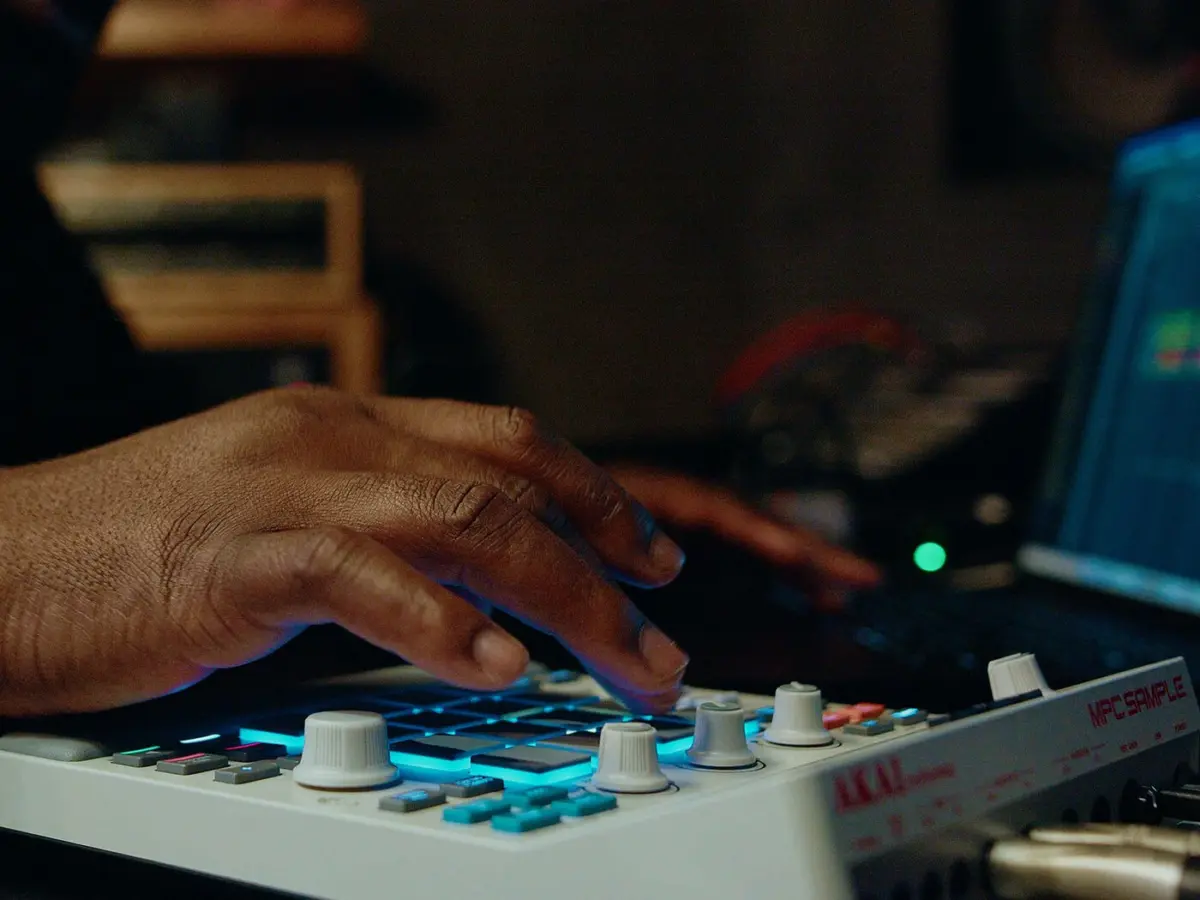
When asked about his studio setup, Daramola unabashedly embraces his inner gear-head. At the heart of his workflow are the PMC 6-2 studio monitors, which he identifies as his single largest and most impactful investment.

"My mixing is a thousand times better because of those," he notes. "And it matters, because a lot of the studios I go into now have PMC monitors as standard."
Flanking the monitors is an enviable array of hardware synthesizers and rhythm machines:
- Akai MPC Sample: A cornerstone for chopping and arranging rhythmic foundations.
- Telepathic Instruments Orchid: A boutique instrument utilized for unexpected textural layers.
- Moog Muse & Moog Sub 37: Analog heavyweights providing rich, warm basslines and commanding leads.
- Sequential Prophet Rev2: A polyphonic powerhouse relied upon for lush pads and atmospheric textures.
While Daramola flirts with the idea of adding a vintage Roland Juno-106 to his collection—having fallen in love with its distinct timbral footprint during sessions at Carlos Imperatori’s Custom Studio in Miami—he remains pragmatic about gear acquisition. "I like to consider myself a futurist," he says. "I think technology is amazing if used the right way, and I’m always looking for what’s next."
Yet, workflow speed trumps gear fetishism. When debating between expansive modular systems like the Moog Matriarch and faster polyphonic polysynths, he ultimately prioritizes efficiency. "I just didn’t have the time to start wiring stuff up," he admits.
Sound Selection as the Ultimate Production Secret
When pressed to debunk common music production myths, Daramola points to a fundamental truth that many aspiring producers overlook: the supremacy of sound selection.
"A lot of music production is just sound selection," he asserts. "Because anyone can throw anything together. But why did you use that synthesizer on that part of the song? Why does the reverb duck at the end as opposed to just simmer through the middle?"

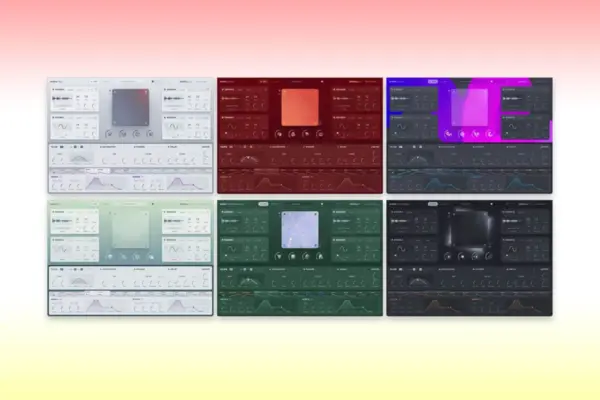
To achieve these nuanced spatial dynamics, he relies heavily on cutting-edge plugins. While he respects industry standards like Valhalla reverbs, his recent go-to is Baby Audio Crystalline for algorithmic spatial work, alongside Dezert Audio Polyfreq to twist lead synthesizers into unrecognisable, ear-catching textures. His overarching philosophy balances commercial accessibility with avant-garde daring: "How do I bring Bon Iver to a larger base? And the people who know listen and say, ‘Wow, he did that!’"
Official Statements & Industry Philosophy: The Human Element
Despite working at the highest tier of the global music industry, Daramola maintains a grounded, highly philosophical approach to collaboration. In an industry notoriously driven by clout and transactional relationships, his operational code is remarkably egalitarian.
The Universal Constant
When asked about the common thread running through his sessions—regardless of whether he is in the studio with a global icon or an unsigned up-and-comer—Daramola’s answer is unequivocal:
"The constant line is the love of music and treating people the same way. You could be the biggest artist in the world, or you could be someone who doesn’t have a name, but when we get in the studio, you’re going to get the same energy. There’s no preferential treatment."
He ties this professional ethics directly to personal survival and spiritual grounding: "Typically, when you deal with life like that, things tend to work in your favour because you’re not being filled by the wrong things; you’re serving a purpose. If you live for the approval of people, you will die by their rejection."
The Studio Vibe
This philosophy translates directly into his physical studio sessions, which reject corporate coldness in favor of unstructured camaraderie.

"If you get in with me, we’re gonna be there for a minute," Daramola explains, detailing his session blueprints. "We’re probably gonna play FIFA. We’re probably gonna chill; we’re just gonna laugh and get to know each other within the first hour. And then we’ll knock out the record."
Visual cues in his workspace reinforce this psychological grounding. Aside from his meticulous collection of Lego architectural builds—which inject vibrant colour into his home—he keeps a physical vinyl-art painting of Kanye West’s My Beautiful Dark Twisted Fantasy in direct line of sight from his mixing chair. Featuring the iconic imagery of a sword pointed toward the artist’s head, it serves as a daily meditation on the necessary "death of ego" required to sustain a long-term creative life.
Future Outlook: Le Di Sentido and the Next Evolution of Latin-Afro
As Daramola looks toward the horizon, the momentum shows no signs of slowing down. With his fourth studio album, Le Di Sentido, nearing completion, the producer is actively pushing his creative boundaries by imposing strict self-discipline on his instrumental palette.
In a genre ecosystem heavily saturated with acoustic and electric guitars—staples of both contemporary Latin music and Afrobeats—Daramola recently challenged himself to abandon the instrument entirely for months at a time. Instead, he forced his melodic ideas through the analog architecture of the Moog Muse, tasked with making synthesizer-heavy arrangements feel organic, warm, and deeply rhythmic without alienating traditional listeners.
Furthermore, his expanding footprint in the Latin Grammy ecosystem signals a permanent shift in how cross-continental collaborations are valued by major institutions. By acting as a cultural bridge between Lagos, London, and Miami, Daramola is not merely participating in the globalization of popular music; he is actively engineering its blueprints.
As he fires up his PMC monitors, pours another coffee, and prepares to welcome his next collaborator for a round of FIFA and a backyard barbecue, Abraham Olaleye remains anchored by the memory of his mother’s guitar on a dark Lagos balcony. No matter how many platinum plaques line his walls or how many global charts he conquers, the mission remains wonderfully simple: love the music, treat everyone the same, and let the machines speak for themselves.