In a milestone moment that bridged generations of rock royalty, 75-year-old music icon Phil Collins formally accepted his solo induction into the Rock and Roll Hall of Fame during a star-studded ceremony at the Peacock Theater in Los Angeles. The honor comes 16 years after his initial 2010 induction as the powerhouse drummer and frontman for progressive rock turned pop behemoth Genesis, cementing his rare status as a dual-inductee into rock’s most prestigious institution.
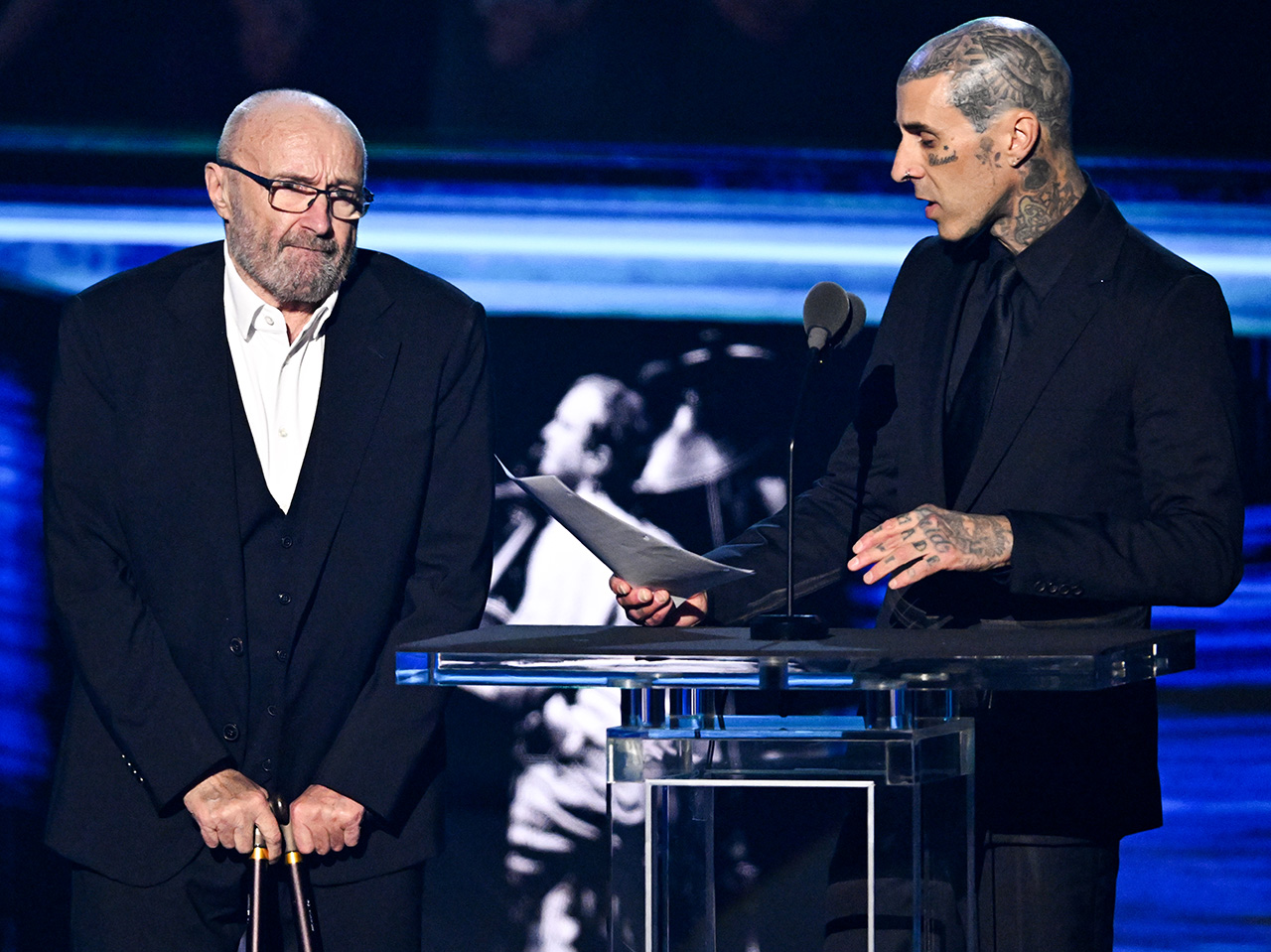
Navigating the stage with the aid of two walking sticks—a poignant visual testament to the severe neurological and spinal health issues that have plagued him over the past two decades—Collins immediately neutralized the somber mood with self-deprecating wit and fierce resolve. Addressing the packed audience, he declared, "I’m really not as bad as it looks," before delivering a resounding message to fans and critics alike: his artistic journey is far from over.
Leading up to the Los Angeles gala, industry speculation had reached a fever pitch, with many observers suggesting that the ceremony would serve as the definitive curtain call on Collins’ legendary six-decade career. Instead, the evening transformed into a celebration of resilience. Collins openly teased the existence of unreleased songs stored in his state-of-the-art home studio and explicitly left the door open for future live performances, sending shockwaves of optimism through the global music community.
Detailed Chronology: From Genesis Percussionist to Solo Icon
+-------------------------------------------------------------------------------------------------+
|                                 PHIL COLLINS' CAREER TIMELINE                                   |
+-------------------------------------------------------------------------------------------------+
| 1970      Joins Genesis as drummer; redefines progressive rock rhythm sections.                 |
| 1975      Steps up as lead vocalist following Peter Gabriel's departure.                        |
| 1981      Releases debut solo album 'Face Value'; "In The Air Tonight" redefines drum production.   |
| 1985      Wins Album of the Year Grammy for 'No Jacket Required'; performs at Live Aid (UK/US). |
| 1999      Wins Academy Award for "You'll Be in My Heart" (Disney's 'Tarzan').                  |
| 2007      Suffers spinal cord injury during Genesis reunion tour, impairing drumming ability.   |
| 2010      Inducted into the Rock & Roll Hall of Fame as a member of Genesis.                    |
| 2026      Inducted as a Solo Artist at Peacock Theater, LA; hints at new music and live shows.  |
+-------------------------------------------------------------------------------------------------+
The Genesis Era and Dual-Induction Legacy
Collins’ path to his individual Hall of Fame honors began in 1970 when he responded to a classified advertisement in Melody Maker seeking a drummer for a rising progressive rock band named Genesis. His virtuosic technique, jazz-fusion sensibilities, and intricate time-signature mastery quickly elevated the group’s sound. Following the departure of founding lead singer Peter Gabriel in 1975, Collins reluctantly stepped up to the microphone for the 1976 album A Trick of the Tail, surprising critics by transforming Genesis into an arena-filling juggernaut.
When Genesis was inducted into the Rock and Roll Hall of Fame in 2010, the band was celebrated for its monumental evolution from avant-garde prog-rock pioneers to global hitmakers. However, Collins’ dual career—simultaneously helm-ing a world-touring band while engineering one of the most commercially successful solo careers in recording history—remained an unprecedented feat in modern pop culture.
The Solo Boom and 1980s Pop Dominance
Launching his solo career with 1981’s raw, divorce-inspired Face Value, Collins transformed personal heartache into multi-platinum art. His 1985 blockbuster album No Jacket Required swept the Grammy Awards, winning Album of the Year and spawning timeless singles like "Sussudio" and "One More Night." Throughout the 1980s, Collins scored more US Top 40 singles than any other artist, dominating radio airwaves, MTV heavy rotation, and Hollywood soundtracks.
His prolific output extended to landmark production and session work for high-profile peers, including Philip Bailey ("Easy Lover"), Howard Jones, and Eric Clapton. Collins became a cultural touchstone whose influence reached far beyond the rock genre, earning widespread respect across hip-hop, pop, and modern rock circles.
Health Struggles, Sabbaticals, and the Induction Ceremony
The intense physical demands of Collins’ open-handed drum style eventually took a severe physical toll. During the 2007 Genesis reunion tour, he suffered a dislocated vertebra in his neck that caused debilitating nerve damage in his hands, severely compromising his ability to hold drumsticks or play the piano. Subsequent spinal surgeries, combined with orthopedic issues, severe pancreatitis, and drop foot, forced Collins into extended sabbaticals, leaving his touring future in constant jeopardy.
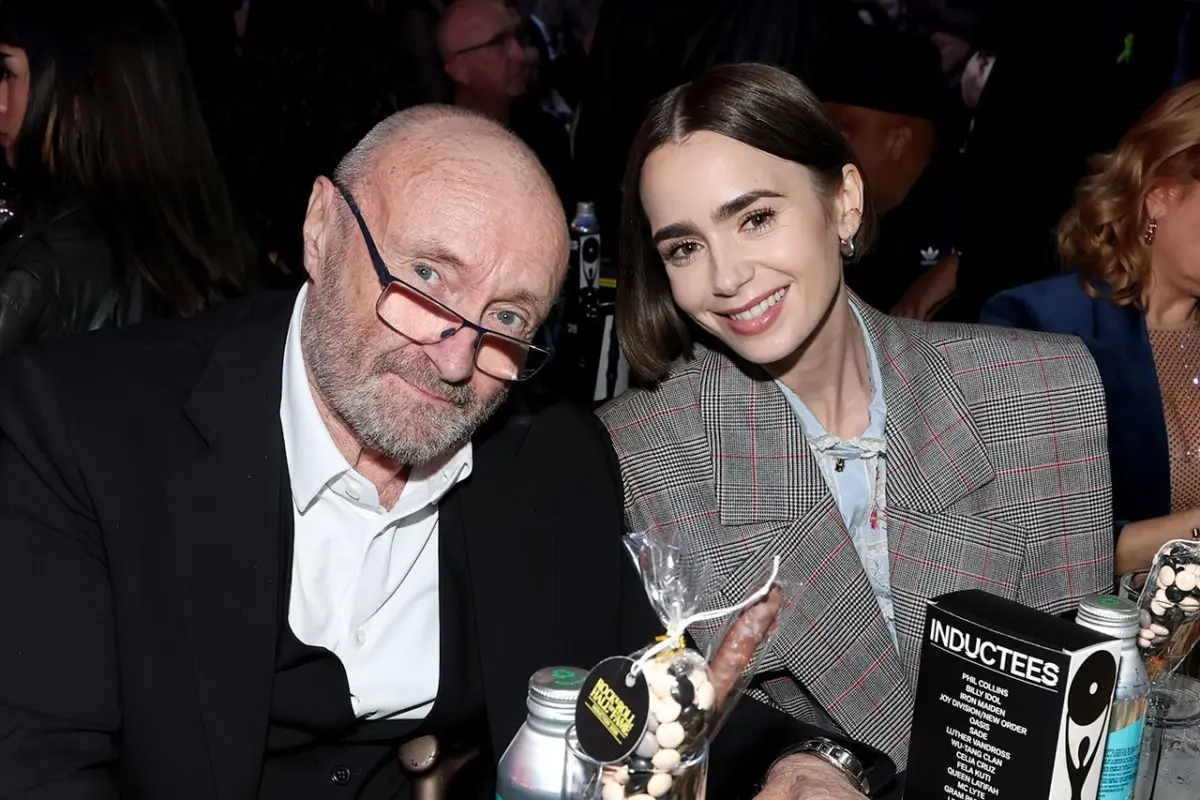
When he arrived at the Peacock Theater in Los Angeles for the Hall of Fame ceremony, supported by walking sticks and flanked by his daughter, acclaimed actress Lily Collins, the physical strain was evident. Yet, as he took the podium alongside Blink-182 drummer Travis Barker—who formally inducted him—Collins proved that his trademark humor and sharp mental acuity remained completely intact.
Supporting Context & Metrics: The Cultural & Commercial Footprint
+-------------------------------------------------------------------------------------------------+
|                               PHIL COLLINS BY THE NUMBERS                                      |
+-------------------------------------------------------------------------------------------------+
| Solo Album Sales        | Over 100 Million Worldwide                                            |
| Genesis Album Sales     | Over 100 Million Worldwide                                            |
| Billboard Hot 100 #1s   | 7 Solo Hits ("In The Air Tonight", "Against All Odds", etc.)          |
| Major Awards            | 8 Grammys, 1 Academy Award (Oscar), 2 Golden Globes                   |
| Rare Achievement        | One of only 3 artists to sell 100M+ albums solo AND in a band         |
|                         | (alongside Michael Jackson and Paul McCartney)                         |
+-------------------------------------------------------------------------------------------------+
The Sonic Legacy: The Gated Reverb Revolution
Beyond chart achievements, Phil Collins changed the technical architecture of popular music. In 1980, while working on Peter Gabriel’s self-titled third album alongside producer Steve Lillywhite and engineer Hugh Padgham at London’s Townhouse Studios, Collins helped accidentally invent the "gated reverb" drum sound.
By applying massive digital reverberation to a drum kit and cutting the tail off instantly with a noise gate through a Solid State Logic mixing desk, they created an explosive, atmospheric percussion sound. This tone became the defining sonic footprint of 1980s pop and rock, immortalized in the iconic drum fill of Collins’ signature 1981 track, "In The Air Tonight."
                 [ DRUM KIT: Heavy Compression & Gated Reverb ]
                                       │
                                       ▼
                 [ SSL CONSOLE: Reverse Talkback Microphone ]
                                       │
                                       ▼
                 [ RESULT: Explosive, Truncated Drum Fill ]
                                       │
                                       ▼
             [ "In The Air Tonight" Sonic Template (1981-Present) ]
Industry Impact by the Numbers
Collins belongs to an elite triad of recording artists—alongside Michael Jackson and Paul McCartney—who have sold more than 100 million albums worldwide both as solo performers and as principal members of a band.
100M+ Solo albums sold globally.
100M+ Albums sold with Genesis.
7 Billboard Hot 100 number-one solo singles in the United States.
8 Grammy Awards spanning pop, rock, and soundtrack categories.
1 Academy Award (Oscar) for Best Original Song ("You’ll Be in My Heart" from Disney’s 1999 animated feature Tarzan).
Official Statements and On-Stage Discourse
The atmosphere inside the Peacock Theater shifted from reverence to jubilation as Travis Barker took the stage to present Collins with his Hall of Fame statuette. Barker spoke emotionally about the profound technical influence Collins exercised over generations of percussionists across genres.
"I remember hearing those drums for the first time and being blown away. That sound changed everything. Thank you, Phil, for inspiring me and so many others to pick up a pair of drumsticks and never stop."
— Travis Barker, Blink-182 Drummer
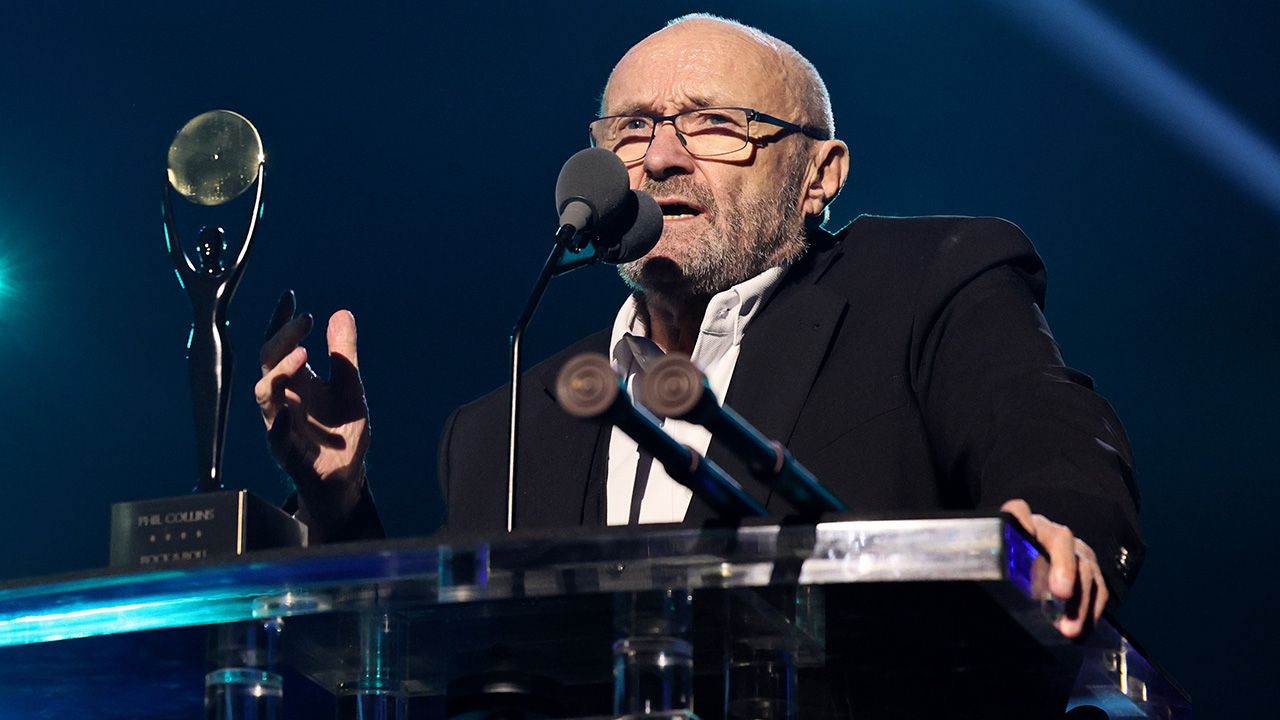
When Collins approached the microphone, supported by his sticks, he immediately addressed the hushed room with characteristic candor, sparking laughter across the venue.
"Thank you so much. I’m really not as bad as it looks."
— Phil Collins, accepting his individual induction
In his emotional acceptance address, Collins expressed deep gratitude to the key industry figures who championed his career from its infancy, acknowledging the late Atlantic Records chairman Ahmet Ertegun and his longtime manager Tony Smith.
"They took me under their wing and saw something that was worth nurturing… I grew up just wanting to play the drums. That’s always what I wanted to do. Everything else has been a really happy accident."
— Phil Collins
He also paid homage to close friends and high-profile collaborators, including Led Zeppelin frontman Robert Plant and guitar legend Eric Clapton, before dropping the statement that defined the night.
"You haven’t heard the last of me. I can promise you that."
— Phil Collins
In post-ceremony press remarks, Collins elaborated on his artistic mindset, candidly reflecting on his recent emotional block surrounding his home recording facility and his desire to return to active songwriting.
"I’ve got to get back in there, because that was fun—it wasn’t work. For a few years I walked the long way around so I didn’t walk past it… I can’t believe that I’m not going to do something."
— Phil Collins, on returning to his home studio
When pressed on whether he would ever step on stage again despite his physical limitations, Collins remained decidedly optimistic:
"It’s not beyond the realm of possibilities of doing some shows. It’s a work in progress. The door is not closed."
— Phil Collins
Future Outlook: Studio Vaults and Potential Live Return
+-------------------------------------------------------------------------------------------------+
|                                 COLLINS' FUTURE POSSIBILITIES                                   |
+-------------------------------------------------------------------------------------------------+
| Studio Vaults       | Cataloging unreleased demos and master tapes in home studio.            |
| New Output          | Potential finishing and releasing of incomplete studio tracks.          |
| Live Performances   | Possible seated or residence-style intimate shows under consideration.   |
| Collaborative Work  | Vocal/arranging roles leveraging his signature production expertise.     |
+-------------------------------------------------------------------------------------------------+
Unreleased Archival Material and the Home Studio
Collins’ revelation that he maintains a fully equipped home studio populated with an undisclosed trove of finished and unfinished tracks has galvanized archivists and music fans. For years following the conclusion of Genesis’s final Not Dead Yet! tour legs, Collins acknowledged mentally distancing himself from the workspace to cope with his physical inability to play the drums.
Now, by openly admitting that he deliberately "walked the long way around so I didn’t walk past it," Collins signals a profound psychological shift. Industry insiders speculate that a future project could mirror his classic production style—utilizing archival recordings of his own drumming, guest instrumentalists, or curated vocal performances. The vast vault of material created during his peak songwriting years in the 1980s and 1990s represents a potentially major new addition to his discography.
The Feasibility of Final Live Performances
While physical reality dictates that Collins will never again perform a grueling world tour behind a drum kit, his recent comments confirm that a return to the stage remains viable. His son, Nic Collins, successfully sat behind the drum kit during the final Genesis reunion dates, providing the powerful rhythm section that allowed his father to focus entirely on lead vocals from a seated position.
A similar model—or an intimate, storytelling residency format akin to Bruce Springsteen’s Broadway run—could provide Collins with a sustainable medium to connect with live audiences. By declaring that "the door is not closed," Phil Collins has made it clear that while his drumming days may be physically constrained, his artistic identity remains defiantly unextinguished.