Executive Overview
From the cobblestones of In Bruges to the desolate rural roads of The Banshees of Inisherin, Oscar-winning writer-director Martin McDonagh has carved out a singular cinematic space defined by tonal whiplash, razor-sharp dialogue, and profound meditations on male companionship. With his latest feature, Wild Horse Nine, McDonagh plunges headfirst into international intrigue, historical turbulence, and existential melancholy.
Set against the volatile geopolitical backdrop of 1973 South America and the remote, windswept majesty of Rapa Nui (Easter Island), the film follows two Central Intelligence Agency operatives—played with contrasting brilliance by John Malkovich and Sam Rockwell—as they navigate a complex personal and political endgame. Wild Horse Nine effortlessly melds farcical comedy with dark historical drama, resulting in what McDonagh has teasingly described as his first "old-man movie."
This extensive feature examines the structural ambitions, thematic undercurrents, historical context, and stylistic triumphs of a film that positions McDonagh firmly within the literary tradition of Graham Greene’s "Greeneland," while establishing new frontiers for contemporary tragicomedy.
Detailed Chronology: From the Chaos of Santiago to the Monoliths of Rapa Nui
The historical engine driving Wild Horse Nine is anchored in the fateful year of 1973. The narrative commences in a bleakly rendered, tense Chile on the precipice of catastrophe. It is the twilight of Salvador Allende’s democratically elected socialist government, a period poisoned by covert United States intervention and mounting societal fracture.
Into this theater of paranoia step Chris (John Malkovich) and Lee (Sam Rockwell), two American intelligence agents whose official mandate is ostensibly obscured by layers of deniability. However, the film quickly pivots away from standard geopolitical thrillers. Rather than maintaining a strict procedural focus on the impending US-engineered coup that would install the military dictatorship of Augusto Pinochet, McDonagh uses the tremors of South American history as a pressurized container for an intensely intimate, highly idiosyncratic character study.
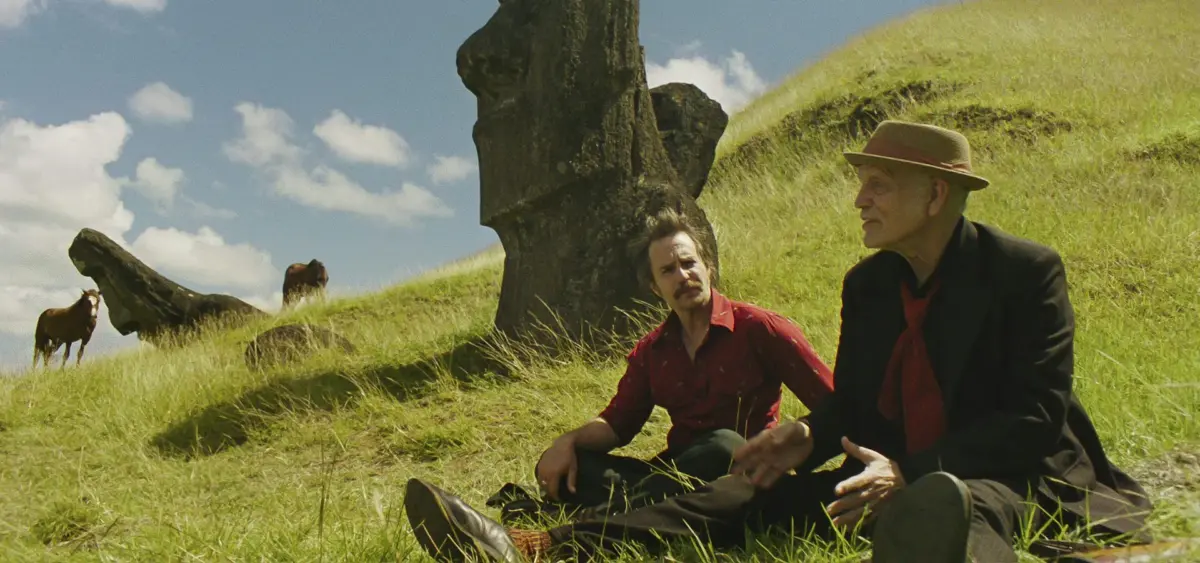
The action soon shifts to the visually sumptuous landscape of Rapa Nui, a remote volcanic island in Polynesia. Here, thousands of miles away from the urban unrest of Santiago, Chris and Lee are tasked with playing out an ambiguous endgame. Their mission on the island remains deliberately murky, mirroring the institutional opacity that has characterized real-world intelligence operations. Yet, the true landscape of the film is as much psychological as it is geographical.
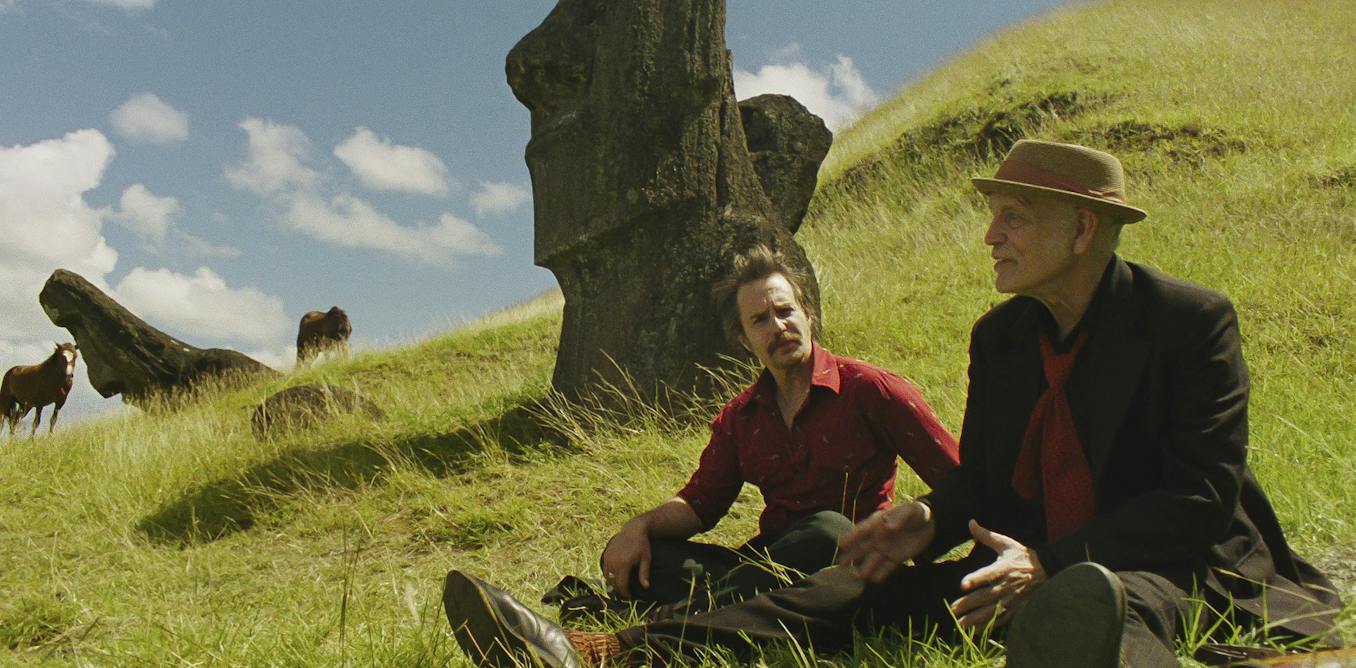
As the narrative unfolds over several sun-drenched, windswept days, the personal tensions between the two men escalate against a backdrop that dwarfs their transient bureaucratic squabbles. The island itself becomes an active participant in the story. Boasting over a thousand monolithic human figures—the moai, carved by indigenous Rapanui between approximately 1400 and 1650—the location introduces a profound sense of deep time. The fleeting
, morally compromised drama of these American interlopers plays out in the shadow of stone giants that have weathered centuries of isolation, environmental transformation, and cultural resilience.
Supporting Context & Metrics: Production, Provenance, and Cinematic Precedents
To fully appreciate the scope of Wild Horse Nine, one must examine the logistical rarity of its production and its clear lineage within McDonagh’s wider filmography.
The Rapa Nui Connection
Remarkably, Wild Horse Nine is only the second feature film in cinematic history to be granted permission to shoot on location on Rapa Nui. The territory was previously featured on the silver screen in Kevin Reynolds’s 1994 historical epic Rapa-Nui. The logistical hurdles of filming on an isolated island over 2,000 miles off the coast of continental Chile cannot be overstated. McDonagh and his production team harnessed the island’s stark topography—its rugged volcanic craters, sweeping ocean cliffs, and iconic stone platforms (ahu)—to establish a visual grammar of isolation.
The cinematography deliberately evokes the aesthetic texture of American cinema and photography from the early 1970s. Utilizing a saturated color palette that mimics vintage film stocks, the visual design creates an intentional temporal bridge between the Nixon era, the height of New Hollywood cinema, and the present day.
The Evolution of McDonagh’s Canon
Wild Horse Nine continues a thematic trajectory that McDonagh established across his previous directorial efforts:
- In Bruges (2008): Explored deep male bonding, professional guilt, and dark comedic timing against a historic European backdrop.
- Seven Psychopaths (2012): Deconstructed narrative conventions through metatextual wit and sudden bursts of disruptive violence.
- Three Billboards Outside Ebbing, Missouri (2017): Won Academy Awards by blending localized systemic grief with biting dark humor.
- The Banshees of Inisherin (2022): Examined the sudden dissolution of a lifelong male friendship against the backdrop of the Irish Civil War.
In Wild Horse Nine, the dynamic between Colin Farrell and Brendan Gleeson from In Bruges and Banshees finds a trans-Atlantic echo in the pairing of Rockwell and Malkovich. Physically and temperamentally, they represent a masterclass in asymmetrical casting. Lee (Rockwell) is the squishier, more restless operative—sporting a persistent mustache and frequently found with food in hand or mouth, struggling to maintain professional composure. Chris (Malkovich) is a grizzled, imposing presence, weather-worn and monumental, structurally resembling the moai he contemplates with quiet fascination.
Their dialogue frequently swings between the mundane and the metaphysical. In one quintessential McDonagh moment, Chris muses aloud on the hypothetical logistics of what it would take for a wild robin to develop a substance addiction—a zany, Tarantino-esque verbal detour that highlights the absurdity of men discussing trivialities while history burns around them.
Official Statements & Thematic Analysis: Men in Love and "Greeneland"
In interviews surrounding the release of Wild Horse Nine, Martin McDonagh has been remarkably candid about his artistic evolution. Speaking to cultural journalists, the writer-director mused that this project may well represent his first "old-man movie."
The Burden of Male Friendship
McDonagh’s films have always been celebrated for their acute, often uncomfortable observations of homosocial bonds. In Wild Horse Nine, this theme reaches a mature, elegiac crescendo. Chris and Lee engage in rancorous, circular verbal sparring over operational protocol, disagreeing sharply on how much discretion a CIA operative ought to display when mingling with the local populace.
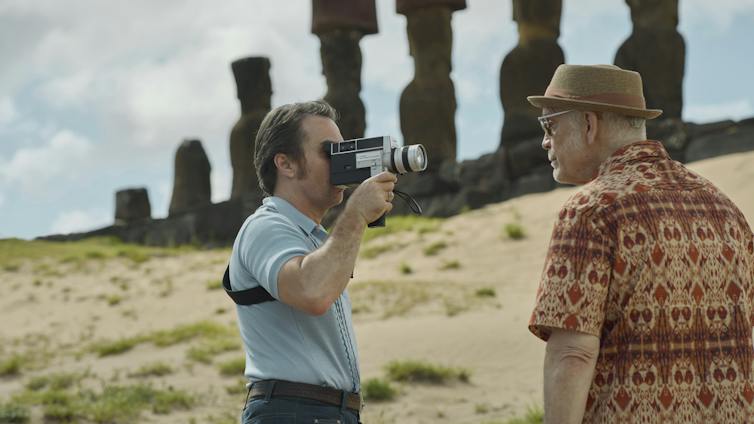
Yet, beneath their caustic banter lies a profound, undeniable love—a bond that far surpasses any other emotional connection in either man’s life. Consider their domestic anchors back home:
- Lee’s wife, Marge (played with caustic perfection by Parker Posey), is actively exploring adulterous avenues stateside, far removed from her husband’s overseas assignments.
- Chris’s estranged brother (brought to life in a delightful, gruff cameo by Tom Waits) resides in Monument Valley, Arizona, embodying all the weather-beaten isolation of the classic American cowboy.
Deftly weaving these domestic touchstones into the narrative, McDonagh illustrates how men constructed by the machinery of empire often find solace only in the company of those equally complicit in its machinery.
Entering "Greeneland"
Critics and cinephiles examining the geopolitical texture of Wild Horse Nine have noted its debt to what British novelist Graham Greene termed "Greeneland." Across mid-century masterpieces such as The Heart of the Matter (1948), The Quiet American (1955), and A Burnt-Out Case (1960), Greene mapped the psychological geography of aging, morally depleted white men reckoning with their complicity in Western imperialism.
Chris fits squarely into the lineage of Greene’s burnt-out cases. His physical and psychological energy is visibly winding down; memories of past, morally bankrupt CIA operations crowd his quiet moments. Standing amidst the ancient monuments of Rapa Nui, even this seasoned instrument of American hegemony is forced to reflect upon a life steeped in geopolitical blood.
To ignore the political engagement of Wild Horse Nine in favor of its comedic brilliance would be a critical miscalculation. The film insists that personal trauma and imperial aggression are inextricably linked—that the private heartbreak of two aging spies cannot be divorced from the broader historical tragedies playing out in the shadows of the Cold War.
Future Outlook: The Critical Legacy and Cultural Impact of Wild Horse Nine
As Wild Horse Nine rolls out in cinemas worldwide via Searchlight Pictures, early critical consensus suggests that Martin McDonagh has successfully avoided repeating his past formulas while doubling down on the thematic obsessions that defined his career.
By scaling up the geopolitical canvas—moving from provincial Irish islands and Midwestern American towns to the complex fault lines of South America and the mystical isolation of Polynesia—McDonagh has demonstrated remarkable artistic growth. The film poses uncomfortable questions about the shelf life of empire, the necessity of art in the face of political collapse, and the enduring, fragile sanctity of male friendship.
In an era of franchise fatigue and hyper-sanitized studio filmmaking, Wild Horse Nine stands as a bracing, unpredictable counterpoint. It proves that dark comedy and historical tragedy are not mutually exclusive, but rather twin lenses through which human folly can be observed with piercing clarity. As Chris and Lee stare out across the Pacific, surrounded by stone giants that have outlived empires, audiences are left to ponder their own place in the grand, absurd pageant of history—wondering, just like that young Chilean woman in the film’s opening moments, whether to laugh, cry, or simply marvel at the joke of it all.