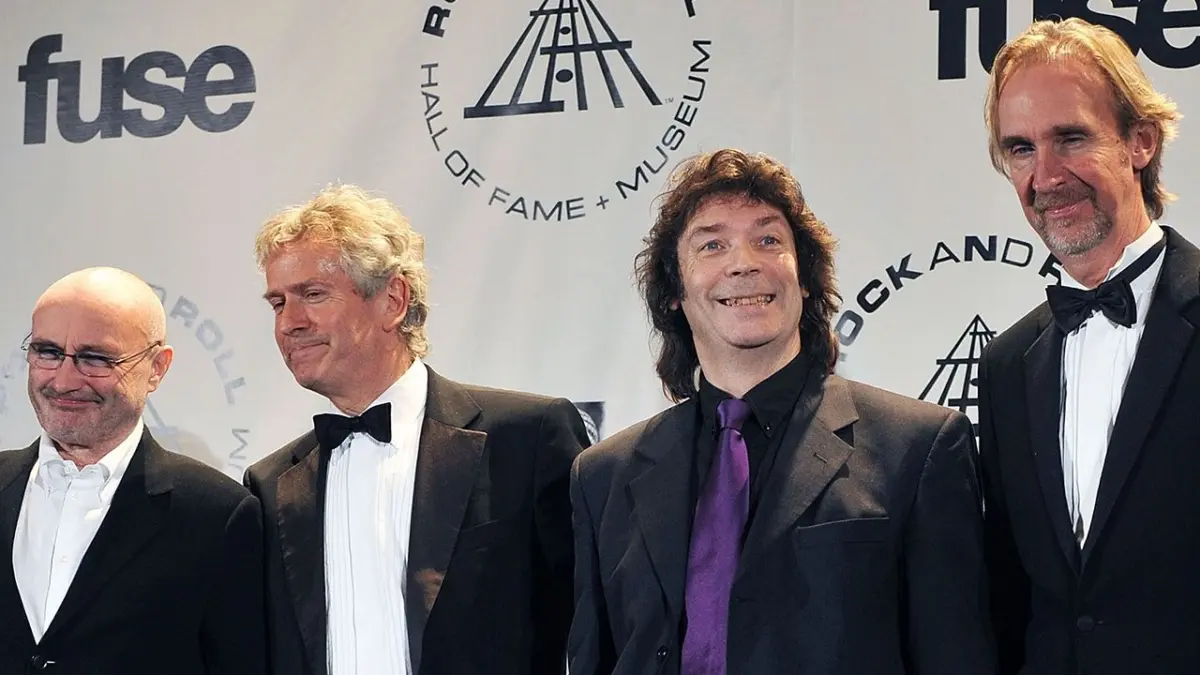
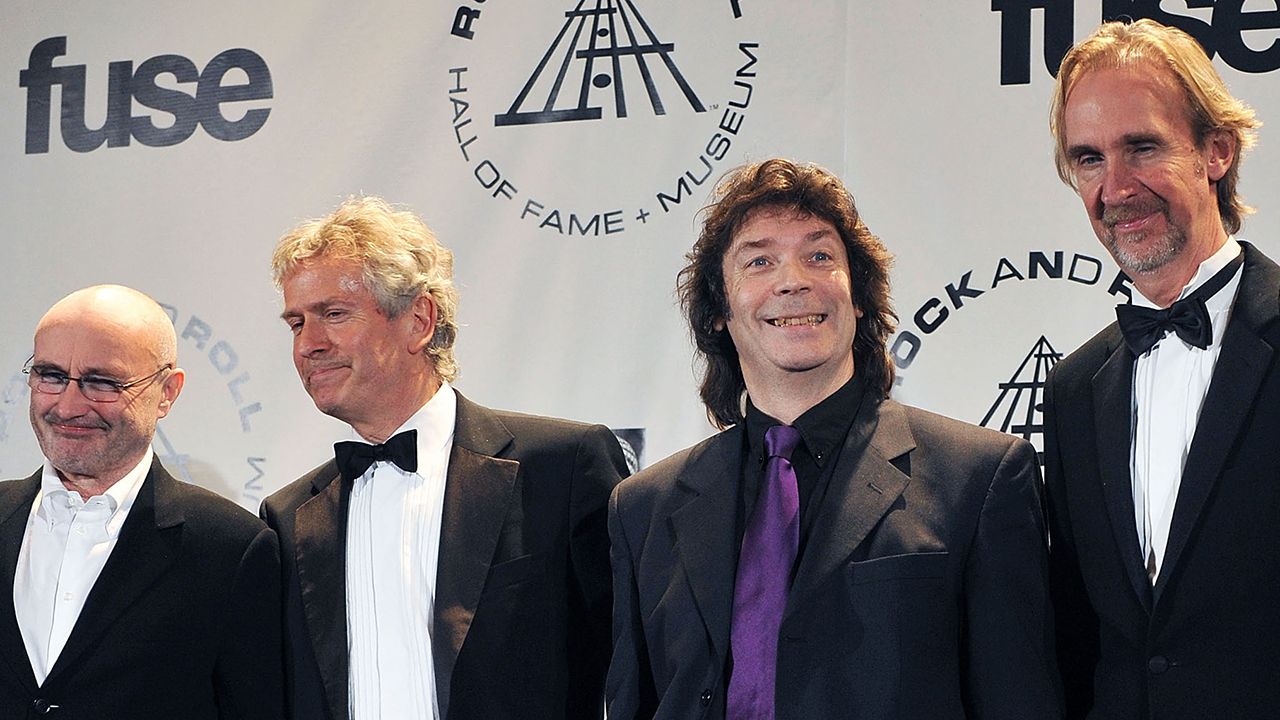
When Genesis was inducted into the Rock and Roll Hall of Fame on March 15, 2010, the historic event was billed as a rare moment of unity for one of Britain’s most celebrated musical exports. However, beneath the red-carpet pleasantries at New York’s Waldorf Astoria lay the complex personal and professional tensions that have long characterized the band’s history.
In a revealing series of reflections, former Genesis lead guitarist Steve Hackett recalled how his attempt to champion fellow progressive rock pioneers Yes during Genesis’s official press conference created an immediate, visible rift with his former bandmates Phil Collins, Tony Banks, and Mike Rutherford. Driven by a desire to honor his close friend and eventual collaborator, the late Yes bassist Chris Squire—who had been unable to secure attendance at the event—Hackett publicly used Genesis’s spotlight to lobby for Yes’s inclusion.
The gesture, while intended to promote solidarity within the traditionally marginalized progressive rock genre, alienated his bandmates, who were standing mere feet away. Combined with a keynote speech by Phish guitarist Trey Anastasio that explicitly praised Hackett’s solo innovations over the rest of the group, and Genesis’s inability to perform live due to Phil Collins’ declining physical health, the 2010 ceremony served as a microcosm of the internal politics, institutional biases, and artistic legacies that define classic rock royalty.
Detailed Chronology: The 2010 Ceremony and Behind-the-Scenes Friction
The Backstage Prelude: The Chris Squire Ticket Dilemma
The sequence of events leading to the press room incident began long before Genesis stepped onto the Waldorf Astoria stage. In the weeks preceding the 25th Annual Rock and Roll Hall of Fame Induction Ceremony, Steve Hackett was in frequent communication with Chris Squire, the founding bassist and driving force behind Yes.
Squire expressed a strong desire to attend the gala to support Hackett and witness progressive rock receive rare validation from the American music establishment. However, the Rock and Roll Hall of Fame’s strict seating allocations and table logistics left Hackett with no spare guest passes.
"He wanted to come along to the night that we were inducted," Hackett recalled. "And I literally said, ‘Look, I can’t get you in.’ He thought I was trying to keep him out—and I said no, I wanted him there. That would have been great."
The resulting misunderstanding left Squire feeling excluded, leaving Hackett determined to publicly acknowledge his friend and demonstrate that Yes belonged on the exact same pedestal.
       [ Early 2010 ]  Genesis announced for Rock Hall Induction
             │
             ▼
     [ Pre-Ceremony ]  Chris Squire requests attendance;
                       Hackett unable to secure guest passes
             │
             ▼
      [ March 15, 2010 ] Induction Ceremony at Waldorf Astoria, NYC
                       • Peter Gabriel absent (tour rehearsals)
                       • Genesis declines live performance
                       • Phish performs tribute set
             │
             ▼
     [ Press Room ]    Hackett publicly advocates for Yes;
                       Collins, Banks, & Rutherford react with annoyance
             │
             ▼
      [ June 27, 2015 ] Chris Squire passes away from leukemia
             │
             ▼
      [ April 7, 2017 ] Yes officially inducted into the Rock Hall
The Press Room Incident
Following their official induction, the present members of Genesis—Hackett, Phil Collins, Tony Banks, and Mike Rutherford (founding frontman Peter Gabriel was absent due to orchestral tour rehearsals in London)—assembled in the media room to answer questions from international journalists.
Seizing the opportunity to rectify the situation with Squire and champion the broader progressive rock movement, Hackett stepped forward and delivered an unexpected endorsement:
"When I got to meet the press I said, ‘You know, I think Yes should be inducted too.’"
The impromptu statement caught the rest of Genesis completely off guard. Standout keyboardist Tony Banks and bassist/guitarist Mike Rutherford, standing just four feet away, made their irritation known to surrounding personnel.
"That caused a bit of a stir with Genesis!" Hackett remembered. "They were standing four feet away from me, saying, ‘Is he with you?’"
To Banks and Rutherford, the moment was supposed to be a celebration of Genesis’s unique commercial and artistic achievements—spanning from their 1970s surrealist art-rock to their 1980s multi-platinum pop dominance. Hackett’s deflection of the spotlight toward a primary rival band was perceived by his former bandmates as an unnecessary distraction.
The Tribute Performance and Stage Awkwardness
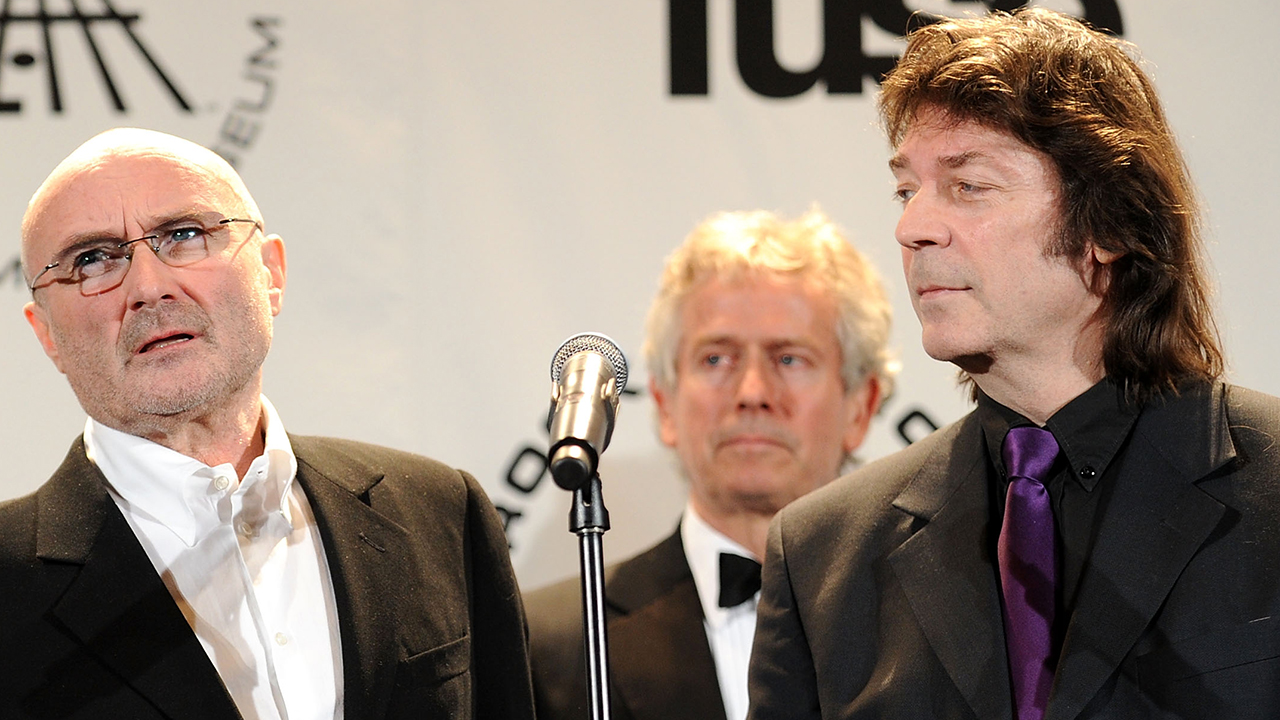
The tension in the room was not limited to the press conference. Because Genesis elected not to perform live—owing to Phil Collins’ severe spinal nerve damage that limited his drumming ability, as well as the classic lineup’s decades-long live dormancy—jam-band icons Phish were selected to perform a tribute set, covering Genesis’s 1973 epic "Watcher of the Skies" and their 1981 hit "No Reply at All."
Phish frontman Trey Anastasio delivered the formal induction speech. Rather than focusing exclusively on the group’s massive radio hits, Anastasio spent significant time breaking down Genesis’s complex structural compositions and explicitly highlighting Steve Hackett’s groundbreaking guitar work—specifically his early development of two-handed tapping and volume-pedal technique.
+-------------------------------------------------------------------+
|               KEY ELEMENTS OF TREY ANASTASIO'S SPEECH              |
+-------------------------------------------------------------------+
|  1. Praise for 1970s Gabriel/Hackett-era compositions.            |
|  2. Direct recognition of Steve Hackett's two-handed tapping.     |
|  3. Analysis of Genesis's metric complexity and influence on Phish. |
+-------------------------------------------------------------------+
For Hackett, listening to Anastasio’s praise while sitting alongside Banks, Rutherford, and Collins created an atmospheric mix of gratification and awkwardness:
"He got up and started saying nice things about not just Genesis, but also some of the techniques I’d come up with. I thought, ‘The guys are sitting here having to listen to this; they’re probably getting really peeved!’"
Supporting Context & Industry Metrics: Prog Rock’s Institutional Struggle
The Rock Hall’s Historical Antagonism Toward Progressive Rock
Hackett’s crusade for Yes underscored a historical grievance within the music industry: the American rock critical establishment’s decades-long disdain for progressive rock. Spearheaded by figures like Rolling Stone co-founder Jann Wenner, the Rock and Roll Hall of Fame routinely bypassed virtuoso British prog acts throughout the 1990s and 2000s in favor of punk, pop, soul, and garage rock artists.
Genesis’s 2010 induction marked a rare breakthrough, though critics noted that the Hall only embraced the group after they had transitioned into a pop powerhouse under Phil Collins’ leadership in the 1980s.
Band
Peak Commercial Era
Year Eligible
Year Inductee
Years Delayed
Pink Floyd
1970s
1992
1996
4
Genesis
1970s / 1980s
1994
2010
16
Rush
1970s / 1980s
1999
2013
14
Yes
1970s / 1980s
1994
2017
23
The Moody Blues
1960s / 1970s
1993
2018
25
King Crimson
1970s
1994
Not Inducted
30+
Hackett noted the historical irony of Genesis entering the Hall before their predecessors:
"You could say Genesis were the first progressive band — or a band that had at one time been progressive — to be inducted. But shortly to be followed by the guys who had preceded us."
The Hackett-Squire Partnership: "Squackett"
Hackett’s loyalty to Chris Squire was rooted not just in fan appreciation, but in a close artistic partnership. Following the 2010 Rock Hall incident, the duo channeled their mutual respect into a joint supergroup project named Squackett.
Working alongside producer Roger King, they recorded the full-length studio album A Life in Daydreams, released in May 2012 by Esoteric Recordings/Cherry Red Records. The record blended Squire’s signature Rickenbacker bass grooves with Hackett’s soaring guitar textures, demonstrating the melodic sensibilities that defined 1970s progressive rock.
           [ Steve Hackett ]          [ Chris Squire ]
             (Ex-Genesis)                (Yes Bassist)
                  │                            │
                  └─────────────┬──────────────┘
                                │
                                ▼
                       [ SQUACKETT ]
                  (Formed 2011 / Album 2012)
                                │
                                ▼
                  "A Life in Daydreams" Album
               • Melodic Prog / Art Rock Fusion
               • Critical acclaim across UK/US
Tragically, Chris Squire was diagnosed with acute erythroid leukemia in May 2015 and passed away on June 27, 2015, at the age of 67. When Yes was finally inducted into the Rock and Roll Hall of Fame seven years after Genesis, in April 2017, Squire was honored posthumously—a timing delay that Hackett continues to lament.
Official Statements: Primary Perspectives on the Induction
The discourse surrounding Genesis’s 2010 induction reveals conflicting perspectives on honor, band hierarchy, and institutional recognition.
Steve Hackett on Institutional Validation and Posthumous Honors
Speaking with Ultimate Classic Rock (UCR), Hackett reflected on the cultural difference between American and British recognition for musicians, alongside the bittersweet nature of delayed entry:
"I think the Rock and Roll Hall of Fame is a great American institution. We haven’t got anything like that in the UK. The wonderful thing is that people are not just celebrated while they’re living, but also when they pass. Some people get inducted too late to attend the ceremony — literally."
Regarding his motivation for bringing up Yes on Genesis’s big night, Hackett added:
"He [Chris Squire] wanted to come along to the night that we were inducted, and I literally said, ‘Look, I can’t get you in.’ … When I got to meet the press I said, ‘You know, I think Yes should be inducted too.’ That caused a bit of a stir with Genesis! But it was important to say."
Historical Band Dynamics: The Hackett-Banks Tensions
The quiet friction on display at the 2010 Rock Hall was consistent with the creative disagreements that led to Hackett’s departure from Genesis in 1977. During the recording of Wind & Wuthering (1976), Hackett felt his songwriting contributions—such as "Please Don’t Touch"—were systematically rejected by Tony Banks and Mike Rutherford in favor of keyboard-centric arrangements.
While Phil Collins often acted as a mediator during their 1970s peak, the press room moment in 2010 illustrated that old compositional rivalries and feelings about authority within the band remained active decades later.
Future Outlook & Legacy Analysis
The Modern State of Genesis and the Torchbearer Role
In the years since the 2010 induction, the paths of the surviving Genesis members have diverged sharply:
Genesis (The Trio): Phil Collins, Mike Rutherford, and Tony Banks reunited for The Last Domino? Tour in 2021–2022. Facing severe health issues, Collins performed seated while his son, Nic Collins, handled drumming duties. The tour marked the final live performances of Genesis, with the group officially retiring the moniker at the O2 Arena in London on March 26, 2022.
Steve Hackett (The Solitary Torchbearer): Hackett has taken on the mantle of preserving the band’s early catalog. Through his extensive worldwide "Genesis Revisited" tours, Hackett, supported by a full band, regularly performs complete renditions of classic albums like Selling England by the Pound (1973) and Foxtrot (1972).
                      [ GENESIS LEGACY PATHWAY ]
                                  │
         ┌────────────────────────┴────────────────────────┐
         ▼                                                 ▼
[ Collins, Banks, Rutherford ]                    [ Steve Hackett ]
• "The Last Domino?" Tour (2021-22)               • "Genesis Revisited" World Tours
• Sold master recording rights in 2022            • Preserves 1971–1977 classic catalog
• Officially retired from live performance        • Active recording and touring artist
Critical Rehabilitation of Progressive Rock
Hackett’s 2010 press room comments stand as an early catalyst for a broader re-evaluation of progressive rock by mainstream institutions. Following Genesis’s entry in 2010 and Yes’s eventual induction in 2017, the Hall went on to induct The Moody Blues (2018) and Roxy Music (2019), reflecting a shift in how legacy music organizations view the technical virtuosity and conceptual ambitions of 1970s art-rock.
Ultimately, Hackett’s outspoken moment in New York highlighted a key difference in perspective: while his bandmates viewed the 2010 induction through the lens of Genesis’s internal narrative, Hackett saw it through the lens of a broader musical movement—one where standing up for peers like Chris Squire and Yes was worth a moment of backstage friction.