Executive Overview
London’s prestigious Wigmore Hall played host to a revelatory evening of early music on Friday, October 30, 2026, as the celebrated ensemble Arcangelo, under the visionary artistic direction of founder and harpsichordist Jonathan Cohen, launched their multi-concert series, The English Baroque Journey. Titled The Music More Full Than It Was, the inaugural programme systematically dismantled the traditional, narrow narrative of English music history—one that notoriously leaps from Henry Purcell directly to George Frideric Handel as if no other luminaries existed in the intervening decades.
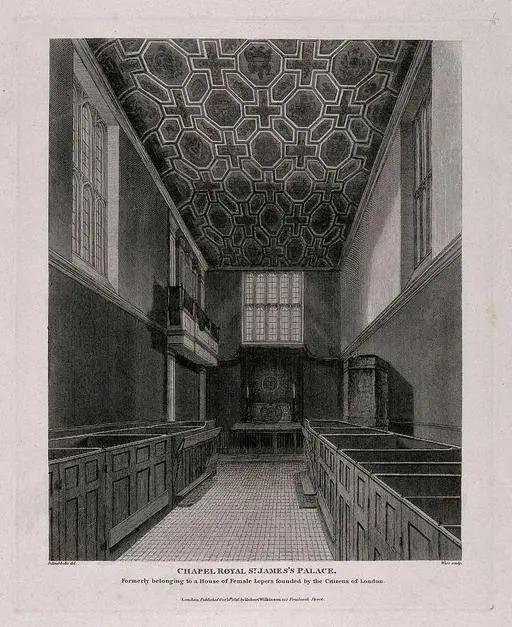
Instead, Cohen and Arcangelo championed a vibrant, richly textured canon of sacred compositions intimately tied to the historic Chapel Royal, stretching from its joyful post-Restoration revival in the 1660s through to the early years of Handel’s residency in England. Featuring an elite roster of eight vocalists and a lithe, period-instrument ensemble, the concert breathed fresh life into lesser-known masterpieces by Christopher Gibbons, Matthew Locke, Pelham Humfrey, John Blow, Maurice Greene, and Purcell himself. By favoring the intimate acoustic of Wigmore Hall over the cavernous, reverberant spaces of modern cathedrals, the performers delivered crystalline textual clarity, nuanced phrasing, and a visceral emotional immediacy that highlighted why this repertoire demands a permanent place in the contemporary concert hall.
Detailed Chronology and Musical Journey
Part I: The Post-Restoration Revival and the Chapel Royal (1664–1685)
The first half of the evening transported the audience directly into the turbulent yet artistically fertile decades following the restoration of the monarchy in 1660. The institutional rebuilding of the Chapel Royal required an urgent reinvigoration of sacred vocal and instrumental writing, a challenge met by a generation of resilient and innovative native composers.
The evening commenced with Christopher Gibbons’s Not unto us, O Lord. As the son of the legendary Orlando Gibbons, Christopher was uniquely positioned to shoulder the expectations of the restored court. Written without violins, the work began in the lowest registers of both voices and instruments, slowly building an architecture of solemn, deliberate counterpoint. Arcangelo’s rendering was characterized by rich, slow-moving textures that blossomed into a surprisingly vibrant sonic landscape.
The programme then shifted to Matthew Locke, a composer deeply entwined with the era’s early theatrical experiments and semi-operas. Though a Catholic who notably served the chapel of Queen Catherine of Braganza, Locke also contributed vital sacred music to the Chapel Royal. His verse anthem How doth the city sit solitary unfolded primarily through continuo accompaniment, deliberately sparing the full ensemble. This restraint mirrored historical realities—the Restoration era faced a notable scarcity of trained treble voices—and focused instead on intricate solo groupings, predominantly among the men, offset by poignant soprano solos. The result was a deeply moving, text-conscious setting that anticipated the expressive mastery later refined by Purcell.
Following an instrumental interlude featuring Purcell’s intensely chromatic Pavan in G minor (Z752) and its driving ground-bass dance, the ensemble turned to Pelham Humfrey. Sent abroad to France by King Charles II to absorb continental compositional techniques, Humfrey’s short-lived career left an indelible mark on English sacred music. His anthem O give thanks unto the Lord opened with a refined string introduction before cascading into a lively choral dance. String ritornellos functioned as fluid architectural bridges between sections. Tenors Hugo Brady and Malachy Frame delivered an agile duet, followed by a resonant, vibrant bass solo from Will Gaunt. The sprawling final section erupted in a joyful tutti, executed with blistering technical precision.
The first half closed with John Blow’s God spake sometimes in visions (dating from the 1680s). Blow, Purcell’s mentor and a titan of his era, suffers from modern concert neglect not due to any deficiency in his craft, but because his expansive, idiosyncratic forms resist easy programming. In the intimate confines of Wigmore Hall, however, the work flourished. Beginning with a stately, sober string introduction, the performance highlighted Blow’s seamless integration of dance rhythms and shifting meters. The singers and instrumentalists navigated rapid stylistic pivots with fluid grace, proving that Blow’s meticulous word-painting rivals that of any European contemporary.
Part II: The Hanoverian Era, Purcell, and Handel
The second half of the concert bridged the late seventeenth century with the high Baroque of the Hanoverian period, tracking the stylistic divergence and personal friction between native-born traditionalists and continental innovators.
The progression opened with Maurice Greene’s Lord, let me know mine end. Appointed Master of the King’s Musick under George I, Greene occupied an influential post, yet he maintained an uneasy, often overshadowed relationship with Handel—who remained the royal favorite despite being Greene’s junior by over a decade. Greene’s writing in this piece, set for full vocal ensemble and continuo over a ground bass, leans backward stylistically. While undeniably serious, intent, and structurally sound, it clearly draws more inspiration from the native English masters of the first half of the programme than from the dazzling brilliance of the Italian masters then captivating London.

The mood shifted dramatically with Purcell’s My beloved spake, an astonishingly inventive work penned when the composer was still in his late teens. Arcangelo’s reading treated the full vocal ensemble with strategic economy; brief, punchy choruses punctuated verses delivered by a small, agile team of soloists featuring James Hall, Matthew Long, Malachy Frame, and Will Gaunt. Bound together by sparkling ritornellos, the performance crackled with dramatic color and an irrepressible rhythmic bounce.
The evening reached its triumphant zenith with one of Handel’s Chandos Anthems, O praise the Lord with one consent. Composed for James Brydges, the future Duke of Chandos, and originally performed at the parish church of St Lawrence—one of the few physical structures still standing where Handel himself directed music—this work showcased the composer’s peerless melodic invention.
Under Cohen’s direction, the performance bounced forward with infectious rhythmic energy. Hugo Brady delivered his solo with a lyrical, affecting lilt, while Matthew Long negotiated intricate passageways with athletic agility. Malachy Frame countered with robust, resonant tone, and soprano Hilary Cronin brought an intimate, deeply expressive lyricism to her solo turns. The evening culminated in a series of ebullient choruses, crowned by an ‘Alleluia’ notable for its blazing vocal runs and architectural grandeur.
Supporting Context & Metrics
Programme Architecture & Forces
- Total Vocalists: 8 (Hilary Cronin, Daisy Livesy, James Hall, Jeremy Budd, Hugo Brady, Matthew Long, Malachy Frame, Will Gaunt)
- Instrumental Ensemble: 6 strings, oboe (featured in the Handel Chandos Anthem exclusively), organ, theorbo, and harpsichord (directed from the keyboard by Jonathan Cohen).
- Historical Span: 1615–1755 (spanning from Christopher Gibbons’ birth to Maurice Greene’s death).
- Core Venues & Institutions: Chapel Royal at St James’s Palace, St Lawrence Whitchurch (Canons), and Wigmore Hall.
The Historical Canon Revision
Musicology has long suffered from a "Great Man" teleology that treats English Baroque music as a binary system: an isolated, brilliant spark in Henry Purcell, followed by a long, barren interregnum until the arrival of the German-born George Frideric Handel in London. Events such as The Music More Full Than It Was challenge this paradigm by demonstrating that composers like John Blow and Matthew Locke were not mere transitional footnotes, but towering architects of a distinct, sophisticated national style. Blow, in particular, maintained a reputation during his lifetime that equaled or exceeded that of his younger pupil, Purcell. By re-contextualizing these works through period-informed performance practice, ensembles like Arcangelo are effectively rewriting the standard musical lexicon for twenty-first-century audiences.
Official Statements
Reflecting on the curatorial philosophy behind the English Baroque Journey, artistic director Jonathan Cohen emphasized the urgency of rescuing these scores from archival obscurity:
"For too long, the history of music in England has been treated as a procession of isolated monuments rather than an interconnected landscape. When you look inside the Chapel Royal of the seventeenth and early eighteenth centuries, you find a hotbed of stylistic evolution, experimentation, and profound emotional depth. These pieces are not museum artifacts; they are urgent, living works crying out to be heard with the vibrancy, color, and rhetorical precision they were originally given."
Industry critics and audience members alike have praised the series for its uncompromising commitment to historical authenticity coupled with contemporary emotional urgency.
Future Outlook
The Music More Full Than It Was serves as a powerful opening salvo for Arcangelo’s multi-part English Baroque Journey. By establishing a rigorous baseline of performance standards—balancing transparent textures, pristine vocal articulation, and dynamic continuo realization—the ensemble has set a high watermark for subsequent installments in the series.
As early music ensembles increasingly push beyond the over-exhausted standard baroque repertoire (such as Vivaldi’s Four Seasons or standard Handel oratorios), programmes exploring the idiosyncratic brilliance of the English Restoration and early Georgian eras offer a fertile frontier for discovery. Future concerts in the English Baroque Journey will undoubtedly be watched closely by critics, scholars, and classical music aficionados eager to hear what other buried treasures Arcangelo and Jonathan Cohen choose to unearth from the British musical archive.