Executive Overview
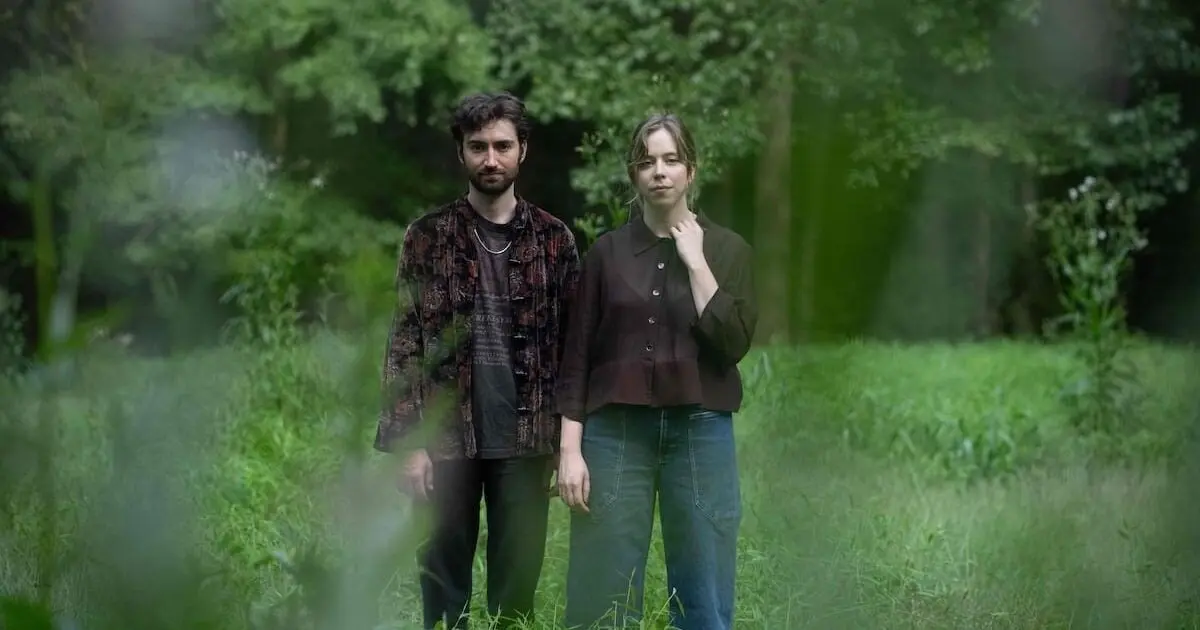
The contemporary indie-folk landscape is perpetually searching for authenticity—a tangible connection to tradition that does not merely mimic the past, but genuinely inhabits it. Enter Viv & Riley, the Durham-based duo comprising multidisciplinary songwriters and multi-instrumentalists Vivian Leva and Riley Calcagno. With their latest single, “Sourwood,” the duo has crafted a masterclass in acoustic subtlety, emotional resonance, and transcontinental artistic collaboration.
Inspired by the striking, fiery transformation of Virginia’s sourwood trees during the autumn months, the track serves as a profound meditation on aging, grief, the passage of time, and the inevitable cycles of human existence. Written by Leva, the song bridges the geographic and cultural divides between the rolling blue ridges of the American South and the historic, creative enclave of Frome in the South West of England. Recorded live to tape under the stewardship of acclaimed producer Dom Monks, “Sourwood” captures a rare, unvarnished intimacy that is increasingly difficult to find in the modern, digital-first recording ecosystem.
This piece explores the anatomy of a transatlantic folk masterpiece, examining the thematic underpinnings of the song, the meticulous analog recording processes that brought it to life, and the broader cultural implications of Viv & Riley’s unique positioning within the global folk revival. Through exclusive commentary, structural analysis, and contextual metrics, we trace how a simple observation of changing leaves in the Appalachian mountains blossomed into a universal anthem for life’s autumnal seasons.
Detailed Chronology
To fully understand the genesis of “Sourwood,” one must trace the artistic trajectory of Vivian Leva and Riley Calcagno—a partnership born of deep-seated roots in traditional American roots music who have consistently pushed the boundaries of the indie-folk genre.
The Appalachian Foundation
Vivian Leva grew up immersed in the rich musical traditions of Southwest Virginia, daughter to renowned tradition-bearers and surrounded by the lore of old-time fiddling and mountain songwriting. Riley Calcagno, raised in the Pacific Northwest, brought an equally rigorous dedication to fiddle tunes and acoustic arrangements. Their paths converged within the vibrant, cross-pollinating traditional music communities of the American South, eventually leading them to settle in Durham, North Carolina—a burgeoning hub for contemporary roots innovation.
Over successive releases, the duo has refined a signature sound characterized by soaring, blood-harmony vocals, intricate string work, and lyrics that treat everyday human experiences with novelistic weight. However, the conceptual timeline of “Sourwood” began during a specific seasonal shift in their home terrain of Virginia.
The Spark of Inspiration
It was during the height of the North American fall—when the canopy of the Blue Ridge Mountains erupts into brilliant displays of crimson, orange, and gold—that the initial seed for the song was planted. Leva, observing the fleeting, breathtaking display of the sourwood (Oxydendrum arboreum) trees, became struck by an inherent paradox in nature: the most vibrant, intense beauty often immediately precedes decay, bareness, and winter’s chill.
This observation catalyzed a period of introspective writing. Leva channeled the transient nature of the foliage into a broader metaphor for the human condition, mapping the life cycle of the trees onto the arc of a human life—the periods of intense creation, connection, and growth, followed by the inevitable shedding of youth and the quiet contemplation of later years.
Crossing the Atlantic: The Frome Sessions
While the song’s emotional geography is strictly tethered to the American South, its physical realization took place thousands of miles away in Somerset, England. Relocating temporarily to the creative nexus of Frome in the South West of England, Viv & Riley entered the studio with producer Dom Monks, a figure renowned for his work with legendary folk and indie acts (including luminaries like Laura Marling and Big Thief).
Rather than opting for the hyper-fractionated, track-by-track overdubbing methods common in contemporary studios, the duo and Monks chose a radically transparent approach. They recorded “Sourwood” entirely live to tape. Stationed just a few feet apart, Leva and Calcagno shared a single microphone, blending their voices in real-time. This methodological choice was not merely aesthetic; it was an ethical commitment to capturing a living, breathing performance uncorrupted by digital manipulation or artificial pitch correction. The resulting recording preserves the subtle shifts in breath, room acoustics, and the kinetic telepathy that defines their years of playing music together.
Supporting Context & Metrics
To contextualize the release of “Sourwood” within the broader music industry, it is helpful to analyze the structural shifts currently occurring in the indie-folk and traditional roots sectors, as well as the technical parameters governing the single’s production.
The Analog Renaissance in Modern Folk
In an era dominated by playlist algorithms, hyper-compressed streaming masters, and digital-first production suites, Viv & Riley’s commitment to tape recording represents a counter-cultural wave within the music industry. According to recent data from the Recording Industry Association of America (RIAA) and the British Phonographic Industry (BPI), physical media—specifically vinyl and cassette formats recorded via analog chains—have seen consistent year-on-year growth, driven largely by listeners suffering from "digital fatigue."
| Production Metric / Attribute | Digital Standard (Typical Indie Release) | Viv & Riley’s "Sourwood" Production Model |
|---|---|---|
| Recording Medium | Multitrack Digital Audio Workstation (DAW) | Direct-to-Analog Tape |
| Vocal Isolation | Isolated microphones, individual vocal booths | Shared single microphone, live room placement |
| Editing & Correction | Pitch correction (Auto-Tune/Melodyne), grid quantization | Zero pitch correction, organic performance captures |
| Acoustic Environment | Deadened studio environments with artificial reverb | Natural room acoustics of Frome, England studio spaces |
| Geographic Fusion | Remote digital file sharing (Dropbox/Splice) | In-person transatlantic collaboration (USA / UK) |
This rigorous production philosophy elevates "Sourwood" from a standard folk release to an archival-quality acoustic document. By stripping away modern production safety nets, the duo forces the listener into an intimate, unmediated dialogue with the artists.
Thematic Resonance: Aging and the Folk Tradition
Folk music has long served as the primary repository for the human experience of aging and mortality. From traditional British Isles ballads to Appalachian murder and mourning songs, the genre thrives on perspective shifts. “Sourwood” joins a prestigious lineage of contemporary reflections on late-life wisdom, sitting comfortably alongside works by luminaries such as Gillian Welch, Dave Rawlings, and the late Guy Clark.
Leva’s lyricism avoids the saccharine tropes often associated with aging in commercial pop music. Instead, it confronts the "autumnal season of life" with clear-eyed realism and gentle empathy. The song asks a central, haunting question: How many springs are in their future? This inquiry transforms the track from a passive nature observation into an active, universal meditation on legacy, loss, and resilience.
Official Statements
The creative philosophy underpinning “Sourwood” is best understood through the words of its creators. In recent interviews and press statements, Vivian Leva and Riley Calcagno have elaborated extensively on the inspiration, execution, and emotional core of the single.
Reflecting on the natural phenomena that sparked the composition, Vivian Leva shared:
“’Sourwood’ was inspired by the sourwood trees that erupt into orange and red blazes in the mountains of Virginia every fall. I was thinking about how these trees display such vibrant beauty before they inevitably lose their leaves and become bare each winter. There is something that seems parallel to the human experience too, how people spend their lives growing, creating, and connecting, but also lose many of those things as they grow old.”
Expanding on the narrative perspective of the song and its unique recording environment, Leva continued:
“’Sourwood’ is a shared moment of companionship with someone in their autumnal season of life as they look back on the things they’ve done and the people they’ve lost, and wonder how many springs are in their future. It was recorded live to tape in Frome, England with producer Dom Monks, just the two of us singing into the same mic, a few feet apart.”
These statements underscore the intentionality behind every facet of the release. From the botanical accuracy of observing the native sourwood (Oxydendrum arboreum) to the spatial dynamics of sharing a single diaphragm in a Somerset studio, the track is a masterclass in conceptual coherence.
Future Outlook
As Viv & Riley continue to tour internationally and build upon the critical acclaim of their previous bodies of work, “Sourwood” establishes a compelling benchmark for what listeners can expect from their upcoming projects. The single not only reinforces their status as torchbearers of contemporary American roots music but also highlights their growing comfort with cross-cultural artistic integration.
The Transatlantic Bridge
By splitting their creative processes between North America and the United Kingdom, Viv & Riley have positioned themselves uniquely within the global folk ecosystem. They draw equally from the deep wells of Appalachian stringband traditions and the nuanced, narrative-driven songwriting styles characteristic of the UK and European acoustic scenes. This dual citizenship in the global folk community grants them a broad, cosmopolitan perspective while maintaining the unshakeable foundation of traditional roots music.
What Lies Ahead
With the release of “Sourwood” and its accompanying live-performance visual media, industry observers and fans alike are eagerly anticipating news of a full-length studio album produced under similar analog conditions. Given the warm critical reception of their Frome recording sessions with Dom Monks, it is clear that this transatlantic partnership yields creatively fertile results.
As the indie-folk genre navigates its ongoing renaissance, artists like Viv & Riley prove that innovation does not require synthesizers or algorithmic trend-chasing. Sometimes, the most radical artistic statement an artist can make is to stand a few feet apart, share a single microphone, and sing honestly about the changing of the seasons, the inevitability of time, and the enduring beauty of human connection.