Executive Overview
In the bustling sprawl of East London, where the historic pulse of community trading meets the relentless pressures of modern gentrification, sound serves as both a mirror and a weapon. With his latest release, "States of Matter," acclaimed guitarist, composer, and producer Giuliano Modarelli has captured this socio-cultural tension, translating it into a breathtaking sonic canvas. Released on October 21 via Bucks Music Group, the single acts as the lead track for Modarelli’s upcoming solo album, Ridley Road—his first full-length solo project since 2012’s Englobed.
The track is an audacious cross-cultural experiment. It opens with the visceral, chaotic symphony of Ridley Road Market in Dalston—the cries of stallholders, the friction of haggling, and the accidental overlapping of disparate musical genres echoing down the lane. From this urban foundation, the piece transitions smoothly into Raag Madhuwanti, a traditional late-afternoon North Indian classical composition named after madhu, the Hindi word for honey. Sung with reverence by eighth-generation Delhi-born Hindustani musician Suhail Yusuf Khan, the raga is underpinned by an unexpected yet deeply complementary rhythmic framework: the heavy sub-bass of dubstep and the driving four-to-the-floor kick of UK steppers dub.
More than just a stylistic exercise in fusion, "States of Matter" is a deliberate political and cultural statement. The single’s title operates on a dual level, referencing both the scientific states of physical matter and what Modarelli defines as "conditions shaped by power and resistance." It is a tribute to Ridley Road Market itself—a historic trading hub that has withstood economic hardship, fascist aggression in the mid-20th century, and contemporary displacement threats. By dedicating the album to the traders and the Save Ridley Road campaign, Modarelli anchors contemporary electronic and classical improvisation in a visceral narrative of community survival.
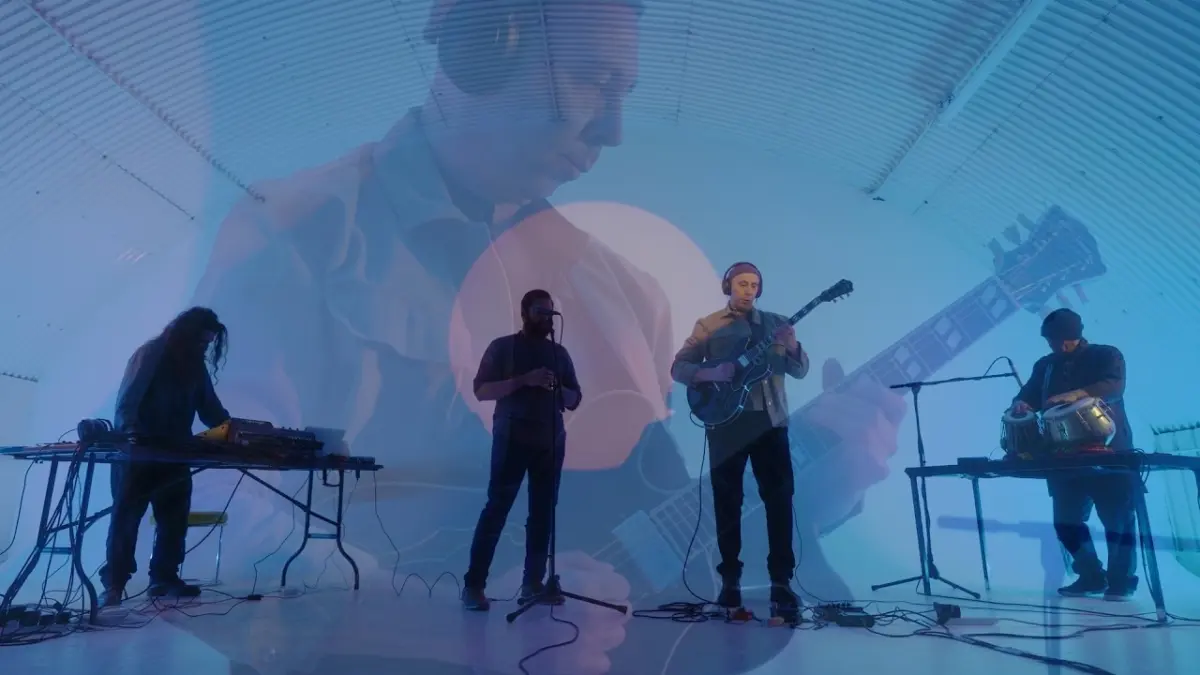
Supported by a stellar ensemble featuring drummer Joost Hendrickx (Kefaya), tabla virtuoso Aref Durvesh, and percussionist Camilo Tirado, "States of Matter" sets a high benchmark for the upcoming album rollout. Leading up to Ridley Road’s official release on February 12, a new single will be unveiled each month, promising a deep exploration of the intersections between global heritage, urban geography, and modern sound system culture.
Detailed Chronology: From Milan to Dalston via Kolkata
To understand the intricate architecture of "States of Matter," one must trace the winding, geographically diverse trajectory of its creator. Born in Milan in 1977, Giuliano Modarelli’s musical awakening was rooted in Western jazz idioms. His early dedication to the craft led him to the prestigious Leeds College of Music, where he honed his technical fluency on the guitar and immersed himself in the complexities of jazz harmony and improvisation.
However, Modarelli’s artistic horizon expanded dramatically when he encountered the profound depths of Hindustani classical music. Drawn to the spiritual and mathematical rigor of the tradition, he embarked on a two-decade pilgrimage of intensive study. Under the direct tutelage of the legendary sarod master Buddhadev Dasgupta and his senior disciple Prattyush Banerjee, Modarelli underwent a rigorous apprenticeship. This training required not merely mastering the instrument, but internalizing the philosophy of ragas, microtonal inflections (shruti), and complex rhythmic cycles (talas). This rare dual foundation—grounded equally in the improvisational freedom of Western jazz and the ancestral discipline of North Indian classical traditions—uniquely positions Modarelli as a bridge-builder between disparate musical worlds.
Upon settling in London, Modarelli’s creative ecosystem expanded further. He co-founded Kefaya, a critically acclaimed global-roots collective, alongside producer and keyboardist Al MacSween. Kefaya became known for its politically charged, genre-fluid collaborations with artists from around the world, blending jazz, folk, electronic production, and social commentary.
The gestation of Ridley Road marks a significant pivot back to a deeply personal solo vision, while retaining the collaborative spirit fostered during his time with Kefaya and various cross-cultural ensembles. The album’s genesis lies in Modarelli’s intimate relationship with East London. Walking through Ridley Road Market, he was struck by what he describes as the "accidental blend and clash" of cultures, languages, and sonic identities. The market’s distinct sensory profile—where Caribbean patois, Turkish folk, Bengali chatter, and modern UK club music bleed into one another—served as the primary catalyst for the project.
"States of Matter" encapsulates this chronological and geographical journey within its brief runtime. It bridges the acoustic precision of Delhi’s classical lineages with the heavy bass culture of contemporary London, channeling decades of personal musical study into a single, cohesive statement about urban life and cultural resilience.
Supporting Context & Metrics: The Legacy and Struggle of Ridley Road Market
To fully grasp the socio-political weight of Modarelli’s new work, one must examine the history and current reality of Ridley Road Market. Established in the late 19th century—specifically trading off Kingsland High Street since the 1880s—Ridley Road began as a modest collection of fruit and vegetable barrows. Over the decades, it evolved into a vibrant, multi-ethnic bazaar featuring approximately 150 stalls, reflecting the waves of immigration that reshaped East London.
Throughout its history, the market has served as a welcoming landing pad for newcomers. Over generations, its stalls have been operated by immigrants and descendants from the Caribbean, Turkey, Kurdistan, Bangladesh, Poland, and beyond. This demographic mosaic created a micro-economy built on resilience, adaptability, and cross-cultural exchange.
However, Ridley Road’s history is defined just as much by confrontation as it is by commerce. In the late 1940s, the market became a vital ideological battleground. It was here that the 43 Group—a militant anti-fascist organization primarily composed of Jewish ex-servicemen—clashed fiercely with the followers of British fascist leader Oswald Mosley, who sought to use the streets to spread antisemitic propaganda. The successful defense of Ridley Road against fascist infiltration remains a celebrated chapter in British labor and anti-fascist history.
Today, the battle lines have shifted from the street-fighting of the post-war era to the boardroom battles of late-stage capitalism and urban gentrification. Local traders, independent businesses, and community organizers operating under the banner of the Save Ridley Road campaign are currently locked in a struggle against proposed evictions, sweeping redevelopments, and skyrocketing rents that threaten to erase the market’s unique character.
It is this contemporary frontline that gives Modarelli’s album its urgency. By embedding field recordings of the market into the opening moments of the track, and by dedicating the entire artistic output to the defenders of Ridley Road, the project transcends mere aesthetic experimentation. It becomes an active form of cultural preservation. The "states of matter" invoked in the title refer not only to the physical transformations of solids, liquids, and gases, but to the shifting legal and economic states of urban spaces—spaces where corporate power attempts to dissolve community life, and where grassroots resistance fights to maintain its solid footing.
Official Statements and Artistic Vision
The conceptual depth of "States of Matter" is further illuminated by the collaborative synergy of the artists involved. The track brings together a powerhouse ensemble of improvisers who understand the delicate balance between honoring ancestral traditions and pushing into uncharted sonic territory.
Suhail Yusuf Khan, whose vocal performance anchors the track, embodies the bridge between past and present. As an eighth-generation musician from the distinguished Delhi gharana, Khan’s delivery of Raag Madhuwanti adheres to the strict architectural and emotional rules of North Indian classical performance. Yet, his willingness to place his voice inside a dubstep soundscape demonstrates a progressive outlook on musical preservation. In traditional Hindustani practice, ragas are time-specific—Raag Madhuwanti, traditionally performed in the late afternoon as the sun begins to set, evokes a transition from the heat of the day to the cooling stillness of evening. In Modarelli’s production, this temporal transition mirrors the shifting atmosphere of Ridley Road Market as daytime trading winds down and the city’s nightlife and sound system culture awakens.
Modarelli himself has elaborated on the thematic framework of the album, framing the music as a direct reaction to the socio-political pressures facing modern urban centers. In press statements accompanying the release, he emphasizes that the compositions are forged from "conditions shaped by power and resistance." The juxtaposition of organic instrumentation—such as Aref Durvesh’s intricate tabla rhythms and Camilo Tirado’s deep bombo strikes—with the electronic weight of Joost Hendrickx’s drumming and Modarelli’s synthesized sub-bass creates a sonic metaphor for tension and release.
Bucks Music Group, which released the single on October 21, has championed the project as a landmark release in contemporary global fusion. A representative for the label noted that Modarelli’s ability to weave field recordings of urban commerce with high-art classical improvisation sets a new standard for modern collaborative music-making, proving that commercial accessibility and profound artistic integrity are not mutually exclusive.
Future Outlook: The Ridley Road Album Rollout
With "States of Matter" now available across all major streaming platforms and via Bandcamp, the release marks the official starting gun for an ambitious campaign leading up to the full album drop.
Ridley Road, scheduled for release on February 12, represents a major milestone in Giuliano Modarelli’s career. It cements his transition from collaborative ensemble player (via Kefaya and various jazz projects) to a singular auteur capable of synthesizing complex geopolitical, historical, and musical narratives into a cohesive long-form statement.
To maintain momentum in an era of rapid-fire music consumption, Modarelli and Bucks Music Group have devised a deliberate, methodical release schedule. Following the October debut of "States of Matter," a brand-new single will be unveiled on the 21st of each subsequent month leading up to February. Each installment is expected to explore different facets of the Ridley Road ecosystem, pulling from the varied cultural influences that populate the East London market and showcasing different combinations of guest instrumentalists and vocalists.
This serialized approach not only builds anticipation for the full-length vinyl and digital release on February 12, but also allows listeners to digest the album’s complex thematic layers one piece at a time. As the singles roll out, audiences will be treated to a masterclass in cross-cultural composition—one that demonstrates how music can serve as a documented history of resistance, a celebration of immigrant communities, and a living, breathing monument to the vibrant streets of East London.
Fans and supporters can stream, purchase, and support the release directly via Giuliano Modarelli’s Bandcamp page, with further updates available through Bucks Music Group and the Save Ridley Road campaign channels.