Executive Overview
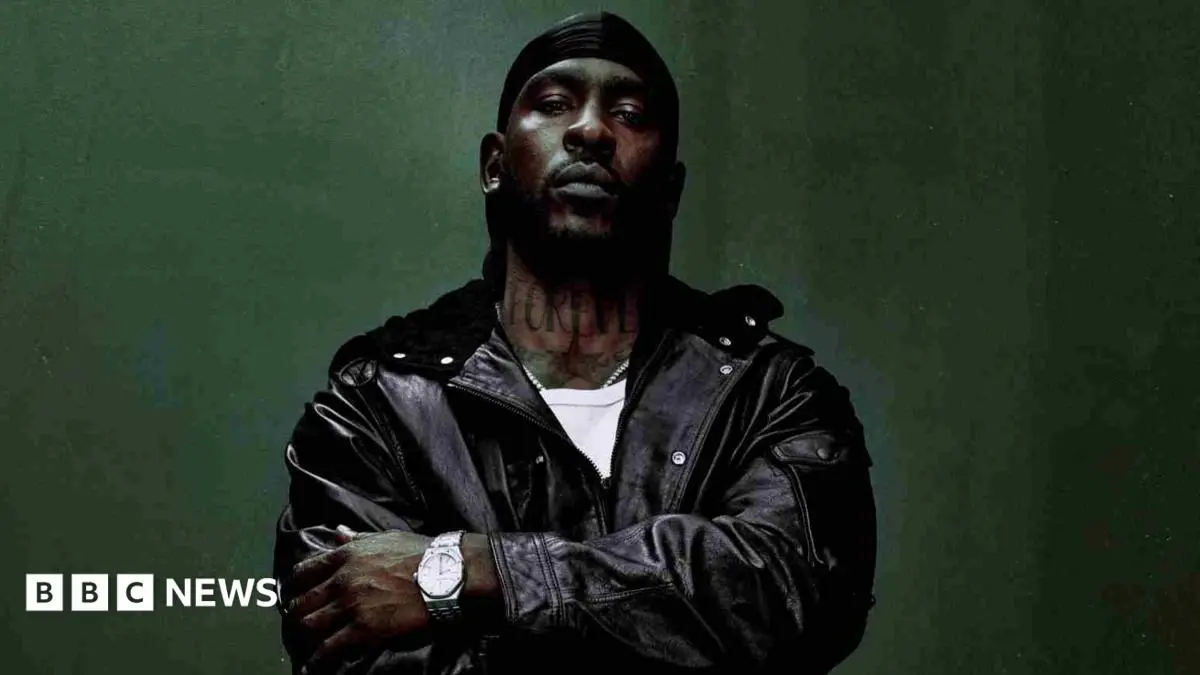
Seven years after his critically acclaimed album Ignorance Is Bliss, British grime pioneer Skepta has officially broken his silence with his sixth studio album, The Fork and Knife. Promising a much-needed return to substance within the British rap landscape, the Tottenham-born artist has delivered a project that is as politically charged as it is sonically ambitious. Tackling sweeping cultural issues such as immigration, systemic racism, post-Brexit identity, and the modern culture wars, the album aims to revitalize a genre that Skepta believes has lost its rigorous edge.
With an illustrious career boasting a Mercury Prize, a Brit Award, and two Ivor Novello Awards, Joseph Olaitan Adenuga Jr.—better known as Skepta—holds a unique position as both a founding father and an elder statesman of UK grime. His return comes at a pivotal crossroads for the British urban music scene. Amid concerns over declining artistic standards, the proliferation of viral novelty tracks, and structural challenges within the industry, The Fork and Knife arrives not merely as a collection of songs, but as a manifesto for cultural preservation and sophisticated lyricism.
This deep-dive feature examines the anatomy of Skepta’s long-awaited comeback, exploring the socio-political underpinnings of his new music, the controversies he navigated along the way, and his vision for the future of UK rap as institutional support systems, such as the newly launched UK rap chart show, begin to take shape.
Detailed Chronology: From Tottenham Origins to The Fork and Knife
The Roots of a Pioneer
Born in Tottenham, north London, to Nigerian immigrant parents who fled the harrowing realities of the Nigerian Civil War, Joseph Adenuga’s early life was steeped in resilience and multicultural adaptation. These formative experiences would ultimately lay the psychological and thematic foundation for his artistry. Long before he was commanding festival stages at Glastonbury and Reading and Leeds, Skepta was absorbing the eclectic sounds of inner-city London, translating the friction of working-class survival into raw, energetic beats.
The turning point in his artistic evolution came in 2009 with the release of the seminal track Reflecting. Charting his arduous journey from a challenging childhood to the cusp of musical recognition, the song broke the traditional mold of grime.
"I feel that was the first grime tune that was introspective and wasn’t just about getting hype," Skepta reflects. "That was the first time I thought, ‘OK, cool, this is a talent of mine’. I’m able to speak my true emotion with no filter, no chorus. I could just spit my emotions on a track that I made and people will feel it for years to come."
The Wait for a Masterpiece
The path to The Fork and Knife has been meticulously measured. Teased for over two years and arriving a full seven years after Ignorance Is Bliss (2019), the project reflects Skepta’s philosophy that artistic greatness cannot be rushed.
The extended timeline was necessary because Skepta deliberately chose to grapple with complex, macro-level societal themes. Instead of recycling familiar club tropes or chasing fleeting algorithmic trends, he spent years refining lyrics designed to withstand the test of time. Every verse, feature, and composition underwent intense scrutiny to ensure that his commentary on the contemporary sociopolitical climate resonated with authenticity and intellectual weight.
Supporting Context & Metrics: The Socio-Political Fabric of the Album
Navigating Identity and Multiculturalism
The Fork and Knife is fundamentally an exploration of existing between cultures. As the child of immigrants, Skepta uses his platform to dissect the modern British identity, particularly in a post-Brexit landscape marked by heightened polarization and xenophobic rhetoric.
On the track In Innocent Smile—which features electronic music heavyweights Chase and Status alongside Madness frontman Suggs—Skepta delivers biting, reflective bars:
"Ain’t no love for an immigrant child / The writing’s on the wall, has anyone else noticed? / Was it Brexit? Was it Covid? / They point fingers, I feel hopeless."
Elaborating on the cultural roots of the genre, Skepta notes that grime is inextricably linked to the immigrant experience. Titans of the movement—including Wiley, Stormzy, and Dizzee Rascal—share similar backgrounds of navigating dual identities within urban Britain.
"That was important for me to represent what it looks like if you give an immigrant child a chance," he asserts. "I’m British and I thought before I even get into a campaign, I wanted to let my stance be known that I’m for multiculturalism."
The Art of Accountability and Overcoming Controversy
Delivering a message of this magnitude required extreme care to avoid misinterpretation, a lesson Skepta learned the hard way. In 2024, the rapper faced intense public backlash and was forced to withdraw artwork for his single Gas Me Up (Diligent) following allegations that the visual imagery referenced the Holocaust. The artwork featured a group of men with shaved heads, with one displaying a tattoo reading "Gas Me Up"—a historical reference to 1990s skinhead culture rather than anti-Semitic imagery.
Rather than deflecting, Skepta acknowledged how the imagery could be deeply offensive when viewed without its specific historical context. Demonstrating artistic maturity, he pulled the promotional materials, promised heightened mindfulness, and used the experience to sharpen the contextual delivery of his subsequent work. Determined not to miss the mark with his sixth album, he approaches The Fork and Knife with a renewed commitment to precision: "I feel like we’ve delivered a classic."
Official Statements & Critical Reception
Setting the Industry Standard
Skepta’s release strategy has coincided with a broader industry debate regarding the quality and direction of contemporary UK rap and grime. Echoing frustrations voiced by fellow artists—such as Digga D, who publicly criticized the viral ‘UK Poo’ TikTok trend for promoting "foolishness"—Skepta has made no secret of his dissatisfaction with the current commercial climate.
"I can’t sit on here and be like ‘I’m happy with how the UK scene is right now’," he states candidly. "Because I’m not. I don’t think there’s been a good grime album for a long time. And I’m here to set levels."
By collaborating with diverse musical icons, including Madness frontman Suggs, Skepta has engineered a sonic bridge between generations, determined to "make rap sophisticated again."
Divided Critical Opinions
Upon its release, The Fork and Knife immediately sparked intense debate among music critics, resulting in a polarized critical reception:
- Complex praised the album as "top-tier" and well worth the seven-year wait, highlighting its lyrical sharpness and sonic cohesion.
- The Observer, while acknowledging the project’s noble intentions and high-minded ambitions, questioned whether the album was "over-egged," suggesting that packing so many weighty socio-political themes onto a single plate risked diluting its impact.
Despite the split reviews, Skepta remains unfazed, viewing the discourse as a natural byproduct of pushing artistic boundaries in an era accustomed to disposable, algorithmic pop-rap.
Future Outlook: A New Era for British Rap Infrastructure
As The Fork and Knife makes its presence felt across global streaming platforms, the broader infrastructure supporting British urban music is undergoing a structural evolution. The launch of the first dedicated UK rap chart show on BBC Radio 1Xtra marks a historic milestone, offering unprecedented mainstream visibility to a genre that has historically fought for institutional recognition.
Skepta views this development as a crucial lifeline for the next generation of bedroom producers and underground lyricists who lack the backing of major multinational record labels.
"Rap is a sport and it’s very hard for visibility when we’re being compared to people who have major machines behind them," Skepta notes. "So this rap chart is going to give all the newcomers and a lot of people who are producing in their bedroom a chance to be seen and heard."
The Legacy Continues
With The Fork and Knife, Skepta has done far more than drop a collection of new songs; he has thrown down a gauntlet. By marrying uncompromising socio-political commentary with masterclass production and generational collaboration, the Tottenham icon has reminded the music industry of grime’s true potential. As the dust settles on early critical debates, one thing remains certain: Skepta has successfully steered the cultural conversation back to where it matters most—substance, skill, and the uncompromising voice of the immigrant child who built an empire on his own terms.