Throughout a career spanning five decades, U2 has occupied a singular, often polarizing space in the global music landscape. Hailing from Mount Temple Comprehensive School in Dublin, Bono, The Edge, Adam Clayton, and Larry Mullen Jr. have weathered the shifting tides of rock history by repeatedly trusting their instincts—and occasionally misfiring when overthinking took the wheel.
Now, in 2026, the legendary Irish quartet is staging one of the most prolific and creatively charged phases of their career. Having already surprised the industry with two urgent, headline-ripped EPs earlier in the year—Days of Ash and Easter Lily—the band is rolling out a traditional campaign for their sweeping new full-length album, Carnaval de Luz.
Marking their milestone 50th anniversary with an unchanged line-up, U2’s 2026 trajectory is defined by 24 new songs, overcoming severe physical health crises, and reclaiming an ethos of "defiant joy" in a fracturing world. This comprehensive report explores the anatomy of U2’s renaissance, examining the political courage, high-stakes collaborations, and unbreakable personal bonds that continue to drive the world’s most enduring rock band.
Detailed Chronology: From Limerick to a Historic 2026 Renaissance
To understand the weight of U2’s 2026 output, one must trace a timeline of relentless ambition, artistic triumphs, and near-fatal missteps.
The Formative Years and the Spark of 1978
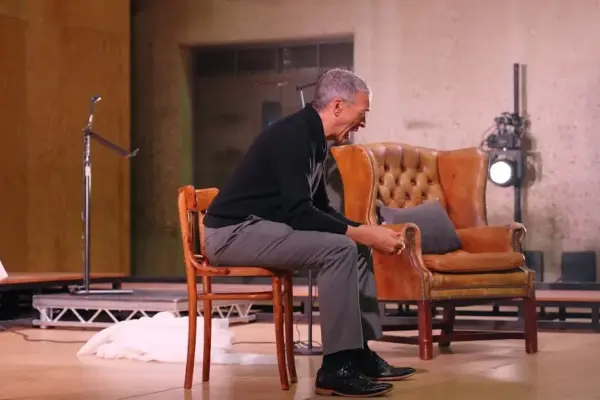
U2’s journey began humbly in the late 1970s. Their first major break came in 1978 when they won a talent show in Limerick, bagging a modest £500 cash prize and the golden ticket to record their own music. Operating out of local venues—including the very Dublin bingo hall where they sat down for recent interviews—the young band forged a brotherhood that would prove impervious to the temptations of rock-and-roll dissolution.
Global Dominance and the 1990s Pivot
By the late 1980s, albums like The Joshua Tree (1987) cemented their status as political and musical heavyweights. However, their instinct for action over caution occasionally yielded friction. When Bono famously sang "Pride (In The Name of Love)" in Arizona in 1987 despite death threats over the governor’s refusal to recognize Martin Luther King Day, it established a precedent of artistic fearlessness.
In the 1990s, the band pivoted toward electronic experimentation, a phase echoed in the groove-heavy, sci-fi folk elements of their current work. By the turn of the millennium, they sought to reclaim their throne, describing their 2000 release, All That You Can’t Leave Behind, as the sound of four men "re-applying for the job of biggest band in the world."
Overreach and Recalibration
Not every bold stroke succeeded. Their 2014 decision to force Songs of Innocence into 500 million iTunes libraries became an infamous exercise in overreach, prompting years of apologies from Bono. Similarly, mid-2000s experiments like the single Get On Your Boots were dismissed by drummer Larry Mullen Jr. as a "catastrophic choice."
Recognizing that overthinking breeds misfires, U2 entered 2026 with a radically stripped-down operational philosophy: spontaneity. Abandoning traditional hype cycles, they dropped two unannounced EPs—Days of Ash and Easter Lily—in rapid succession before announcing their full-scale album, Carnaval de Luz.
Supporting Context & Metrics: Navigating Turmoil and Triumphs
The artistic bedrock of U2’s 2026 material stems from a deeply turbulent geopolitical climate and personal physical resilience.
The EPs of Conscience: Days of Ash and Easter Lily
Days of Ash: Released at the onset of 2026, this EP captured immediate, fiery indignation. It directly addressed pressing international and domestic flashpoints, including the shooting of US citizen Renee Good by an ICE officer, and the tragic death of Palestinian activist Odeh Hathaleen, allegedly killed by an Israeli settler (an incident where Yinon Levy has been charged with reckless manslaughter and vowed to fight the allegations in court).
Easter Lily: Serving as a thematic counterweight, this second EP offered a reflective, melodic exploration of whether faith and friendship can sustain humanity through dark times.
Carnaval de Luz and the Sound of the Future
Balancing the melancholy of their companion EPs, Carnaval de Luz looks toward "defiant joy." Recorded alongside producers like Jacknife Lee—who noted that tracks like "The Mirror Maker" required an exhaustive 196 takes—the album marries electronic grooves reminiscent of their 90s experimental era with the serrated guitar riffs of 2004’s Vertigo.
The album also features a historic collaboration: "Torn," a duet with country legend Dolly Parton. Originally written by Parton as a ballad about a woman choosing between two men, U2—with assistance from Snow Patrol’s Jonny McDaid—reworked the lyrics to reflect political divisions tearing families apart. Recorded in June, less than three months before Parton’s passing, the track serves as a poignant emotional bridge between Carnaval de Luz and the socio-political urgency of Days of Ash.
Physical Resilience and the Return of Larry Mullen Jr.
U2’s creative resurgence is all the more remarkable given the physical tolls borne by its members. Bono’s life-altering injuries forced the cancellation of a 2010 US tour, while severe neck and back problems sidelined Larry Mullen Jr. during the band’s critically acclaimed 2023–2024 Las Vegas residency at the Sphere.
Doctors initially advised Mullen to retire. Instead, he underwent a high-risk surgical procedure that carried the genuine threat of paralysis. Emerging triumphant, Mullen returned to the kit for 2026, completely redesigning his playing style to protect his body while driving the band’s massive upcoming international stadium tour.
Official Statements & Perspectives
In exclusive interviews surrounding their 2026 releases, the members of U2 reflected candidly on their legacy, artistic integrity, and the sacred right to free speech.
Bono on defying industry conventions:
"Our management, our label, they all said, ‘You can’t do that, people won’t notice’. And we said, ‘We don’t mind. It’s okay not to have a big hype behind everything’. And it was really beautiful. The people who we wanted to notice, noticed."
Adam Clayton on the motivation behind Carnaval de Luz:
"Our journey from the mid-1970s was about expanding freedom and opportunity for everyone: Make your own rules, pull down what wasn’t useful. Now we seem to be in a period where that’s under threat and under attack. We wanted to make the point that we didn’t want our joy robbed."
The Edge on the Macklemore Tour Controversy and Free Expression:
Following controversy on Ed Sheeran’s recent US tour where venue owners pressured Sheeran to drop support act Macklemore over pro-Palestinian commentary, The Edge offered a staunch defense of artistic liberty:
"We totally support Macklemore’s right as an artist to say what he wanted to say. I don’t think Ed should be vilified. He was in a very difficult situation. But I commend the other young artists who decided to leave [his] tour. They were sticking up for an artist’s right to free speech, and I think that’s the issue above anything else."
"We might disagree with some of the members of the pro-Palestine movement, but we absolutely agree with the fundamentals. We absolutely agree that what’s going on [in Gaza] is unconscionable and that a child’s life is equally valuable, no matter what their background."
Larry Mullen Jr. on resilience, censorship, and survival:
Reflecting on his return to drumming and the band’s unwavering stance against outside interference, Mullen stated:
"We, as a band, will fight for the right to speak your mind, as long as it doesn’t incite violence. Even if we disagree with it or don’t like it, nobody—no billionaire, no promoter, no owner—has the right to censor anybody. And they will definitely not be censoring us, ever."
Future Outlook
As U2 looks toward the remainder of 2026 and an extensive international stadium tour—including two high-profile nights at London’s Tottenham Hotspur Stadium next June—the band stands at an intriguing crossroads of venerability and rebellion.
Releasing 24 new songs in a single calendar year makes this the most prolific chapter in their five-decade history. Yet, numbers and box sets pale in comparison to the core ethos driving them forward. By refusing to let political polarization rob them of their joy, by risking physical wellness to honor their craft, and by staring down corporate censorship with unyielding defiance, U2 has proven that their best work continues to stem from pure, unadulterated instinct.
As they prepare to fill stadiums across the globe once more, the message from Dublin is unmistakable: U2 is not merely re-applying to be the biggest band in the world—they are reminding everyone why they earned the title in the first place.