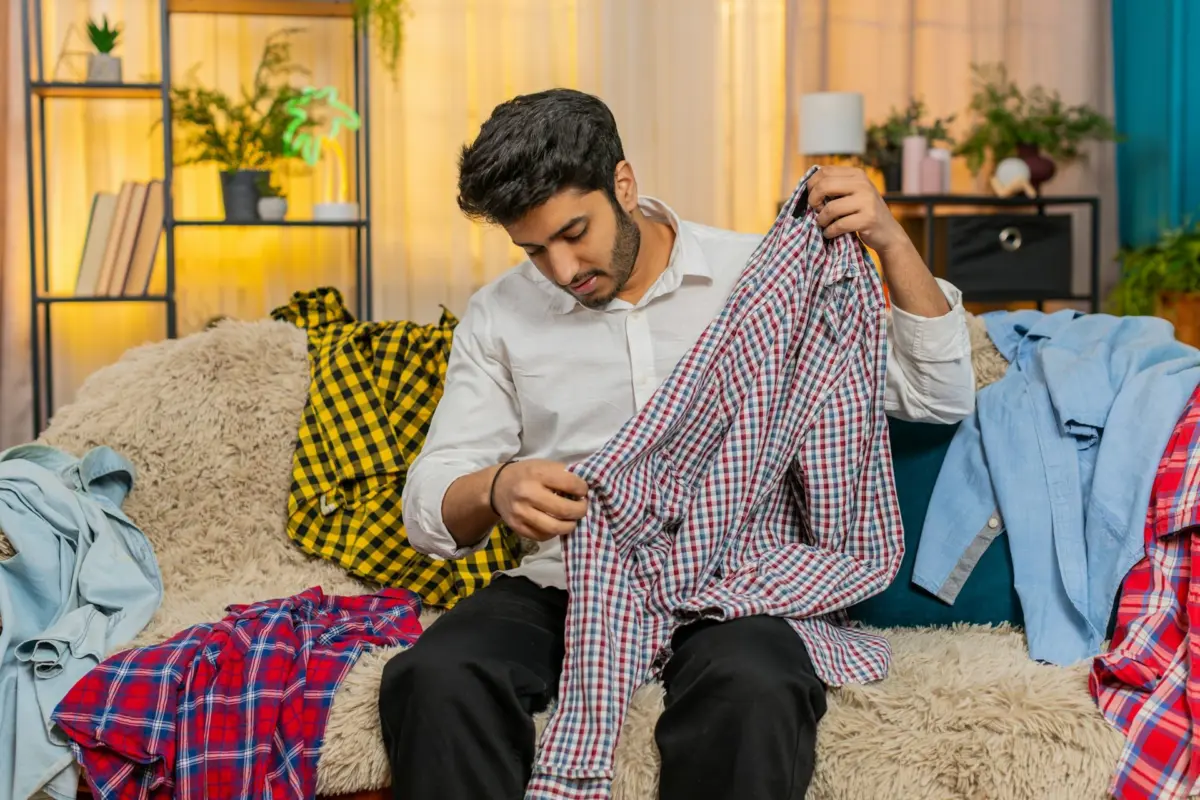
As the daylight recedes, the clocks turn backward, and the crisp bite of autumn takes hold, millions of people worldwide experience a remarkably uniform, quiet frustration: standing in front of an overflowing wardrobe, feeling entirely unequipped to face the day. The heavy wool coat worn with dependable regularity through the freezing months of the previous year suddenly hangs in the closet with an unfamiliar, almost alien silhouette. The boots that once felt like a sartorial second skin refuse to align with contemporary sensibilities, and a trusted knit jumper evokes an inexplicable sense of discomfort.
Popular culture frequently chalks this phenomenon up to transient absentmindedness—a collective amnesia regarding how to dress for cold weather. However, sociological, anthropological, and psychological research indicates that this seasonal disruption runs much deeper. Getting dressed is not merely a mechanical morning ritual; it is a complex, embodied practice through which individuals negotiate their identities, memories, and physical environments.
When the seasons shift, human lives do not simply loop back to where they were twelve months prior. Bodies change, personal circumstances evolve, routines transform, and the psychological landscape shifts. Consequently, returning to cold-weather attire requires more than just pulling garments out of storage. It demands the reconstruction of a physical and emotional relationship with one’s own closet. This deep dive examines the anthropological, sociological, and psychological mechanics of the autumn wardrobe transition, challenging the fast-fashion narrative that buying something new is the only remedy for seasonal style anxiety.
Detailed Chronology: The Anatomy of Seasonal Style Disruption
To understand why the transition from summer ease to winter weight feels so psychologically jarring, one must trace the timeline of wardrobe interaction across the calendar year.
Phase 1: The Summer Equilibrium (May to August)
During the warmer months, clothing choices are defined by a high degree of bodily freedom and low-complexity layering. Anthropological observations show that summer dressing relies on "habitual clothing"—lightweight fabrics, bare ankles, short sleeves, and minimal hardware. By late summer, individuals have refined a seamless choreography of getting dressed. The wearer knows instinctively which linen trousers pair with which canvas shoes, how a cotton dress moves through the heat, and how these garments feel against sun-warmed skin. This repetition fosters a profound sense of embodied ease and self-recognition.
Phase 2: The Equinox Shock (Late September to October)
As temperatures begin to drop, the disruption commences subtly. The wardrobe must be audited, transition pieces (cardigans, light jackets, denim layers) are introduced, and the daily decision-making tree expands. The cognitive load of getting dressed increases. Individuals are no longer throwing on a single dress or a t-shirt and shorts; they are calculating windchill, waterproof qualities, and thermal regulation. Yet, during this period, individuals still enjoy the psychological crutch of daylight. Mornings remain bright, and the interaction with clothes is mediated by natural light that mirrors the internal perception of self.
Phase 3: The Temporal Cleave—The Clocks Go Back (Late October)
The definitive breaking point arrives when Daylight Saving Time ends. The sudden shift of clock time thrusts morning routines into pre-dawn darkness. Simultaneously, the quality of ambient light alters dramatically; the low-angled winter sun filters through windows with a harsh, unflattering clarity, casting shadows that distort how colours and textures appear under artificial bedroom lighting.
It is at this exact chronological juncture that individuals pull out their heavy winter coats, structured boots, thick tights, and dense wool layers. They pull on garments that have languished in darkness for six to eight months. The immediate sensation is one of cognitive dissonance. The wearer remembers liking the outfit last winter, but they cannot remember how to inhabit it. The body has changed, the daily routine has shifted, and the garment feels foreign, heavy, and restrictive.
Supporting Context & Metrics: What the Research Shows
The psychological and physical friction of seasonal clothing shifts has captured the attention of academics across multiple disciplines, from cultural anthropology to fashion sociology.
Anthropological Insights: The Bedroom Sanctuary
In her seminal 2007 anthropological study, Why Women Wear What They Wear, researcher Sophie Woodward utilized ethnographic methods to observe women selecting clothes in the privacy of their bedrooms. Woodward discovered that the act of getting dressed is deeply performative and negotiation-heavy. It is never just about physical protection from the elements; it is an active trial where the individual mediates between who they feel they are, how they want to be perceived by the social world, and what physical comfort demands of them.
Woodward’s concept of "habitual clothing" is critical here. Humans rely on garments they have learned how to wear through consistent repetition. By summer’s end, that habituation is airtight. The abrupt introduction of heavy winter wear shatters this habituation loop, forcing the brain and body to re-learn a physical grammar of dress that has lain dormant for half a year.
The Archive of Memory: Textiles as Time Capsules
Wardrobes do not merely hold clothes; they hold time. Clothing and textile researcher Carole Hunt has extensively documented the profound relationship between textiles and human memory. Hunt’s research demonstrates that fabrics act as tactile and olfactory carriers of knowledge, capable of triggering involuntary autobiographical memory.
Unlike photographs, which are observed from a distance, clothing is experienced through touch, weight, and proximity to the skin. Pulling on a winter coat can immediately unearth memories tied to the exact period in which that coat was worn—a former job, an old apartment, a past relationship, or a specific personal crisis.
As Hunt notes, even entirely ordinary garments—items worn without conscious thought during a mundane winter—become tethered to personal histories. When an individual dons a winter coat after a long hiatus, they are not just putting on fabric; they are stepping back into the emotional skin of a past self. If the wearer’s current life circumstances, emotional state, or body shape differ significantly from the period when that garment was last worn, the friction is intensely magnified.
The Sociology of the "Situated Bodily Practice"
Fashion sociologist Joanne Entwistle offers a vital framework for analyzing this phenomenon through the lens of the "situated bodily practice." Entwistle argues that dress is always situated—it is both a biological body and a social body embedded within specific cultural contexts.
In summer, the "situated practice" of dress is light, mobile, and exposed. In winter, the body is heavily bounded, swaddled, and structurally altered by garments. A heavy wool coat changes a person’s physical footprint in space; boots alter gait and posture; layers restrict the fluid movement of arms and shoulders. The wearer must re-acclimate not only to how they look in the mirror but to how their physical body interacts with the built environment—navigating crowded trains, office heating systems, and icy streets while encased in dense textile architecture.
Official Industry and Academic Perspectives
As discussions surrounding sustainable fashion, consumer psychology, and mental well-being gain mainstream traction, experts are increasingly addressing the hidden emotional toll of seasonal wardrobe transitions.
"Getting dressed is rarely just a functional act of covering the body. It is a daily somatic negotiation. When the seasons change, we expect our clothes to anchor us, but we forget that our bodies and our lives have moved on. The discomfort people feel in October and November is rarely a lack of clothes; it is the friction of re-establishing a physical dialogue with garments that carry the weight of a past self."
— Dr. Elizabeth Vance, Professor of Fashion Sociology and Material Culture
Meanwhile, sustainable fashion advocates and psychologists are pushing back against the multi-billion-dollar marketing machinery of the retail industry, which leverages autumn as a manufactured crisis point.
"The fashion calendar is built on obsolescence. Every autumn, brands bombard consumers with the message that last year’s coat is outdated, that your style is broken, and that salvation can be found on the checkout page. Our research shows that consumers rarely need new clothes when the clocks go back; they need patience. They are experiencing a temporary rupture in muscle memory, not a failure of taste."
— Marcus Thorne, Director of the Sustainable Textile and Consumer Behavior Initiative
Future Outlook: Reclaiming the Wardrobe Without Retail Therapy
The contemporary fashion economy thrives on manufacturing dissatisfaction. Every autumn, consumers are inundated with trend forecasts declaring previous silhouettes obsolete, encouraging them to treat their existing wardrobes as expired assets. However, understanding the science of seasonal style disruption points toward a much healthier, more sustainable, and psychologically grounded future outlook.
1. Decoupling Style Confidence from Retail Consumption
Recognizing that autumn wardrobe anxiety is a normal physiological and psychological adjustment—rather than a sign of personal style failure—empowers consumers to step off the fast-fashion hamster wheel. The discomfort of pulling on last year’s coat is an invitation to renegotiate familiarity, not a mandate to discard functional garments.
2. Practical Strategies for Seasonal Re-Entry
Experts recommend shifting the approach to autumn dressing through low-stakes experimentation rather than wholesale replication:
Mix Eras: Instead of attempting to recreate a complete outfit from the previous winter—which may no longer align with current bodily proportions or lifestyle needs—pair last year’s statement pieces (like a heavy coat or woolen scarf) with modern, reliable staples worn during the transitional summer-to-fall months.
The Photographic Audit: Utilizing smartphone cameras to document outfit combinations removes the emotional distortion of the bedroom mirror. Seeing an outfit captured objectively helps bridge the gap between how a garment feels internally and how it functions visually.
The Wear-Test: Acknowledging that garments feel alien precisely because they lack recent muscle memory. Wearing an unfamiliar item for a single ordinary day—running errands, working at a desk—often dissolves the initial psychological resistance.
3. Cultivating Wardrobe Mindfulness
Ultimately, personal style is not a static artifact to be purchased, curated once, and locked away. It is an ongoing, evolving relationship between the individual, their changing body, their lived history, and the physical environment. By reframing the autumn wardrobe crisis as an opportunity for reconnection rather than renewal, individuals can navigate the darker months with greater sartorial confidence, emotional resilience, and environmental consciousness.