Executive Overview
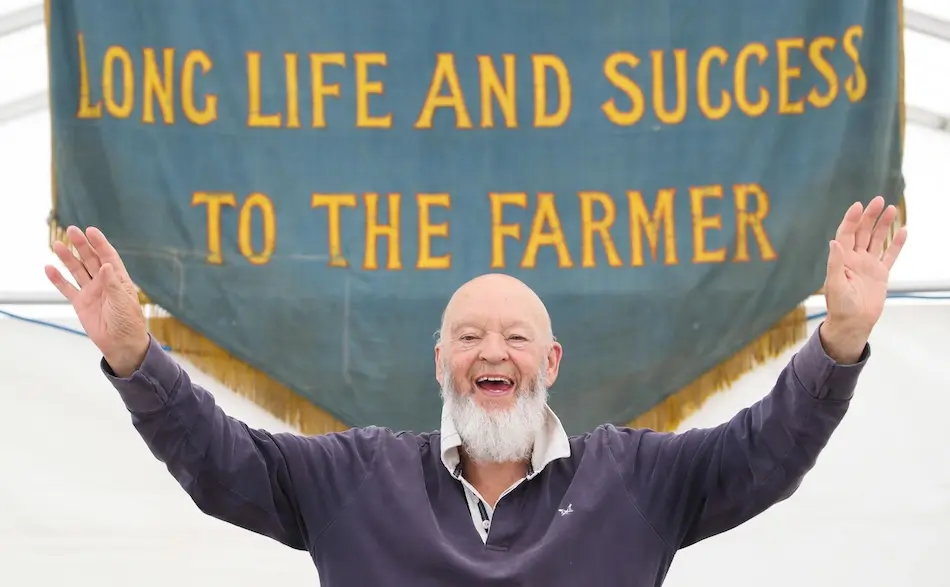
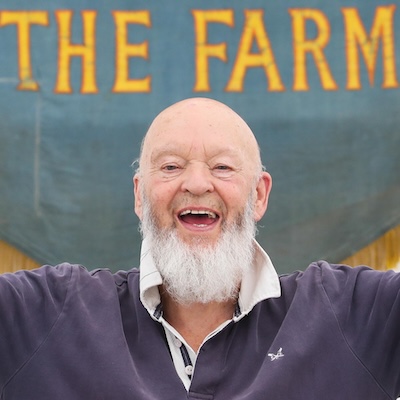
To millions around the globe, October 17, 1985—or any other day in autumn—might feel ordinary, but October 17, 2025, marks a monumental milestone in modern cultural history. Sir Michael Eavis, the visionary dairy farmer who fundamentally transformed the British countercultural landscape by founding the Glastonbury Festival, turns 90. Sitting down for an exclusive, wide-ranging interview at his historic home in Pilton, Somerset, Eavis reflects on a life lived on his own terms: a sprawling, improbable narrative of music, political activism, agricultural grit, and profound community stewardship.
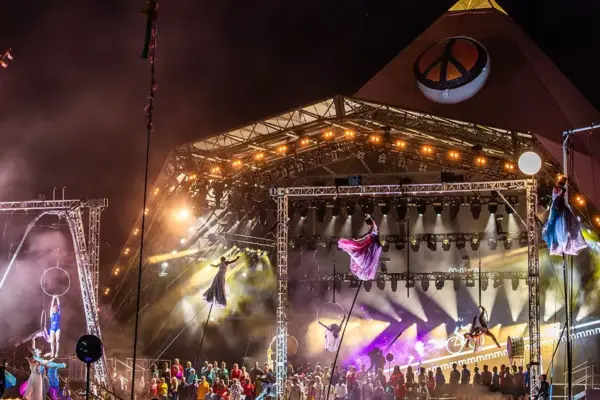
Over more than half a century, what began as an eccentric local gathering for 1,500 people—where tickets cost just £1 and came with free milk from Worthy Farm—has blossomed into the most famous music and performing arts festival on Earth. Yet, as Eavis reaches his tenth decade, his characteristic humility remains intact. Far from resting on his laurels during the festival’s designated fallow year, he is as relentlessly active as ever, collaborating with visionary creative forces like Joe Rush and Arcadia, tending to his thriving dairy operations, and taking stock of an extraordinary legacy that extends far beyond the Pyramid Stage.
From grueling legal battles with local magistrates to supplying cheddar to national supermarkets, and from building affordable social housing for Pilton locals to championing progressive political causes, Eavis’s journey is a masterclass in resilience. This comprehensive retrospective explores the milestones, struggles, and triumphant triumphs of a man who truly did it "his way."
Detailed Chronology: From Pilton Pastures to Global Dominance
The Humble Beginnings (1970)
The Glastonbury legend officially began on September 19, 1970, originally dubbed the Pilton Pop, Folk & Blues Festival. Inspired by an open-air concert featuring Led Zeppelin at the Bath Festival of Blues and Progressive Music, a 35-year-old Michael Eavis paid £1,500 to book T. Rex as headliners. Approximately 1,500 counterculture enthusiasts paid £1 a ticket to enter Worthy Farm, receiving free raw milk poured straight from the farm’s dairy.
Reflecting on those early days from the vantage point of his 90th birthday, Eavis admits that the atmosphere was vastly different. Rather than dealing with corporate sponsorships or global media syndicates, his primary adversaries were local officialdom. "In those days, I was always at war with the council and the village and the local magistrates and the police," Eavis recalls. It was a friction-heavy crucible, but one that forged the unyielding determination required to keep the event alive.
Navigating Peril and Probation (The 1970s and 1980s)
The festival’s survival was by no means guaranteed. Throughout its formative decades, Glastonbury faced persistent existential threats. Local magistrates viewed the bohemian influx with deep suspicion, issuing stark warnings that came perilously close to ending the enterprise permanently.
"There really were all kinds of threats to its existence over the years," Eavis notes. "The chairman of the magistrates once said to me, ‘If you do this again, you’ve had it’."
Despite regulatory opposition, financial volatility, and logistical nightmares—including the notorious mud baths of various iterations—Eavis persevered. He leaned into the political ethos of the era, aligning the festival with causes like the Campaign for Nuclear Disarmament (CND), establishing a permanent ideological heartbeat that resonates to this day.
The Golden Era and Global Hegemony (1990s–2020s)
As the decades progressed, the adversarial relationship with authorities thawed, replaced by mutual respect and meticulous coordination between festival organizers, local government, and emergency services. Glastonbury evolved into an institution of national heritage.
The festival’s recent chapters have continued to push creative boundaries. Looking back at the most recent festival, Eavis points to rock legend Neil Young’s Saturday night performance as a personal highlight. "He was so good. He really loves performing here and he played such a great set."
Today, the festival commands a cultural gravity so absolute that Eavis jokes about its surging demand: "At this point, it feels like you could put a million tickets on sale and they’d still sell out. They probably would!"
Supporting Context & Metrics: Agriculture, Activism, and Community Impact
While the world knows Michael Eavis as the titan of Worthy Festival Ltd., his identity is inextricably bound to the land. Beneath the glittering veneer of headliners, laser shows, and VIP lounges lies a working dairy farm that remains central to the Somerset economy.
The Worthy Farm Agricultural Engine
Operating a massive festival on a working farm requires extraordinary logistical balancing acts, but the agricultural heartbeat of Worthy Farm never skips a beat. Eavis’s dairy herd continues to produce high-grade milk, a significant portion of which is supplied directly to Wyke Farms. There, it is crafted into the distinctive Worthy Farm Cheddar—a product now stocked on shelves across the United Kingdom.
Eavis recalls a moment of surreal validation involving his cheese empire: "A couple of years ago, we went to Scotland on the train. When we got off in Glasgow, there was a Co-op shop just over the road. So I decided to pop across just to see if they had the cheese. They did! It was all over the shelves! Isn’t that wonderful?"
Philanthropy and Social Housing in Pilton
Perhaps the most enduring testament to Eavis’s character is his commitment to local equity. Long before corporate ESG (Environmental, Social, and Governance) metrics became standard corporate parlance, Eavis was quietly addressing rural poverty and housing shortages in his own backyard.
Through land allocation and direct development, Eavis spearheaded the construction of 52 social houses in Pilton, designed explicitly to ensure that local families and younger generations could afford to remain in the village rather than being priced out by second-home buyers and urban migration.
The initiative received national acclaim when former England football captain and broadcaster Gary Lineker visited Pilton to officially open the development. "Gary Lineker came to open the houses, and he really saw the value of them," Eavis says with visible pride. "He did a lovely interview about them and it went everywhere. I think my mother would be proud of me for the houses too. They look lovely on a sunny day. I drive that way out of the village, you know, and I see the sun shining out on them and think, ‘How did all this happen?’"
In addition to local housing, the festival routinely channels millions of pounds into charitable organizations, including Oxfam, Greenpeace, and WaterAid, cementing a philanthropic model that few global events can match.
Official Statements and Personal Reflections
The milestone birthday interview reveals a man who is reflective yet profoundly content. When asked how he feels reaching the age of 90, Eavis attributes his vitality to a life defined by passion and continuous engagement.
"I feel very well actually. It all feels like the culmination of more than 50 years of work… It’s all been a long story of excitement. That’s probably what’s keeping me going!"
— Sir Michael Eavis
The Creative Spark
Even during a designated fallow year—a strategic intermission designed to allow the farmland to recover—Eavis refuses to slow down. His ongoing involvement with the festival’s artistic collaborators underscores a lifelong love affair with creative minds.
"I’ve seen both Joe Rush and Arcadia in the last week," Eavis notes, "which gave me great pleasure as I still really enjoy working with such creative people."
The Power of Conviction
Asked if his lifelong Methodist faith has played a defining role in shaping the moral and political compass of the festival, Eavis answers without hesitation: "I’m sure it is."
This spiritual grounding, combined with an unshakeable stubbornness, explains why Glastonbury has steadfastly refused to dilute its political messaging. Eavis insists that the festival must remain a platform for discourse: "Oh absolutely. There will always be a political angle there. And I think people expect that."
Future Outlook: The Next Chapter for Worthy Farm
As Sir Michael Eavis celebrates his 90th birthday with a modest, intimate party in Pilton village surrounded by family, local residents, and his band—with whom he plans to perform a secretive three-song set (widely rumored to feature Frank Sinatra’s iconic anthem, My Way)—the broader question for observers is what the future holds for Glastonbury Festival.
While Emily Eavis continues to steer the operational helm alongside her father, ensuring that the festival evolves to meet the demands of contemporary music lovers and environmental imperatives, the foundational ethos established by Michael in 1970 remains immutable.
The challenges facing live entertainment—ranging from rising production costs and economic inflation to climate change adaptation—are formidable. Yet, if history has taught us anything about the dairy farmer from Pilton, it is that adversity is merely the prelude to triumph.
Sir Michael Eavis built an empire out of mud, music, and moral conviction. As he enters his tenth decade, the lights across Worthy Farm burn brightly, casting a warm glow over a legacy that has forever changed the cultural fabric of Britain and the world.