Executive Overview
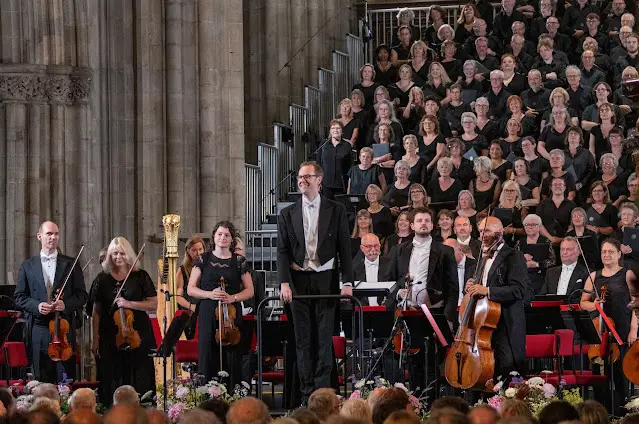
The historic Three Choirs Festival—the world’s oldest non-competitive classical music festival, rotating annually between the cathedral cities of Gloucester, Hereford, and Worcester—has officially unveiled its preliminary programme for the upcoming 2027 edition. Set to take place from July 24 to July 31, 2027, in the magnificent setting of Worcester Cathedral, the week-long celebration of sacred choral music, orchestral masterpieces, and contemporary innovation will be spearheaded by Artistic Director Samuel Hudson.
True to its rich heritage of bridging centuries of musical expression, the 2027 programme delivers an extraordinary juxtaposition of monumental anniversary tributes, world premieres, deeply personal local homages, and a visionary look toward the future of classical composition. From Benjamin Britten’s searing pacifist masterpiece War Requiem to the bicentenary commemoration of Ludwig van Beethoven, and from the legacy of Edward Elgar’s deeply rooted Worcester connections to cutting-edge contemporary commissions, the festival promises to be a watershed moment in the modern history of British classical music.
Furthermore, the 2027 festival serves as a vital platform for contemporary orchestral and choral writing. It marks the second year of Gavin Higgins’s tenure as Associate Composer, highlights a major new premiere by Dobrinka Tabakova, introduces a brand-new realization of Elgar’s elusive Piano Concerto by David Owen Norris, and formally welcomes acclaimed composer Grace-Evangeline Mason as the festival’s new Associate Composer for the 2027–2029 triennium.
Detailed Chronology: A Week of Masterpieces and Premieres
The 2027 Worcester Festival is structured around a meticulously curated sequence of performances, balancing monumental choral-orchestral pillars with intimate chamber settings and striking contemporary works.
Opening Weekend: A Statement of Power and Reflection
The festival will open on Saturday, July 24, 2027, with a performance of Benjamin Britten’s War Requiem, op. 66. Written for the consecration of the rebuilt Coventry Cathedral in 1962, Britten’s monumental work intersperses the Latin Mass for the Dead with the harrowing anti-war poetry of Wilfred Owen. Under the direction of Samuel Hudson, the performance will feature an acclaimed trio of soloists: soprano Elizabeth Watts, tenor Peter Hoare, and baritone David Stout. This opening choice sets a profound, reflective, and emotionally charged tone for the week ahead.
Commemorations and Milestones: Beethoven and Handel
The festival schedule is heavily punctuated by major historical anniversaries. To mark the bicentenary of Ludwig van Beethoven’s death (1827–2027), the festival presents a rare and gripping performance of the Missa solemnis in D major, op. 123. Widely regarded as one of Beethoven’s supreme achievements, the spiritual intensity of the mass will be brought to life by soloists Katie Trethewey, Helen Charlston, Nick Pritchard, and James Atkinson.
In addition to Beethoven, the festival will observe the 300th anniversary of George Frideric Handel’s Coronation Anthems (composed for the coronation of King George II in 1727). These jubilant works will be performed in full splendor by the combined forces of the three cathedral choirs of Gloucester, Hereford, and Worcester, showcasing the historic roots of the festival’s choral tradition.
Contemporary Visions and Orchestral Grandeur
A cornerstone of the modern Three Choirs Festival is its commitment to expanding the orchestral repertoire through ambitious commissions and strategic partnerships.
Gavin Higgins, currently serving as Associate Composer, will present the performance of his major work His Salt Skin. Commissioned for the festival, it will be performed by the BBC National Orchestra of Wales under the baton of conductor Duncan Ward, joined by mezzo-soprano Marta Fontanals-Simmons and countertenor Cameron Shahbazi. This bracing contemporary piece will be paired in the programme with Ralph Vaughan Williams’s expansive A Sea Symphony.

The orchestral programme also features a landmark world premiere by Dobrinka Tabakova. Tabakova’s newly commissioned work will form the centerpiece of a concert that also includes Vaughan Williams’s luminous Serenade to Music.
Perhaps one of the most anticipated musicological events of the festival is the first public performance of a new realization of Edward Elgar’s unfinished Piano Concerto by pianist, musicologist, and broadcaster David Owen Norris. Elgar left sketches for a piano concerto at his death, and Norris’s dedicated realization offers modern audiences a fascinating glimpse into what might have been, realized through modern scholarship and profound sympathy for Elgar’s idiom.
Choral Highlights and Local Legacies
The Three Choirs Festival Youth Choir will take center stage in a vibrant concert featuring Joseph Haydn’s Nelson Mass (Mass in D minor), alongside the first festival performance of Cecilia McDowall’s evocative choral work, Songs of Exile.
Deepening the local connection to Worcester, the festival will showcase Portrait of a Mind, a piece by Worcester-based composer Ian Venables, performed by acclaimed tenor Gwilym Bowen. Other contemporary choral benchmarks gracing the schedule include Joby Talbot’s mesmerizing Path of Miracles—a musical pilgrimage along the Camino de Santiago—and a brand-new choral commission by Eric Whitacre, written specifically for the virtuosic vocal ensemble Tenebrae. Whitacre’s new work will be performed alongside Herbert Howells’s deeply atmospheric Requiem.
Closing Gala: Elgar’s Worcester Roots
The festival will draw to a majestic close with a final concert dedicated to Sir Edward Elgar, whose ties to Worcester and the Three Choirs Festival are foundational to the event’s identity. The programme features Elgar’s lesser-performed oratorio, The Light of Life (Lux Christi), op. 29. Interestingly, this work holds a specific historical resonance for the city: it was originally composed for and premiered at the Three Choirs Festival in Worcester in 1896. Closing the 2027 festival with this work creates a poetic, circular homage to Elgar’s enduring legacy within the cathedral walls.
Supporting Context & Metrics: The Architecture of the Festival
To fully understand the weight and significance of the 2027 preliminary programme, one must examine the institutional framework, logistical scale, and artistic lineage that sustain the Three Choirs Festival year after year.
The Triennial Rotation and the Three Cathedral Choirs
Established in the early 18th century as a modest meeting of the charity choirs of Gloucester, Hereford, and Worcester, the Three Choirs Festival has evolved into a global destination for classical music enthusiasts. Operating on a strict triennial rotation, the hosting duties shift each August among the three cathedral cities. Worcester’s turn in 2027 follows closely on the heels of previous iterations, carrying forward a legacy of artistic excellence that spans over three centuries.
At the heart of every festival are the cathedral choirs themselves—comprising lay clerks and boy and girl choristers—who form the administrative and musical bedrock of the event. Their ability to collaborate with world-class visiting orchestras, such as the BBC National Orchestra of Wales, and international soloists underscores the festival’s unique dual identity as both a localized community institution and a globally significant cultural showcase.
The Evolution of the Associate Composer Role
The appointment of Associate Composers has become one of the most effective tools for the festival to champion living British music. Gavin Higgins, who assumed the role for the 2026 and 2027 festivals, made a profound impact during his inaugural year. His Gloucester Service, premiered at the 2026 Festival Evensong, received widespread critical acclaim and was broadcast nationally on BBC Radio 3 and made available on BBC Sounds. Higgins’s continued presence in 2027—culminating in the performance of His Salt Skin—demonstrates the festival’s dedication to nurturing deep, multi-year artistic relationships rather than relying on one-off commissions.

Building on this momentum, the festival announced that composer Grace-Evangeline Mason will assume the role of Associate Composer for a three-year term spanning 2027 to 2029. Mason is no stranger to the festival’s audiences; her striking orchestral tone poem The Imagined Forest (2021) triumphantly opened the 2024 Three Choirs Festival in Worcester, conducted by Samuel Hudson. Her upcoming tenure promises to bring fresh compositional energy, cementing the festival’s reputation as a vital incubator for contemporary orchestral and vocal writing.
Official Statements & Artistic Vision
Speaking on the release of the preliminary programme, Artistic Director Samuel Hudson emphasized the balance between the festival’s historic roots and its forward-looking artistic vision:
"The 2027 Festival in Worcester represents a profound dialogue between our glorious past and the vibrant, living future of classical music. By anchoring our programme in historic cornerstones—such as Elgar’s 1896 masterpiece The Light of Life and the monumental choral demands of Britten’s War Requiem—we honor the sacred walls of Worcester Cathedral and the centuries of tradition that built this festival. At the same time, through daring new commissions by Gavin Higgins, Dobrinka Tabakova, and Eric Whitacre, alongside the vital appointment of Grace-Evangeline Mason as our next Associate Composer, we ensure that the festival remains an active, risk-taking engine for new music."
Gavin Higgins, reflecting on his ongoing tenure as Associate Composer, shared his enthusiasm for the upcoming performance of His Salt Skin:
"Working with the Three Choirs Festival has been an extraordinary journey. To have His Salt Skin performed by the BBC National Orchestra of Wales in the majestic acoustic of Worcester Cathedral alongside such monumental works as Vaughan Williams’s A Sea Symphony is an incredible privilege. This festival understands how to challenge both composers and audiences, inviting us to explore deep emotional and sonic landscapes."
Grace-Evangeline Mason expressed her gratitude and excitement regarding her upcoming appointment for 2027–2029:
"Having my work The Imagined Forest open the 2024 festival under Samuel Hudson was an unforgettable experience. To return now as Associate Composer starting in 2027 is a true honor. The Three Choirs Festival possesses a unique spirit of community and musical ambition, and I cannot wait to share new sonic worlds with the Worcester audiences over the coming years."
Future Outlook: Looking Beyond 2027
As the classical music landscape faces evolving financial, logistical, and cultural pressures, the resilience and adaptability of the Three Choirs Festival serve as a beacon of stability and artistic ambition. The 2027 programme demonstrates that historic institutions do not need to remain static to survive; rather, by embracing bold musicological rediscovery (such as David Owen Norris’s realization of the Elgar Piano Concerto), championing living composers (Higgins, Tabakova, Mason, Whitacre, McDowall), and honoring core choral traditions, the festival continues to reinvent its relevance for the 21st century.
With ticket demand anticipated to be exceptionally high—particularly for signature events like the opening War Requiem, the Beethoven Missa solemnis, and the Elgar closing gala—organizers advise patrons to review the full programme details on the official Three Choirs Festival website. As Worcester prepares to welcome thousands of musicians, critics, and music lovers in July 2027, the stage is set for a historic week that will resonate long after the final cathedral notes fade away.