Executive Overview
In an era dominated by hyper-compressed digital masters, pristine algorithmic delivery systems, and the relentless pursuit of sonic perfection, a quiet counter-revolution is taking place in the margins. It is a movement that finds beauty in tape hiss, warmth in saturation, and profound emotional resonance in the spaces between notes. At the vanguard of this analog renaissance stands singer-songwriter and pianist Natalie Wildgoose. Following the quiet critical triumph of her April 2026 EP, Rural Hours—a release lauded for its intentional transience and sparse arrangements featuring Owen Spafford on violin and Chris Brain on acoustic guitar—Wildgoose has returned with a companion release that strips her artistry down to its elemental bones.
Titled Rural Tapes, this newly dropped live EP captures the ephemeral spirit of its predecessor and magnifies it through the warm, forgiving lens of lo-fi analog recording technology. Recorded during a torrential downpour in the north of England on a vintage Tascam Porta 02 4-track cassette MiniStudio, Rural Tapes reduces the instrumentation to just voice and piano. The result is an intimate, hauntingly atmospheric collection of songs that feel less like manufactured commercial products and more like archaeological discoveries pulled from the ether of isolation and domestic sanctuary.
This comprehensive report examines the genesis, execution, and cultural significance of Rural Tapes. Through a detailed chronological exploration of Wildgoose’s creative evolution, analysis of her hardware choices, examination of her aesthetic philosophy regarding analog media, and a look at the striking visual accompaniment provided by filmmaker and artist Dylan Friese-greene, we unpack how Wildgoose continues to redefine modern acoustic songwriting. By intentionally leaning into the unpredictable nature of magnetic tape, Wildgoose has crafted a masterclass in atmospheric restraint, cementing her status as one of the most compelling and uncompromising voices in contemporary independent music.
Detailed Chronology: From Rural Hours to the Cassette-Bound Isolation of Rural Tapes
To fully understand the weight and texture of Rural Tapes, one must trace the recent trajectory of Natalie Wildgoose’s artistic output. The journey begins in earnest with her relationship to older recording mediums—a fascination that is both aesthetic and philosophical.
Earlier in her career, while developing the EP Come Into The Garden, Wildgoose famously relied upon her grandfather’s vintage Akai Reel-to-Reel tape machine. This heirloom piece of audio engineering imprinted itself upon her creative psyche. In an interview given earlier this year during her appearance as a guest on the Off the Shelf series, Wildgoose articulated a core tenet of her creative philosophy regarding tape machines:
"I love that when you listen to the recordings after passing them through her, the songs are no longer built, but found, among realms of isolation, magic, and the unknown."
This methodology—treating the recording process as an act of excavation rather than construction—informed the creation of Rural Hours. Released in April 2026 to widespread critical acclaim, Rural Hours presented listeners with a fragile, beautiful world of acoustic arrangements. Reviewer Thomas Blake, writing for Klof Magazine, captured the elusive essence of the release when he noted that Wildgoose’s songs are “intentionally ephemeral,” adding that “part of their appeal is the charged silence they leave in their wake, leaving you to imagine what else there might be.” That initial project brought together a small, empathetic ensemble: Wildgoose on piano, Owen Spafford weaving delicate violin lines, and Chris Brain anchoring the arrangements with acoustic guitar.
However, the seed for something even more stripped-down and immediate had already been planted. The transition from the trio arrangements of Rural Hours to the solitary confinement of Rural Tapes occurred organically, born out of meteorological necessity rather than a calculated marketing strategy.
Reflecting on the day the new EP was born, Wildgoose shared:
"I made Rural Tapes during a day of heavy rainfall up north, there was nothing else to do other than stay indoors, windows open and play the piano."
Trapped inside by the northern downpour, with the sound of rain blanketing the landscape, Wildgoose bypassed modern digital audio workstations (DAWs) entirely. Instead, she powered up a Tascam Porta 02—a legendary 4-track cassette MiniStudio beloved by lo-fi enthusiasts, bedroom pop pioneers, and experimental musicians for its distinctively warm, saturated, and tape-hiss-heavy frequency response. With only her voice, her piano, and the ambient noise of the storm bleeding through the open windows, she tracked the live EP in a single, uninterrupted burst of creative energy.
By stripping away Spafford’s violin and Brain’s guitar, Rural Tapes lays bare the skeletal architecture of the original compositions. The untamed, rootless quality that reviewers sensed in Rural Hours is no longer a subtle undertone; it is the driving force of the record. The release bridges the gap between private rehearsal and public performance, offering listeners a keyhole view into a moment of pure, unmediated artistic expression.
Supporting Context & Metrics: The Analog Revival and the Aesthetics of Imperfection
The release of Rural Tapes arrives at a fascinating intersection of modern consumer behavior and artistic rebellion. While the mainstream music industry continues to chase the algorithmic optimization of streaming services—where tracks are mastered to be as loud and dynamically compressed as possible to catch the fleeting attention of distracted listeners—an underground subculture is doubling down on physical, tactile, and imperfect formats. Cassette tapes, vinyl records, and even VHS tapes are experiencing sustained cultural resurgences, driven by an audience suffering from digital fatigue.
At the heart of Wildgoose’s sonic signature is the hardware she employs. The Tascam Porta 02, utilized for Rural Tapes, is an iconic piece of consumer-grade recording gear first introduced in the 1990s. Designed to make multitrack recording accessible to home hobbyists, the Porta 02 operates at standard cassette speed, utilizing compact cassettes as its medium.
From an engineering perspective, recording to a Tascam Porta 02 introduces several distinct sonic characteristics:
- Tape Saturation: Pushing levels into the red on a cassette deck creates a natural, pleasant compression that rounds off harsh transient peaks, gluing the elements of a mix together.
- Frequency Roll-off: Cassette tape naturally attenuates extreme highs and sub-bass frequencies, resulting in a mid-range focused, warm tonality that mirrors the human vocal register.
- Wow and Flutter: Mechanical variations in tape transport speed introduce subtle, organic pitch fluctuations that give static chords a living, breathing quality.
- Noise Floor (Tape Hiss): The omnipresent background hiss acts as an atmospheric blanket, drawing the listener closer as they strain to hear the delicate details hidden beneath the noise.
Wildgoose’s embrace of these limitations aligns with her broader philosophy on art as an ongoing, unpredictable evolution. This ethos extends far beyond her musical output, permeating her physical correspondence with fans. Her handwritten newsletter—a masterclass in tactile D.I.Y. aesthetics—features delicate pressed flowers carefully arranged around her handwritten words. In one memorable dispatch, she ruminated on the nature of creative work:
"All art is work in progress, one which you cannot predict the outcome. I believe our thoughts, feelings, mistakes, practices have an energy that is hidden in the work and the listener or viewer can hopefully relate or feel these things too."
This embrace of "mistakes" as energetic conduits explains why Wildgoose refuses to sanitize her recordings with digital editing software. A stray pedal squeak, a breath intake, or the subtle warble of a worn-out cassette ribbon are not flaws to be excised; they are proof of life. They are markers of human agency in a world increasingly overrun by automated perfection.
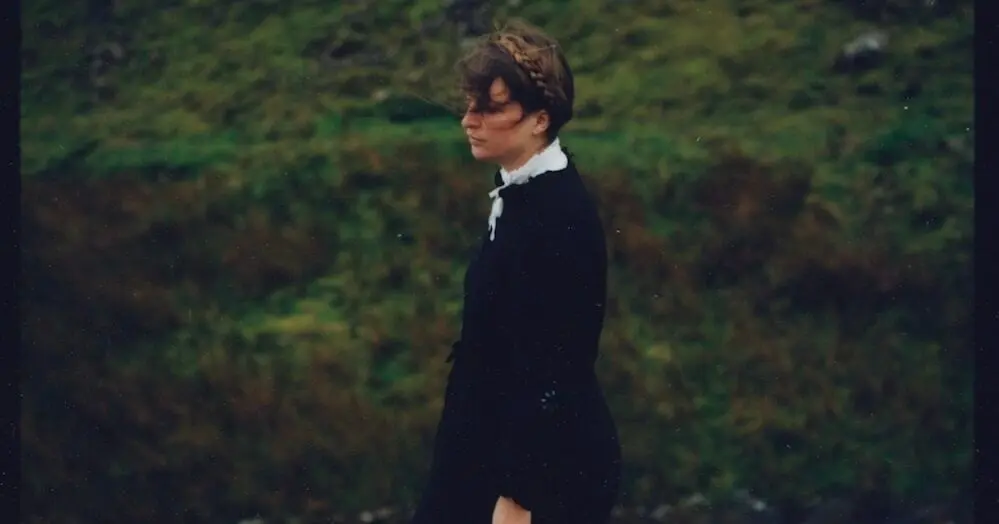
To compound the analog aesthetic of the Rural Tapes release, Wildgoose has collaborated with visual artist dylan friese-greene to create original blue cyanotype animations. The cyanotype process—a 19th-century photographic printing method that produces a Prussian blue monochrome image—is famously hands-on, requiring exposure to sunlight and water washing. Friese-greene elevates this archaic process further by utilizing green tea to bleach and tone the cyanotypes, imparting a sepia-tinged warmth that mirrors the sonic characteristics of the Tascam cassette tape. The resulting visual companion pieces serve as a hypnotic, aquatic extension of the music, grounding the project in a cohesive, handcrafted visual world.
Official Statements & Curated Perspectives
The critical reception to Wildgoose’s recent output underscores a growing appetite for art that demands active listening rather than passive consumption. Thomas Blake’s initial assessment of Rural Hours remains the definitive touchstone for understanding her work’s unique power:
"Her songs are intentionally ephemeral… part of their appeal is the charged silence they leave in their wake, leaving you to imagine what else there might be."
This reliance on "charged silence" is a bold compositional choice. In modern pop production, silence is often viewed as dead air—a void to be filled immediately with a backing vocal, a synth pad, or a drum fill. Wildgoose treats silence as an active instrument. By capturing her performances on a low-fidelity cassette machine during a rainstorm, the silence between her piano chords is filled not by emptiness, but by the subtle room tone, the whir of the tape transport, and the distant patter of rain.
Wildgoose herself has been remarkably transparent about the psychological landscape that produces this kind of music. Reflecting on her transition from digital convenience to analog heritage, she explained during her Off the Shelf residency:
"I love that when you listen to the recordings after passing them through her, the songs are no longer built, but found, among realms of isolation, magic, and the unknown."
This concept of finding rather than building songs is crucial. It suggests that the melodies and emotional truths already exist in the environment, waiting to be captured if the artist is quiet enough, patient enough, and equipped with the right medium to catch them. The northern rainstorm that forced her indoors did not disrupt her workflow; it provided the exact atmospheric catalyst needed to distill Rural Hours down to its purest, most vulnerable essence.
Future Outlook: The Enduring Legacy of Low-Fi Intimacy
As Rural Tapes makes its way into the world via state51 distribution—available for streaming and physical acquisition—it marks a fascinating milestone in Natalie Wildgoose’s burgeoning career. It proves that an artist does not need massive studio budgets, bank-breaking gear lists, or multi-producer teams to create work of profound emotional depth and sonic intrigue.
Looking ahead, Wildgoose’s uncompromising commitment to tactile, analog-driven storytelling positions her as a vital voice in the contemporary folk and ambient landscape. As audiences grow increasingly weary of the frictionless, highly polished sterility of the streaming economy, the demand for art that feels lived-in, flawed, and profoundly human will only escalate.
Whether she continues to unearth hidden songs through her grandfather’s Akai reel-to-reel, tracks intimate live sessions on a battered Tascam cassette deck, or curates more of her exquisite handwritten newsletters adorned with pressed flowers, Wildgoose has established a sacred contract with her listeners. It is a pact built on trust, intimacy, and the shared acknowledgment that the most powerful art lives not in the glossy finish, but in the margins, the silences, and the gentle hiss of magnetic tape rolling on a rainy afternoon.
Rural Tapes is available now to stream and order via state51 distribution. Fans can further immerse themselves in Wildgoose’s creative world by subscribing to her handwritten newsletter and exploring dylan friese-greene’s tea-toned cyanotype animations across digital platforms.