Executive Overview
The 1990s in the United Kingdom was a decade defined by profound social and cultural upheaval, soundtracked by a relentless, synthetic heartbeat. While the sprawling industrial warehouses of London and the sprawling fields of the M25 motorway network are often heralded as the cradle of British rave culture, the quiet, commuter-belt Essex suburb of Romford played an equally vital, yet historically under-appreciated, role.
This autumn, a new immersive exhibition titled Mega Mega: Romford’s Suburban Sound Revolution aims to correct that historical oversight. Running from October through December, the exhibition explores how a seemingly unremarkable suburban town on the eastern fringe of London morphed into an epicenter for the UK’s most cutting-edge electronic dance music. From the frantic, high-bpm hardcore of the early ’90s to the evolving, bass-heavy mutations of jungle, UK garage, and drum & bass, Romford was a crucible for sonic innovation.
Curated by cultural historian and producer Katherine Green in formal partnership with Havering London, Mega Mega is not merely a nostalgic trip down memory lane. It is an ambitious, multimedia archaeological dig into the pirate radio airwaves, independent record shops, cottage-industry record labels, and underground promoters that turned Essex into an unexpected capital of counter-culture. Blending rare archival material, immersive soundscapes, and first-hand oral histories, the exhibition captures a pivotal moment when bedroom producers and suburban entrepreneurs rewired the British musical landscape.
Central to the exhibition’s innovative approach is its blending of traditional museum curation with interactive, participatory art. Highlights include Bosh, an installation by artist Rosie Strickland that transforms a vintage Volkswagen Golf into a mobile "micro-club"—serving simultaneously as a sculptural sound installation and a vehicle for living history. Furthermore, the exhibition serves as a living archive, featuring an open call for local residents to donate their own memorabilia, flyers, dubplates, and personal stories to ensure Romford’s rave heritage is permanently preserved for future generations.
Detailed Chronology: The Evolution of Romford’s Sound
To understand Romford’s significance in the 1990s dance music landscape, one must trace the chronological explosion of electronic genres that swept across the UK, finding a particularly fertile breeding ground in the Essex suburbs.
1989–1991: The Acid House Aftermath and the Hardcore Awakening
As the ecstasy-fueled glow of the Second Summer of Love began to institutionalize in central London, outer-lying areas like Romford absorbed the shockwaves and pushed the tempo higher. The early days of the decade were defined by early hardcore techno—a chaotic, sample-heavy genre that married the four-on-the-floor rhythms of house music with breakbeats lifted from funk records, sped-up reggae vocal stabs, and synthesized piano riffs.
Romford’s youth, caught between urban proximity and suburban boredom, found an outlet in this nascent sound. Bedroom producers working with rudimentary equipment—Atari ST computers, Akai samplers, and cheap synthesizers—began turning out tracks that resonated far beyond the confines of Essex.
1991–1993: The Rise of Boogie Times and Suburban Base
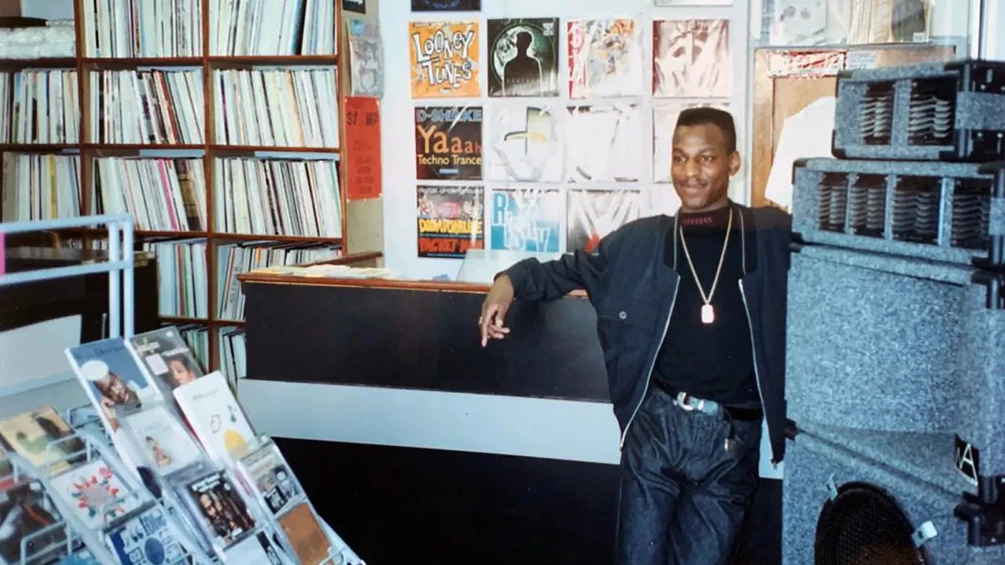
The epicenter of this movement materialized in the form of Danny Donnelly’s legendary Romford institution: the Boogie Times record shop. More than just a retail space, Boogie Times functioned as a community hub, a clearinghouse for white-label vinyl, and an informal networking agency for the clandestine dance music underground.
Out of this retail ecosystem grew the seminal Suburban Base Records label, founded by Donnelly. Suburban Base became an absolute powerhouse of the early ’90s hardcore and jungle scenes, releasing foundational records that defined the era. Among its most notable outputs were Sonz of a Loop Da Loop Era’s hypnotic, breakbeat-heavy Far Out and Smart E’s novelty-infused yet devastatingly effective club weapon, Sesame’s Street. These releases did not just chart; they established a blueprint for how independent, regional labels could dictate national club trends from the suburbs.
1993–1996: The Jungle and Drum & Bass Metamorphosis
As hardcore fractured and matured, absorbing influences from Jamaican dancehall, dub, and hip-hop, it birthed jungle and, eventually, drum & bass. Romford’s producers and DJs were at the vanguard of this sonic evolution. The complex, chopped-up Amen break rhythms and subterranean sub-basslines found a natural home on the pirate radio stations broadcasting illegally from the tower blocks and high-rise rooftops of East London and Essex.
Romford producers were instrumental in stripping away the sunnier pop elements of early rave and replacing them with darker, more technical atmospheres. The area became a key corridor for artists traveling between London club nights and regional Essex raves, cementing its status as an indispensable node in the UK dance network.
Late 1990s: The UK Garage Era and Beyond
As the decade drew to a close, the 140-plus BPM frenzy of jungle gave way to the swinging, 4/4 syncopation of UK garage. Romford’s network of producers, promoters, and pirate radio operators adapted fluidly, embracing the warmer, R&B-infused vocal cuts and choppy basslines that dominated the late-90s commercial and underground landscapes. The suburban infrastructure built during the hardcore years proved robust enough to nurture this new wave of club culture, ensuring that Romford remained relevant as the century turned.
Supporting Context & Metrics: The Wider Landscape of UK Rave Preservation
Mega Mega: Romford’s Suburban Sound Revolution does not exist in a vacuum. It arrives amid a broader cultural reckoning across the United Kingdom, where institutions, academics, and grassroots activists are finally acknowledging rave culture as a legitimate, historically significant art form worthy of archival preservation. For decades, dance music was treated by mainstream cultural bodies as ephemeral, anti-social, and disposable. Today, it is recognized as one of the most influential British cultural exports of the late 20th century.
The exhibition joins a wave of high-profile projects launched in recent years that seek to document the legacy of counter-cultural movements:
- Common Grounds – Counterculture & Confrontation Since 1976: Hosted at Nottingham’s Bonington Gallery, this photography exhibition charts half a century of UK free party culture, documenting how marginalized youth utilized sound systems and unauthorized gatherings to reclaim public space.
- Spiral Tribe & ’90s Free Party Culture: Recent London exhibitions have focused on the nomadic sound-system collective Spiral Tribe, exploring their role in orchestrating monumental illegal gatherings like the Castlemorton Common Festival in 1992, which ultimately triggered draconian legislative crackdowns via the infamous Criminal Justice and Public Order Act of 1994.
- Bristol’s Jungle Heritage at the RWA: Curated by legendary producer Krust, this exhibition at the Royal West of England Academy explores Bristol’s rich, three-decade relationship with jungle music, highlighting the city’s unique contribution to the global bass music continuum.
- The Music is Black: A British Story: Curated by Jacqueline Springer at the V&A East, this expansive exhibition celebrates 125 years of Black British music, contextualizing the profound impact of Caribbean sound system culture on the development of British rave, jungle, and garage.
Within this landscape, Mega Mega occupies a unique niche: it focuses squarely on the suburban experience. While cities like London, Bristol, and Manchester dominate the historical narratives of British club culture, Romford’s story demonstrates how suburban spaces acted as vital pressure valves and creative incubators during a period of intense economic and social change.
Official Statements and Curatorial Vision
The intellectual and creative driving force behind Mega Mega is curator Katherine Green, whose work frequently explores the intersections of local history, community identity, and counter-cultural movements. Partnering with Havering London, Green has sought to construct an exhibition that avoids sterile museum tropes, opting instead for a visceral, multi-sensory experience.
"Romford in the 1990s was a place of immense creative fertility," notes Green in her curatorial notes. "While the capital often takes the credit for the evolution of dance music, the reality is that the suburban periphery provided the physical space, the entrepreneurial drive, and the sheer community grit required to sustain these underground movements. Through Mega Mega, we want to honor the architects of this suburban sound revolution—from the pirate radio engineers and record shop clerks to the producers whose white-labels soundtracked a generation."
Local authorities have also championed the project as a vital celebration of Havering’s cultural identity. Representatives from Havering London emphasized the importance of engaging younger generations with the borough’s rich, counter-cultural history. By framing the rave scene not as a cautionary tale of social deviance—as tabloid media often portrayed it in the 1990s—but as an indigenous art form born of working-class ingenuity, the council hopes to foster a renewed sense of local pride.
Integral to this vision is the interactive art installation Bosh, created by artist Rosie Strickland. Speaking on the integration of contemporary art with historical archiving, Strickland explained the concept behind transforming a classic Volkswagen Golf into a micro-club:
"The car was the ultimate vessel of suburban freedom in the ’90s—it was where you listened to your mixtapes, where you planned your journey to the rave, and where you decompressed on the drive home as the sun came up," Strickland stated. "By turning a VW Golf into a micro-club, we are creating a physical archive that lives and breathes. It combines the tactile memory of vehicle culture with the immersive power of sound design and oral history, inviting visitors to step inside the very atmosphere of the era."
Future Outlook: Archiving the Ephemeral
One of the greatest challenges facing historians of electronic dance music is the ephemeral nature of the culture itself. Pirate radio broadcasts vanished into the ether; acetate dubplates degraded after being played out at high volumes weekend after weekend; flyers dissolved in muddy fields; and independent record shops vanished as high street economics shifted.
Mega Mega: Romford’s Suburban Sound Revolution addresses this vulnerability head-on by establishing a permanent, publicly accessible local archive. The open invitation extended to Romford residents to contribute personal photographs, flyers, unreleased cassettes, ticket stubs, and oral testimonies transforms the exhibition from a temporary cultural event into an ongoing historical project.
By empowering the local community to curate their own history, the project ensures that the narratives of ordinary ravers, suburban producers, and underground entrepreneurs are permanently safeguarded. Organizers have confirmed that the collected materials will remain accessible to researchers, musicians, and the public long after the exhibition closes its doors in December.
As electronic music culture continues to face commercialization, gentrification, and the closure of grassroots venues across the United Kingdom, exhibitions like Mega Mega serve a vital purpose. They remind us that culture is not merely handed down by corporate institutions, but built from the ground up—fueled by DIY ethos, illicit airwaves, suburban boredom, and a relentless desire to dance.
Exhibition Details
- Event: Mega Mega: Romford’s Suburban Sound Revolution
- Dates: October – December
- Location: Romford, London Borough of Havering
- Admission: Free / Open to the public (Check local council listings for specific venue hours and ticket reservations for special events)
- Call for Contributions: Residents wishing to donate archive materials or volunteer can register their interest via the official Havering London project portal.