Executive Overview
Dolly Parton’s place in the pantheon of global music is secure, defined as much by her philanthropic legacy and cultural ubiquity as by her staggering artistic output. Yet, for all her genre-hopping excursions—venturing boldly into disco, pop, bluegrass, and even heavy metal—Parton has invariably circled back to the rustic foundations of country music. From the pulsating disco bop of "Baby I’m Burnin’" to the metal-infused collaboration "Bygones" alongside Judas Priest frontman Rob Halford, Parton’s career has continually shattered the stylistic boundaries of country music while remaining unshakeably rooted in its traditions.
Her relationship with the genre is complex. While her cross-over ambitions periodically alienated pockets of her conservative core fan base, her historical footprint within country music is monumental. She boasts 25 number-one singles on Billboard’s Country Music charts, ten Academy of Country Music Awards, and a coveted 1999 induction into the Country Music Hall of Fame.
However, looking at Parton solely as a successful country artist obscures her more radical achievement: she used the machinery of a historically rigid, male-dominated, and culturally conservative industry to smuggle complex feminist narratives, working-class critiques, and avant-garde vulnerability into the mainstream. As country music experiences a broad contemporary cultural revival, examining Parton’s interplay with the genre reveals how a singular artist can simultaneously honor and subvert a musical tradition.
Detailed Chronology: From East Tennessee to Global Icon
The Formative Years and the Pop Interlude (1960s)
Born in a one-room cabin in Sevier County, Tennessee, Parton’s early life was steeped in the mountain music and religious hymns of Appalachia. Arriving in Nashville as a teenager in the mid-1960s, she initially found traction as a songwriter. However, breaking through as a performer proved significantly more difficult.
When Parton signed with Monument Records in 1965 at the age of 19, industry executives found her high-pitched, piercing vocal delivery incompatible with the prevailing tastes of traditional country radio. Early releases, such as the 1960s girl-group-styled track "Busy Signal," were desperate attempts by producers to market her as a mainstream pop singer. At the time, Nashville was an impenetrable boys’ club where commercially successful female singer-songwriters were rare exceptions.
Paved by the ground-breaking work of peers like Loretta Lynn—whose 1966 hit "You Ain’t Woman Enough (To Take My Man)" offered a fierce counterpoint to male-centric narratives—Parton’s raw talent ultimately won out. Her 1967 debut studio album, Hello, I’m Dolly, definitively announced her arrival as an authentic country force.
The Golden Era of Crossover and Collision (1970s–1980s)
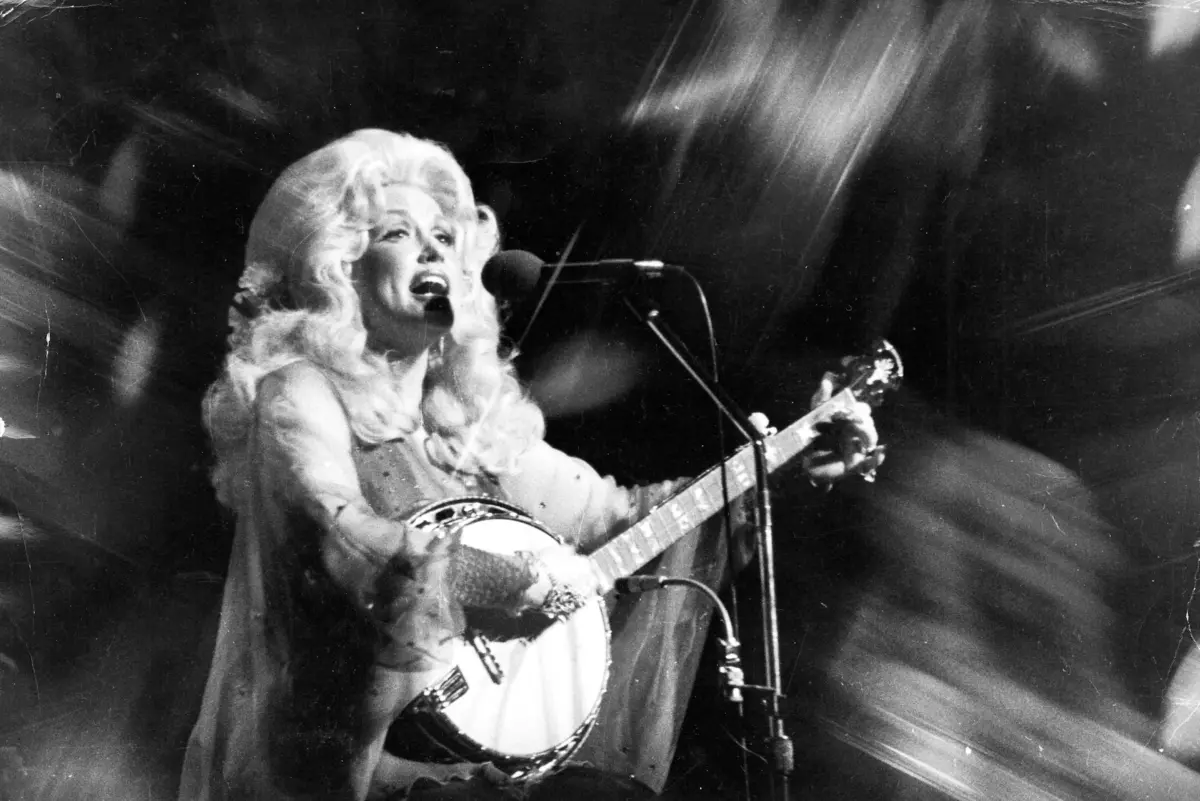
Throughout the 1970s, Parton crafted some of the most enduring standards in American music history, including "Coat of Many Colors" (1971) and "Jolene" (1973). These tracks effortlessly employed country music’s core structural markers: uncomplicated, memorable melodies; traditional instrumentation like banjos, fiddles, and guitars; adept storytelling; and lyrical explorations of love, family, and hardship.
Yet, Parton was never content to remain confined to the rural aesthetics of the genre. By the late 1970s and 1980s, she made a concerted push toward pop superstardom. Anthems like "9 to 5" (1980) leveraged country’s traditional fascination with work songs, but shifted the setting from industrial factories, coal mines, and long-haul trucking routes to the feminized, white-collar grind of typewriters, corporate bureaucracy, and toxic office politics. The gamble paid off brilliantly: in 1981, "9 to 5" spent two consecutive weeks at the top of the Billboard Hot 100.
This crossover pivot, however, came at a cost. As her star ascended in Hollywood and pop charts, her core country audience began to drift away. The tension culminated in 1997 when Parton made the unprecedented decision to officially dissolve her fan club—historically one of the most dedicated factions in country music—due to dwindling engagement from traditionalists.
The Bluegrass Renaissance and Genre-Defiance (Late 1990s–Present)
Rather than retreating into semi-retirement, Parton utilized her newfound artistic independence to reclaim her acoustic roots on her own terms. She launched a critically acclaimed bluegrass trilogy: The Grass is Blue (1999), Little Sparrow (2001), and Halo & Horns (2002).
Subsequent projects, such as 2008’s Backwoods Barbie and 2014’s Blue Smoke, demonstrated her ongoing mastery of country-pop fusion. By the time she was inducted into the Rock and Roll Hall of Fame in 2022—an honor she initially resisted before embracing—Parton had firmly established herself as an artist who transcends categories entirely.
Supporting Context & Metrics: The Architecture of Country Music
To understand Parton’s disruption of country music, one must first examine the genre’s foundational socio-cultural parameters. Country music as a recognized commercial category emerged in the 1940s from a deeply segregated American music industry. Early record executives intentionally marketed "old-time," "cowboy," and "mountain" music toward white consumers, frequently trading in romanticized, nostalgic notions of a simple, pastoral American South.
These cultural associations proved remarkably resilient, surviving various attempts at modernization, most notably the "Nashville Sound" of the 1950s—a production style that attempted to smooth out country’s rough edges with lush string arrangements and pop conventions to appeal to broader urban demographics.
Despite these commercial evolutions, country music has frequently battled a reputation for aesthetic and political conservatism. Sociological surveys often highlight the polarizing nature of the genre; the knee-jerk conversational response of "anything except rap or country" underscores how the genre is frequently coded as unrefined or culturally insular outside its base. Parton presents a fascinating paradox within this dynamic: while she embodies many traditional signifiers of country iconography—her rhinestones, Appalachian rags-to-riches narrative, Tennessee drawl, and overt patriotism—she simultaneously weaponized these tropes to challenge patriarchal structures.
Key Metrics of Parton’s Country Dominance
- 25: Number-one singles achieved on the Billboard Hot Country Songs chart.
- 10: Academy of Country Music (ACM) Awards won over her career.
- 1999: The year of her formal induction into the Country Music Hall of Fame.
- 49+: Solo studio albums released across a career spanning seven decades.
Subverting the Genre: Gender, Politics, and Censorship
Country music has historically relied on reductive gender tropes, frequently casting women into polarized archetypes: the pure, self-sacrificing angel or the wayward, dangerous seductress. Parton’s songwriting systematically dismantled these binaries, offering a far more nuanced and radical account of working-class womanhood.
Her 1968 track "Just Because I’m a Woman" boldly asserted female sexual autonomy and the equal right to make personal mistakes without social ostracization. Meanwhile, songs like "Your Ole Handy Man" delivered biting critiques of domestic inequality, expressing frank exhaustion at having to shoulder all household labor for a partner who behaved "as is he is as helpless as a baby."
Not all of Parton’s narrative risks were embraced by the industry. Her darker compositions frequently collided with the puritanical sensitivities of country music institutions:
- "The Bridge": A haunting gothic ballad detailing the absolute desperation of an abandoned, pregnant woman.
- "Down from Dover": A tragic narrative exploring out-of-wedlock pregnancy and loss.
Both songs faced heavy resistance, resulting in outright bans from numerous conservative radio stations across the American South. Yet, these acts of censorship only served to validate the subversive weight of Parton’s pen. She proved that beneath the buoyant melodies and self-deprecating humor lay an incisive social critic.
Future Outlook: The Legacy of a Maverick
As country music enjoys a major global revival—marked by younger generations discovering its storytelling roots and artists from outside the traditional mold claiming space within the genre—the cultural revaluation of Dolly Parton’s work is accelerating.
Critics and music historians now view her career not merely as an anomaly of pop-culture longevity, but as a masterclass in genre negotiation. Parton demonstrated that an artist does not need to abandon their heritage to embrace modernity, nor do they need to surrender their creative autonomy to satisfy commercial gatekeepers.
Looking forward, Parton’s blueprint serves as a guiding light for contemporary artists navigating the treacherous waters of commercial genre divisions. By treating country music not as a static museum piece, but as a living, breathing language capable of expressing the full spectrum of human dignity, heartbreak, and resilience, Dolly Parton permanently altered the DNA of American music. Her legacy remains a testament to the power of a "little simple song" delivered with uncompromising vision and fierce, unyielding grace.