Executive Overview
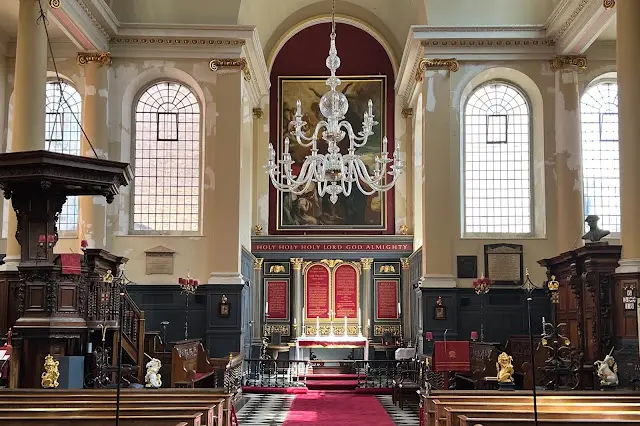
On Thursday, September 24, the historic walls of St James Garlickhythe Church in the heart of central London will resonate not merely with sound, but with sanctuary. Renowned pianist and accompanist Christopher Glynn is set to host and perform in a transcendent evening of chamber music, joined by the crystalline soprano of Rowan Pierce and the expressive artistry of oboist Julia White. This star-studded assembly of classical talent has volunteered their formidable gifts for a singular, vital purpose: a benefit concert in steadfast support of the national charity Music in Hospitals & Care.
In an age dominated by clinical efficiency, sterile environments, and the systemic isolation often accompanying long-term illness, aging, and disability, this event champion the profound therapeutic intersection of art and medicine. The funds raised during the evening will directly bolster the charity’s ongoing mission to deliver professionally curated, live musical experiences to the bedsides and common rooms of hospitals, care facilities, hospices, and specialized community spaces throughout the United Kingdom.
The concert’s thoughtfully curated repertoire bridges centuries and genres. It pairs the timeless Baroque mastery of Henry Purcell with the Romantic lyricism of Franz Schubert, the twentieth-century English pastoralism of Herbert Howells, and the evocative cinematic landscapes of Ennio Morricone, alongside beloved melodies from The Sound of Music and the whimsical, Parisian charm of Yann Tiersen’s score for Amélie.
Beyond the aesthetic pleasure of a world-class classical performance, the evening serves as a clarion call for a broader cultural shift within health and social care. It asks audiences to reconsider the concert hall not as an exclusive sanctuary for the elite, but as an extension of holistic healing—a place where music operates as medicine, social connector, and cognitive anchor.
Detailed Chronology and Artistic Vision
The Genesis of the Programme: "Music, for a while"
The conceptual scaffolding of the September 24 concert finds its anchor in one of the most sublime utterances in the English Baroque canon: Henry Purcell’s Music for a while. Christopher Glynn, whose sensitivity as a collaborative pianist has earned him international acclaim, has structured the entire evening around the psychological and emotional premise laid out in Purcell’s opening lines: "Music, for a while, shall all your cares beguile."
[Beginning of Programme]
  └── Purcell: "Music for a while" (Establishing consolation and the soothing of cares)
        └── Schubert: "An die Musik" (Praising art as an elevated human refuge)
              └── Howells: "King David" (Exploring narrative, drama, and historical depth)
                    └── Morricone: "Gabriel’s Oboe" & Cinematic Selections (Bridging memory and contemporary resonance)
[Conclusion of Programme]
  └── Purcell: "Music for a while" (Returning to the restorative power of song)
In developing this narrative arc, Glynn sought to explore the myriad roles that music plays across the human lifespan: how it is praised when we are joyful, imagined when we are isolated, remembered when we are frail, and shared when we seek connection.
"The programme is a celebration of music in its many different roles," Glynn explains. "We begin and end with Music, for a while, shall all your cares beguile. The opening line of one of Purcell’s most famous songs gives this programme its starting point: the idea that music can console, delight, stir memories, lift spirits, and bring people together."
Moving fluidly from Purcell’s hypnotic ground bass into Franz Schubert’s reverent ode An die Musik—a quintessential nineteenth-century German art song that serves as a direct prayer of gratitude to the art form itself—the concert establishes an unbroken lineage of emotional expression. From there, the tonal palette expands into the rich harmonic language of Herbert Howells’ King David, a piece renowned for its dramatic intensity and painterly textures.
Cinematic Interludes and Contemporary Resonance
To bridge the gap between classical formality and universal human experience, the second half of the programme ventures into the cinematic realm. Ennio Morricone’s Gabriel’s Oboe from the 1986 film The Mission—performed with virtuosic nuance by oboist Julia White—offers an immediate, soaring meditation on grace, redemption, and cross-cultural communication.
The inclusion of selections from Rodgers and Hammerstein’s The Sound of Music and Yann Tiersen’s whimsical score for Amélie is far from accidental. These are musical touchstones deeply embedded in the collective consciousness of multiple generations. For older listeners, particularly those navigating the fog of dementia or the monotonous routine of long-term care facilities, these melodies function as powerful mnemonic keys, capable of unlocking long-dormant memories and sparking spontaneous joy.
Supporting Context & Metrics: The Science of Sound in Healthcare
While the aesthetic merit of the St James Garlickhythe concert is undeniable, the operational backbone of Music in Hospitals & Care is firmly rooted in empirical research, cognitive science, and clinical observation. The charity operates on a foundational premise that is increasingly validated by modern medicine: live music is not merely an entertaining diversion; it is a clinical intervention that yields measurable physiological and psychological benefits.

The Neurological and Physiological Impact of Live Music
When professional musicians perform live within a clinical setting, the human body responds across multiple systems simultaneously:
- Pain Perception and Neurological Modulation: Neurological studies demonstrate that active engagement with live music stimulates the release of endogenous opioids—endorphins—which act as natural analgesics. This neurochemical response can significantly lower the subjective perception of pain, reducing reliance on pharmaceutical interventions for chronic or post-operative patients.
- Autonomic Nervous System Regulation: Listening to live, acoustic music has been clinically proven to reduce cortisol (stress hormone) levels, lower heart rates, and stabilize blood pressure. In high-anxiety environments like intensive care units or oncology wards, this physiological calming effect is critical for stabilizing patients.
- Cognitive Stimulation and Memory Retrieval: For individuals living with neurodegenerative conditions such as Alzheimer’s disease and various forms of dementia, musical memory is often the last cognitive faculty to degrade. Procedural and emotional memory tied to music resides in subcortical brain regions untouched by standard memory loss. Live performance acts as a cognitive bridge, allowing patients to reconnect with their identities, family members, and caregivers.
- Physical Rehabilitation as "Natural Physiotherapy": Music instinctively compels the human body to move. Whether it is a patient tapping a finger, swaying in a wheelchair, or attempting rhythmic steps during physical therapy, the temporal structure of music provides an external pacemaker for motor recovery. This phenomenon, known as rhythmic auditory stimulation (RAS), is a cornerstone of modern neurological rehabilitation.
The Socio-Emotional Dimensions of Care
Beyond individual biology, institutional environments often foster profound loneliness and social alienation. Long-term hospital stays and residential care facilities can strip individuals of their autonomy, reducing them to clinical charts and care schedules.
Live music disrupts this monotony. It transforms an anonymous clinical ward into a shared social space. When patients, nurses, doctors, and visiting families gather to listen to a soprano like Rowan Pierce or a pianist like Christopher Glynn, hierarchical barriers dissolve. Laughter, shared tears, and spontaneous conversations replace the sterile silence of the corridor.
By funding these localized interventions, the proceeds from the September 24 concert directly enable Music in Hospitals & Care to deploy professional musicians who are specially trained to perform in sensitive environments—artists who understand how to read a room, adapt their volume and tempo to frail constitutions, and improvise interactions with vulnerable audiences.
Official Statements and Artistic Profiles
The upcoming concert brings together three of the United Kingdom’s most distinguished interpreters of classical and chamber repertoire, each bringing a deep commitment to community outreach and artistic integrity.
Christopher Glynn (Pianist and Host)
Grammy Award-winning pianist Christopher Glynn has established an enviable reputation as one of the finest collaborative pianists and accompanists of his generation. A winner of the prestigious accompaniment prize at the Kathleen Ferrier Awards and the Wigmore Hall Song Competition, Glynn performs regularly with leading vocalists and instrumentalists across the world’s most prestigious stages. His extensive discography includes critically acclaimed recordings for Hyperion, Signum, and Coro. Beyond his concert career, Glynn is deeply passionate about bringing classical music out of traditional auditoriums and into community spaces, viewing performance as an act of fundamental civic generosity.
Rowan Pierce (Soprano)
Praised for her "radiant tone" and "compelling dramatic sincerity," British soprano Rowan Pierce is rapidly emerging as a leading light in early music, opera, and concert repertoire. A graduate of the Royal College of Music and a former Britten Pears Young Artist, Pierce has collaborated with landmark ensembles including the Orchestra of the Age of Enlightenment, the Academy of Ancient Music, and the Gabrieli Consort. Her sensitivity to text-painting and historical performance practice makes her uniquely suited to navigating the shifting emotional landscapes of Purcell, Schubert, and modern art song.
Julia White (Oboist)
Known for her lyrical phrasing and warm, distinctive tonal color, oboist Julia White is an active orchestral and chamber musician based in London. Working with major British orchestras and contemporary ensembles, White brings a rare versatility to her instrument, seamlessly traversing the demanding technical requirements of Baroque obbligatos and the impressionistic requirements of contemporary cinematic scores. Her collaboration with Glynn and Pierce highlights the unique vocal qualities of the oboe—an instrument historically praised for its uncanny ability to mimic the human singing voice.
Future Outlook: The Role of Music in the Future of Social Care
As the United Kingdom’s health and social care systems face unprecedented structural and financial pressures, the integration of arts-based interventions into mainstream care models is more urgent than ever. Events like the benefit concert at St James Garlickhythe do more than raise crucial operational funds for Music in Hospitals & Care; they serve as public advocacy milestones, reminding policymakers, healthcare administrators, and the general public that holistic health care cannot be measured purely in pharmaceutical metrics and bed turnover rates.
The ongoing work of organizations like Music in Hospitals & Care points toward a future where music is recognized as an indispensable pillar of preventative and palliative care. By embedding professional musicians directly into the healthcare continuum, we acknowledge a fundamental truth of the human condition: that art is not an optional luxury added after physical survival is secured, but an essential component of what it means to live a fully realized, dignified life.
Event Details and How to Participate
- Date: Thursday, 24 September
- Venue: St James Garlickhythe Church, Garlick Hill, City of London, London EC4V 2AL
- Performers: Christopher Glynn (Piano/Host), Rowan Pierce (Soprano), Julia White (Oboe)
- Beneficiary: Music in Hospitals & Care
For comprehensive event details, ticket purchases, and direct donations to support the charity’s nationwide outreach programs, interested patrons are encouraged to visit the official Music in Hospitals & Care website. Through the simple act of purchasing a ticket and lending an ear, attendees will ensure that the consoling, restorative power of live music continues to reach those who need it most.