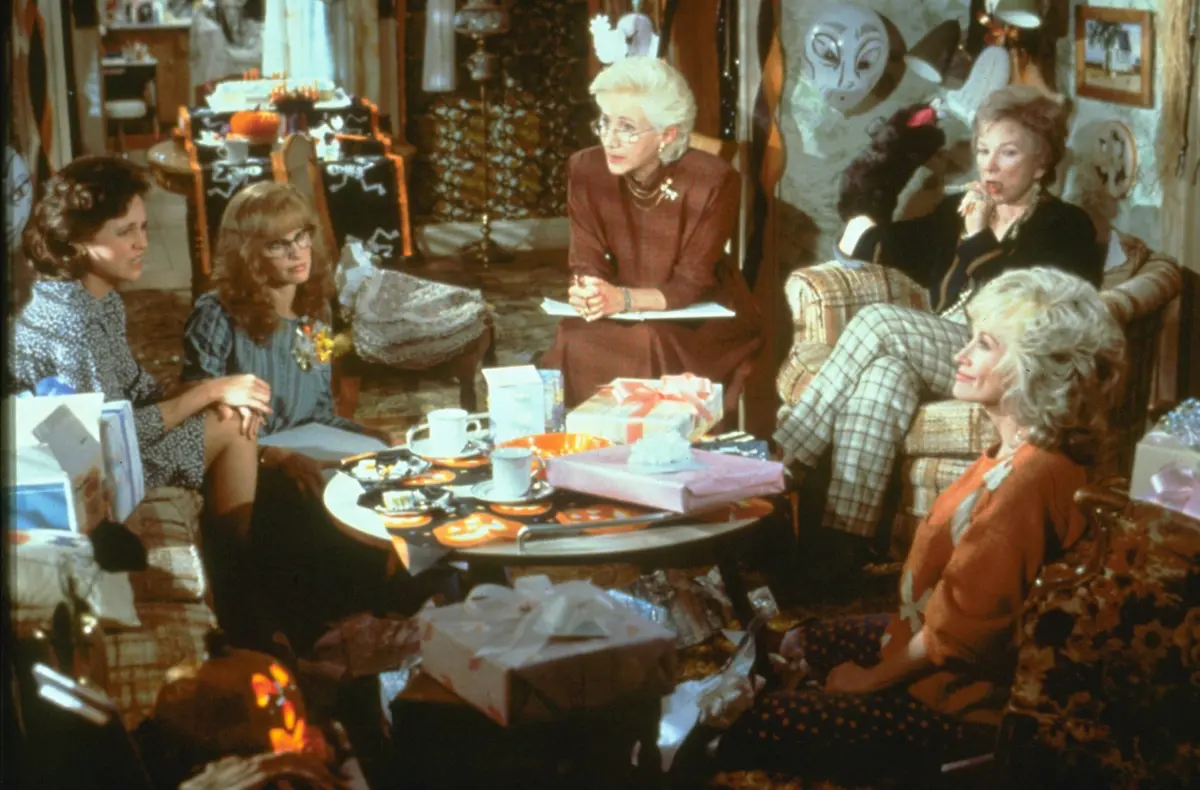
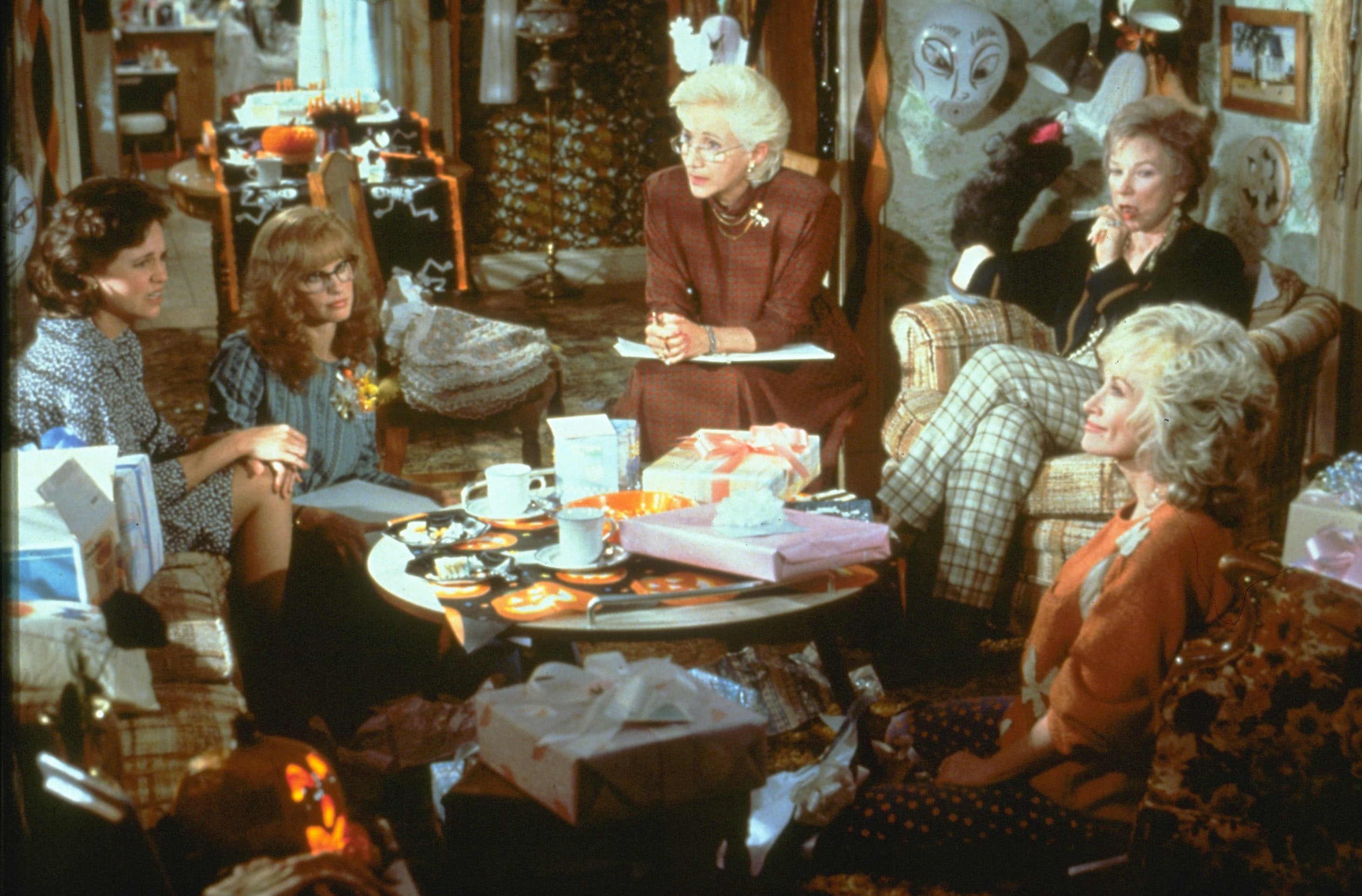
The cinematic adaptation of Steel Magnolias stands as a monumental touchstone in American comedy-drama, revered for its poignant blend of southern wit, deep emotional resonance, and an ensemble cast featuring some of the most formidable talent in Hollywood history. Released in 1989 and directed by Herbert Ross, the film brought together Sally Field, Shirley MacLaine, Daryl Hannah, Olympia Dukakis, Dolly Parton, and a fresh-faced, rising talent named Julia Roberts.
Yet, beneath the glittering veneer of small-town Louisiana charm and the effortless camaraderie displayed on screen, the production was underpinned by intense interpersonal friction and formidable creative friction. Chief among these trials was the fraught dynamic between director Herbert Ross and his leading cast members—most notably country music icon Dolly Parton, making her major cinematic stride as beauty parlor owner Truvy Jones, and a young Julia Roberts, who was navigating only her fourth credited feature film role.
In the wake of Dolly Parton’s passing at the age of 80 following a brief battle with cancer, a flood of long-held anecdotes, behind-the-scenes revelations, and deeply personal recollections have resurfaced. These accounts paint a vivid picture of a production where the legendary ensemble was forced to double as protectors. Director Ross was widely remembered as exacting, abrasive, and particularly harsh on the cinematic newcomer, Roberts.
Through archived autobiographical writings, retrospective interviews, and vintage promotional appearances, a cohesive narrative has emerged. It reveals how Parton—armed with a razor-sharp wit, unshakable self-awareness, and a profound sense of grace—clashed with Ross, defended her younger co-stars with vulgar humor, and ultimately imparted life-altering wisdom to a burgeoning movie star on the sweltering Louisiana sets.
Detailed Chronology: From Louisiana Heat to Hollywood History
To truly understand the internal dynamics of the Steel Magnolias set, one must examine the timeline of both the production and the subsequent reflections shared by its cast members decades later.
1. Pre-Production and Casting Friction (Late 1988)
When Tri-Star Pictures greenlit the screen adaptation of Robert Harling’s successful off-Broadway play, the casting process drew intense industry speculation. While theatrical heavyweights like Sally Field and Shirley MacLaine were instantly secured, the inclusion of Dolly Parton—a global music superstar rather than a seasoned dramatic actress—drew skepticism from director Herbert Ross. Furthermore, Ross reportedly resented studio pressures to cast a relatively unknown Julia Roberts as Shelby Eatenton Latcherie, preferring a more established name for the pivotal, tragic role.
This initial resistance set a combative tone. Parton later recounted in her 1994 autobiography, Dolly: My Life and Other Unfinished Business, that Ross "didn’t particularly like me" and openly doubted her capability to handle the emotional demands of the script.
2. Principal Photography in Natchitoches, Louisiana (1988–1989)
Principal photography took place on location in Natchitoches, Louisiana, under punishing weather conditions characterized by intense southern humidity and soaring temperatures. It was during these grueling months that the ensemble dynamic solidified.
The Acting Confrontation: Early in the shoot, Ross directly criticized Parton’s dramatic capabilities. Rather than shrinking from the critique, Parton leaned into her trademark self-deprecation. As she famously recounted in her memoir, she turned to the director and stated: "I’m not an actress, I’m Dolly Parton. I’m a personality who has been hired to do this movie. You’re the director. It’s your job to make me look like I’m acting." By the end of production, mutual respect had been forged, and the two had made peace.
Targeting the "Baby": While Parton could hold her own against the director, twenty-something Julia Roberts was not as bulletproof. Ross trained a relentless, hyper-critical spotlight on Roberts, whose filmography at that point consisted of minor television and film parts. Cast members quickly noticed the director’s harsh treatment and formed an unspoken protective ring around the newcomer.
3. Promotional Tours and the Oprah Revelation (1989)
As the film prepared for its November 1989 theatrical release, the cast embarked on promotional junkets. During an iconic joint appearance on The Oprah Winfrey Show, Julia Roberts shared an anecdote that would become legendary. While complaining about the oppressive Louisiana heat—noting that everyone was desperately trying to stay cool while wearing heavy wigs and period-appropriate wool costumes—Roberts urged Parton to join in the grievances.
Instead of complaining, Parton offered a profound perspective rooted in her impoverished childhood in rural Appalachia: "When I was a little girl, I wanted to be famous and I wanted to be rich, and now I’m both those things. I’m not going to complain about it." Roberts noted that this single lesson fundamentally altered her professional outlook and resilience.
4. Retrospective Valuations (2000s–2024)
Decades after the film’s release, the true nature of the set’s behind-the-scenes dynamics began to leak out into public retrospectives. In a comprehensive 2024 interview with Vulture, Sally Field corroborated long-standing rumors regarding Herbert Ross’s treatment of Roberts, confirming that the veteran actors "would all rally around Julia, because she was the baby." Field highlighted Parton’s unique defensive tactics, noting that Parton weaponized her unmatched sense of humor—often dipping into remarkably colorful, vulgar language—to completely disarm the director and neutralize any unfair attacks on Roberts.
5. Parton’s Passing and Resurfaced Legacies (August 2025)
The passing of Dolly Parton on August 25, 2025, at the age of 80, triggered a global outpouring of grief and a retrospective look at her monumental cultural footprint. Among the countless tributes and remembrances, the anecdotes from the Steel Magnolias set resurfaced across global media outlets, reminding the public of Parton’s fierce loyalty, emotional intelligence, and unwavering mentorship of women in the entertainment industry.
Supporting Context & Metrics
The production metrics and biographical weight of Steel Magnolias underline why these behind-the-scenes tensions remain a subject of fascination more than three decades later:
Box Office and Critical Reception: Made on an estimated budget of $15 million, Steel Magnolias grossed over $98.7 million worldwide, becoming a massive commercial success and a defining cultural touchstone of late-80s cinema.
Award Recognition: Julia Roberts earned her first Academy Award nomination (Best Supporting Actress) for her heartbreaking portrayal of Shelby, cementing her status as a bona fide Hollywood megastar. Sally Field also received a Golden Globe nomination for her searing performance as M’Lynn Eatenton.
Career Trajectories: At the time of filming, Roberts had only three credited feature film roles to her name (Blood Red, Mystic Pizza, and Satisfaction). Her breakout performance in Steel Magnolias immediately preceded her superstardom in 1990’s Pretty Woman.
Dolly Parton’s Cinematic Footprint: While primarily renowned as a Hall of Fame country music songwriter and performer with hundreds of charting singles, Parton’s cinematic outings—including 9 to 5 (1980) and The Best Little Whorehouse in Texas (1982)—proved her viability as a magnetic box office draw, even if traditional Hollywood directors occasionally underestimated her transition from the music stage to the soundstage.
Official Statements and Retrospective Testimonies
The historical record of these events is preserved through direct quotes and published memoirs from the principal figures involved.
Dolly Parton (from Dolly: My Life and Other Unfinished Business, 1994)
Reflecting on her direct confrontation with director Herbert Ross regarding her acting abilities, Parton wrote:
"He told me I couldn’t act. This was not news to me, and I told him so. ‘I’m not an actress, I’m Dolly Parton,’ I told him. ‘I’m a personality who has been hired to do this movie. You’re the director. It’s your job to make me look like I’m acting.’ By the end of the film, we had all made peace and become friends."
Sally Field (in conversation with Vulture, 2024)
Elucidating the protective environment the veteran cast built around Julia Roberts, Field recalled:
"While I was given the freedom to do whatever, Ross was very, very, very hard on [Roberts], who at the time was in the early stages of her career and filming her fourth credited movie role. We would all rally around Julia, because she was the baby. She was sort of the newcomer. And she was wonderful, and [Ross] just picked on her. It was awful."
Field added regarding Parton’s defense mechanism:
"She would come to Roberts’s aid, always with humour, but usually the most vulgar humour you ever heard so that it was like, you just literally don’t have a leg to stand on."
Julia Roberts (on The Oprah Winfrey Show, 1989)
Detailing the sweltering Louisiana weather and the profound life lesson she received from Parton while sitting on a set porch, Roberts recalled:
"Everyone had ice on their wrist and was doing the whole thing, everyone was like, ‘It’s hot, can I get some water?’ And I finally just had to say, ‘Dolly, I mean, you’ve got a wig and the wool. Come on, it’s hot, sweat a little, you know? Just say “I’m hot,” you know. “This is a drag!”’ And she said—I remember we were sitting on the porch, do you remember this?—and she said to me, ‘When I was a little girl, I wanted to be famous and I wanted to be rich, and now I’m both those things. I’m not going to complain about it.’ I have never forgotten it."
Future Outlook and Cultural Legacy
As time marches on, the enduring cultural footprint of Steel Magnolias continues to expand, viewed increasingly not just as a masterclass in ensemble acting, but as a historic blueprint for female solidarity within an historically male-dominated, high-pressure industry.
The resurrection of these stories following Dolly Parton’s passing in August 2025 serves as a poignant reminder that the warmth, resilience, and humor projected onto the silver screen were mirrored in the real-life bonds forged between the actors off-camera. Herbert Ross may have brought a demanding, abrasive style to the director’s chair, but his friction inadvertently galvanized a legendary group of women into an unbreakable sisterhood.
Today, the legacy of Steel Magnolias lives on not only through its iconic quotes ("Drink juice, Shelby!") and tear-jerking dramatic climaxes, but through the enduring off-screen lessons passed down from a country music icon to a generation of young artists—proving that true grace, humor, and mutual protection can weather even the harshest southern heat and Hollywood pressure.