Executive Overview
As the cultural sector continually navigates the intersection of traditional arts and emerging technology, few institutions have pushed the boundaries quite as far as London’s Philharmonia Orchestra. Set to debut at the Southbank Centre’s flagship Creative Intelligence festival in September 2026, the orchestra’s latest innovation—Virtual Orchestra: Play Along—represents a watershed moment in immersive arts education.
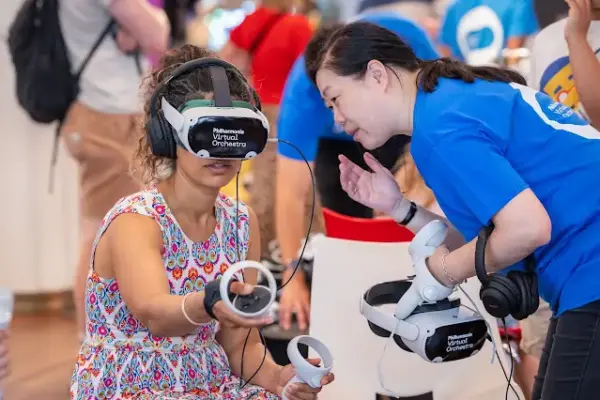
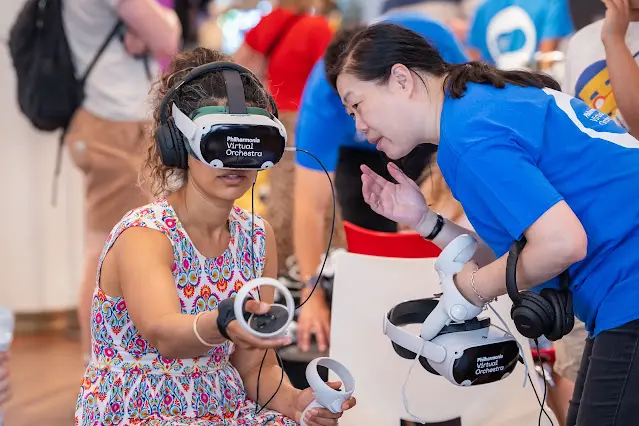
This groundbreaking virtual reality (VR) experience transforms passive concertgoers and digitally native youth into active participants. By donning a VR headset, users are invited to step past the auditorium seats and directly onto the stage of the Royal Festival Hall. Here, they can pick up virtual percussion instruments—such as the timpani, cymbals, and triangle—learn foundational musicianship through guided tutorials led by professional orchestral players, and ultimately perform alongside the Philharmonia in a roaring, high-energy rendition of Rossini’s William Tell Overture.
The project arrives at a critical cultural juncture. Designed explicitly with children and young people in mind, Virtual Orchestra: Play Along directly combats the alarming nationwide decline in school music participation and falling GCSE Music entries. Backed by strategic funding from the UK government and developed through pioneering R&D collaborations with tech giants and creative innovators, this initiative proves that classical music does not need to dilute its artistic integrity to remain relevant. Instead, it can leverage cutting-edge tools—such as ultra-high-definition 12.5k spatial video and object-based Ambisonic audio—to forge deeper, more visceral emotional connections with the next generation of music lovers.
Detailed Chronology: From Concept to Stage
The realization of Virtual Orchestra: Play Along is the culmination of years of technological experimentation, meticulous audio-visual engineering, and rigorous educational testing.
April 2025: Capturing the Symphony in Ultra-HD
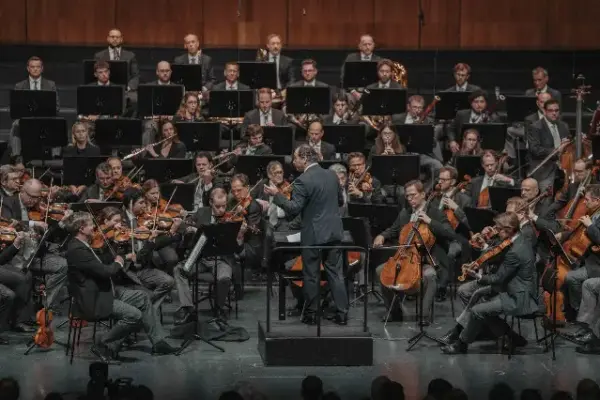
The foundational layer of the experience was captured during a live Philharmonia Orchestra performance at London’s prestigious Royal Festival Hall in April 2025. Under the baton of Principal Conductor Santtu-Matias Rouvali, the orchestra performed a blistering arrangement designed to test the limits of spatial audio and visual fidelity.
Rather than relying on standard commercial cameras, the production team deployed an advanced array of 3D 360-degree cameras capable of capturing footage in an ultra-high 12.5k resolution. This cinematic-grade capture ensures that when users look around in VR, they do not see a flat, distorted video sphere, but rather a lifelike, three-dimensional acoustic environment where every brass valve, string bow, and percussion strike is rendered with astonishing clarity.
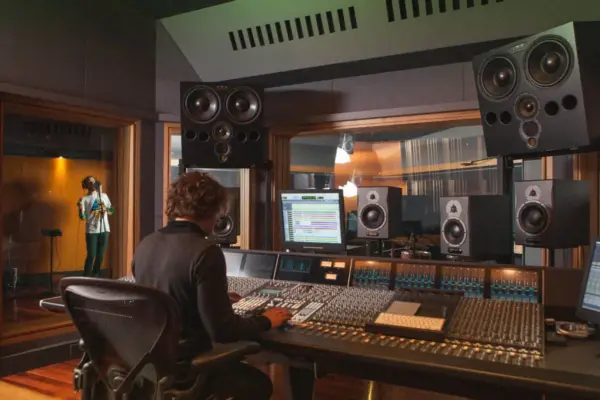
Simultaneously, live audio engineers utilized object-based spatial audio techniques. This audio was subsequently converted into higher-order Ambisonics, a full-sphere surround sound format that mirrors the acoustic geometry of the concert hall. Consequently, when a participant plays their virtual instrument, the surrounding soundscape behaves exactly as it would on a physical stage: the cellos project from the left, the brass blares from the rear, and the acoustics reflect off the timber walls of the hall in real time.
2025: The Innovate UK Grant and Regional Pilot Programs
Following the technical capture, the project entered its crucial research and development phase, supercharged by a £99,284 grant awarded to the Philharmonia Orchestra as one of 272 beneficiaries of the Innovate UK and Department for Culture, Media and Sport (DCMS) Create Growth Programme in 2025.
This financial backing allowed the orchestra to collaborate with key technical and artistic partners—including percussionist Tom Edwards, Meta Camera, and Schallgeber—to refine the software mechanics of the game. Crucially, the grant funded a rigorous pilot program involving Year Seven cohorts drawn from 11 schools across Leicestershire, Derbyshire, and Lincolnshire.
During these trials, students tested early iterations of the VR tutorials, learning how to read basic notation scores, practice timing, and handle virtual mallets. The feedback gathered from these classrooms directly shaped the final user interface, ensuring that the software was intuitive enough for absolute beginners while remaining engaging enough for students with prior musical exposure.
September 11–13, 2026: The Southbank Centre Debut
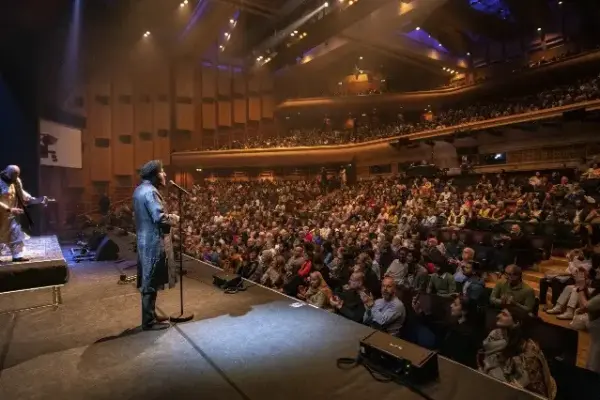
The culmination of this extensive development cycle will occur at the Southbank Centre’s Creative Intelligence festival, running from September 11 to 13, 2026. Inspired by the spirit of the historic 1951 Festival of Britain—which celebrated British scientific and artistic ingenuity 75 years prior—the festival explores how contemporary artists, digital innovations, and artificial intelligence are actively reshaping our modern world.
Within this forward-looking ecosystem, Virtual Orchestra: Play Along will serve as a premier showcase, welcoming members of the public, educators, and industry leaders to experience firsthand how immersive technology can democratize access to the symphony orchestra.
Supporting Context & Metrics: Reversing the Music Education Crisis
To fully appreciate the significance of the Philharmonia’s initiative, one must examine the broader socio-educational landscape surrounding music education in the United Kingdom.
The Decline of Classroom Music
Over the past decade, arts education within the state-funded school system has faced unprecedented financial and structural pressures. According to recent educational statistics, GCSE Music entries have experienced a consistent, troubling decline. Budget cuts, a prioritization of STEM (Science, Technology, Engineering, and Mathematics) subjects within the English Baccalaureate (EBacc) framework, and reductions in localized peripatetic music services have left many children without access to physical instruments or one-on-one tuition.
For many working-class families, the cost of purchasing an instrument, paying for private lessons, or securing concert tickets creates an insurmountable economic barrier to entry. Classical music, in particular, has long suffered from a perception of elitism—an ivory-tower art form disconnected from the realities of modern youth culture.

The Pedagogical Solution: Key Stage 3 Integration
Recognizing that a standalone VR game, while dazzling, cannot solve systemic educational gaps on its own, the Philharmonia Orchestra has built a comprehensive support ecosystem around the project.
Alongside the VR experience, the organization has developed a bespoke, curriculum-linked educational program tailored for Key Stage 3 students. This initiative provides participating schools with comprehensive digital resources, lesson plans, and Continuing Professional Development (CPD) support for generalist and specialist music teachers alike.
By integrating immersive virtual reality into the standard curriculum, the Philharmonia provides teachers with a high-impact hook that immediately captures students’ attention. A child who might otherwise feel intimidated by a traditional orchestral score can, through gamified VR tutorials, break down complex rhythms, understand dynamic phrasing, and experience the adrenaline-fueled joy of collaborative ensemble playing without the pressure of public performance anxiety.
Official Statements and Industry Insights
The philosophy driving Virtual Orchestra: Play Along is deeply rooted in the Philharmonia’s decade-long history of digital experimentation. The orchestra has consistently positioned itself as a pioneer in virtual reality, augmented reality, and interactive audio installations, consistently asking how technology can expand, rather than dilute, the orchestral art form.
Marta Génova, the Philharmonia Orchestra’s Head of Digital Product and Experience, encapsulates this ethos:
"For over a decade, the Philharmonia Orchestra has pioneered immersive musical experiences, and Virtual Orchestra: Play Along takes that work into a new phase where we ask audiences to participate rather than observe."
Génova emphasizes that this project marks a fundamental paradigm shift for the institution’s digital output:
"For the first time in our VR work, users can take up a virtual instrument, develop skills through guided practice, and perform with the orchestra onstage, among the musicians, in concert. Through R&D collaboration with percussionist Tom Edwards, Meta Camera, and Schallgeber, we have developed new ways to connect artists and audiences, reducing barriers to engagement and making cultural spaces more welcoming to participants."
By focusing on percussion—instruments that rely heavily on physical coordination, rhythm, and kinetic energy—the design team ensured that the virtual interaction feels visceral and rewarding. Striking a virtual timpani or crashing digital cymbals provides immediate haptic feedback and auditory gratification, bridging the gap between digital gaming and acoustic reality.
Future Outlook: The Next Frontier for Classical Music
As Virtual Orchestra: Play Along prepares for its high-profile premiere at the Southbank Centre, industry observers are already looking ahead to the long-term implications of the project.
Scaling Access Beyond the Concert Hall
While the immediate rollout focuses on festival attendees and the pilot schools across the Midlands, the scalable nature of digital VR software opens up extraordinary possibilities for national and international distribution. Imagine a future where regional libraries, community centers, and schools across the globe can download the Philharmonia’s virtual ecosystem, allowing students in remote rural areas or underfunded urban districts to "sit" within a world-class symphony orchestra.
This democratization of access does not seek to replace live, physical concerts; rather, it acts as a powerful onboarding funnel. By demystifying the mechanics of the orchestra and allowing young people to experience the sheer thrill of playing inside the ensemble, projects like Virtual Orchestra: Play Along are cultivating the next generation of classical music audiences, donors, and performers.
The Convergence of AI, VR, and Live Performance
Looking further ahead into the late 2020s and beyond, the success of the Philharmonia’s initiative points toward an increasingly sophisticated convergence of artificial intelligence and immersive media. Future iterations of virtual orchestras could incorporate real-time AI accompaniment—meaning the virtual musicians could dynamically respond to the tempo, volume, and phrasing of the human user, creating a truly interactive, living chamber music experience within virtual reality.
For now, however, the Philharmonia Orchestra remains focused on the immediate, transformative magic of putting mallets into the hands of children, handing them a score, and inviting them to take center stage at the Royal Festival Hall. In doing so, they are proving that 250-year-old masterpieces like Rossini’s William Tell Overture are not relics of a bygone era, but living, breathing blueprints for the future of human creativity.