Executive Overview
For centuries, the legacy of Antonio Salieri has been shadowed by a persistent historical myth—largely cemented by popular culture, theatrical dramas, and romanticized literature—that paints him as a bitter, mediocre rival driven to orchestrate the premature demise of Wolfgang Amadeus Mozart. In reality, Salieri was one of the most brilliant, influential, and respected musical figures of the late 18th century. He was a master pedagogue who mentored Beethoven, Schubert, and Liszt; a favored court composer in Vienna; and an innovator who stood shoulder-to-shoulder with Christoph Willibald Gluck in shaping the future of European opera.
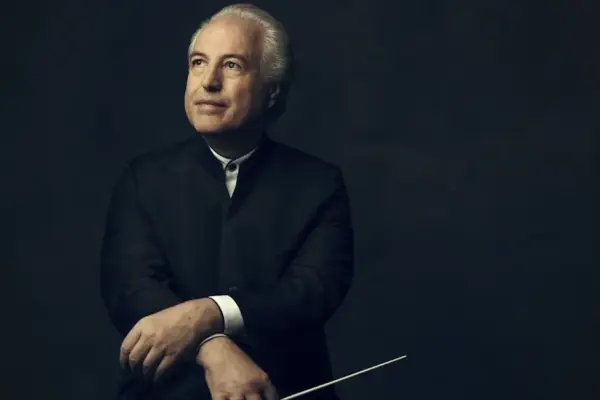
Yet, despite his prodigious output and historical significance, Salieri’s operas remain tantalizingly marginalized, rarely finding a home on contemporary lyric stages. This frustrating trend is finally seeing a welcome challenge. From October 10 to 18, the prestigious Opéra Royal du Château de Versailles will host a landmark new production of Salieri’s 1787 masterpiece, Tarare. Directed by Jean-Romain Vesperini and conducted by Théotime Langlois de Swarte, this high-profile staging promises to reintroduce modern audiences to a work that was once the toast of Paris, blending gripping theatricality, exoticism, and radical political subversion.
Tarare is no ordinary 18th-century opera. Featuring a daring libretto by Pierre-Augustin Caron de Beaumarchais—the celebrated mastermind behind The Marriage of Figaro—the opera represents a fascinating convergence of theatrical genius and musical reform. It marries high-stakes tragedy with biting social satire and exotic spectacle, carrying a revolutionary political message that championed the sovereignty of the people over the tyranny of absolute monarchs.
This upcoming revival at Versailles offers a rare, long-overdue opportunity to evaluate Salieri not through the lens of a Mozartian footnote, but as a pioneering giant of European lyric theatre whose creations paved the way for the French Revolution and the romantic age.
Detailed Chronology: The Evolution of a Master Composer
To understand the magnitude of Tarare, one must trace the remarkable trajectory of Salieri’s career, which spanned the turbulent musical landscape of Enlightenment Europe.
The Apprenticeship and the Shadow of Gluck
Born in Legnago, Italy, in 1750, Salieri arrived in Vienna as a young man and quickly immersed himself in the city’s vibrant musical ecosystem. From around the age of sixteen, he received informal yet rigorous literary and artistic instruction from the great poet Metastasio. Even more formative was his relationship with Christoph Willibald Gluck. Gluck—the towering reformer who sought to strip Italian opera seria of its excessive vocal gymnastics in favor of dramatic truth, natural declamation, and emotional integrity—became Salieri’s informal advisor, friend, and confidante.
So profound was this mentorship that Salieri rightfully regarded himself as Gluck’s true heir. This influence was immediately apparent in Salieri’s 1771 opera Armida, based on Torquato Tasso’s epic, which aggressively adopted and expanded upon the principles of Reform opera established by Gluck and librettist Ranieri de’ Calzabigi.
The Viennese Turbulence and La Scala
Salieri’s career in Vienna hit a major pivot point in 1777. The city’s prominent Italian opera company collapsed under the weight of financial mismanagement. Simultaneously, Emperor Joseph II expressed a strong desire to promote German-language lyric theatre, granting Salieri a year’s leave of absence.
Seizing the opportunity, Salieri accepted an invitation from Milan—a commission originally offered to Gluck, who gracefully stepped aside. The result was Europa riconosciuta (Europa Recognized), composed for the grand opening of the newly constructed Teatro alla Scala in 1778. (In a testament to the work’s historic status, the opera was revived in 2004 to celebrate La Scala’s reopening following extensive architectural renovations.) During this extended Italian tour, Salieri also penned La scuola de’ gelosi (1778), a sparkling comedy that demonstrated his innate gift for buffo writing and showcased distinct pre-echoes of the masterworks Mozart would soon produce.
The Parisian Venture and Les Danaïdes
Following a brief return to Vienna—during which he contributed to the Emperor’s nascent German singspiel project—Salieri embarked on his most ambitious international endeavor yet. In 1783–1784, he agreed to assist his ailing mentor Gluck with a prestigious, high-stakes commission for the Académie Royale de Musique in Paris: Les Danaïdes (The Danaids).
In a dramatic twist of artistic subterfuge, Gluck had accepted the commission but failed to write a single note of the score. As the deadline loomed, Salieri stepped into the breach, composing the massive five-act tragédie lyrique entirely on his own. Initially, marketing strategies preserved the illusion that Gluck was the primary author to ensure ticket sales, but once the opera premiered to ecstatic acclaim, Salieri’s sole authorship was officially acknowledged.
Les Danaïdes became an overnight sensation and a permanent fixture of the Parisian repertoire, remaining on stage for over four decades. Its dark, visceral power left an indelible mark on generations of musicians; a young Hector Berlioz later recorded the profound, earth-shattering impression the work made on him in his celebrated Mémoires.
The Road to Tarare
Buoyed by the triumph of Les Danaïdes, Salieri solidified his reputation in France, producing a series of French-language operas. He followed with Les Horaces (The Horatii), which, despite its artistic merits, met with a lukewarm reception. Undeterred, Salieri partnered with playwright Pierre-Augustin Caron de Beaumarchais in 1787 to create Tarare.
This collaboration represented the pinnacle of late-18th-century theatrical ambition. Beaumarchais, perpetually skating on the edge of political censorship and royal disfavor, poured his radical egalitarian philosophies into the libretto—his only complete opera text.
Supporting Context & Metrics: Unpacking Tarare
To fully appreciate the cultural weight of the Versailles revival, it is essential to examine the musical, theatrical, and political infrastructure surrounding Tarare.

The Creative Pillars of Tarare
- The Composer: Antonio Salieri (1750–1825), Imperial Court Composer in Vienna, master of both French tragédie lyrique and Italian comic opera.
- The Librettist: Pierre-Augustin Caron de Beaumarchais (1732–1999), revolutionary dramatist, philosopher, and author of The Barber of Seville and The Marriage of Figaro.
- The Modern Champion: Christophe Rousset, renowned harpsichordist, conductor, and founder of Les Talens Lyriques, who has spent decades recording and championing Salieri’s operatic canon (including Les Danaïdes, Les Horaces, and Tarare).
- The Production Team: Directed by Jean-Romain Vesperini and musically directed by violinist and conductor Théotime Langlois de Swarte.
- Performance Dates: October 10–18, at the legendary Opéra Royal du Château de Versailles.
Plot Architecture and Subversive Themes
Set in an exoticized, despotic Oriental kingdom, Tarare tells the story of the virtuous soldier Tarare, whose beloved wife, Astasie, is abducted and forced into the harem of the tyrannical, vicious Sultan Atar. The opera details Tarare’s relentless quest to rescue his wife, a struggle that culminates in the violent overthrow of the despotic ruler. In a radical democratic twist, the oppressed citizens refuse to install a new autocrat; instead, Tarare is proclaimed king by the collective will of the people.
The opera’s thematic framework is unapologetically revolutionary. As musicologist and conductor Christophe Rousset has noted, the central motif of Tarare is "death to tyrants." The narrative visualizes how nature gives birth to human society, only for corrupt figures of royalty and tyranny to impose artificial, oppressive hierarchies upon the populace.
Adding to its theatrical audacity, Tarare features a striking narrative epilogue—a device rarely utilized in operas of that era—where two characters step outside the dramatic frame to directly address the audience, reflecting on the perpetual folly of humankind.
Political Aftershocks and the Italian Adaptation
The political implications of Tarare were not lost on contemporary audiences. Years after the premiere, in the wake of the French Revolution, Beaumarchais famously boasted that his libretto for Tarare had served as a conceptual first draft for the Declaration of the Rights of Man.
The work’s explosive success in Paris quickly resonated across borders. Recognizing the universal appeal of the subject matter, Salieri reworked the material into an Italian-language version retitled Axur, re d’Ormus. Featuring a new libretto by Mozart’s legendary collaborator Lorenzo Da Ponte, this Italian adaptation premiered in Vienna in January 1788, becoming an immense hit across the Habsburg Empire and proving that Salieri’s theatrical instincts could seamlessly conquer both Parisian grandeur and Viennese elegance.
Official Statements & Artistic Perspectives
The revival of Tarare at the Opéra Royal du Château de Versailles is not merely a museum piece; it is an active artistic intervention designed to correct historical oversights and re-engage modern audiences with the vitality of the 18th-century French stage.
In past reflections, conductor Christophe Rousset—who has recorded the definitive modern interpretations of Salieri’s French trilogy with Les Talens Lyriques—has emphasized the sheer audacity of Salieri’s musical language:
"Salieri discovered something new within himself when he confronted the French stage. He absorbed the declamatory power of Gluck, but infused it with an Italian lyricism and a symphonic daring that completely redefined what musical drama could achieve in Paris. In Tarare, he and Beaumarchais created a bomb—a theatrical device that challenged the very legitimacy of absolute monarchy years before the Bastille fell."
The choice of venue could not be more historically resonant. While Tarare was originally premiered in Paris, the Opéra Royal du Château de Versailles—inaugurated in 1770 on the eve of the revolutionary storm—provides an authentic, visually breathtaking architectural backdrop for a work that directly interrogates the nature of royal power, courtly vice, and popular sovereignty.
Director Jean-Romain Vesperini’s new staging aims to strip away centuries of accumulated academic dust, presenting the opera’s exoticism and political grit with visceral theatricality. Under the baton of Théotime Langlois de Swarte, the musical forces are set to deliver a performance that highlights Salieri’s brilliant orchestration, rich choral writing, and innovative use of musical contrast between the oppressed masses and the corrupt court.
Future Outlook: Reclaiming Salieri for the 21stead Century
The upcoming run of Tarare at Versailles marks a crucial milestone in a broader, long-term cultural reckoning. For too long, the historiography of classical music has been dominated by a teleological, single-track narrative that treats Mozart as the sole sun around which all 18th-century composers merely orbited as minor planets.
Organizations like the Bampton Classical Opera in the UK have steadily chipped away at this misconception through critically acclaimed modern UK premieres of Salieri’s masterworks—such as La grotta di Trofonio (2015), which offered fascinating pre-echoes of Così fan tutte, and La scuola de’ gelosi (2017). Yet, these boutique stagings, while invaluable, have remained isolated exceptions in a global opera season otherwise dominated by standard-repertoire warhorses.
The high-profile production of Tarare at Versailles signals a potential turning point. By placing a major, politically charged French opera by Salieri on one of Europe’s most prestigious historical stages, producers are sending a clear signal: Salieri’s operas are not pale imitations of Mozart or Gluck, but vital, muscular theatrical achievements in their own right.
As modern audiences increasingly demand historical depth, contextual diversity, and thrilling theatrical storytelling, the rediscovery of Antonio Salieri’s operatic output offers a goldmine of neglected masterworks. If the upcoming October run of Tarare achieves the artistic triumph its creators intend, it may well catalyze a wider renaissance, finally securing Salieri his rightful place in the global operatic canon—not as a shadowy antagonist in a cinematic myth, but as a towering titan of the Enlightenment stage.