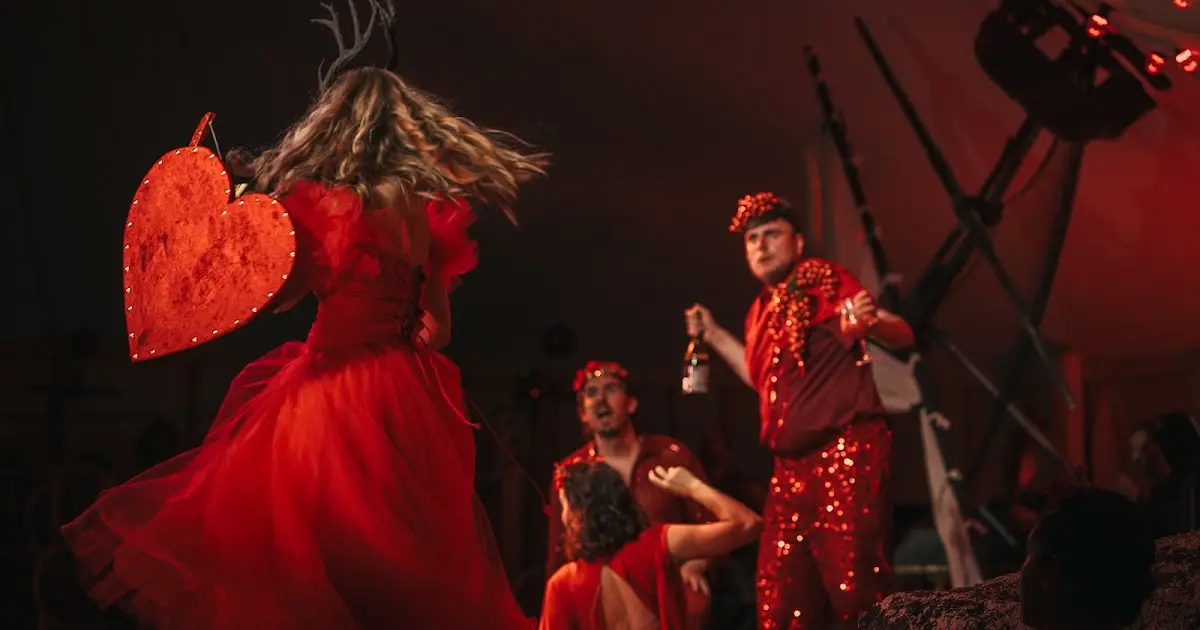
In a bold gambit that bridges the gap between historical restoration-era performance practice and contemporary fringe theatre, Vache Baroque—in collaboration with the physical theatre company Out of Chaos—recently mounted a striking, highly physical production of The Tempest. Reviewed on September 6, 2026, at The Vache, the production sought to breathe new life into the notoriously unwieldy genre of the English "semi-opera" (or "dramatick-opera"). Under the musical direction of Jonathan Darbourne and the stage direction of Paul O’Mahony, the creative team bypassed the heavily adapted 1674 text by Thomas Shadwell, John Dryden, and William Davenant in favor of returning directly to Shakespeare’s original text. This was paired with a rich, eclectic musical pastiche drawing primarily on Matthew Locke’s surviving theatre music, augmented by masterpieces from Henry Purcell, Pelham Humfrey, John Dowland, John Weldon, Thomas Morley, Robert Johnson, Alessandro Kapsberger, François Couperin, and Marin Marais.
Featuring a versatile, hyper-engaged ensemble of actors, vocalists, and period-instrument specialists, the production offered a vividly engaging theatrical evening. It tackled the inherent structural challenges of the semi-opera genre—where the primary dramatic figures typically do not sing, and the plot swings wildly between spoken text, instrumental interludes, and lavish masques. While Part One suffered from pacing issues, over-amplification, and a feeling of an undercooked play augmented by incidental songs, Part Two found its footing. Driven by a stellar performance from soprano Stephanie Hershaw as Ariel, a visually opulent wedding masque, and the seamless integration of instrumentalists into the physical staging, the production ultimately succeeded as a wildly imaginative, modern reinvention of a long-dormant historical form.
Detailed Chronology & Production Analysis
Part One: The Struggle for Equilibrium
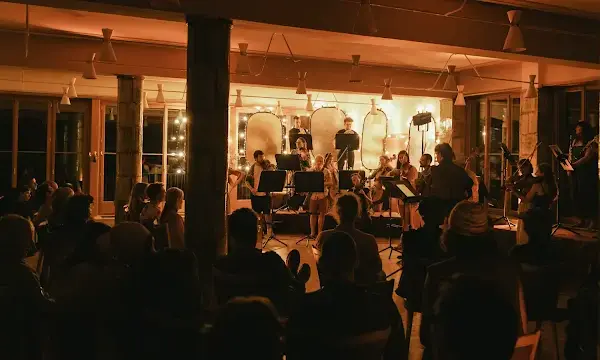
The performance format at The Vache immediately established an intimate, immersive atmosphere, utilizing a performance tent configured nearly in the round with the audience seated on three sides. Movement direction by Annie-Lunnette Deakin-Foster and production designs by Caitlin Mawhinney ensured that the boundaries between audience, stage, and orchestra dissolved rapidly. However, structural friction quickly emerged from the material itself.
In historical semi-operas, music was woven into the fabric of the drama through elaborate, high-budget supernatural spectacles. In Vache Baroque’s staging, the decision to cleave closely to Shakespeare’s original narrative meant that nearly half an hour elapsed in Part One before a single note was sung. While musical director Jonathan Darbourne cleverly utilized his nine-piece period ensemble and continuous harpsichord accompaniment to comment musically on the unfolding drama, the dramatic pacing stalled.
Compounding these structural hurdles was a heavy reliance on sound design. Working alongside sound artist Dan Samsa—who curated a rich, evocative sonic backdrop of "found noises" to make the isle "full of noises"—the production deployed microphones for nearly all performers. Within the relatively intimate confines of the performance tent, this amplification proved counterproductive. The actors, including Tim Delap’s fierce Prospero and Leah Haile’s earnest Miranda, felt over-amplified, rendering their delivery excessively forceful and occasionally giving Part One a "shouty" quality. The division of labor—where actors spoke and designated singers performed individual numbers—felt disjointed during the opening movement, leaving critics and audiences wondering if a fully sung adaptation or a stricter adherence to the Dryden/Davenant text might have yielded smoother dramatic cohesion.
Part Two: The Masque, Metamorphosis, and Momentum
If Part One struggled to find its generic footing, Part Two triumphantly justified the company’s creative ambitions. The second half surged forward on the back of richer musico-dramatic events, most notably the centerpiece masque celebrating the betrothal of Ferdinand and Miranda.

This sequence allowed the musical forces to step into their element. Stephanie Hershaw’s portrayal of Cupid, alongside Ross Cumming’s robust Bacchus and a vocal supporting ensemble comprising Isabelle Peters, Camilla Seale, and Conor Prendiville, elevated the performance into true baroque splendor. Hershaw shouldered the lion’s share of the vocal and physical workload, delivering an Ariel that was simultaneously ethereal, athletic, and fiercely magnetic.
Furthermore, Part Two saw the physical staging truly gel. The instrumentalists abandoned their pit mentality entirely, actively engaging in the stage business—most notably when they participated in the psychological and physical torment of the comic drunkards Stephano (played with earthy charm by Camilla Seale) and Trinculo (brought to life with razor-sharp comedic timing by Ross Cumming). The fake feast sequence and the magical illusions conjured by Prospero demonstrated a mastery of physical theatre, bridging the centuries between Restoration-era stage machinery and modern fringe performance techniques.
Supporting Context & Metrics: The Semi-Opera Enigma
To understand the scale of Vache Baroque’s achievement—and the hurdles they faced—one must examine the peculiar evolutionary dead-end that was the English semi-opera.
Historical Context: The Restoration Compromise
Fully sung Italianate opera never managed to take permanent root in Restoration England. Following the reopening of the theatres in 1660 after the Interregnum, British audiences favored spoken drama, physical comedy, and rhetorical nuance over continuous recitative and aria. However, courtly taste craved visual splendor, dance, and sonic extravagance.
The resulting compromise was the "dramatick-opera" or semi-opera. Flourishing roughly between 1673 (beginning with Thomas Shadwell’s adaptation of Macbeth with music by Matthew Locke) and 1712 (the final flowering of the genre via The Tempest), these works alternated spoken dramatic scenes performed by actors with elaborate musical masques, supernatural interventions, and comic songs performed by specialized singer-actors.
Modern Performance Challenges
In the modern era, mounting a semi-opera is a formidable musicological and theatrical tightrope walk:

- Structural Schizophrenia: The division between speaking actors and singing characters creates a jarring stylistic dichotomy for contemporary audiences accustomed to either straight theatre or fully integrated opera.
- Economic Realities: Original semi-operas relied on breathtaking, bank-breaking stage machinery—flying machines, trapdoors, collapsing scenery, and massive choral forces. Recreating this on a 21st-century fringe budget requires immense creative substitution.
- Textual Overhauls: Modern directors must decide whether to use the period-specific, heavily altered Restoration librettos (which amplify the music opportunities) or revert to the original Shakespearean/dramaturgical texts (which can crowd out the musical numbers).
Production Metrics & Artistic Roster
| Production Element | Details & Personnel |
|---|---|
| Presenting Organization | Vache Baroque in collaboration with Out of Chaos |
| Key Leadership | Paul O’Mahony (Director), Jonathan Darbourne (Musical Director) |
| Design & Technical Team | Caitlin Mawhinney (Designer), Annie-Lunnette Deakin-Foster (Choreographer), Ben Pickersgill (Lighting), Dan Samsa (Sound Artist) |
| Principal Actors | Tim Delap (Prospero), Leah Haile (Miranda), Hannah Barrie (Caliban), Tré Medley (Ferdinand), Dom Swain (Sebastian) |
| Principal Singers | Stephanie Hershaw (Ariel/Cupid), Isabelle Peters (Alonso), Camilla Seale (Stephano), Conor Prendiville (Antonio), Ross Cumming (Trinculo) |
| Period Instrument Ensemble | 9-piece ensemble including harpsichord, violins, viola, bass violin/viola da gamba, oboes/recorders, theorbo/lute/guitar, and percussion. |
Official Statements & Artistic Vision
The creative philosophy underpinning Vache Baroque’s production centers on making early music relevant, visceral, and theatrically alive for audiences who might otherwise view the baroque repertoire as dusty or inaccessible.
Director Paul O’Mahony, speaking on the integration of physical theatre techniques with classical text, emphasized the production’s core intent to re-examine the power dynamics within Shakespeare’s script:
"What our version successfully maps out is the insidious, pervasive way Prospero imposes his will upon every single soul on that island—whether through coercion, enslavement, or emotional manipulation. By stripping away some of the traditional distance between the stage and the audience, we force the spectator to confront the discomfort of absolute authority."
Musical Director Jonathan Darbourne addressed the compositional challenge of weaving a unified soundscape out of disparate 17th-century sources:
"Matthew Locke’s surviving music for The Tempest is foundational, but it leaves gaps if you want to trace an emotional and dramatic arc across a full evening. By supplementing Locke with Purcell, Humfrey, French masters like Marais and Couperin, and English lutenists, we weren’t just padding out the running time; we were building a rich, cosmopolitan sonic mirror for an island populated by spirits, monsters, and shipwrecked aristocrats."
Critics noted that while the production achieved a remarkable synergy in its second half, it occasionally stumbled by not providing a grand, unifying vocal vehicle for the entire company—including the non-singing actors—at the emotional climax or conclusion of the evening. Nevertheless, the total commitment of the ensemble, who frequently doubled as instrumentalists, actors, and movers, set a high-water mark for ensemble-driven early music theatre.

Future Outlook & Legacy
Vache Baroque’s mounting of The Tempest marks a significant milestone in the ongoing renaissance of seventeenth-century English stage works. As major houses increasingly look beyond the standard operatic canon, productions that successfully marry historical performance practice with innovative fringe-theatre techniques point the way forward for the genre.
The production’s willingness to experiment—utilizing found-sound artscapes by Dan Samsa, stripping back orchestral barriers, and forcing classical musicians into active theatrical choreography—signals a healthy evolution in how early music is curated. For future companies attempting the notoriously slippery semi-opera genre, the primary lessons of Vache Baroque’s experiment are clear: narrative pacing in Part One must be aggressively managed to accommodate the delayed entry of vocal music, and the acoustic design in intimate tents must trust the unamplified capabilities of trained classical actors.
Ultimately, Vache Baroque delivered an evening of invigorating, highly entertaining theatre. By transforming a historical footnote into a living, breathing, kinetic experience, they have proven that the ghosts of the Restoration stage still have plenty of magic left to work on modern audiences.