Executive Overview
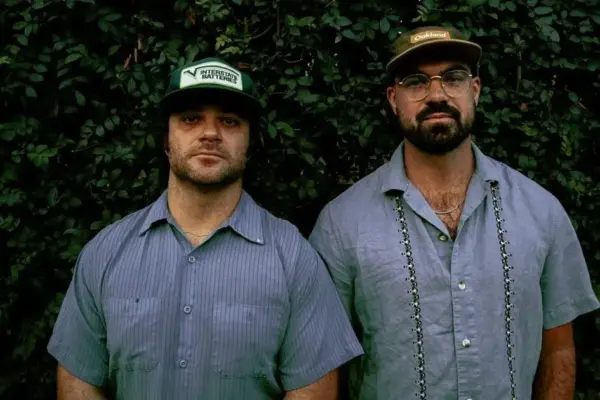
Jazz—love it, hate it, or endlessly debate its elusive cultural boundaries—refuses to vanish. It remains one of the most intellectually demanding, culturally resilient, and fiercely democratic forms of human expression ever devised. From the celestial harmonies of the Mills Brothers to the spiritual, levitational prayers of free-jazz pioneer Albert Ayler, jazz is a living, breathing tradition that simultaneously engages the lips, the hips, and the hippocampus. Yet, translating this rich, sprawling history into contemporary relevance is a challenge that many modern instrumentalists stumble over. Enter saxophonist Jarret Gilgore and guitarist Anthony Pirog.
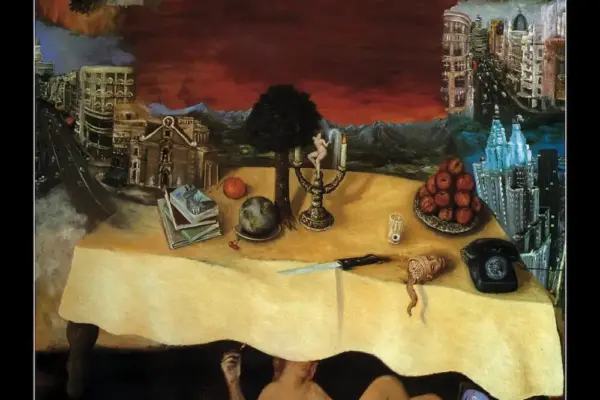
On their breathtaking new collaborative album, Between The Earth and Where (slated for release on September 18, 2026, via Unheard of Hope), Gilgore and Pirog have contributed a magnificent, shimmering tributary to this vast river of human achievement. Hailing from the vibrant, high-risk experimental music scene of Washington, D.C., the duo has previously built reputations on fiery, uncompromising improvisation. However, with Between The Earth and Where, they have consciously stripped away the blood-and-thunder bombast of their earlier work to deliver a record defined by subtle warmth, sophisticated restraint, and discreet lyricism.
Described by Pirog as both “a musical hug” and “a reflection of our relationship,” the album represents a distinct pivot toward intimacy, emotional candor, and deep listening. In an era where nuance, subtlety, and artistic eloquence face relentless pressure from the socio-political cacophony of their native capital, Gilgore and Pirog invite listeners into a sonic utopia. This in-depth report examines the making of Between The Earth and Where, analyzes its track-by-track architecture, contextualizes the artists within the modern American avant-garde, and explores the broader cultural implications of their most mature statement to date.
Detailed Chronology: From D.C. Underground to Intimate Minimalism
The Roots of a Creative Partnership
To understand the quiet majesty of Between The Earth and Where, one must trace the artistic evolution of its creators through the crucible of the Washington, D.C. underground. For years, Jarret Gilgore and Anthony Pirog were fixtures of a local scene known more for its visceral intensity, punk rock ethos, and avant-garde noise than for quiet introspection. In dives, DIY spaces, and underground listening rooms across the District, the pair cut their teeth testing the limits of acoustic and amplified sound, regularly painting the town red with dense, chaotic improvisations.
For Gilgore, whose mastery of the saxophone balances a deep reverence for the bebop and free-jazz canons with a contemporary structural fluidity, and Pirog, a virtuoso guitarist whose stylistic footprint ranges from jazz fusion to sonic art-rock, early collaborations were about exploration at high volumes. They were navigating the complex geography of modern composition, challenging audiences with unpredictable cadences and unyielding sonic friction.
The Pivot to Stillness
Yet, musical maturity often arrives as an exercise in subtraction. As both artists navigated the personal and professional shifts of their respective careers, a shared desire emerged to explore the spaces between notes. The aggressive skronk of their youth gave way to a rigorous meditation on tone, texture, and emotional transparency.
The conceptual groundwork for Between The Earth and Where was laid over countless hours of dialogue and informal playing sessions, where the duo realized that their strongest musical statements were no longer born from volume or velocity, but from vulnerability. By removing drums and bass, Gilgore and Pirog left themselves entirely exposed. Every breath through the saxophone, every trembling pluck of the guitar string, and every pedal-generated textural shift carried total accountability. The result is a masterclass in modern chamber jazz—an album that captures two seasoned improvisers operating at the absolute peak of their empathetic powers.
Supporting Context & Metrics: The Anatomy of Modern Chamber Jazz
The Contemporary Jazz Landscape
The release of Between The Earth and Where arrives at a fascinating juncture for instrumental music. In an attention economy dominated by algorithmic single-stream releases and compressed dynamic ranges, long-form improvised music faces unique commercial and cultural pressures. However, boutique labels like Unheard of Hope have carved out vital spaces for uncompromising art.
By bypassing the traditional major-label machinery, artists like Gilgore and Pirog retain total creative autonomy, allowing them to release records that prioritize artistic integrity over commercial expediency. The metrics of success for such a release are measured not in immediate chart-topping radio plays, but in critical resonance, vinyl preservation, and the cultivation of a dedicated, discerning listenership that spans indie-rock aficionados and jazz purists alike.
Sonic Architecture: Instrumentation and Techniques
The sonic palette of Between The Earth and Where relies heavily on the nuanced interplay between Gilgore’s saxophone and Pirog’s heavily textured guitar work. Rather than engaging in traditional soloist-versus-accompanist dynamics, the pair operate as equal architectural partners.
- Negative Space: Borrowing structural concepts from modern classical composition and ambient drone, the duo utilizes silence not merely as a pause, but as a structural pillar. As demonstrated on tracks like Life Lines, the unsaid dictates the shape of the musical conversation.
- Textural Modulation: Pirog employs delicate tremolos, subtle looping pedals, and swelling feedback to create atmospheric backdrops that evoke ambient pioneers like Brian Eno and William Basinski, while Gilgore uses breath control and microtonal inflections to weave vocal-like emotional arcs.
- Genre Hybridization: The record effortlessly bridges the gap between contemporary chamber music, pastoral folk-jazz (evoking comparisons to Australia’s Dirty Three), and minimalist electronic soundscapes, proving that genre boundaries in twenty-first-century instrumental music are porous by design.
Official Statements and Track-by-Track Breakdown
To truly appreciate the depth of Between The Earth and Where, one must journey through its meticulously crafted sequence. Anthony Pirog has characterized the album’s overarching ethos simply as “a musical hug… a reflection of our relationship.” That warmth radiates from every measure.
Soft Eyes
The opening track serves as an immediate mission statement for the album. Pirog’s guitar constructs finely latticed, intricate harmonic patterns that act as a secure foundation for Gilgore’s sensuous blowing. As the saxophone dreams, flutters, and spirals at the very edge of human consciousness, the listener is lulled into an atmosphere of profound tranquility. There is no rushing here; the music unfurls with the unhurried grace of a slow-motion cinematic sunrise.
For Now
Delicate tremolos define the romantic contours of For Now. The track bears a striking spiritual resemblance to the evocative, heartbroken landscapes of Dirty Three’s landmark record Ocean Songs. It moves through long, drifting periods of ambient wandering before suddenly and dramatically ascending into poignant, star-crossed lead lines that tug directly at the listener’s empathy.
Life Lines
Here, Gilgore and Pirog step into the role of master sculptors working exclusively with negative space. Instead of filling every acoustic second with notes, they allow the silences—the things unsaid—to give shape and tension to the musical dialogue. It is a masterclass in musical conversation, proving that listening is always more important than playing.
Aster
A radical departure into pure atmospheric architecture, Aster is a dream-vision built upon softly swelling feedback. The track wraps the listener in a warm, enveloping synth-bath that feels akin to William Basinski’s elegiac Disintegration Loops, albeit compressed and distilled down from hours of tape decay into a potent, hypnotic minute of auditory suspension.
Golden Hour (Lead Single)
Serving as the album’s primary calling card, Golden Hour is a giddy, kaleidoscopic mix of arpeggiated organ textures, rhythmic acoustic-electric guitar interlocking, and droning saxophone lines. It moves through the speakers like a tunnelling fantasia—imagining a surreal scenario where a wedding band performs an intimate first dance specifically tailored for avant-garde electronic music pioneers Brian Eno and Steve Reich.
Future Outlook: A New Standard for Artisanal Improv
As the music industry looks toward the final quarter of 2026, releases like Between The Earth and Where offer a vital reminder of the power of nuance, eloquence, and human connection. In a cultural climate where political bombast and algorithmic noise threaten to flatten public discourse, Jarret Gilgore and Anthony Pirog have constructed an alternative: a sonic utopia built on mutual respect, deep listening, and emotional candor.
Following the album’s official release on September 18, 2026, via Unheard of Hope, the duo is slated to bring their delicate, nocturnal blues to select listening rooms and independent art spaces across the United States. Industry analysts and jazz critics alike are watching closely to see if this stylistic pivot marks a permanent evolution for both artists or merely a transient phase in their restless creative journeys.
Regardless of where their individual paths lead next, Between The Earth and Where stands as a definitive artistic triumph. It proves that when musicians have the courage to strip away the excess and focus entirely on truth, the results can be nothing short of transcendent. Gilgore and Pirog have not merely released an album of new compositions; they have handed us a map to a quieter, more thoughtful world—one well worth visiting again and again.