Executive Overview
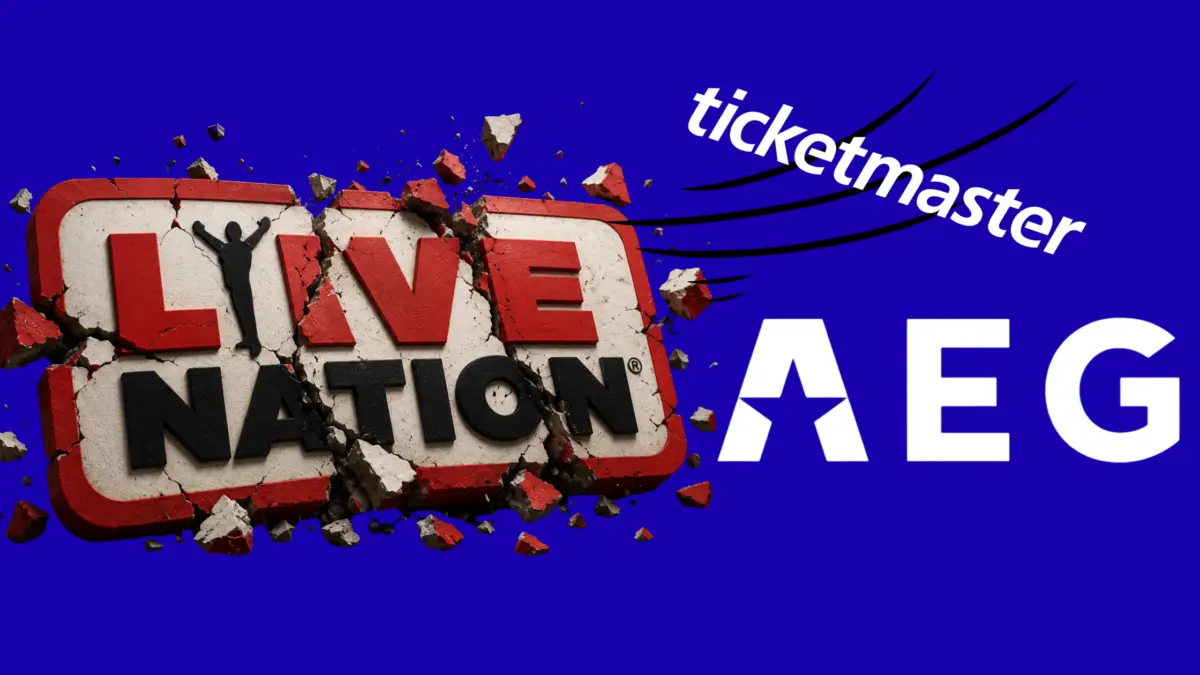
The live entertainment ecosystem is experiencing a seismic regulatory and legal shift, highlighted by high-stakes antitrust battles in the United States and a coordinated international crackdown on exploitative secondary ticketing practices. At the epicenter of this industry-wide turbulence is Live Nation Entertainment and its subsidiary, Ticketmaster. Facing intense scrutiny from federal regulators, state attorneys general, and aggressive commercial rivals, Live Nation is fighting to preserve a controversial settlement with the United States Department of Justice (DOJ)—a deal that critics argue falls woefully short of dismantling an entrenched monopoly.
Simultaneously, lawmakers across the globe are advancing legislative frameworks to protect concertgoers and sports fans from predatory market dynamics. From the United States Congress pushing forward bipartisan bills to curb automated bot scalping and speculative resales, to Brazil enacting the "Taylor Swift Law" in response to tragic concert conditions and rampant gouging, and South Korea deploying aggressive financial penalties against commercial ticket flippers, governments are drawing a hard line.
This comprehensive report examines the mounting pressure on Live Nation, the fierce opposition led by primary rival AEG, and the sweeping wave of global regulations transforming the business of live music.
Detailed Chronology of the Antitrust Legal Battle
The roots of the current legal crisis trace back to 2010, when the DOJ approved the landmark merger of Live Nation, the world’s largest concert promoter, and Ticketmaster, the dominant force in ticketing. Proponents of the merger argued it would create operational efficiencies. Critics, however, warned it would forge an unassailable titan capable of monopolizing both talent touring and primary ticketing.
To secure regulatory approval in 2010, Live Nation entered into a consent decree prohibiting it from retaliating against venues that chose competing ticketing services. This agreement was extended in 2020 after the DOJ discovered multiple violations of the original terms. Despite these interventions, market conditions remained largely unchanged, setting the stage for a dramatic escalation.
The 2024 DOJ Lawsuit and State-Led Interventions
In 2024, the DOJ—alongside a bipartisan coalition of 33 US states—filed a sweeping antitrust lawsuit against Live Nation and Ticketmaster. The federal government officially requested a forced corporate divestiture, arguing that the company leveraged its dominance across tours, venue ownership, and ticketing to unfairly crush competitors and exploit fans.
However, the legal front fractured in March of this year when the DOJ agreed to a controversial settlement with Live Nation. While federal prosecutors maintained that the negotiated terms delivered meaningful consumer relief, the move stunned consumer advocates and rival promoters who viewed the deal as a political compromise brokered by well-connected lobbyists.
Crucially, the 33 US states refused to drop their litigation. Pressing forward, these state prosecutors successfully convinced a jury that Live Nation and Ticketmaster operate an unlawful monopoly, keeping the threat of a forced corporate breakup alive.
The Final Push Before Judge Subramanian
With the deadline for formal public comments arriving today, interested parties have rushed to submit their arguments to US District Judge Arun Subramanian, who holds the ultimate authority to approve or reject the DOJ settlement. The outcome of Judge Subramanian’s review—alongside the separate sanctions he must determine based on the state-led jury verdict—will fundamentally reshape the future of the live music industry.
AEG’s Challenge and the Corporate Power Struggle
As expected, Live Nation’s chief competitor in the live music space, AEG, seized the public comment window to deliver a devastating critique of the DOJ settlement. AEG, a powerhouse in tour promotion, venue management, and primary ticketing (via its subsidiary AXS), has long maintained that Ticketmaster’s dominance distorts the broader marketplace.
The Core of AEG’s Argument
In its formal filing submitted via Billboard, AEG did not mince words regarding the structural flaws of the DOJ’s proposed agreement:
"The bottom line is simple: as long as Ticketmaster remains vertically integrated with Live Nation, venues will continue to face pressure to choose Ticketmaster because of Live Nation’s control over content. The proposed deal does not address that fundamental incentive structure. Divestiture is needed to restore competition."
AEG pointed to the historical failure of the 2010 and 2020 consent decrees, arguing that behavioral remedies have proven entirely ineffective at curbing monopolistic practices. According to AEG, Ticketmaster’s massive market share subsidizes Live Nation’s content and promotion wings, effectively starving independent competitors of oxygen.
Live Nation Fights Back
Live Nation quickly fired back at AEG’s filing, dismissing the intervention as a self-serving maneuver rather than a principled defense of the market. Dan Wall, Live Nation’s EVP of Corporate and Regulatory Affairs, issued a sharp public rebuke:
"AEG’s filing is designed to advance its own commercial interests rather than those of artists, venues or fans, and it misrepresents the settlement’s terms. The Department of Justice negotiated this settlement and has said it delivers meaningful relief for consumers. Nothing in AEG’s filing changes our confidence that the court will approve it."
Despite Live Nation’s public confidence, the convergence of the federal settlement review and the state-level monopoly verdict leaves the conglomerate in its most precarious legal position since the 2010 merger.
Official Statements and Industry Perspectives
The debate surrounding the future of ticketing and live entertainment has mobilized key stakeholders across the sector, from corporate executives to independent venue operators.
Corporate Leadership Positions
- Dan Wall (Live Nation, EVP of Corporate & Regulatory Affairs): Defended the DOJ settlement as a robust framework that protects consumers, framing competitor opposition as opportunistic corporate posturing designed to manipulate regulatory outcomes.
- Jay Marciano (AEG Presents, CEO): Previously noted in internal communications that Ticketmaster operates a predatory monopoly, using ticketing profits to insulate Live Nation from fair competition across tours and venues.
- Stephen Parker (NIVA, Executive Director): Praised the momentum of legislative reforms in the US, emphasizing that independent stages, non-profits, and fans stand united behind new federal bills targeting secondary ticketing abuses.
Global Crackdown on Ticket Touting and Secondary Markets
While US courts weigh the structural integrity of Live Nation, legislative bodies across the United States, Brazil, and South Korea are enacting sweeping reforms to tackle the predatory secondary ticketing market.
+---------------------------------------------------------------------------------+
|                         GLOBAL TICKETING REFORMS AT A GLANCE                    |
+-------------------+-----------------------------------+-------------------------+
| Jurisdiction      | Primary Legislative Focus         | Key Measures            |
+-------------------+-----------------------------------+-------------------------+
| United States     | MAIN Event Ticketing Act &        | Outlaws bot usage, bans |
|                   | GHOST Act                         | speculative resales.    |
+-------------------+-----------------------------------+-------------------------+
| Brazil            | "Taylor Swift Law"                | Price transparency,     |
|                   |                                   | mandatory free water.   |
+-------------------+-----------------------------------+-------------------------+
| South Korea       | Commercial Touting Ban            | Fines up to 50x profit  |
|                   |                                   | for illegal resale.     |
+-------------------+-----------------------------------+-------------------------+
United States: Congress Targets Bots and Speculative Sellers
In the US, the National Independent Venue Association (NIVA) has championed new legislative efforts advancing through Congress.
- The MAIN Event Ticketing Act: This bill strengthens federal restrictions against automated software "bots" used by scalpers to harvest primary inventory for inflated resale. The measure recently cleared the House subcommittee stage, following companion legislation that successfully navigated the Senate committee process.
- The GHOST Act (Guaranteeing Honest Ownership In Secondary Ticketing Act): Introduced this week, this measure directly combats speculative ticketing—a deceptive practice where scalpers list tickets for sale online before they have actually secured them.
Brazil: The "Taylor Swift Law" and Venue Safety
Brazil enacted landmark live entertainment legislation dubbed the "Taylor Swift Law." The regulatory overhaul was catalyzed by two major events during the pop superstar’s Eras Tour: astronomical ticket gouging by secondary resellers, and the tragic death of fan Ana Clara Benevides from heat exhaustion in November 2023.
The new legislation mandates strict price transparency for secondary platforms, forcing them to clearly identify as resale marketplaces and declare all fees upfront while cracking down on speculative listing. Furthermore, addressing the safety failures of past concerts, the law requires large-scale events to provide free drinking water and permit fans to bring their own water bottles into venues during extreme weather.
South Korea: Criminalizing Commercial Ticket Flipping
South Korea implemented stringent anti-touting laws designed to eliminate commercial ticket flipping. The new regulations outlaw the resale of event tickets for profit on a commercial scale, imposing severe financial penalties—fines up to 50 times the ill-gotten revenue generated by the offender.
Enforcement agencies remain vigilant against creative evasion tactics. Local media reports have already highlighted crafty workarounds, such as scalpers listing an Americano mobile coffee coupon for 660,000 won (approximately $480 USD) bundled with a "free" baseball ticket valued at just 100,000 won. Regulators are actively closing these loopholes to preserve market integrity.
Future Outlook
The coming months will dictate the structural trajectory of the live entertainment industry for the next decade.
- Judicial Rulings: Judge Subramanian’s impending decision on the DOJ settlement will determine whether Live Nation escapes federal restructuring or faces court-mandated remedies. Simultaneously, the penalties arising from the state-led monopoly jury verdict will test the limits of corporate consolidation.
- Legislative Momentum: The harmonization of international ticketing laws—from US bot bans to Brazil’s consumer safety mandates and South Korea’s steep financial penalties—signals an era of diminished tolerance for predatory practices in live entertainment.
- Market Competition: Regardless of judicial outcomes, independent promoters like AEG and advocacy groups will continue applying pressure to ensure that artists, venues, and fans are not held hostage by vertical integration.
The live music economy stands at a historic crossroads, balancing on the tension between mega-corporate dominance and a worldwide regulatory awakening.