Executive Overview
Over the weekend, the iconic Icelandic artist Björk stepped behind the decks to deliver a characteristically boundary-pushing, eclectic DJ set for the "New Chapter" edition of Rome’s prestigious Dissonanze Festival. Performing at the city’s renowned Auditorium Parco della Musica Ennio Morricone on Saturday, September 12th, the multi-faceted musician, composer, and producer once again demonstrated her voracious appetite for global electronic music discovery. Her performance synthesized a kaleidoscopic array of cutting-edge club genres, ranging from hyperpop and experimental bass to East African singeli and intricate North African sound design.
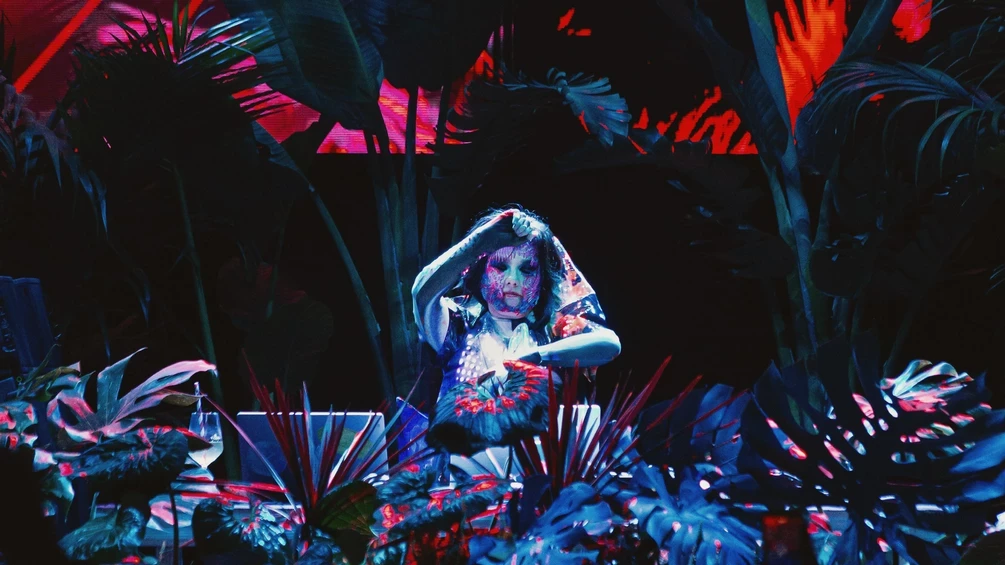
Dressed in a striking, sculptural outfit designed by Kit Wan Studios and obscured by an intricate, avant-garde mask crafted by Karina Bond, Björk’s visual presence matched the sonic turbulence of her tracklist. The set bridged geographical and stylistic chasms, pulling together trailblazing East African producers, underground hyperpop architects, and longtime collaborators like Arca and Kelela.
This high-profile performance in the Italian capital is far from an isolated incident; rather, it underscores a concentrated period of energetic DJing and curatorial pursuits for the artist. From her recently staged one-day Echolalia festival in Iceland—timed to coincide with a total solar eclipse—to high-profile collaborative appearances at the BRIT Awards alongside Rosalía, Björk continues to redefine her relationship with contemporary club culture. With a highly anticipated new studio album officially confirmed for release next year, this Mediterranean masterclass serves as both a testament to her restless musical curiosity and a thrilling teaser for the sonic directions she may explore next.
Detailed Chronology: Inside the Rome Performance
The Italian capital played host to one of the most eccentric and globally minded DJ sets of the European festival calendar on Saturday, September 12th. Taking over the esteemed Auditorium Parco della Musica Ennio Morricone for Dissonanze Festival’s "New Chapter," Björk assumed control of the decks with the precision and unpredictability that has come to define her four-decade career.
Rather than relying on safe, nostalgic crowd-pleasers, the legendary auteur curated a relentless, shifting landscape of contemporary electronic music. The atmosphere inside the auditorium was charged from the opening transition, marked by her arresting aesthetic presentation. Decked out in a structured, futuristic ensemble by Kit Wan Studios and shielded by a haunting, sculptural mask by Karina Bond, Björk operated less like a conventional club DJ and more like a high-fashion high priestess presiding over a sonic ritual.
As the set progressed through the evening, the temporal and geographical boundaries of the dancefloor dissolved. The tracklist unfolded as a masterclass in modern underground curation. Among the pivotal moments of the night was the inclusion of underscores’ glitchy, emotionally charged hyperpop cut ‘Unlimited Love’, which sat comfortably alongside the dense, folkloric-industrial soundscapes of ‘The Primitivist’ by Egyptian-born, Berlin-based producer ABADIR.
The energy shifted rapidly into high-octane territory with selections from the ever-influential Nyege Nyege Tapes ecosystem. Björk showcased the breakneck, hyper-speed rhythms of singeli trailblazers DJ Travella and Jay Mita, forcing the Roman audience to grapple with the dizzying tempos of East African dance music. These tracks were interwoven with eclectic cuts from international innovators such as Yaa Naara, Fave, Kasimyn, and Theodora, alongside regular collaborators Arca and Kelela.
Understanding that the immersive nature of the performance extended beyond the physical confines of the auditorium, Björk subsequently took to Instagram. She shared a curated selection of clips from the evening alongside a partial tracklist, allowing global fans who missed the live iteration to experience the vibrant, cross-cultural tapestry of her set.
Supporting Context & Metrics: A Summer of Eclipse and Exploration
Björk’s appearance at Dissonanze Festival is the latest milestone in an intensely active period of live DJ performances and multi-disciplinary curation. Over the past several months, the Icelandic polymath has increasingly integrated herself into global club and festival circuits not just as a live vocalist or orchestra leader, but as a dedicated selector bridging disparate underground scenes.
Most notably, this past summer saw the realization of her ambitious, one-day Echolalia festival. Timed precisely with Iceland’s rare total solar eclipse on August 12th, the event transformed Víðistaðatún in Hafnarfjörður into an open-air sanctuary of avant-garde sound. The carefully curated bill for Echolalia featured a cadre of boundary-pushing contemporary artists, including Arca and ambient pioneer Kaitlyn Aurelia Smith. The spirit of the festival extended beyond temporary stages; its cultural footprint is currently being celebrated through an immersive exhibition at the National Gallery of Iceland, cementing the project’s status as a landmark artistic statement.
This deep dive into contemporary electronic music ecosystems is rooted in a lifelong dialogue with club culture. Music critics and historians often point to her landmark 1995 sophomore solo album, Post, as a pivotal moment where high-art pop composition successfully absorbed the tectonic shifts of 1990s club culture, techno, and trip-hop to achieve timeless pop perfection. Decades later, her sets in Rome and Iceland prove that her finger remains firmly on the pulse of global underground evolution—championing localized movements like singeli and experimental hyperpop and thrusting them onto international stages.
Official Statements and Industry Reception
The critical and public response to Björk’s recent artistic endeavors underscores her unique, enduring status as a bridge between high-art experimentalism and grassroots underground movements. While traditional press releases from major festivals often rely on hyperbole, the organic reaction from the international electronic music community tells a more authentic story of mutual respect.
Independent producers whose work was featured in Rome—ranging from the experimental sound designers of Nyege Nyege Tapes to contemporary hyperpop architects—have frequently expressed awe at how deeply Björk researches and respects regional club sounds. Rather than utilizing underground tracks as mere novelties in her sets, her mixing displays an authentic understanding of their structural mechanics and cultural context.
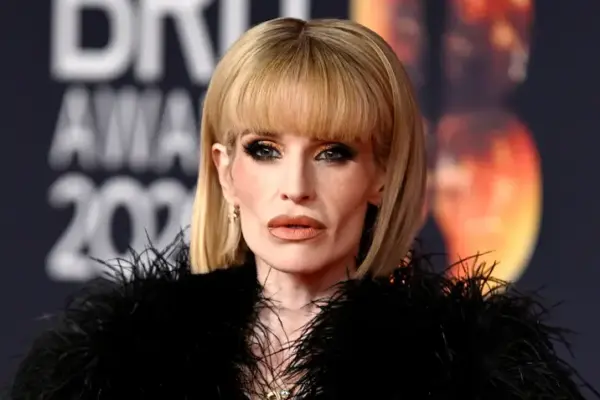
Furthermore, the mainstream music industry continues to celebrate her cross-generational appeal. Earlier this year, the global pop landscape paused when Björk joined Spanish icon Rosalía on stage at the 2026 BRIT Awards. Their joint, electrifying performance of their collaborative track ‘Berghain’ served as a masterclass in cross-genre pop theater, uniting the worlds of avant-garde composition and global streaming superstardom.
Industry analysts tracking her recent moves note a deliberate pivot toward agility. By focusing on intimate, highly curated DJ sets, surprise festival curation, and cross-pollination with younger artists, Björk has bypassed traditional, grueling arena-tour cycles in favor of dynamic, culturally resonant interventions that keep her at the vanguard of modern music discourse.
Future Outlook: The Road to 2027
As the dust settles on her triumphant appearance at Rome’s Dissonanze Festival, the global music community’s collective gaze is fixed firmly on the horizon. The timing of these eclectic DJ sets and immersive curatorial projects is far from accidental; it serves as the stylistic preamble to a much larger artistic statement.
With Björk officially confirming that a brand-new studio album is slated for release next year (2027), speculation is running rampant regarding how her recent explorations of global club music, hyperpop textures, and experimental bass will inform her next body of work. If her DJ sets in Iceland and Italy are indicative of her current creative diet, listeners can expect an album that continues her historical trajectory of breaking stylistic molds, rejecting complacency, and synthesizing the most vital underground currents of the twenty-first century.
In the interim, fans and musicologists alike are encouraged to revisit her deep-seated history with club culture—from the digitized brass and IDM textures of Homogenic and Vespertine to her modern-day championing of global club subgenres. As Björk prepares to unveil her next major musical chapter, one thing remains absolute: she continues to chart a course entirely of her own making, proving that true artistic longevity lies in relentless curiosity and an unwavering commitment to the avant-garde.